Sarande
04/12/2026 - 04/19/2026
We left Corfu on Orthodox Easter Sunday by ferry. It was a quick easy ferry ride from Corfu to Sarande Albania where we picked up our rental car and headed to our air bnb. Easiest travel day ever.
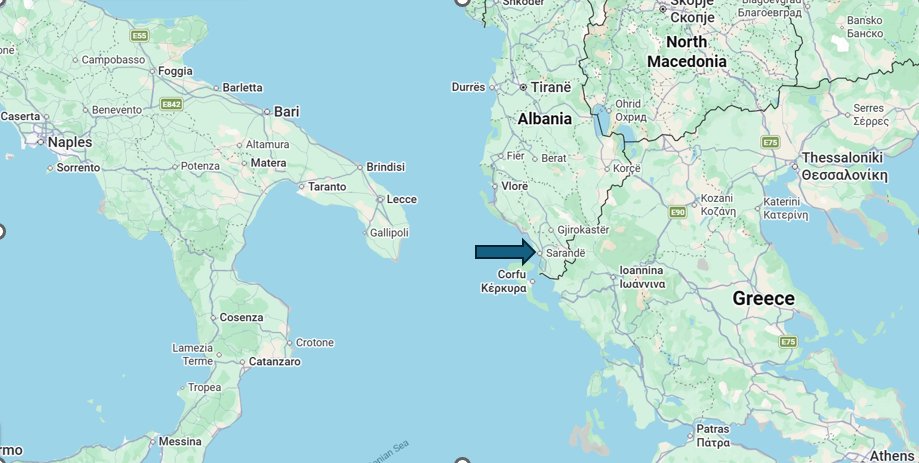
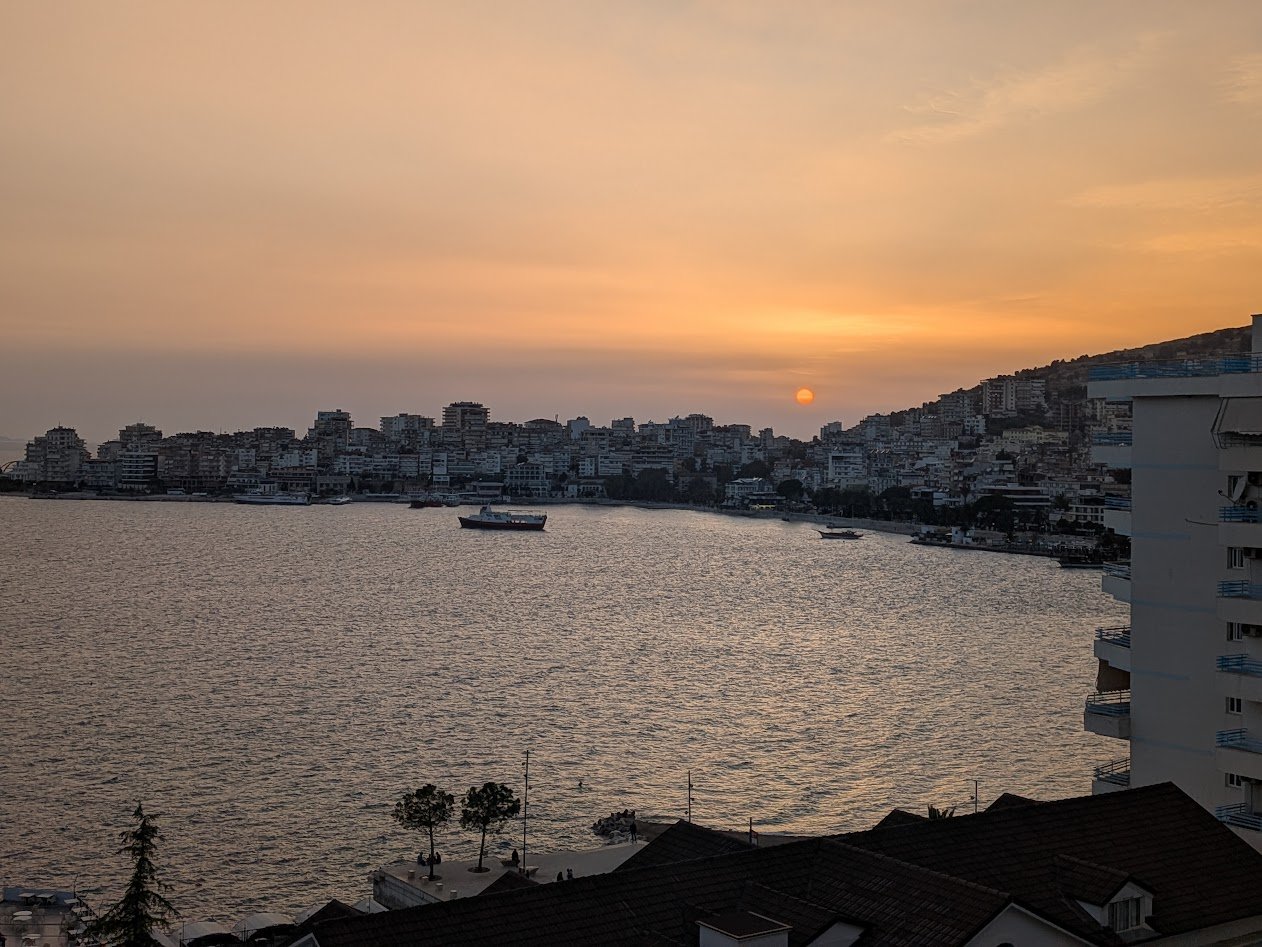
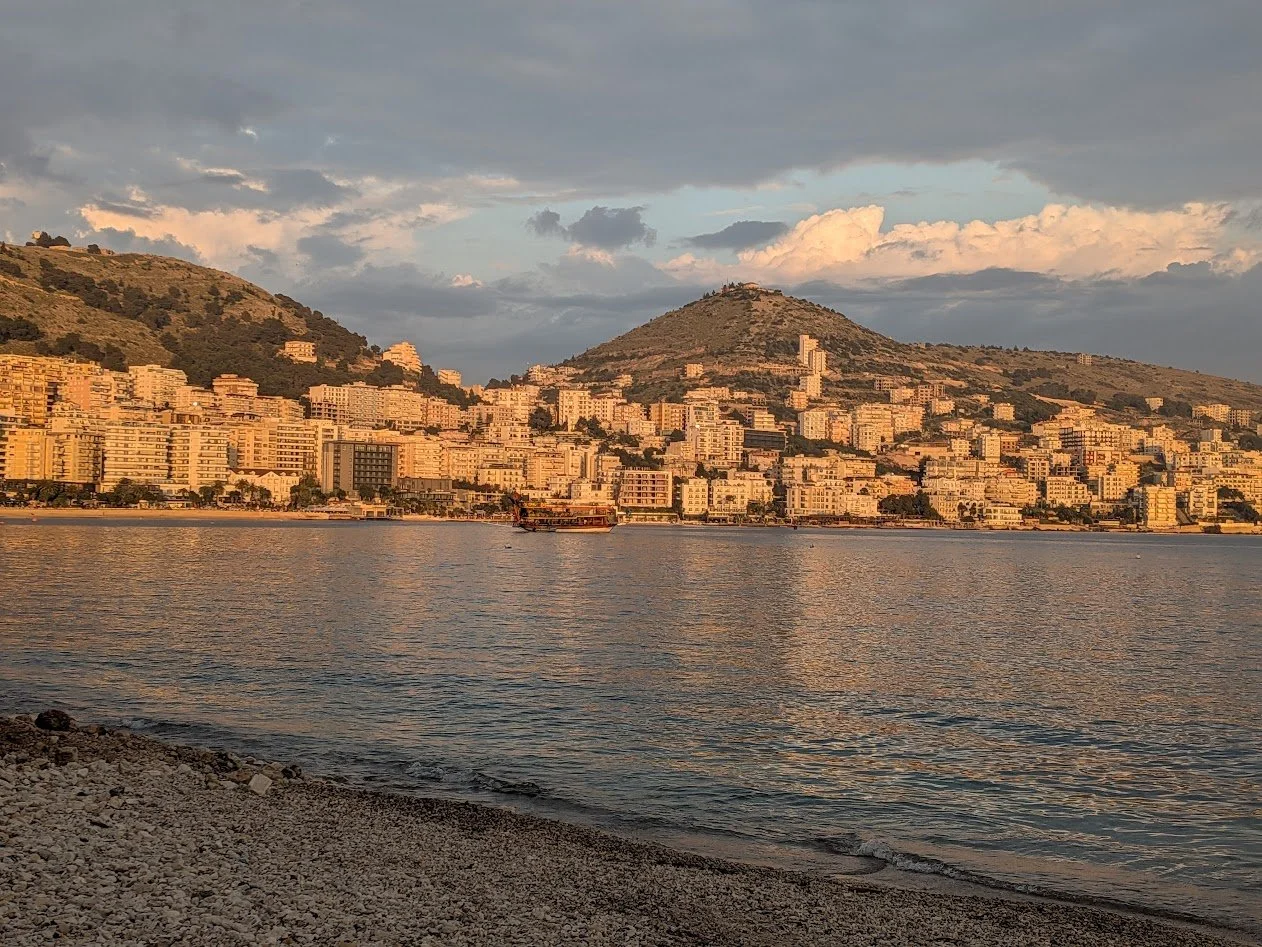
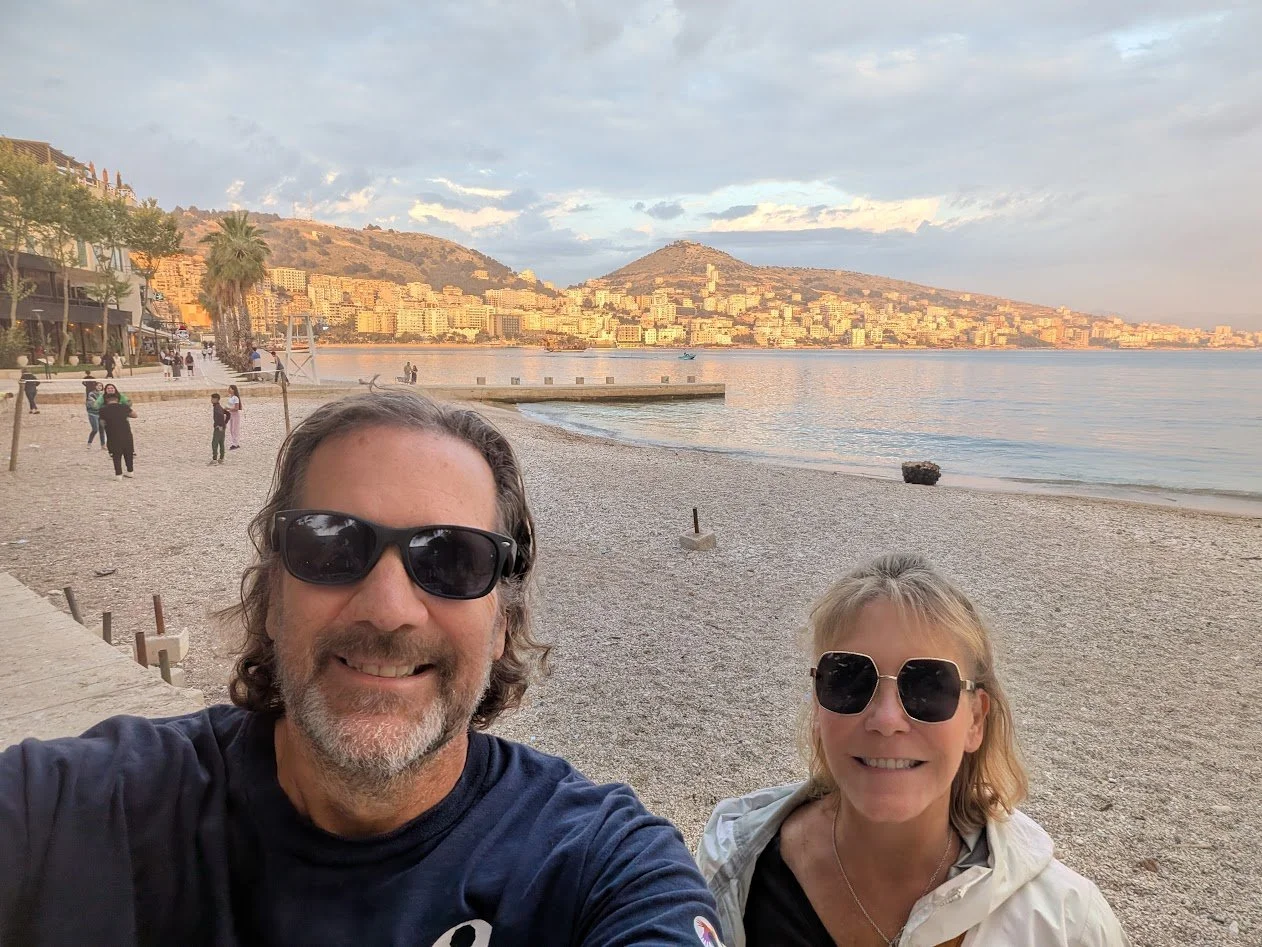
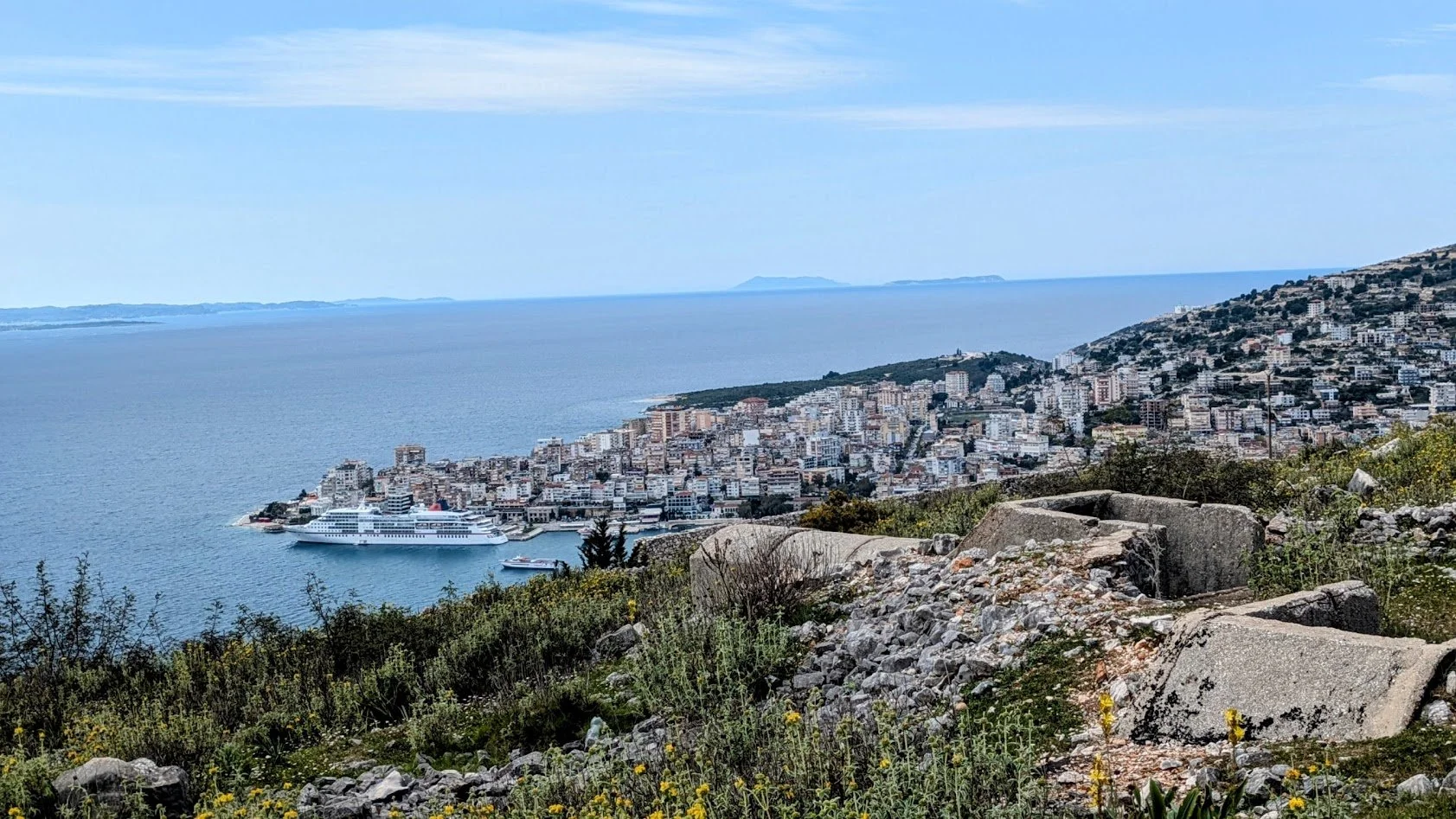
Sarande is a really pretty beach town with an absolutely incredible promenade that curves around the bay. It is full of bars and restaurants and the views are seriously stunning. The water is crystal clear and the buildings are terraced so the views are beautiful even from several streets back. We stayed in an apartment with arguably the best view we’ve had the entire trip!
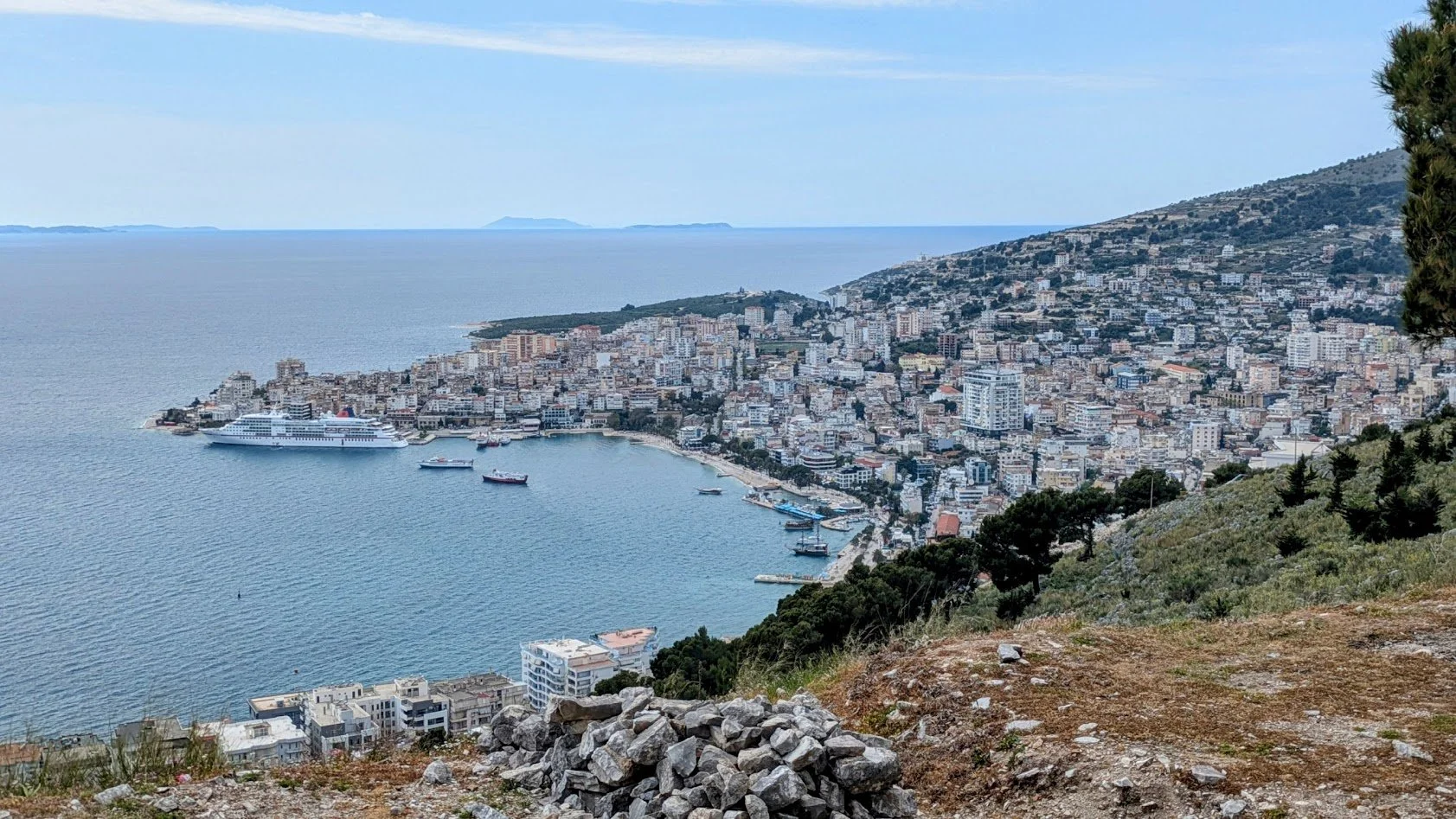
We checked out a really cool 6th century Byzantine era monastery that is perched above the town. The Monastery of 40 Saints was built in honor of the Forty Martyrs of Sebaste, (soldiers who refused to renounce Christianity in Armenia). It served as a major pilgrimage site for over 1,000 years, featuring a large basilica, crypts, and 40 rooms. The city of Saranda is named after this monastery. It was damaged during World War II and turned into a military base during the communist era.
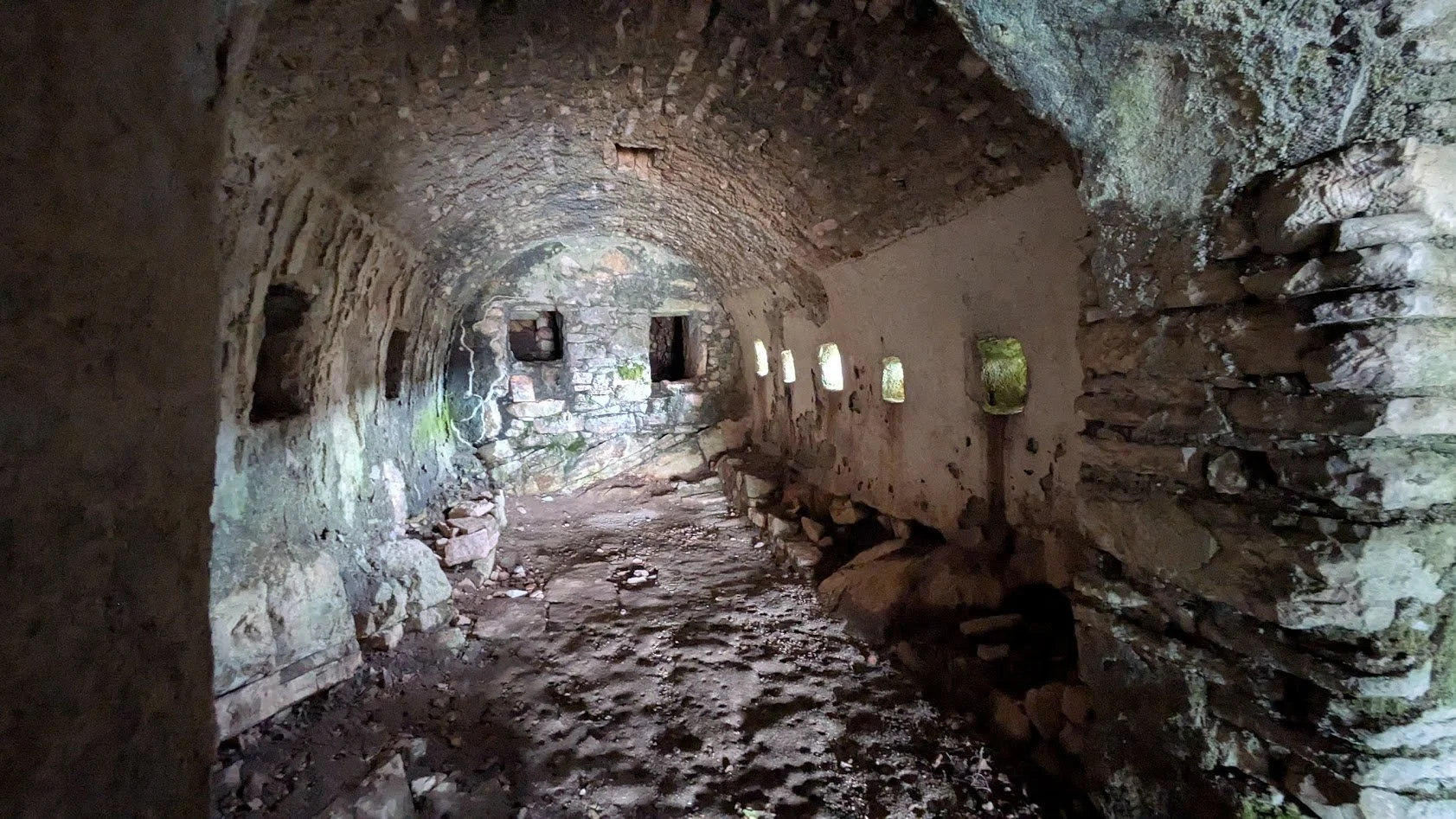
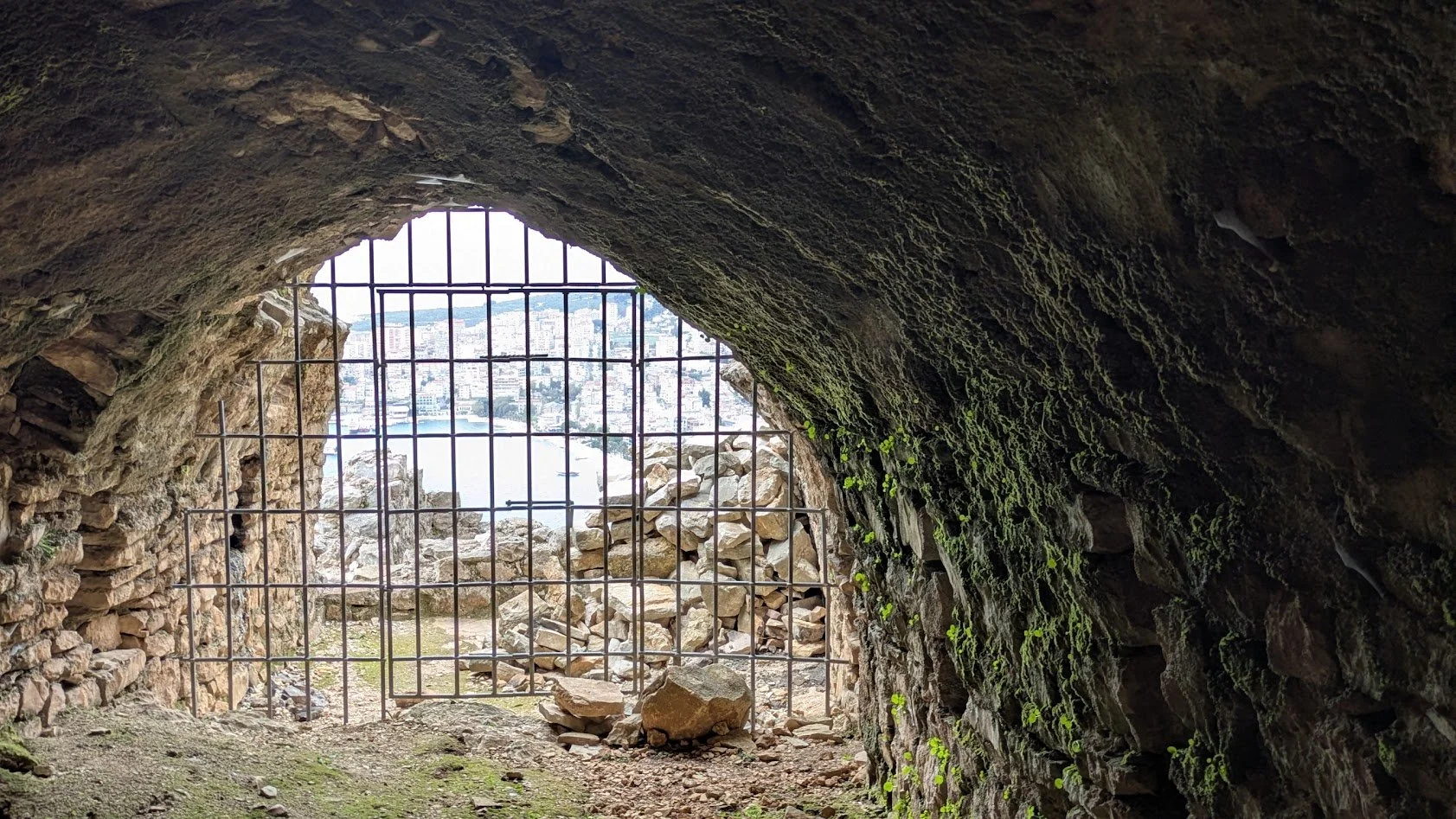
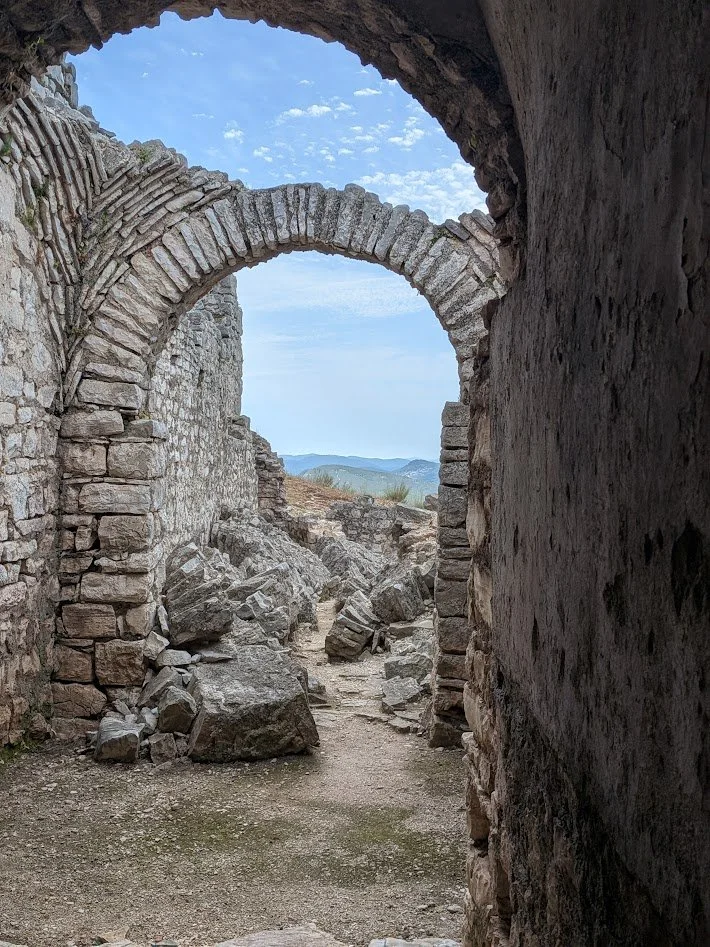
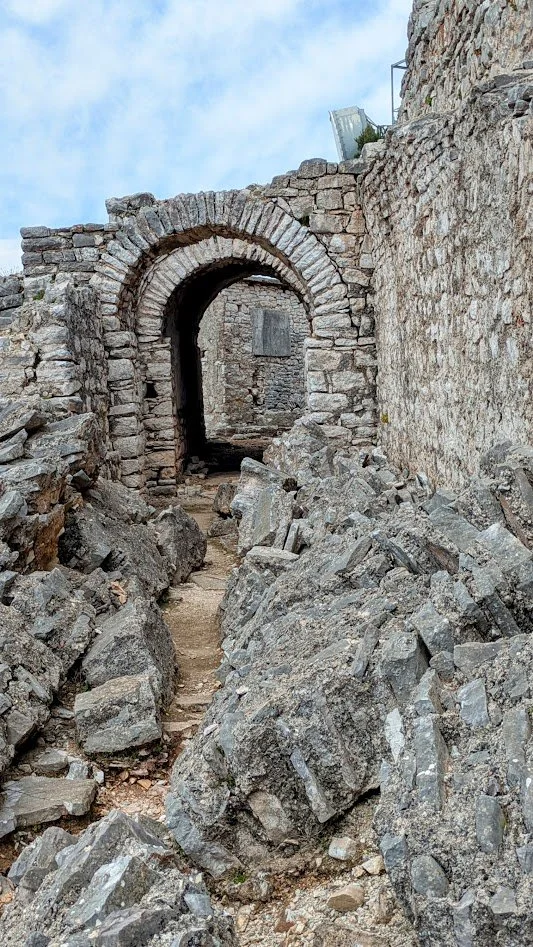
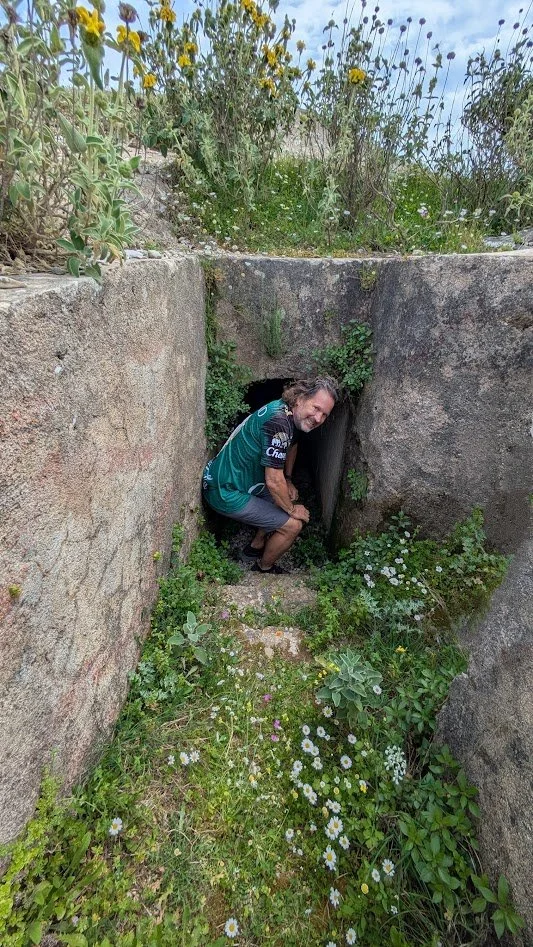
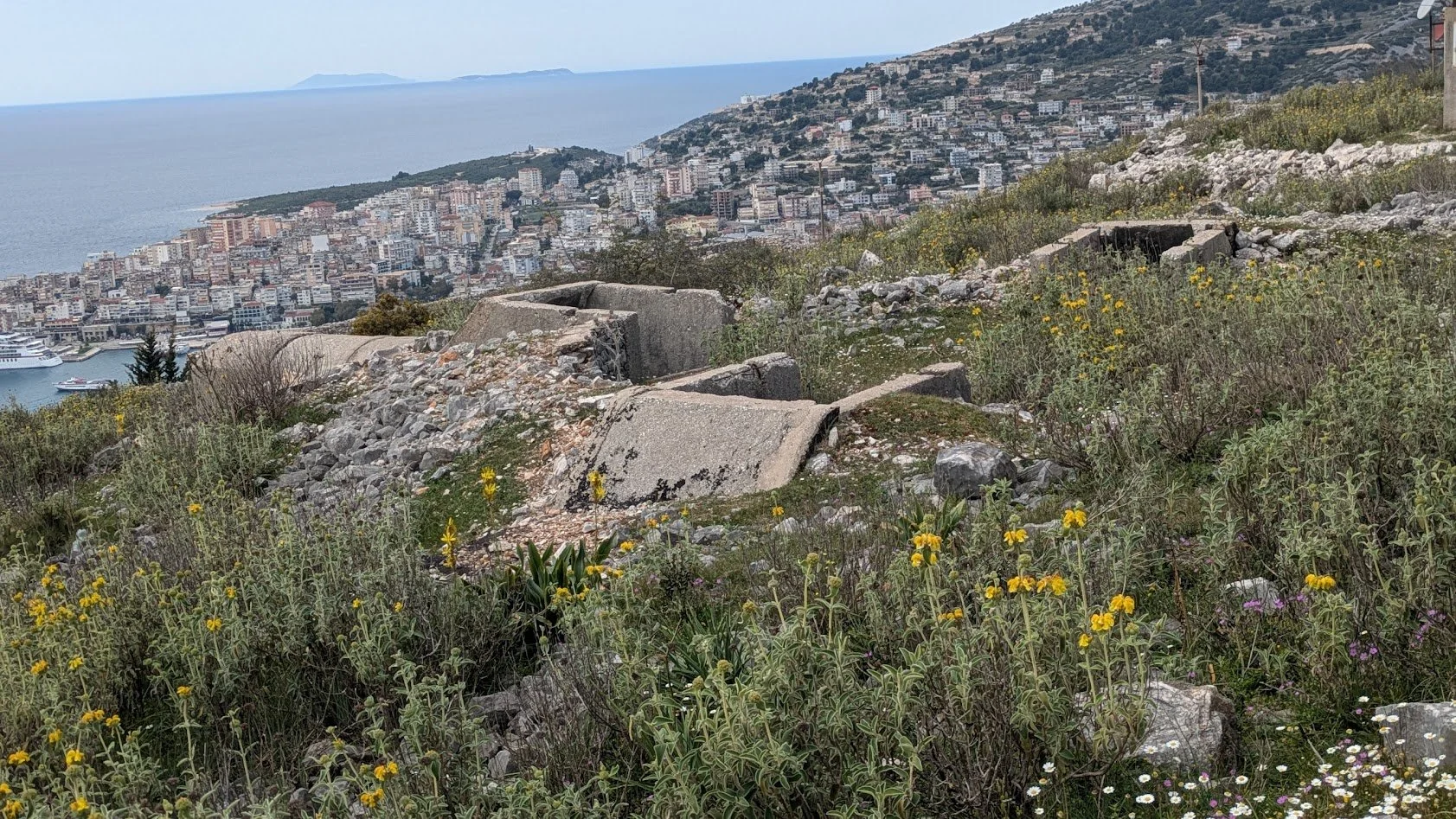
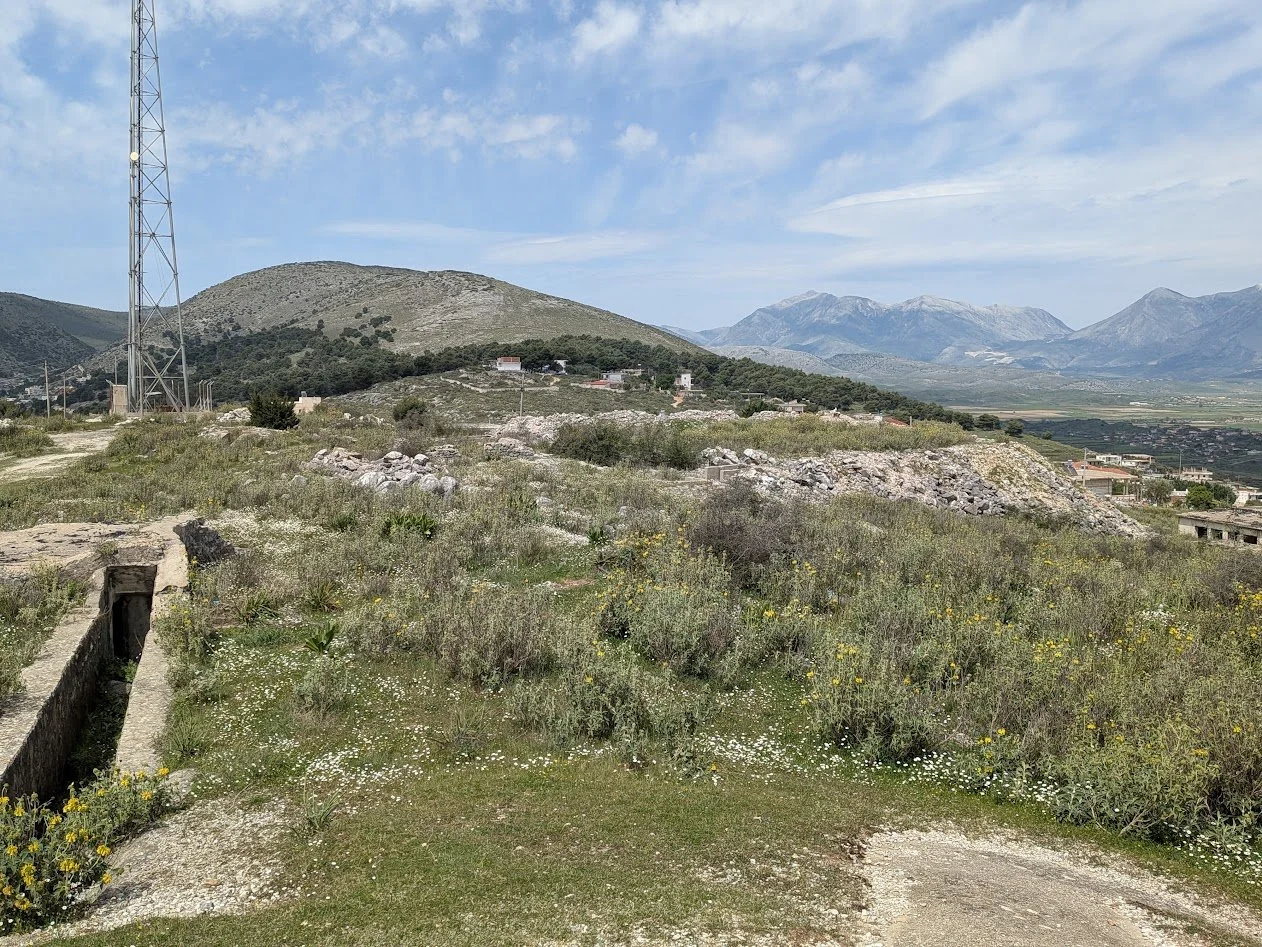
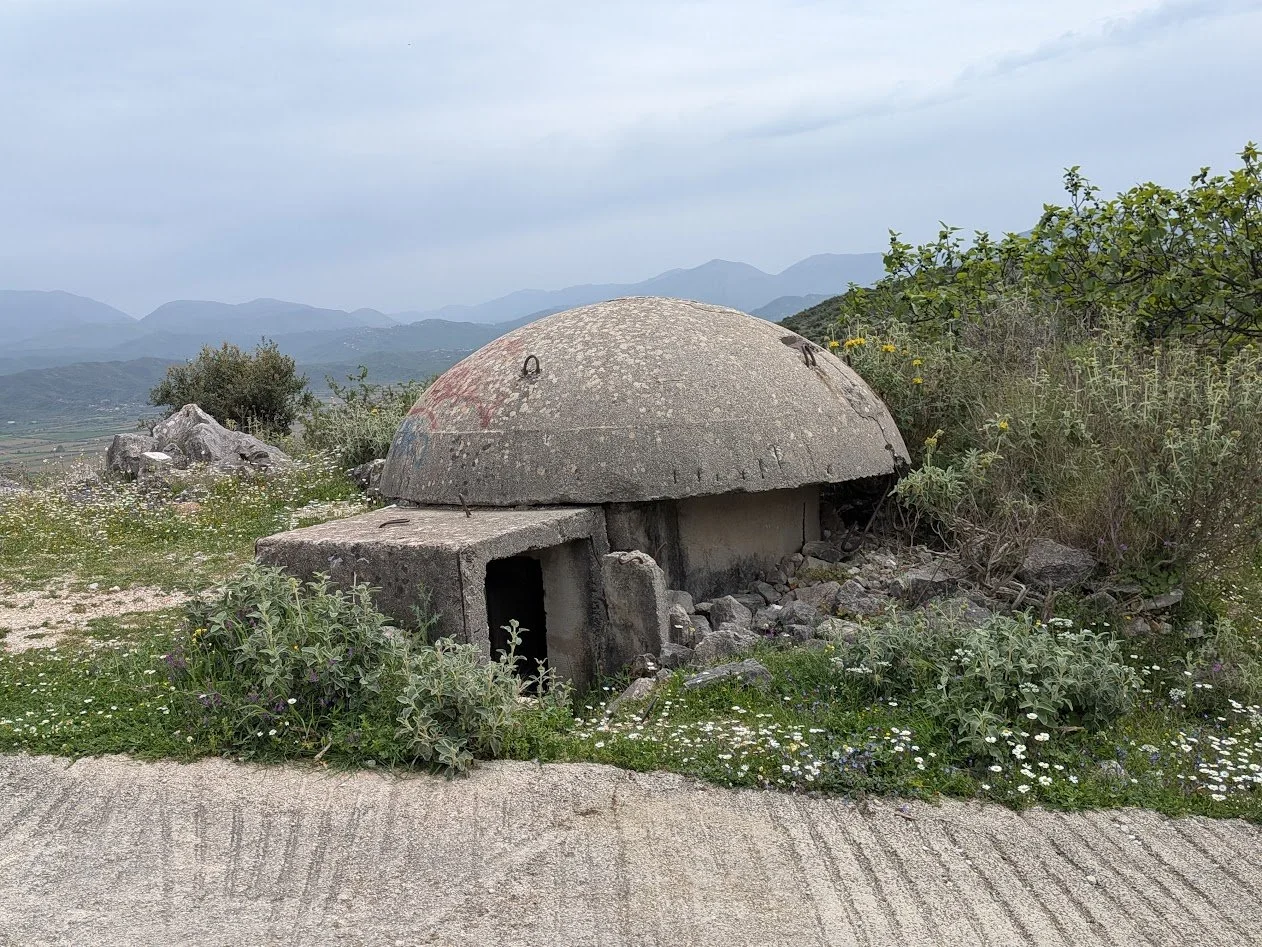
Also on the hill by the monastery we saw communist era bunkers … buckle up, here comes your Albania history lesson!
After centuries of being ruled by everyone else, Albania gained their independence from the Ottomans in 1912. Unfortunately, they didn’t know how to set up a government or rule a country, so they floundered for a while, then some guy named Zog stepped in and declared himself the king and the country became a monarchy from 1928–1939. King Zog leaned heavily on Mussolini for guidance and financial support (bad move), and at some point Italy took over and occupied Albania and King Zog fled. Then the whole WWII thing happened and the Nazi’s occupied Albania like they did most of Europe. Once WWII ended, Albania was independent and once again had to figure out how to set up a government - which they had never successfully done up to this point, and they failed yet again in a really big way!
Enter center stage - Enver Hoxha! Somehow Hoxha garnered support and became the leader. He pushed a communist agenda and was buddies with Stalin. Hoxha was aligned with USSR for a while, but after his idol Joseph Stalin died, he didn’t agree with Nikita Khrushchev’s reformist ideas and parted ways with USSR. He then aligned with China. But again, when his buddy Mau Zedong died, China began moving away from rigid Stalinism and Hoxha, a staunch Stalinist, saw this as a betrayal of pure Marxism-Leninism… so he decided not to align with anyone! He decided to go it alone and sever ties with EVERYONE.
Hoxha established a brutal Stalinist dictatorship. For 40 years, life for Albanian people under Enver Hoxha was marked by extreme totalitarianism, severe isolationism, pervasive fear, banned religion, restricted travel, and resulted in extreme economic poverty. Collectivization and self-reliance policies caused chronic shortages, low wages (around $15 USD/month in the 1980s), and the prohibition of private car ownership.
The Sigurimi (secret police) enforced strict surveillance, and encouraged citizens to nark on their neighbors and family, with roughly one in three citizens informing against each other. Albania was isolated from both the West and the Soviet bloc, leading to an economic decline that made it the poorest and least developed country in Europe. Thousands of people were sent to forced labor camps or prisons, with many dying in detentions, modeled on Stalinist gulags.
In 1967, Albania was officially declared the world's first atheist state; Over 2,000 mosques and churches were destroyed, clergy were executed, imprisoned, or forced into labor, and practicing faith privately resulted in severe punishment, including death or exile.
Hoxha was paranoid to the extreme! He spent what little money the country had on bunkers!! While people were starving and needing housing, he kept building bunkers … just in case the country was attacked. Albania is home to an estimated 175,000 to as many as 750,000 concrete bunkers. These structures were designed for defense against NATO or Soviet forces but never saw combat, leaving the country dotted with abandoned "pillbox" fortifications. There are over 5.7 bunkers for every square kilometer, they are everywhere — in parks, on beaches, in vineyards, on mountain passes, and in cities. The bunkers never served their intended military purpose, as the imagined invasion never occurred. Now they just litter the country as a reminder of its dark communist past.
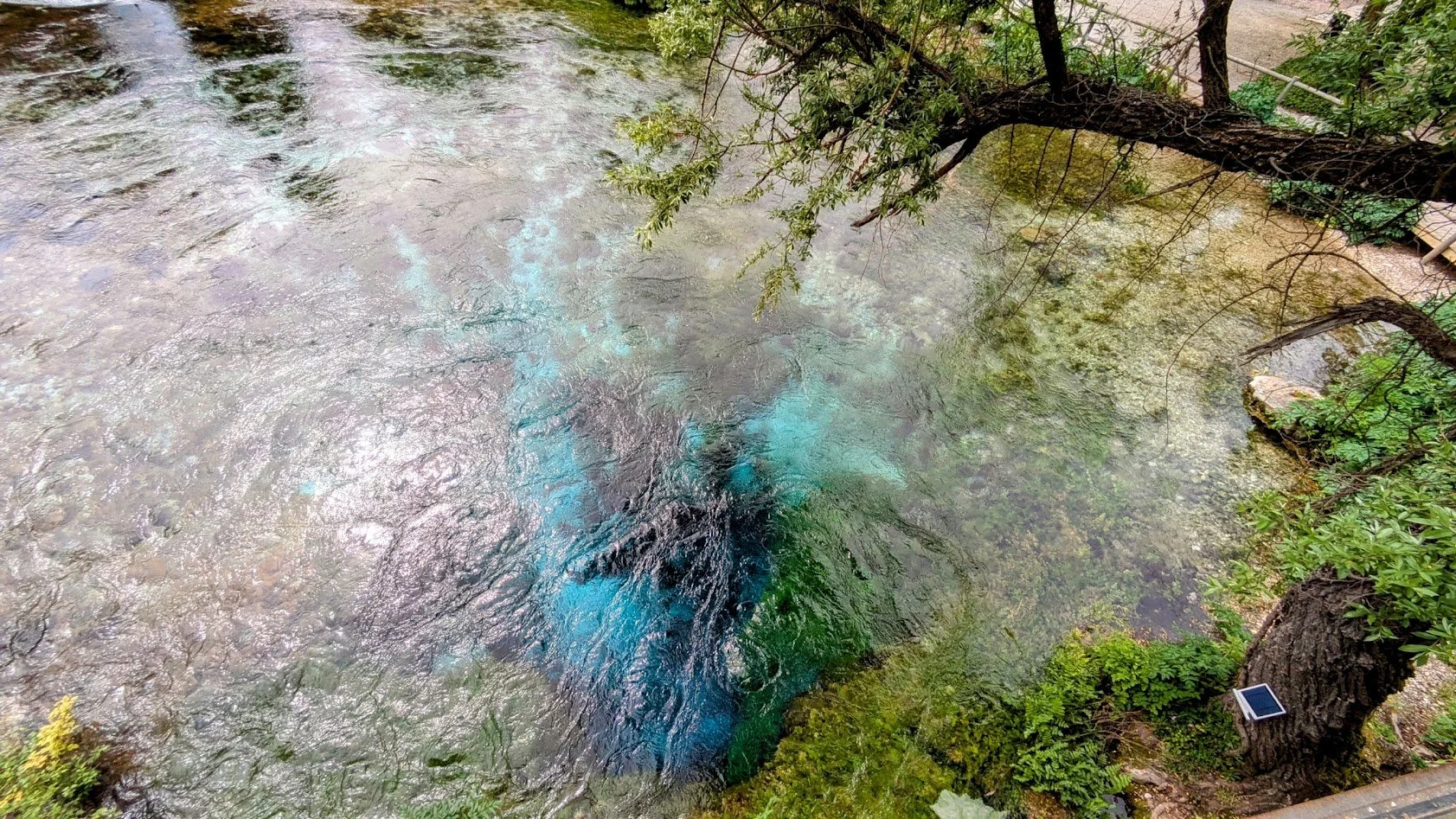
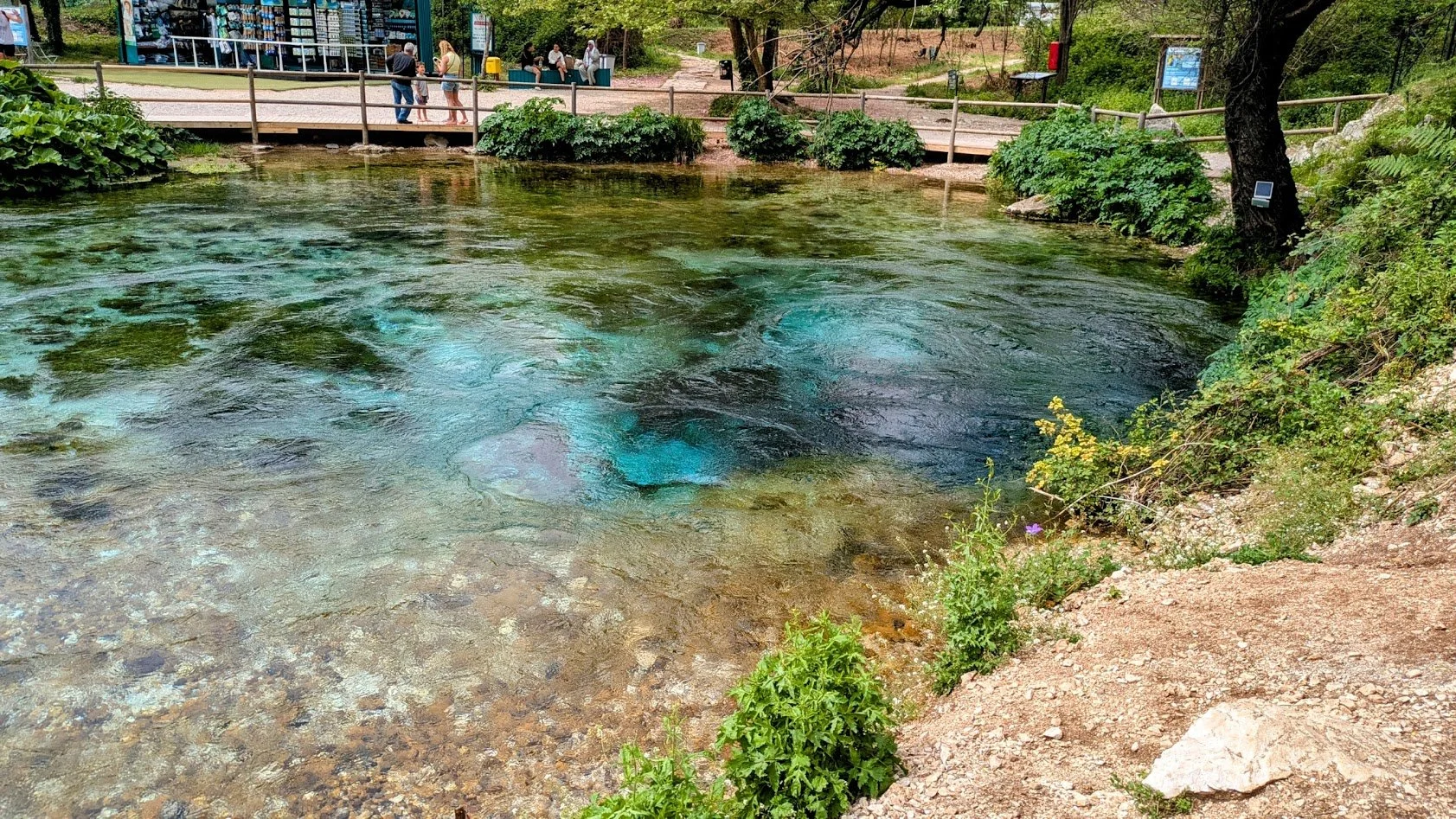
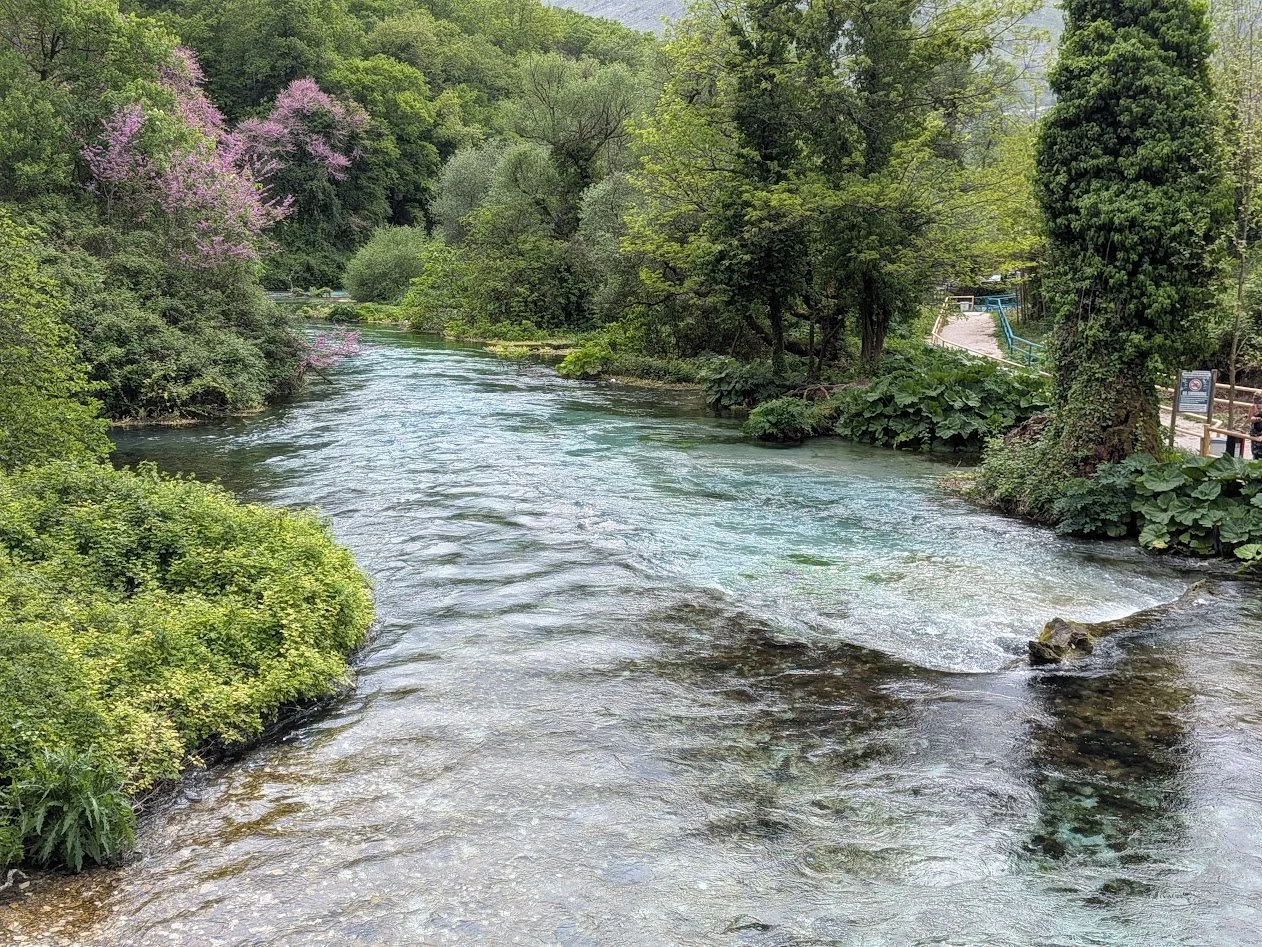
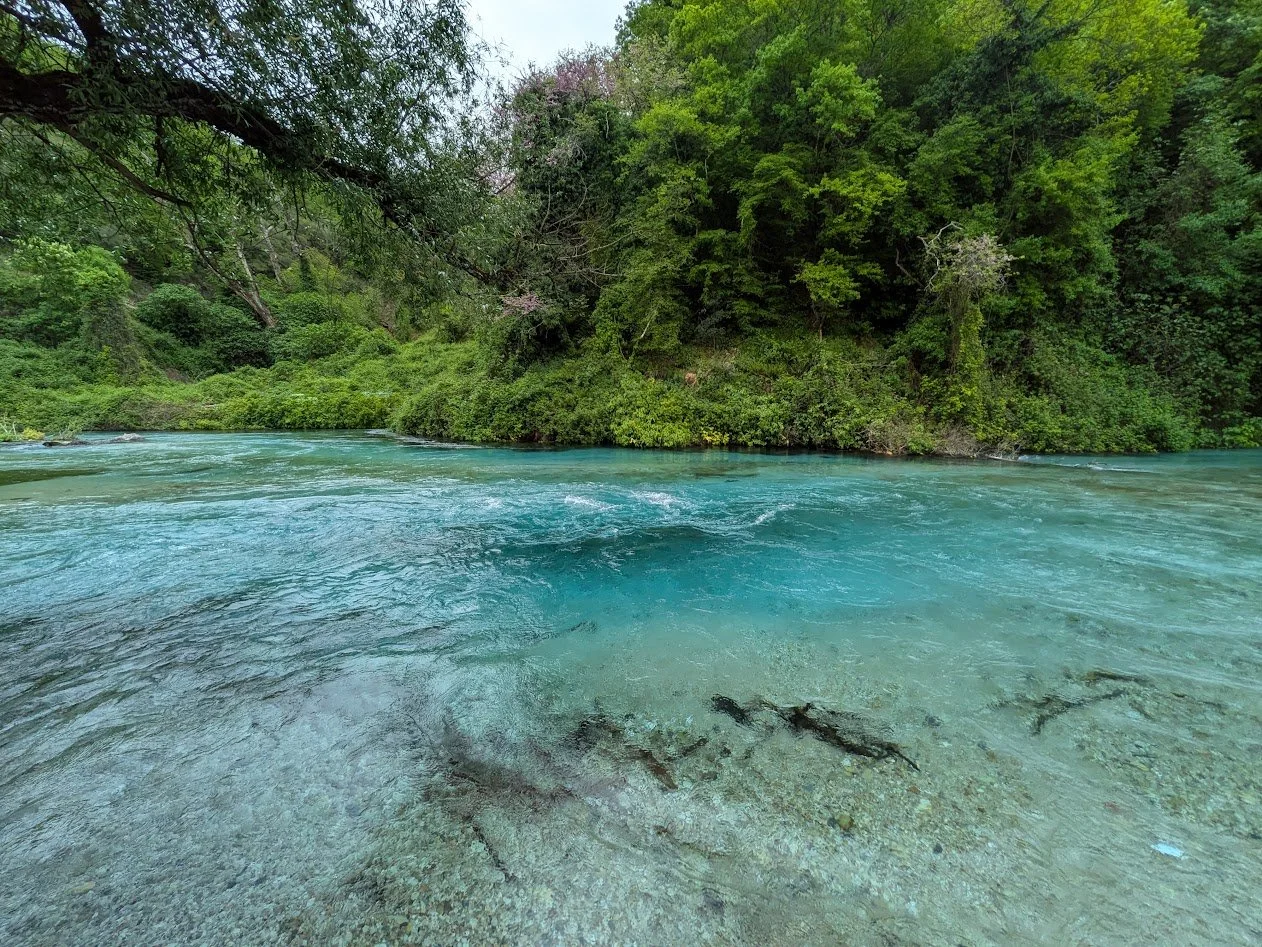
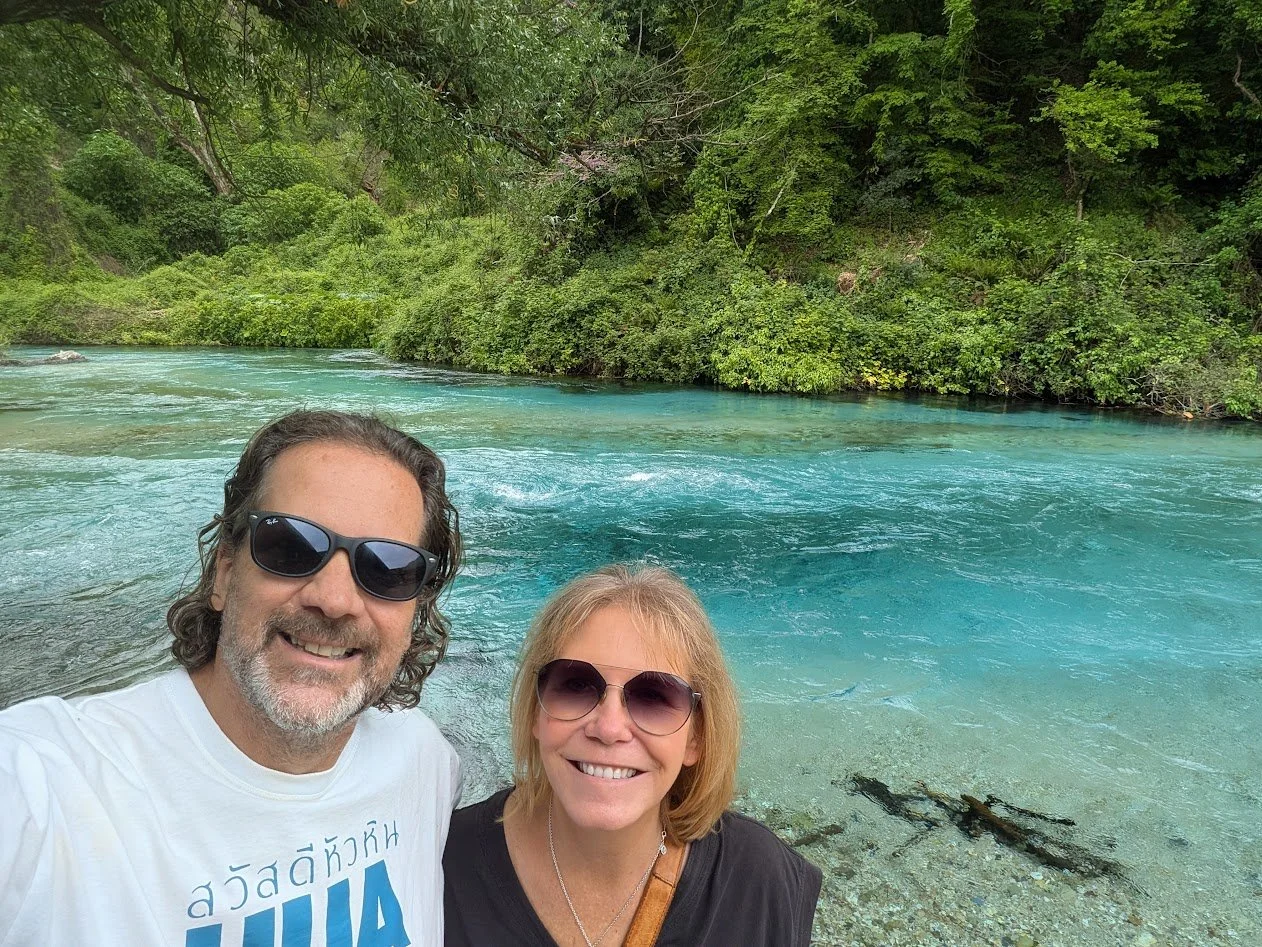
One day we visited the “Blue eye” about 30 minutes away from town. The Blue Eye (Syri i Kaltër) is a natural water spring famous for its vivid blue, crystal-clear water that supposedly resembles an eye. It is over 50 meters deep (that’s DEEP!), with a spring that discharges water at a massive rate of 4,860 gallons per second. It is considered a must see in southern Albania. It was pretty as far as water goes, but a bit of a hike to get out there. We walked the 30 minutes from the parking lot, snapped a few pictures, and headed back. We were kind of underwhelmed.
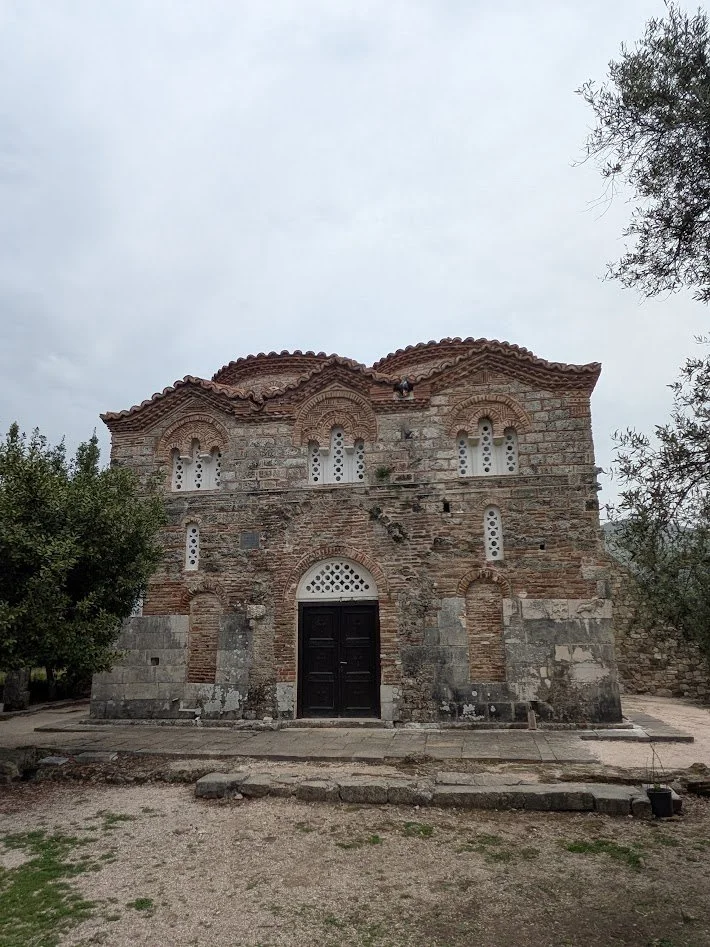
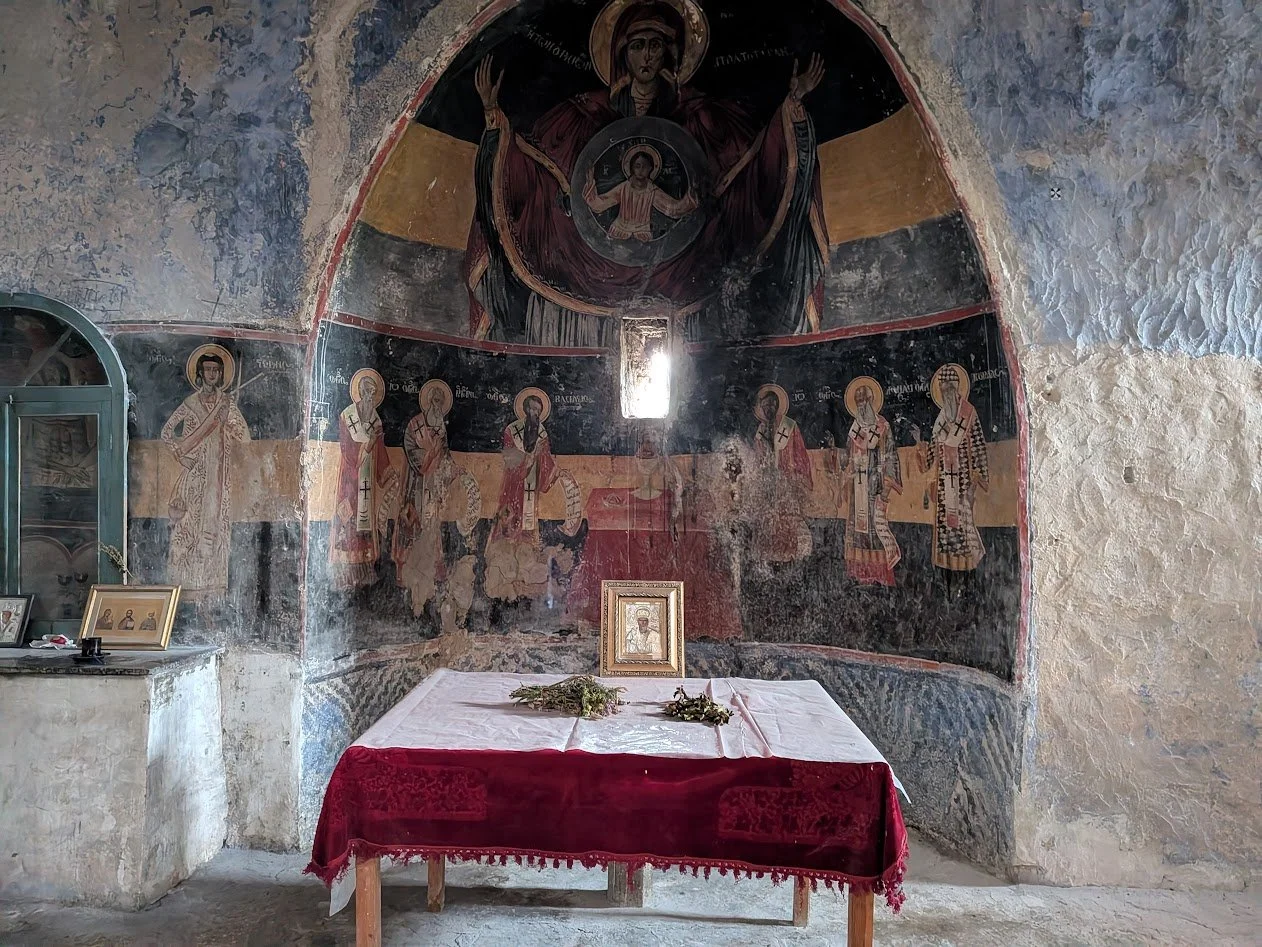
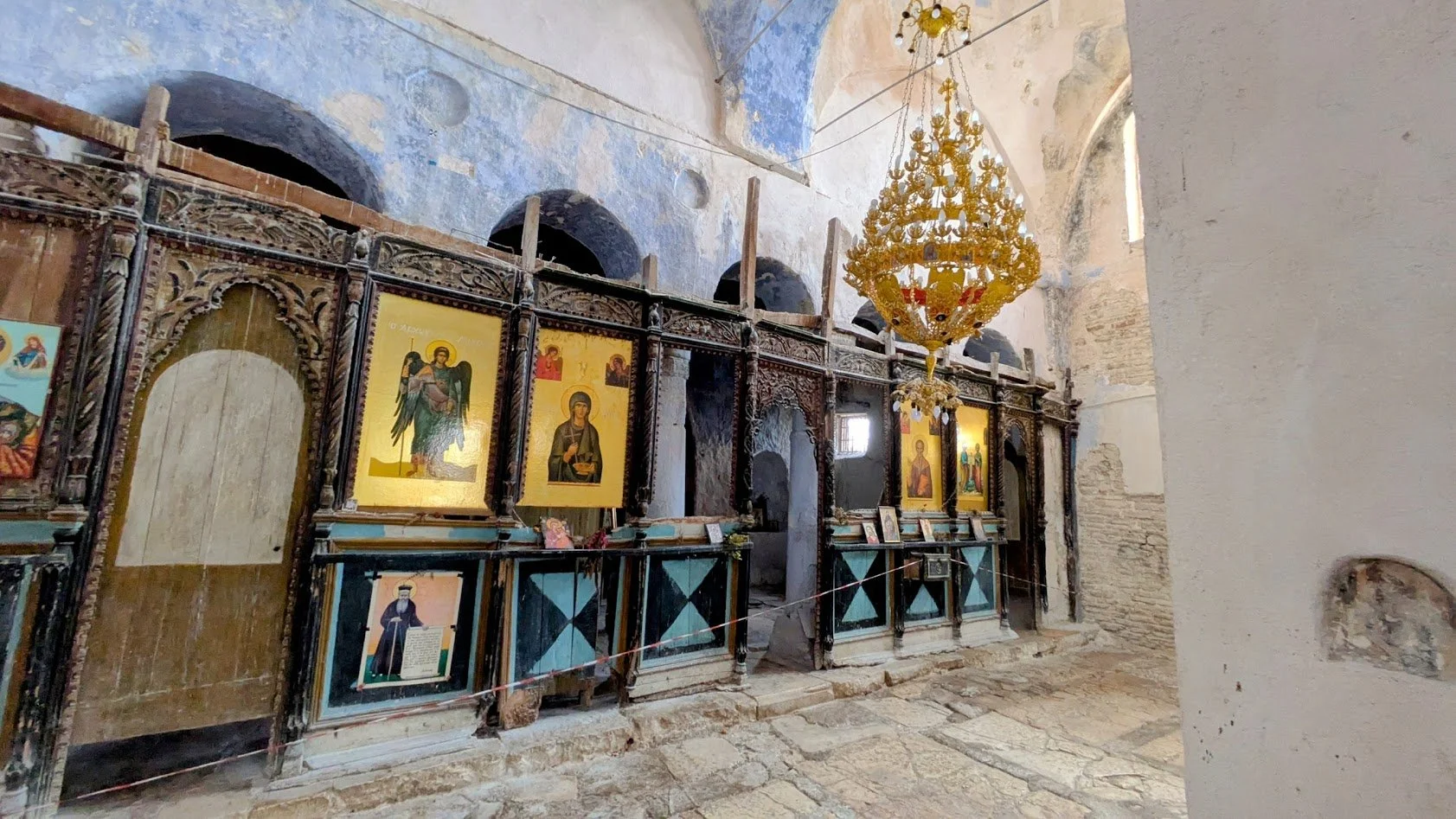
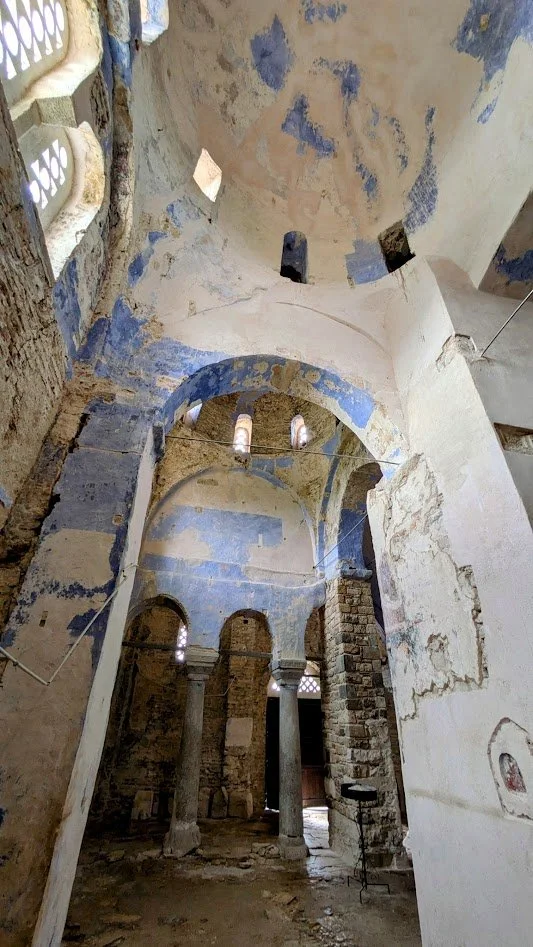
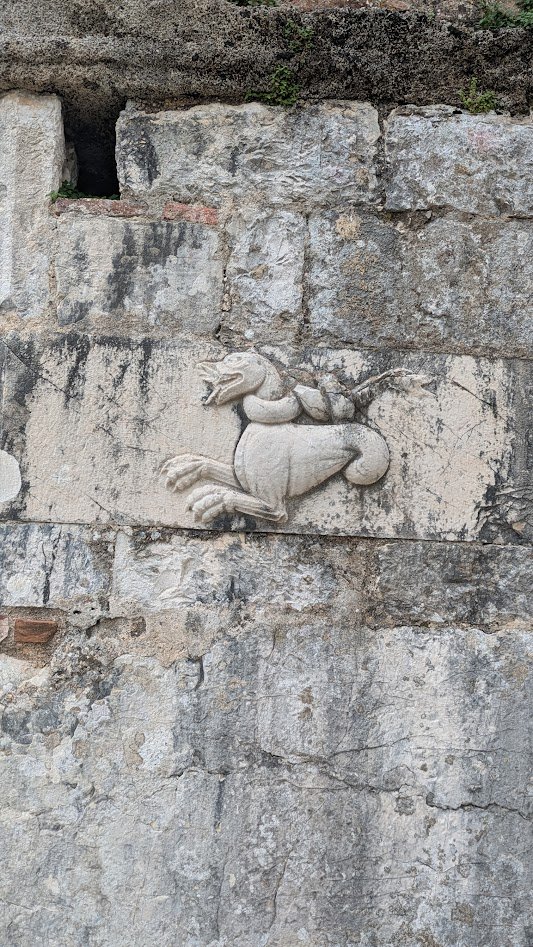
During one of our adventures, we stopped off at the St. Nicholas Monastery Church, which is a 13th-century Byzantine church known for its unique double-apse architecture, 3rd-century BC Hellenic stone foundations, distinctive, partly preserved circular defensive walls, carvings of mythical creatures, and rare, surviving Byzantine-era frescoes. It is one of the few churches that survived the destruction of religious sites during the communist regime of Enver Hoxha.
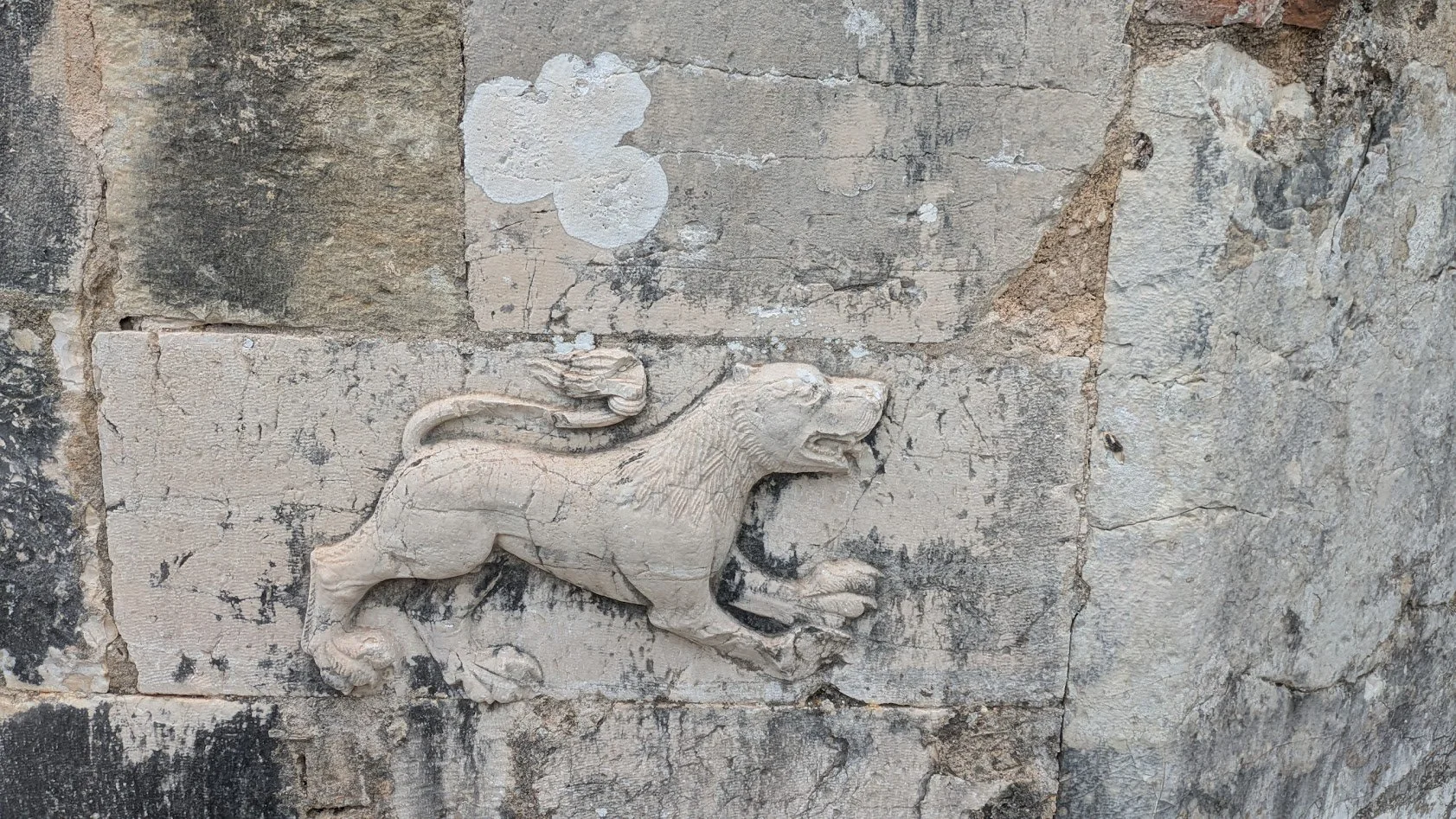
Another day we drove south about 30 minutes south to the town of Ksamil and Butrint National Park which are right near the Greece border. In fact, we were so close to Greece that Grady’s phone gave him the “welcome to Greece” greeting! Ksamil is known for having the most beautiful beaches in Albania – claiming the title of the 'Maldives of Europe'. I don’t know about all that, but there were nice sand beaches (as opposed to the pebble beaches you see throughout a lot of Europe). Ksamil was a lot more built up and modern than we expected and there were some great restaurants.
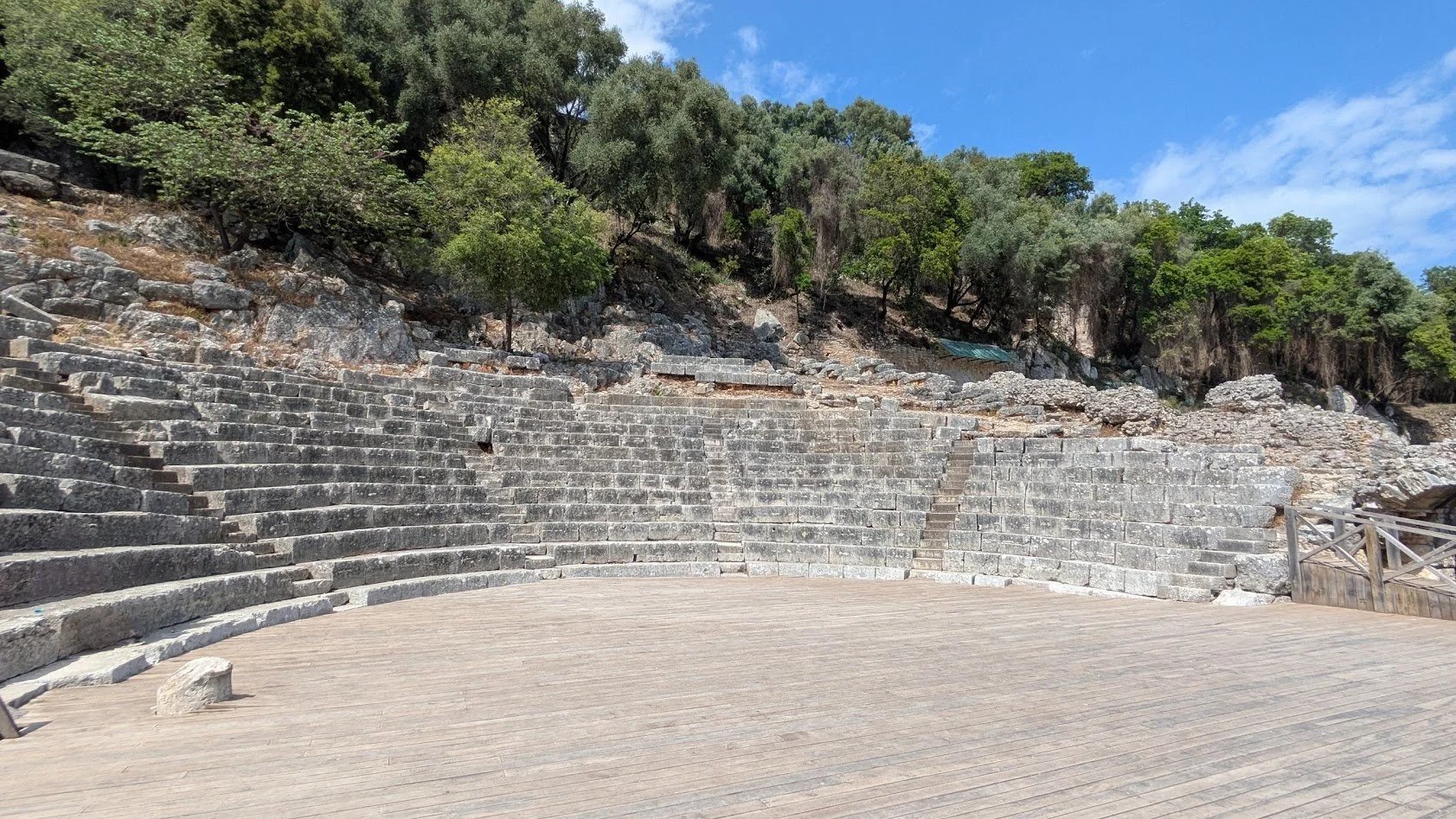
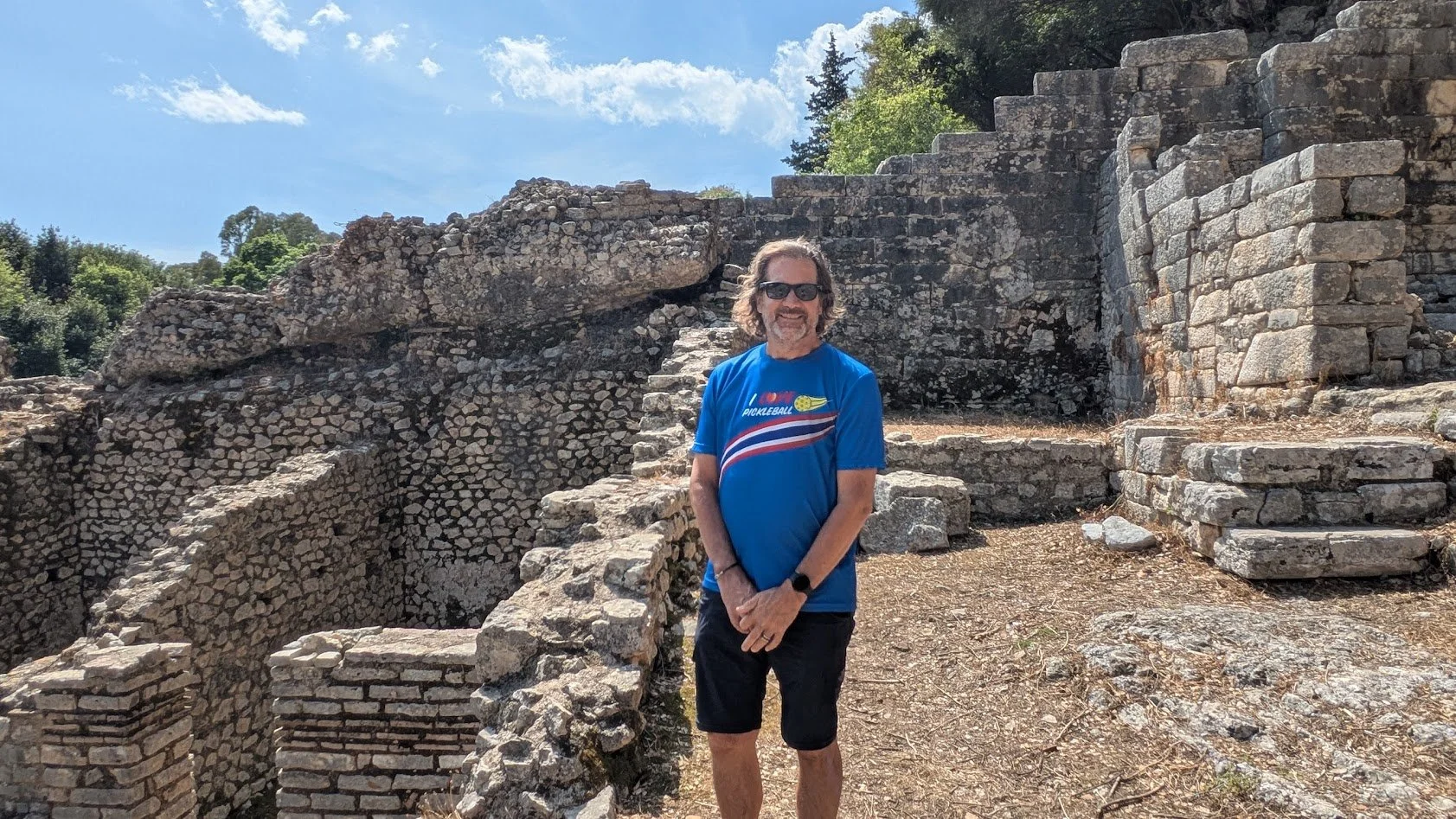
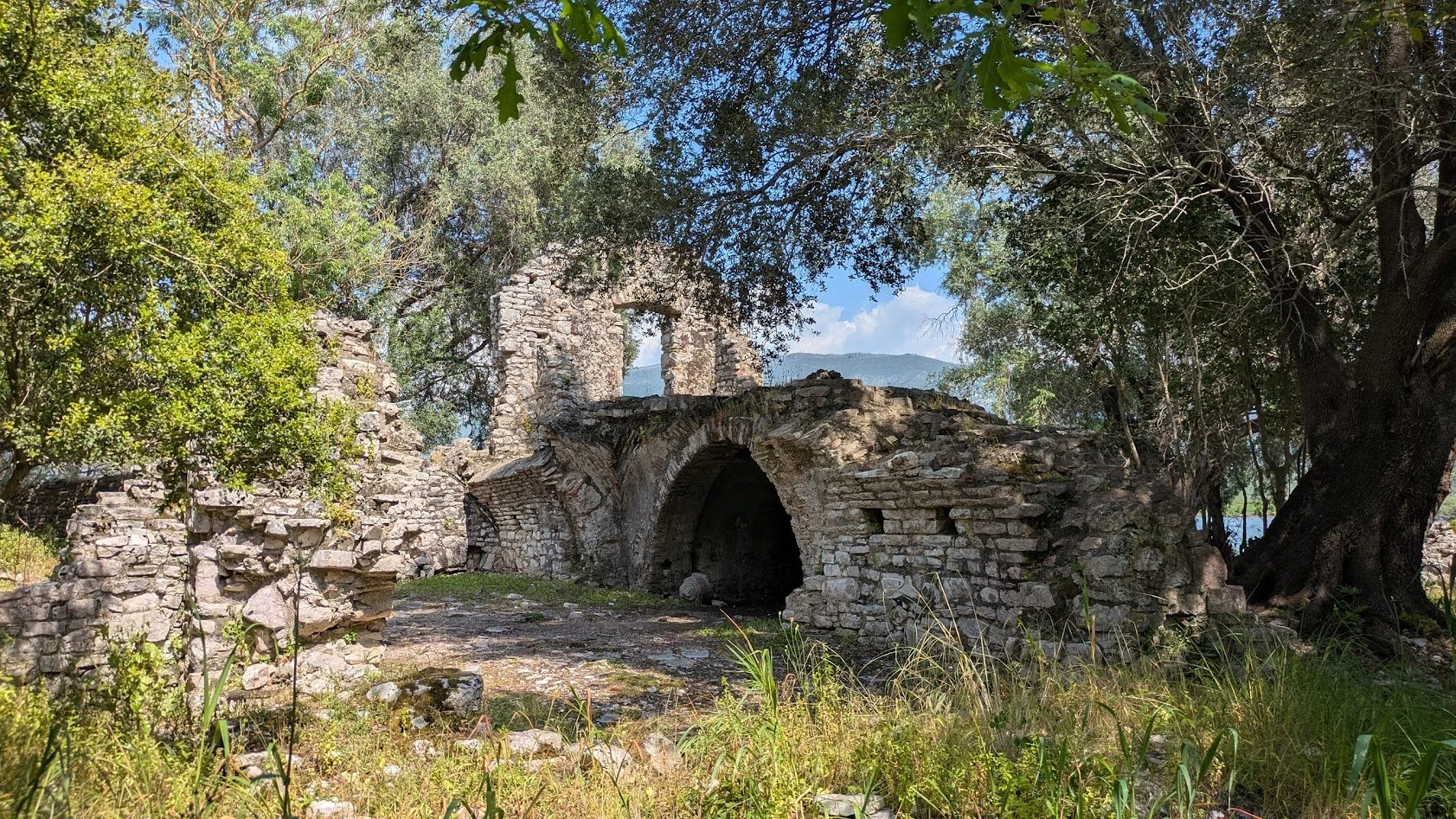
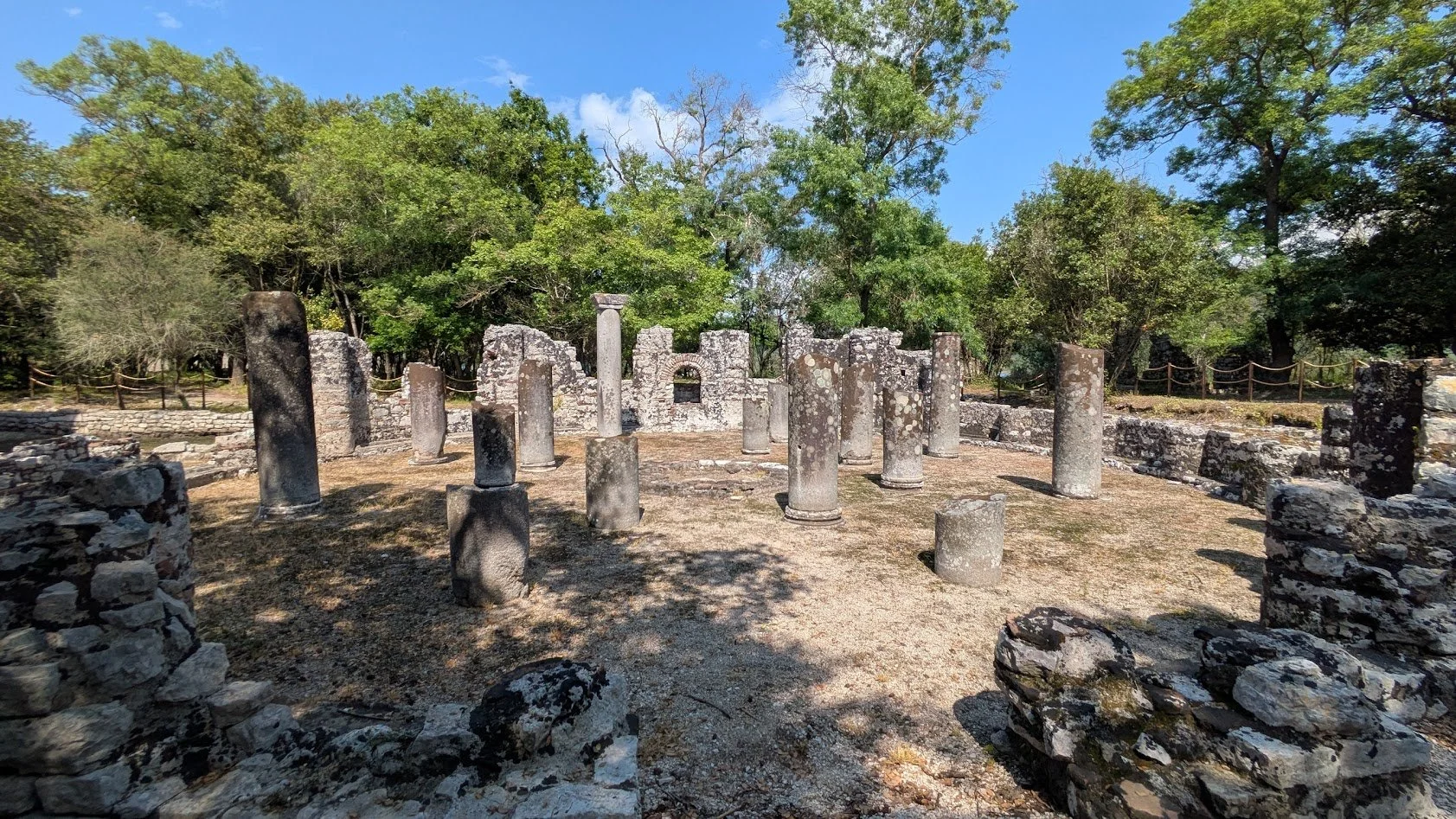
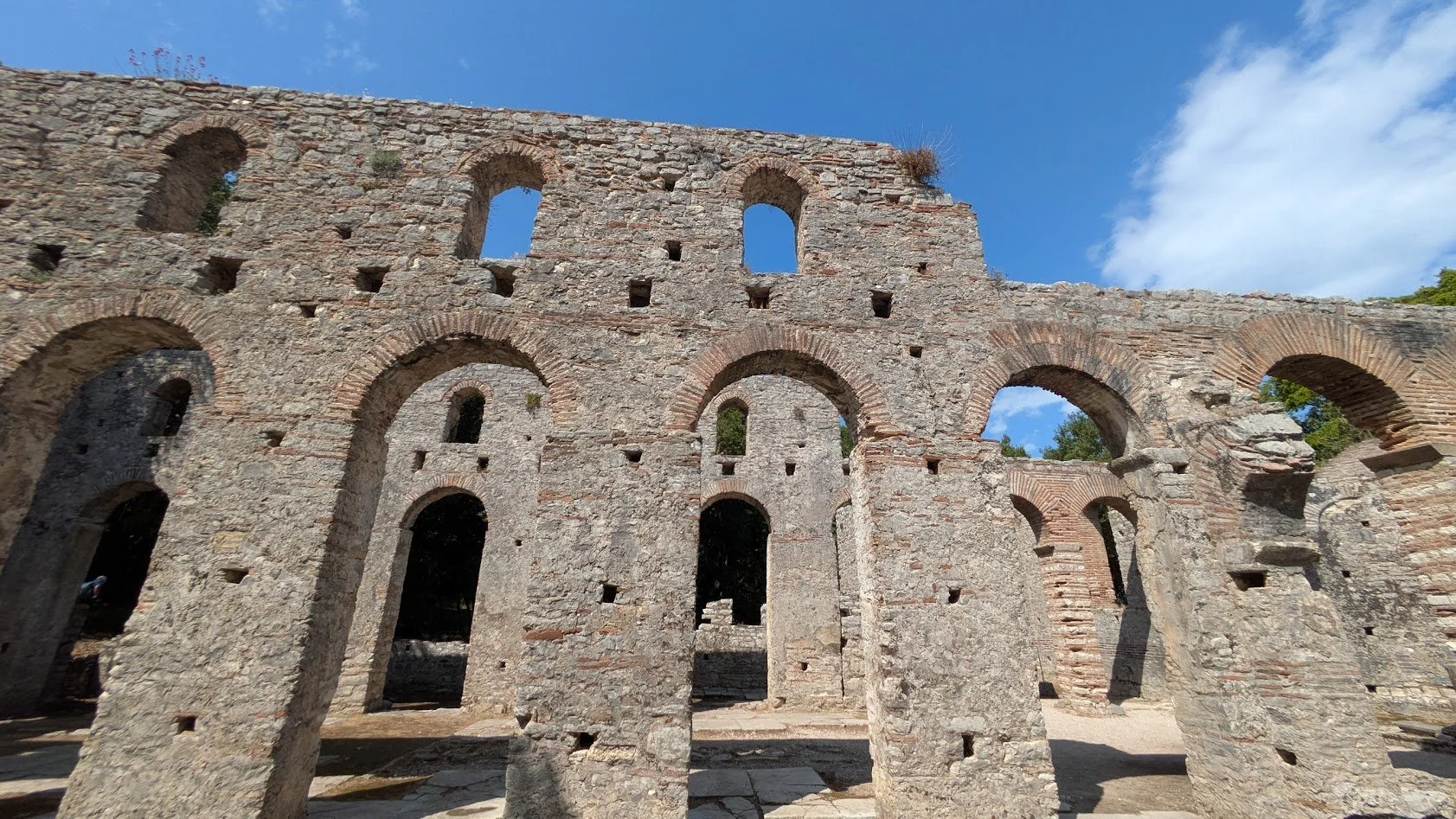
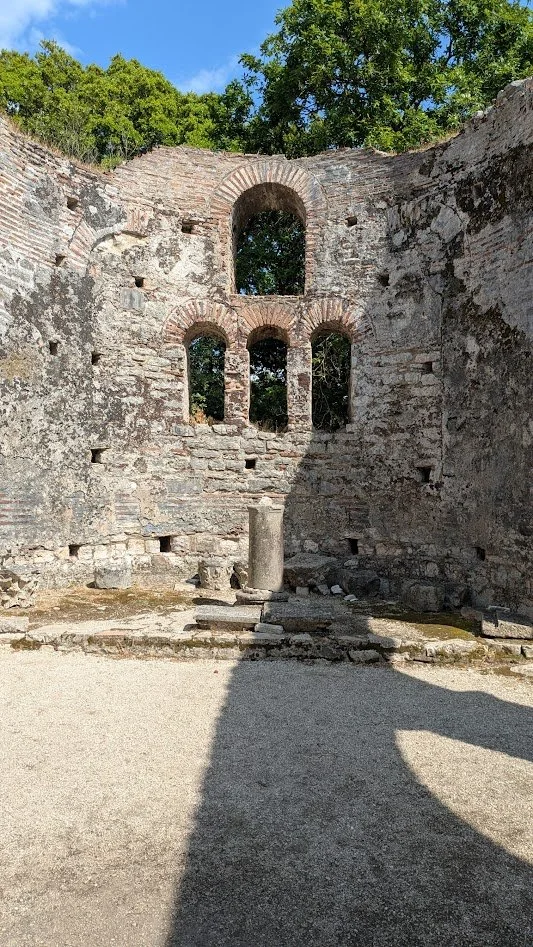
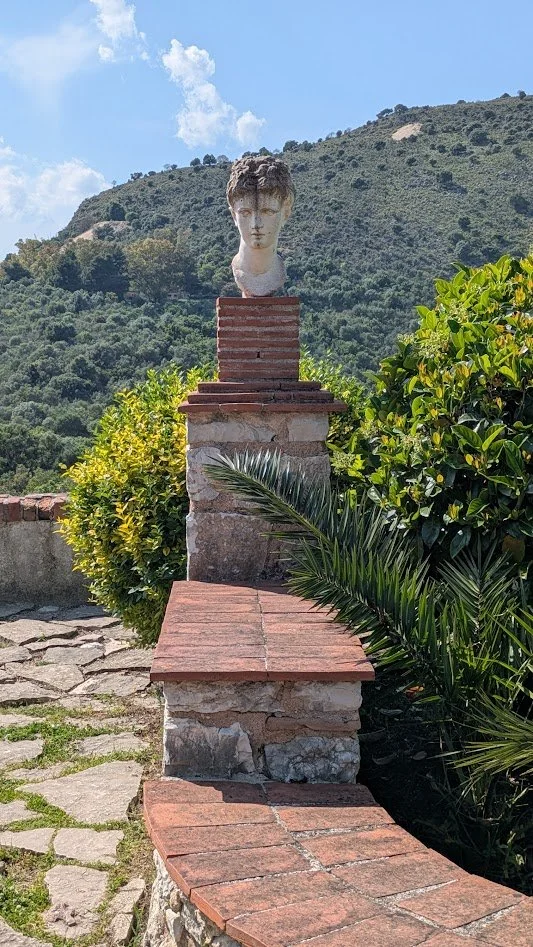
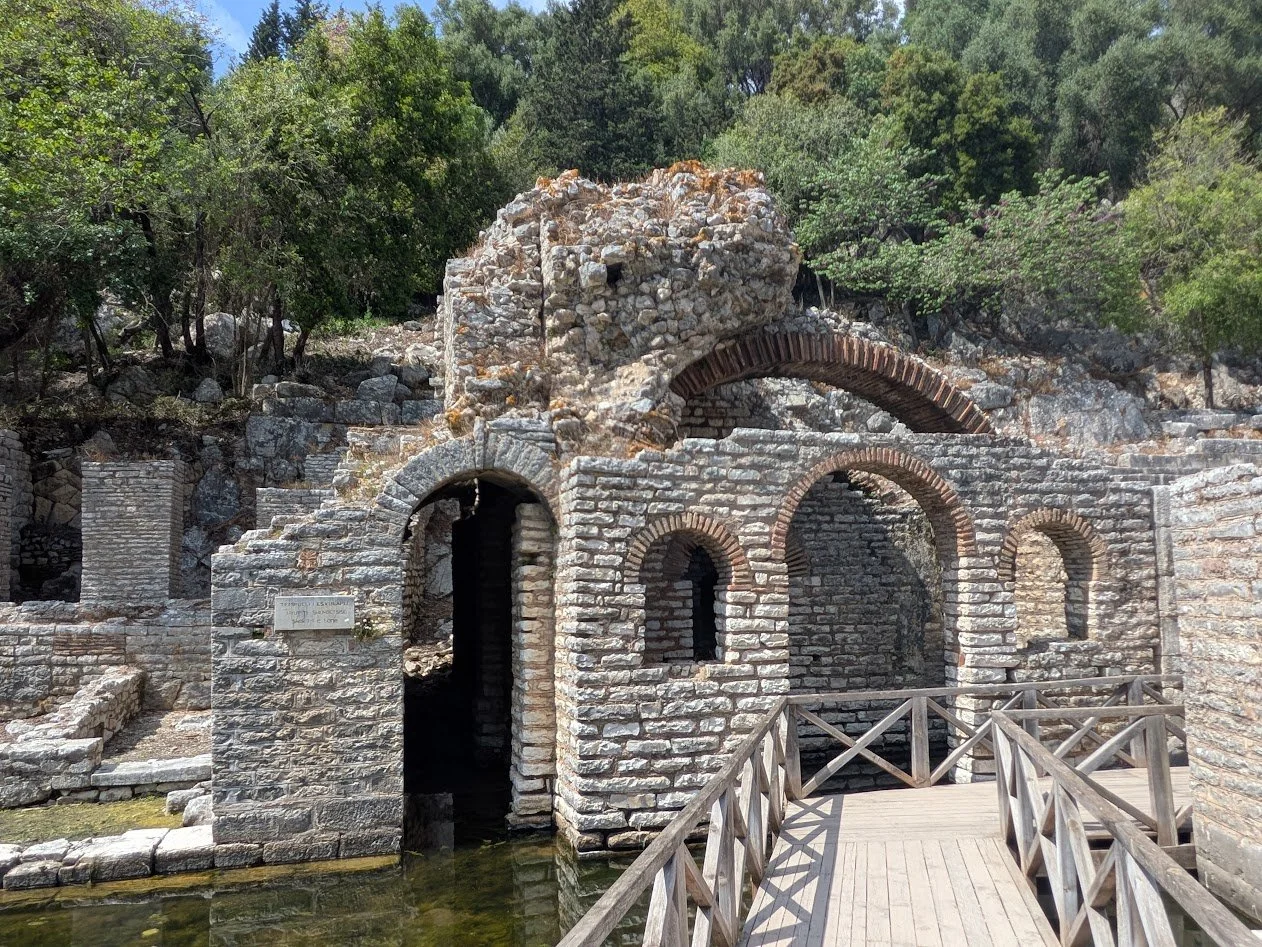
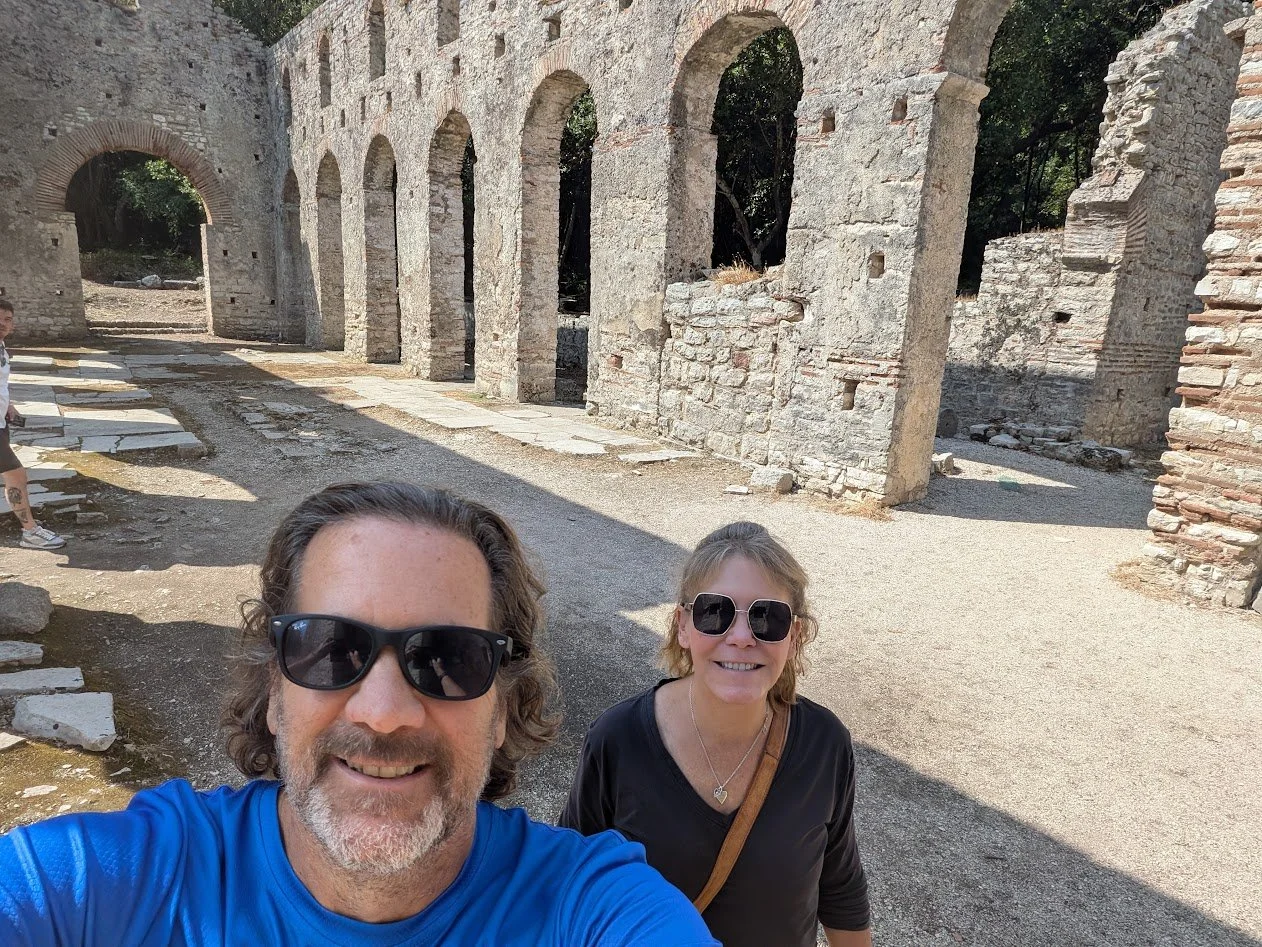
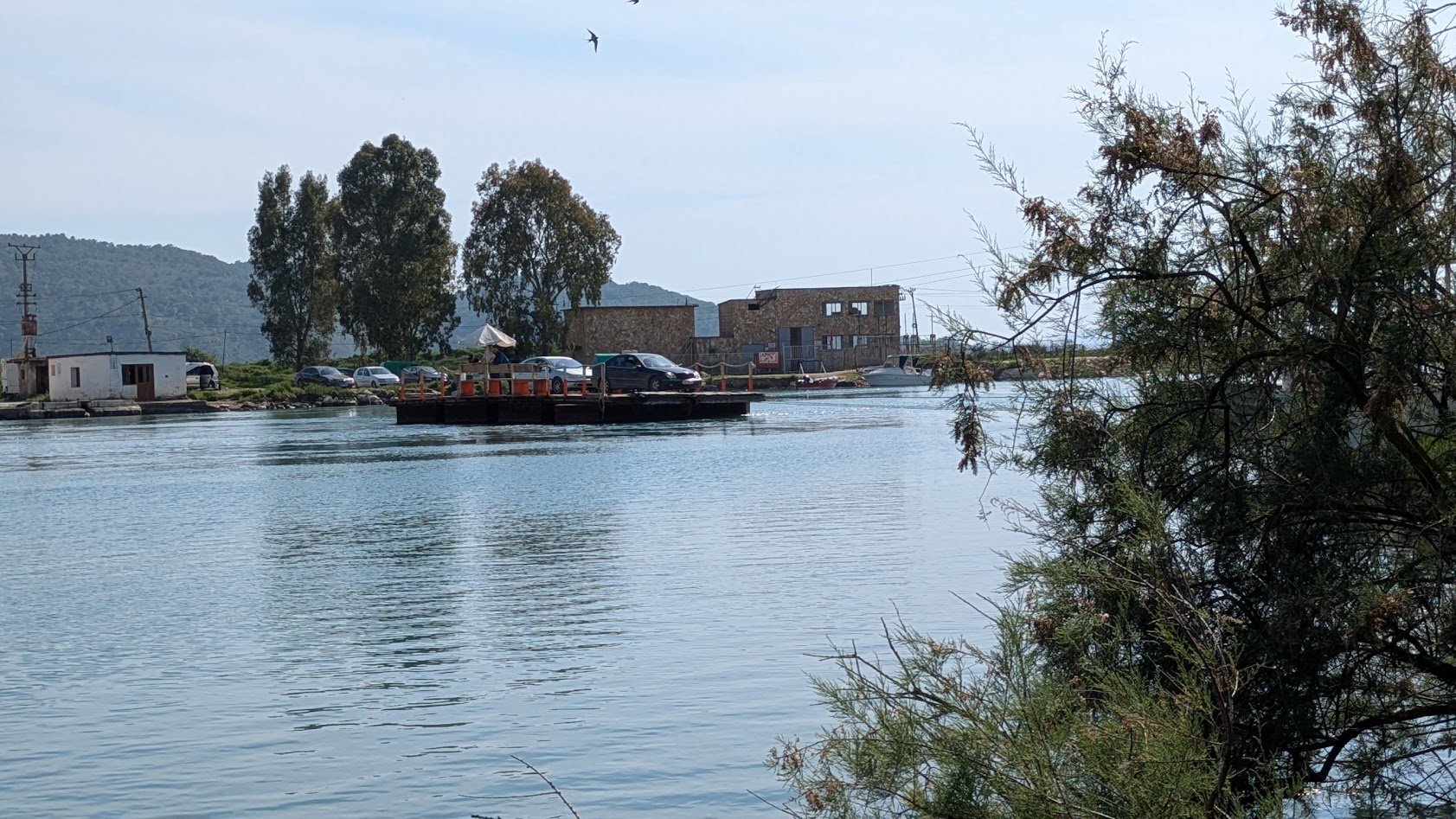
We headed a bit south of Ksamil to Butrint National Park which was founded in the 8th century BC under Julius Caesar. It features a mix of ancient Greek, Roman, Byzantine, and Venetian ruins—including a 3rd-century BC theatre and 6th-century baptistery— the whole thing is surrounded by water and marshes (sort of on an island) and apparently the surrounding wetlands are home to a crap ton of plant and animal species, some of which are critically endangered. We didn’t spot anything interesting.
It was cool - we liked that there was quite a bit still in tact, a lot of signs and information, and a nice museum on site. But honestly, we have seen so many ruins that they all pretty much look the same to us at this point. Just more “old stones” as Grady would say.
Below you can add a comment: type your text in the white box and then Post Comment. If you get a second panel, you just need to enter your name and then hit ‘comment as guest’.
Be nice with your comments, we can always delete them 😊
