Angkor Archaeological Park
02/08/2026
We did a full day tour to Angkor Archaeological Park on the outskirts of Siem Reap. Angkor Archaeological Park is a 400-square-kilometer UNESCO World Heritage site containing the magnificent remains of the Khmer Empire from the 9th to 15th centuries. As the largest pre-industrial city in the world, it is one of Southeast Asia's most important sites, and is the former capital of the Khmer Empire, with hundreds of Hindu and Buddhist temples and structures. We saw a few of the most iconic ones, and that pretty much took up a full day!
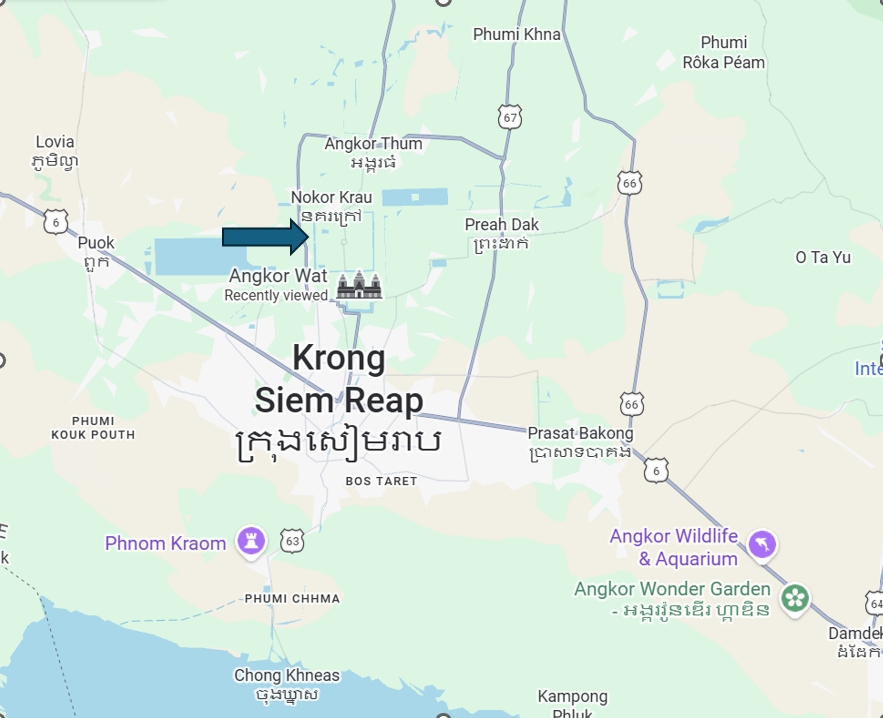
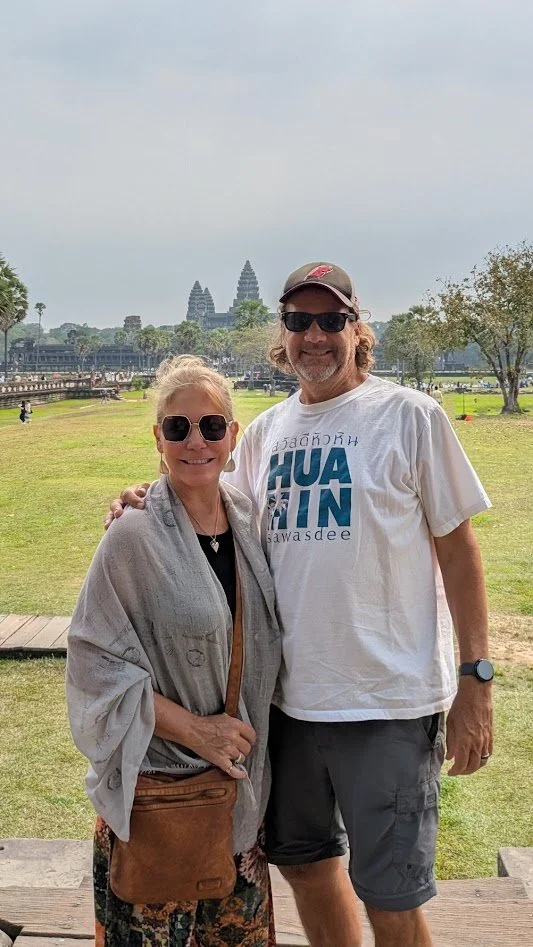
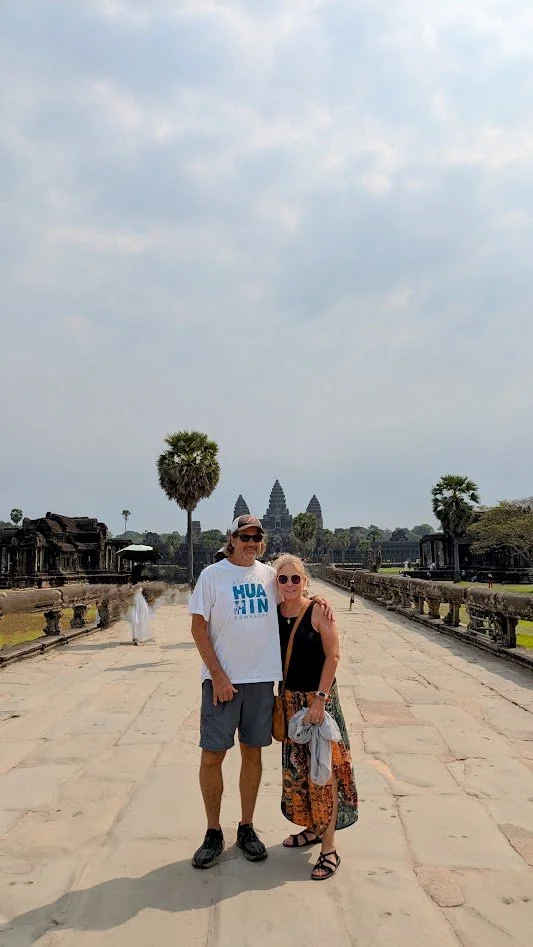
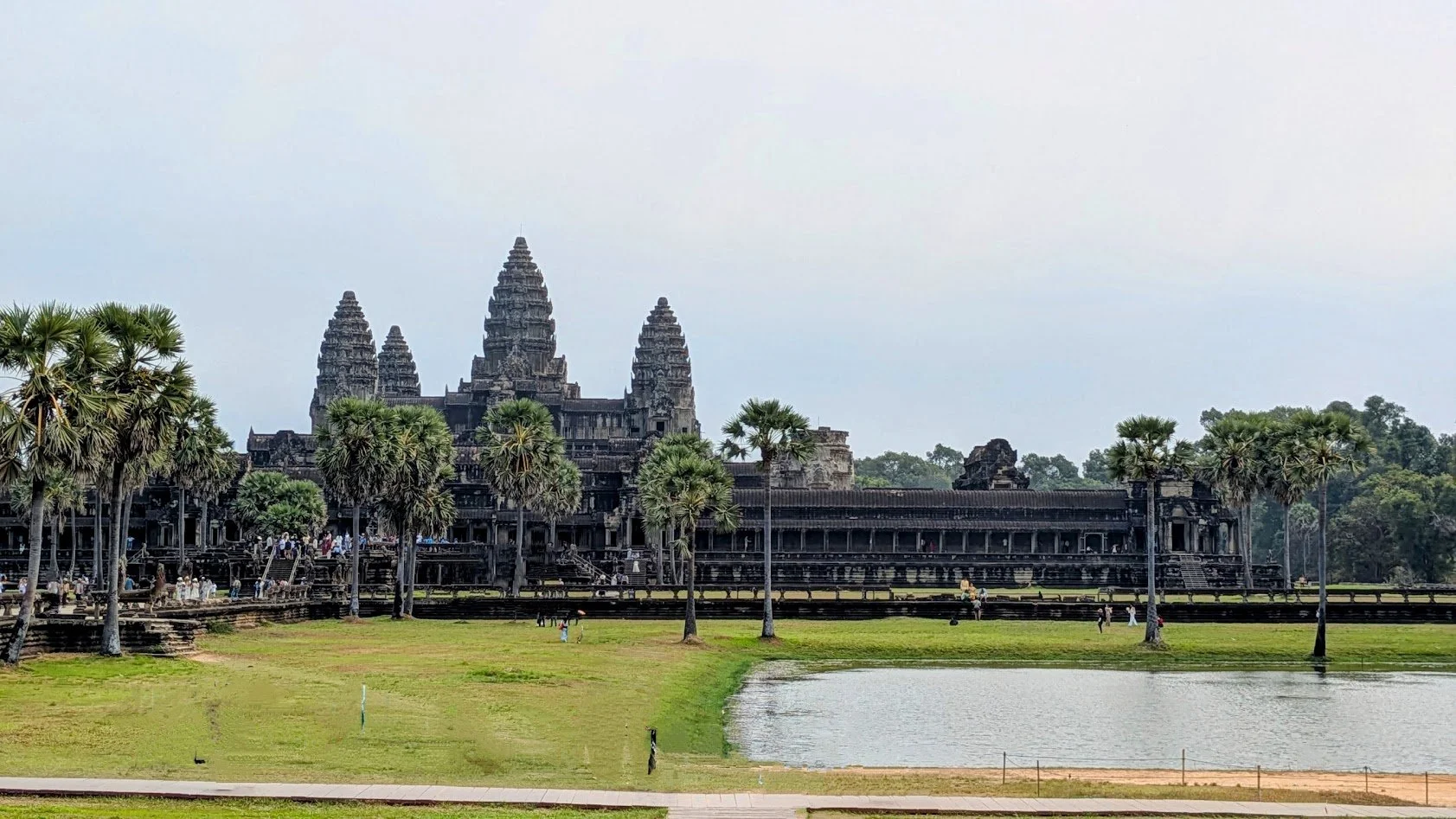
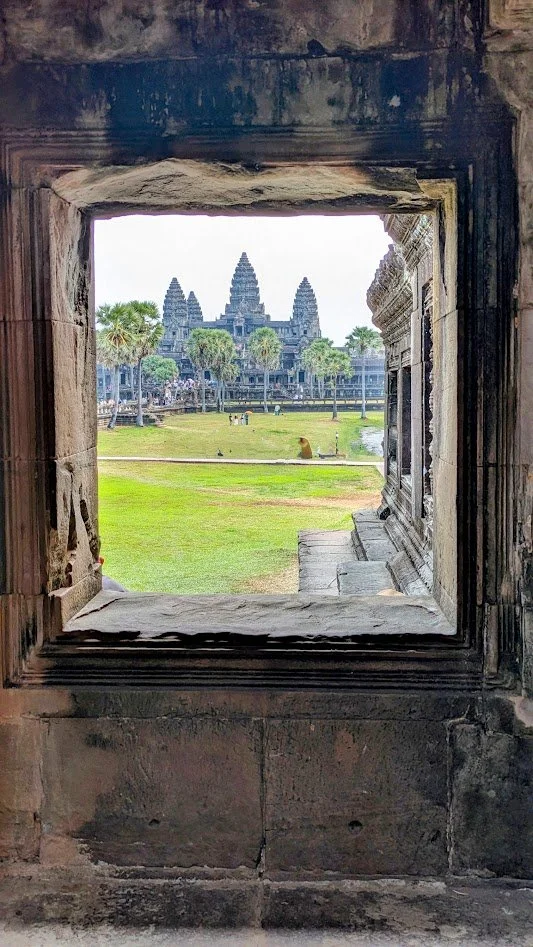
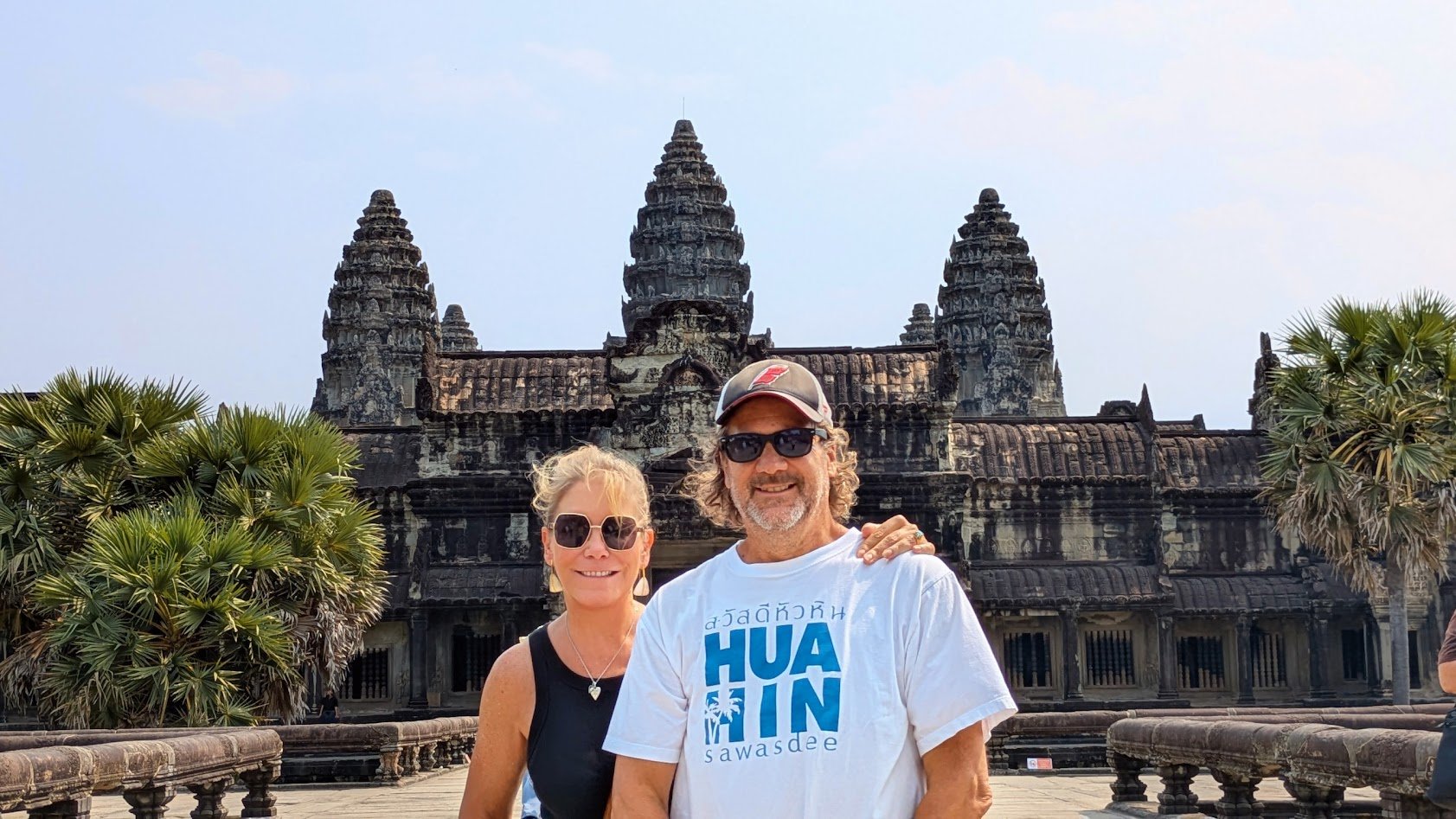
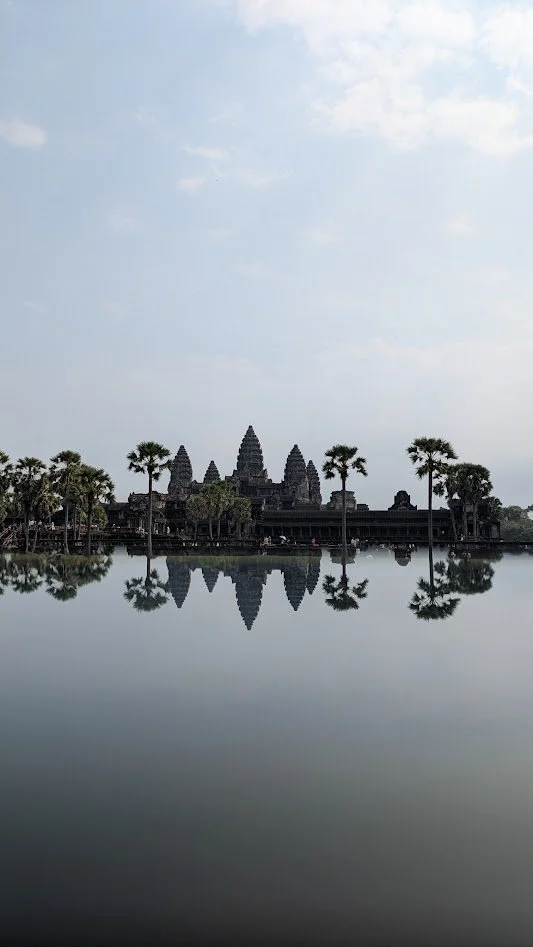
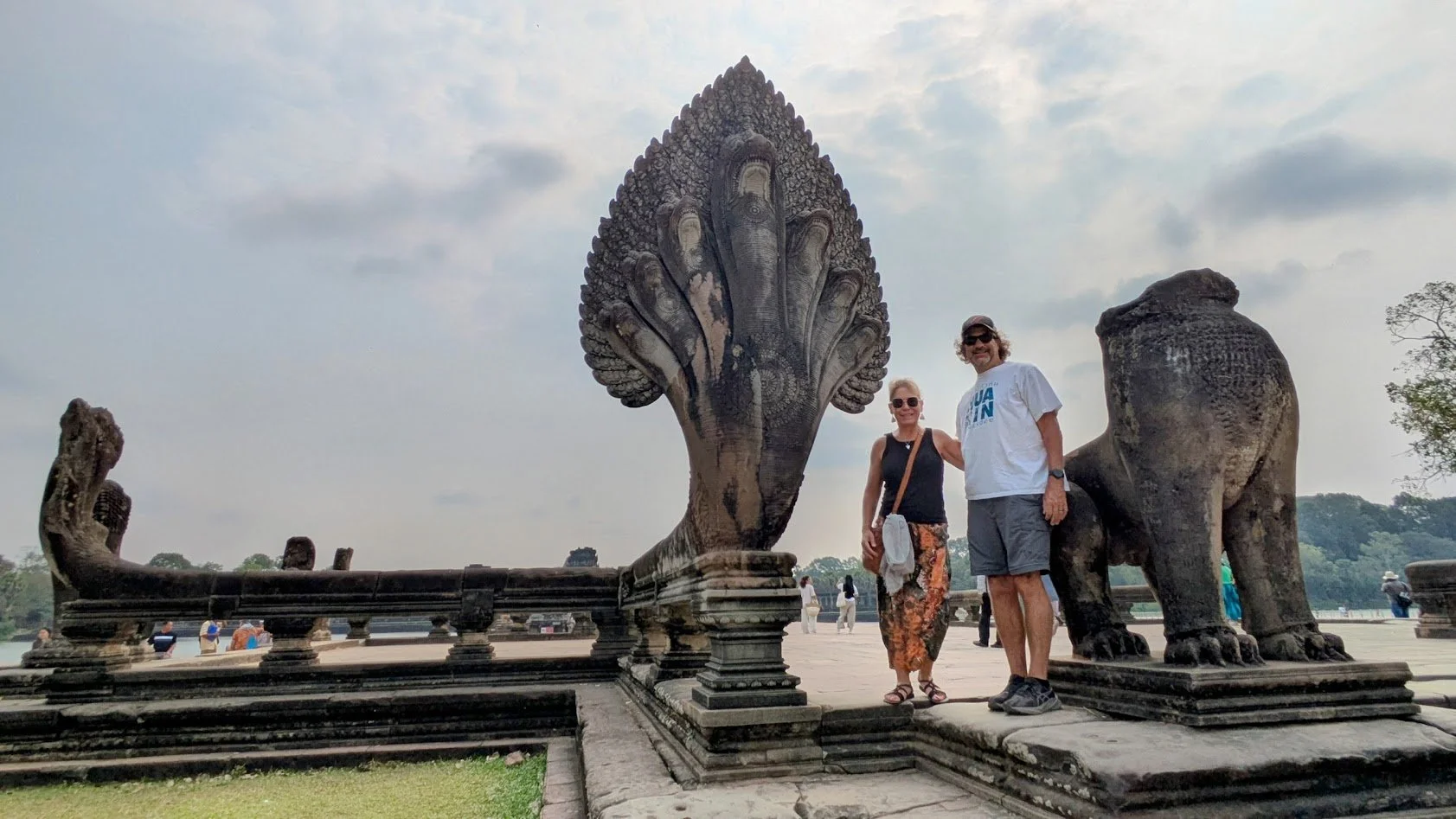
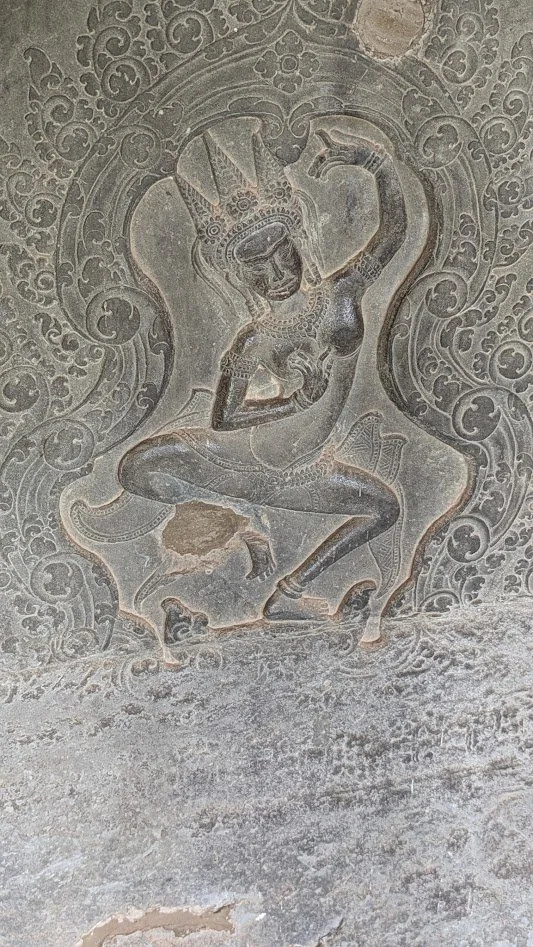
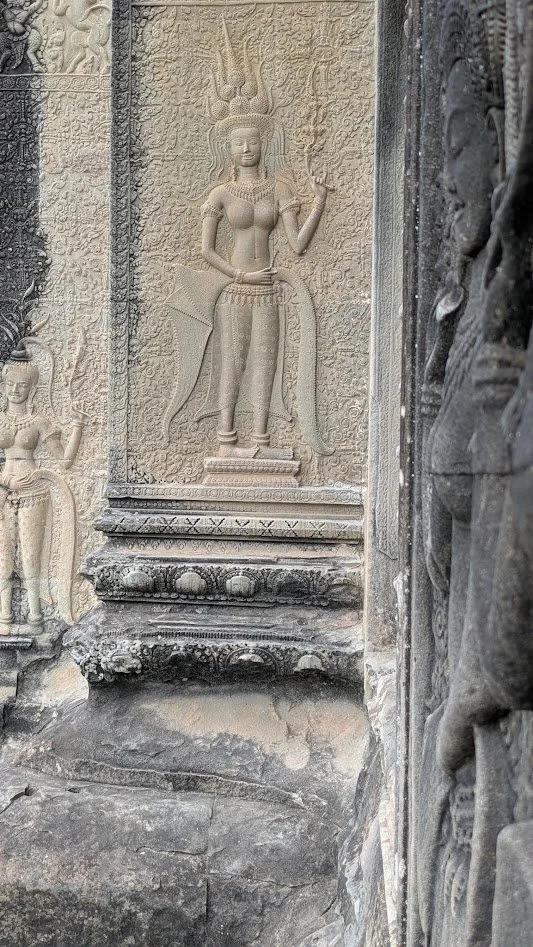
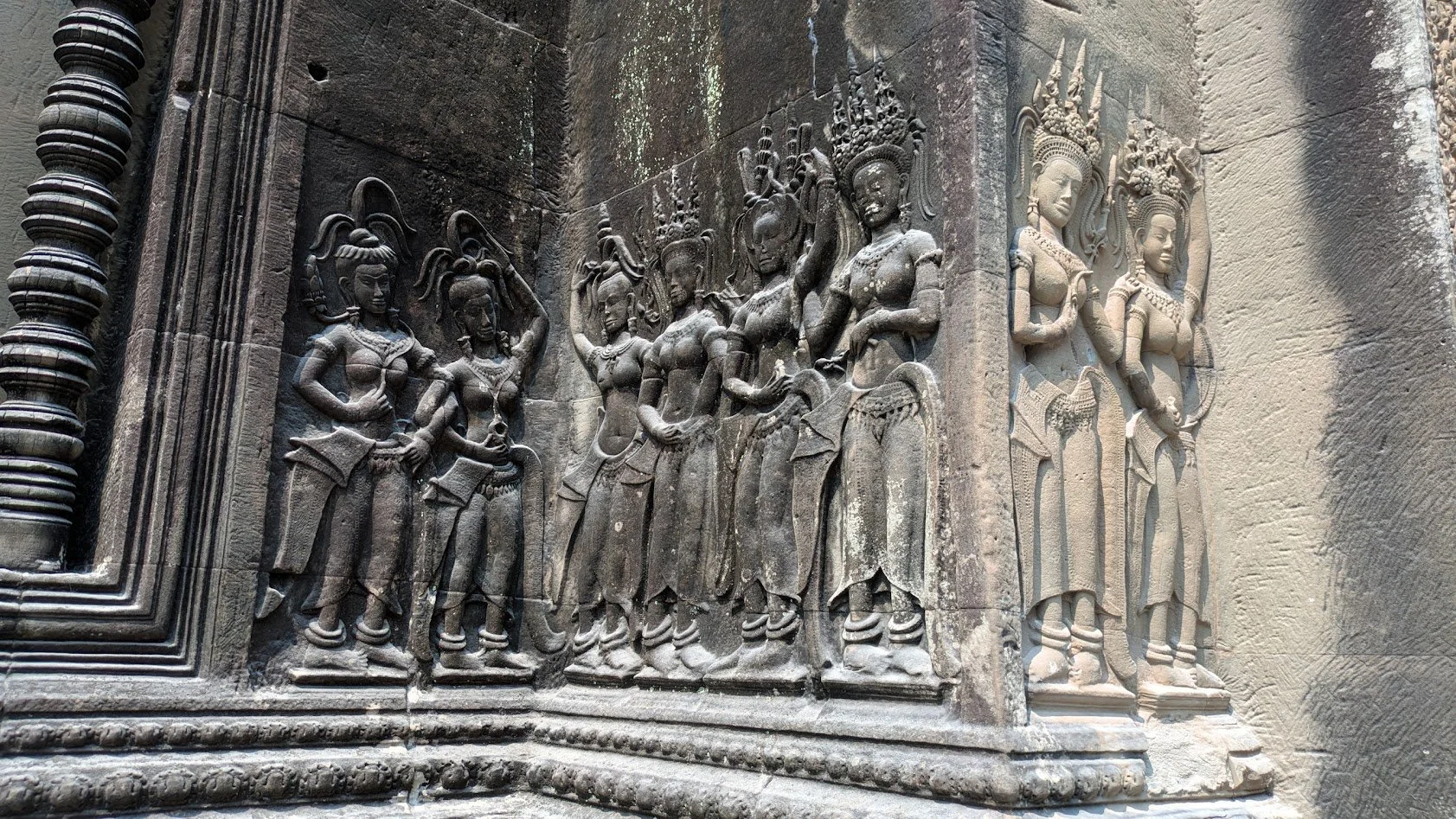
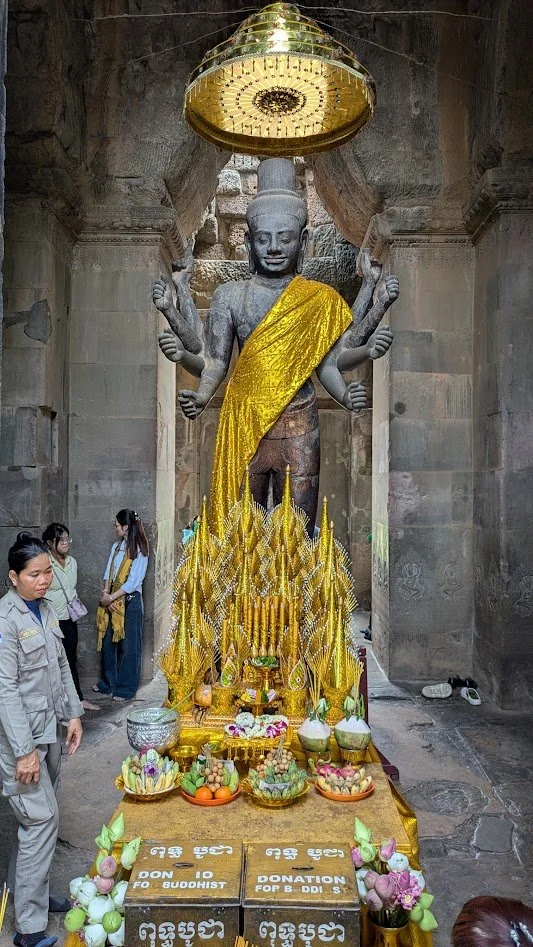
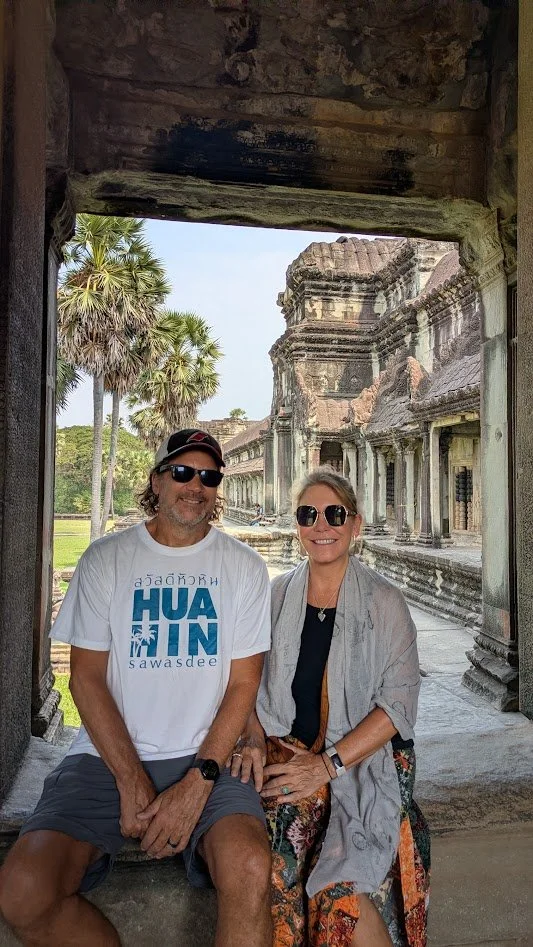
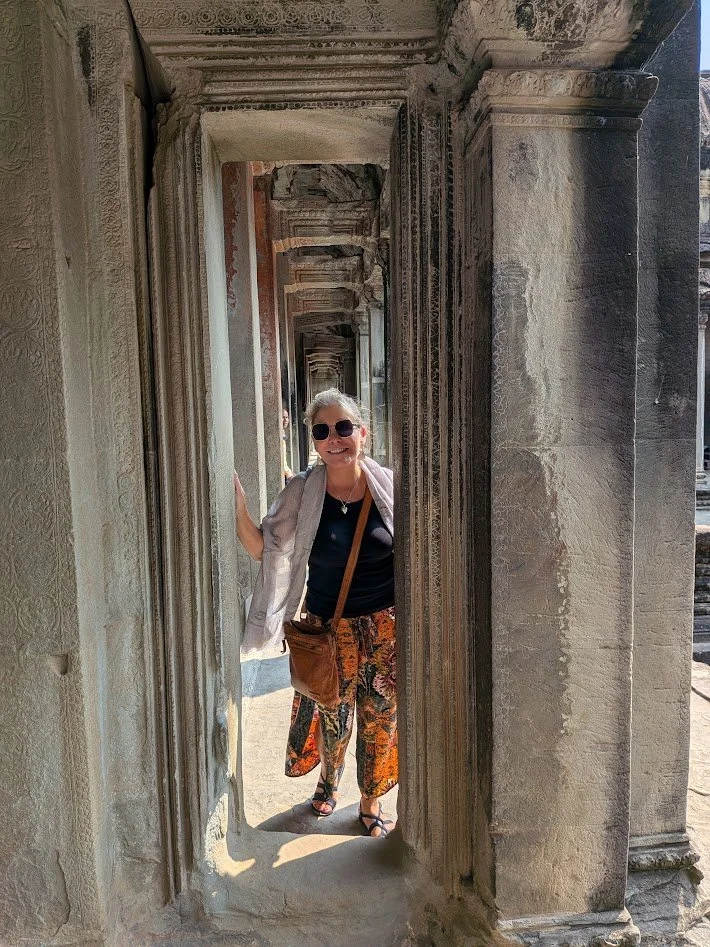
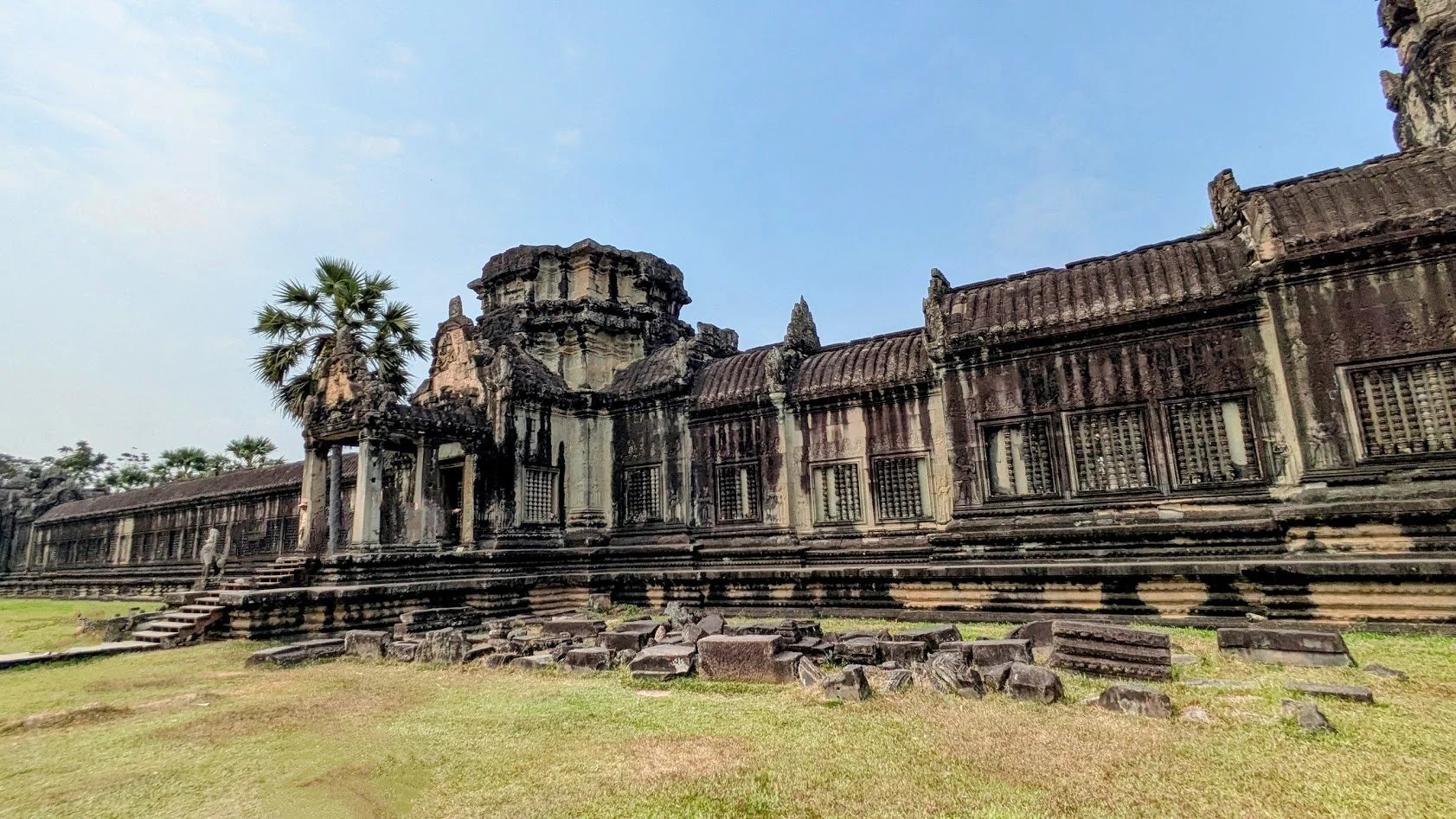
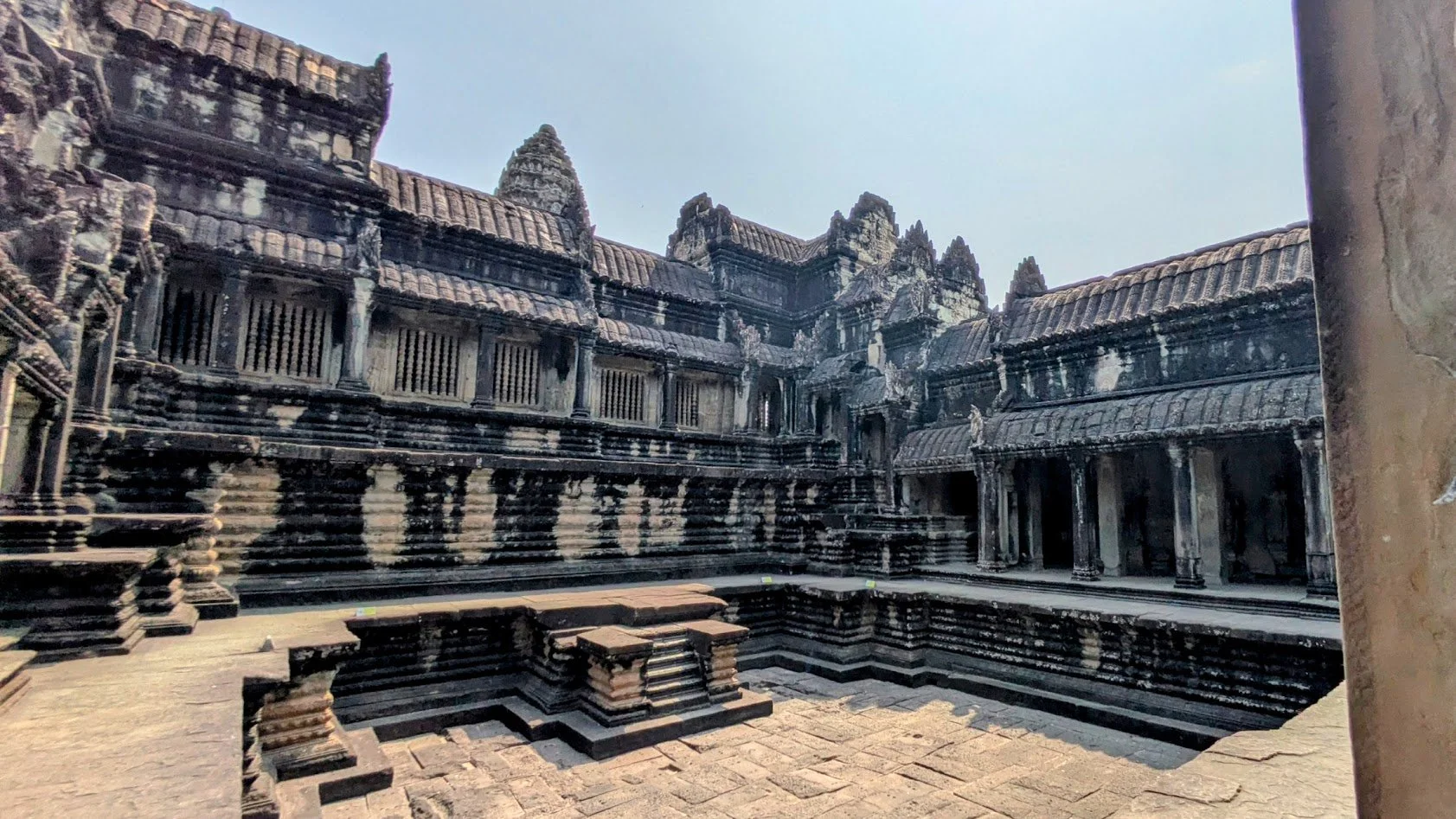
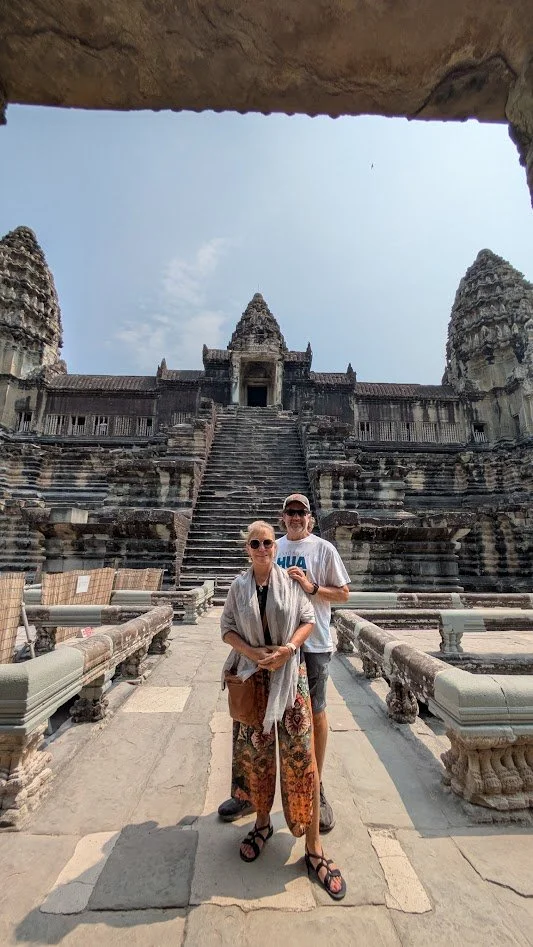
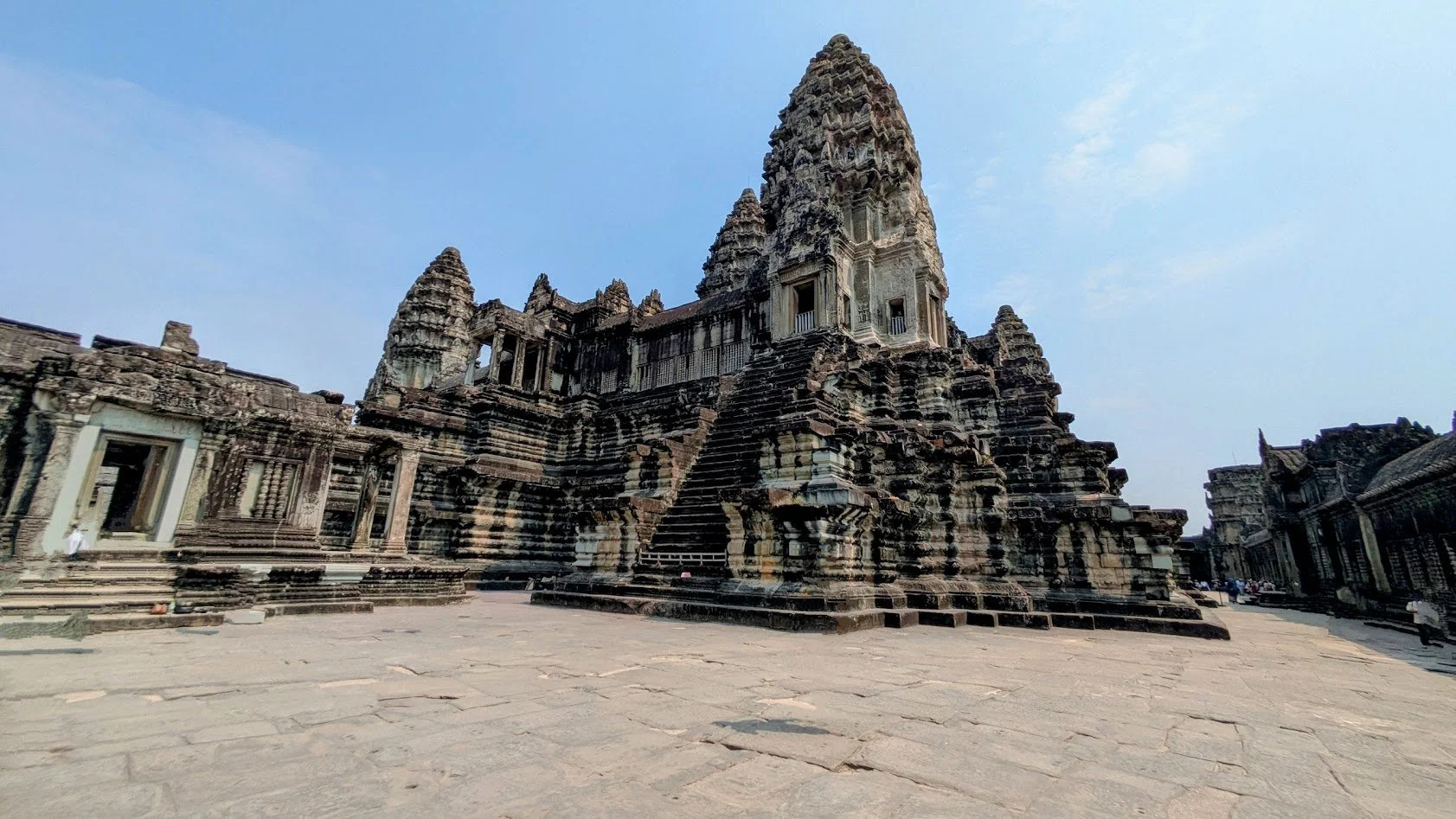
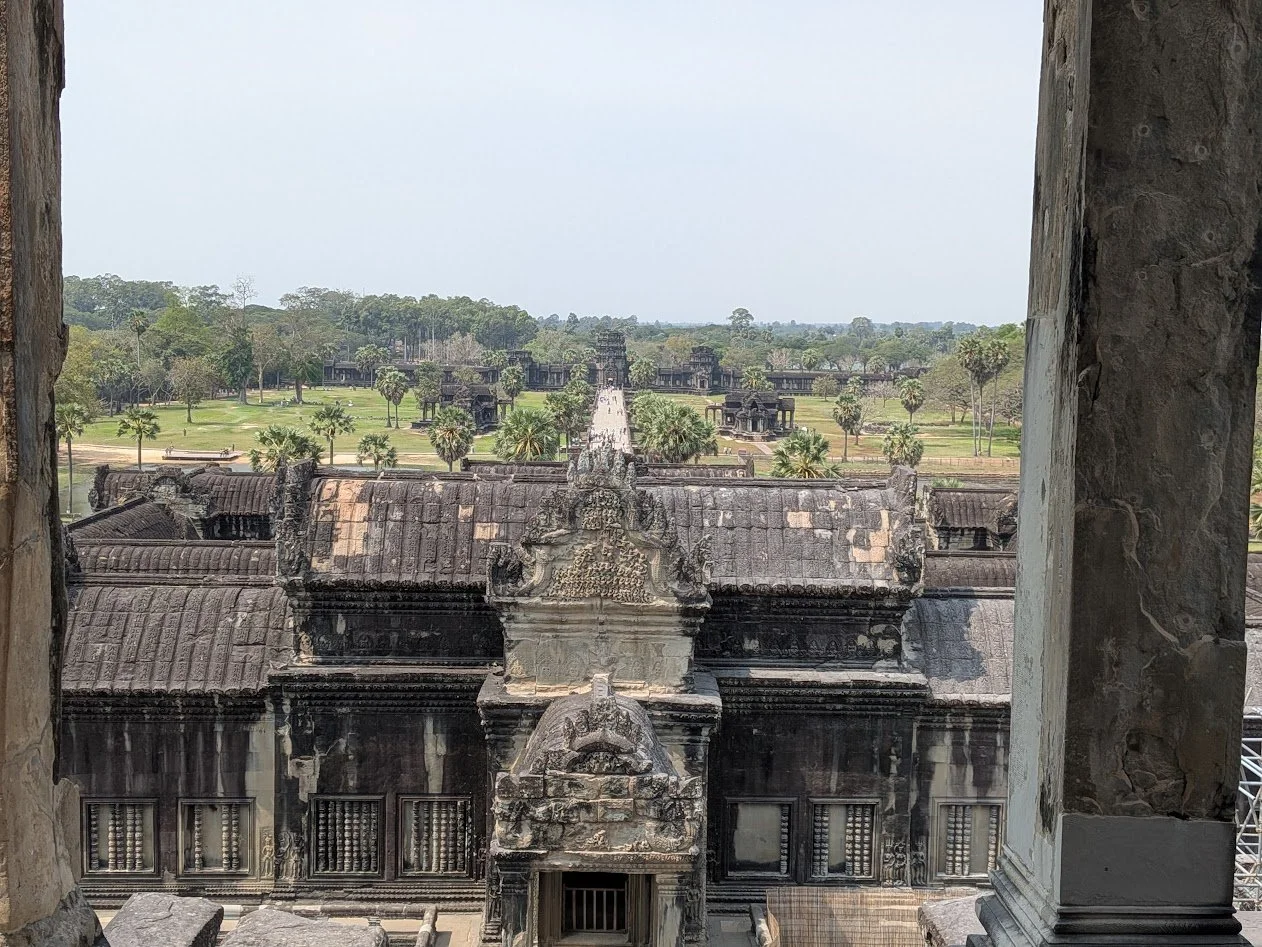
Our first stop was, of course, Angkor Wat - the largest religious monument in the world, spanning 402 acres. It was built in the early 12th century as a Hindu temple dedicated to Vishnu, the preserver and protector. It later transitioned into a Buddhist site. It is famous for its massive sandstone construction, intricate carvings, and westward orientation.
Angkor Wat was built over approximately 30–35 years (circa 1113–1150 AD), it required an estimated 300,000 laborers and 6,000 elephants. According to our guide, the laborers were all volunteers who were happy to assist in the building of such an important religious monument (you know, good karma and going to heaven and all that crap). But according to Google, most of the laborers were slaves - which sounds more accurate. The site is built using over five million tons of sandstone hauled from Kulen Mountain which is about 50 km away . Angkor Wat was designed to represent Mount Meru, the home of the gods in Hindu and Buddhist cosmology, with five towers representing the mountain's peaks. It also features nearly half a mile of intricate carvings depicting scenes from Hinduism.
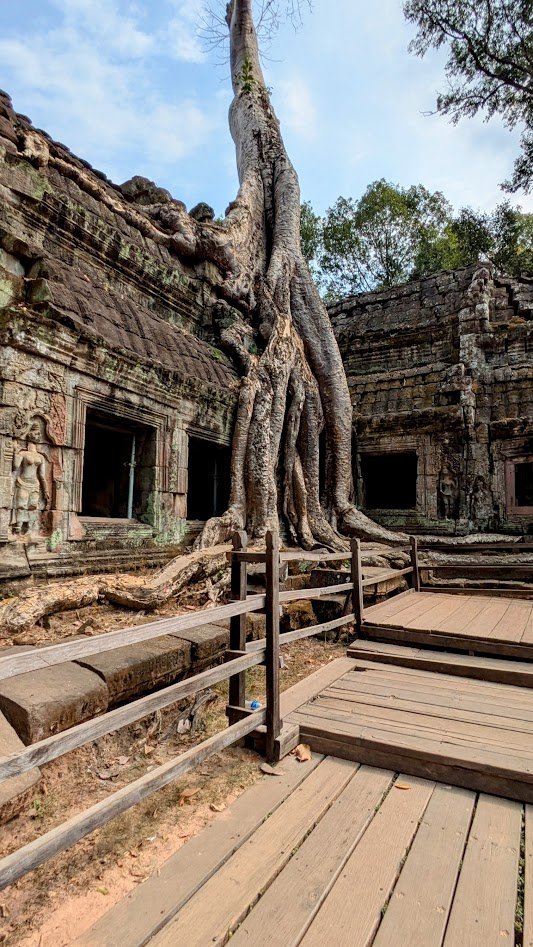
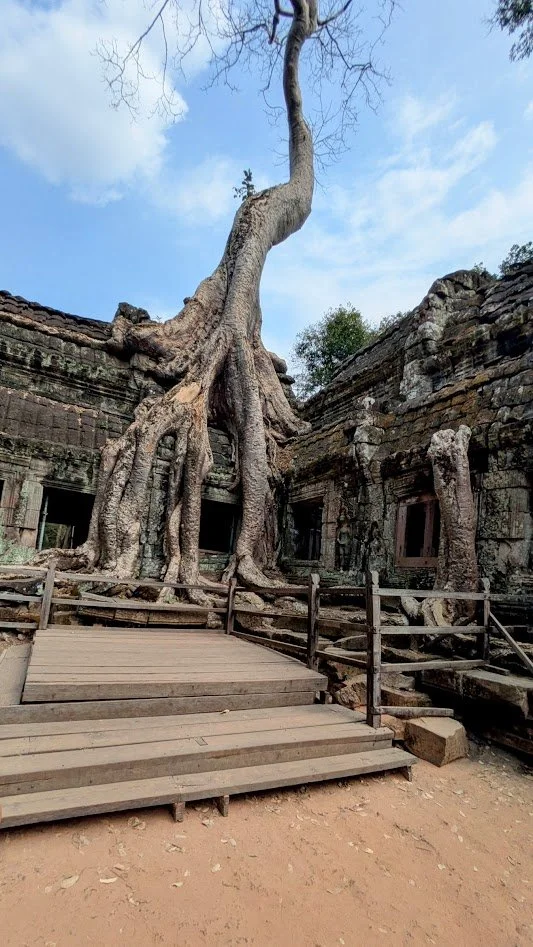
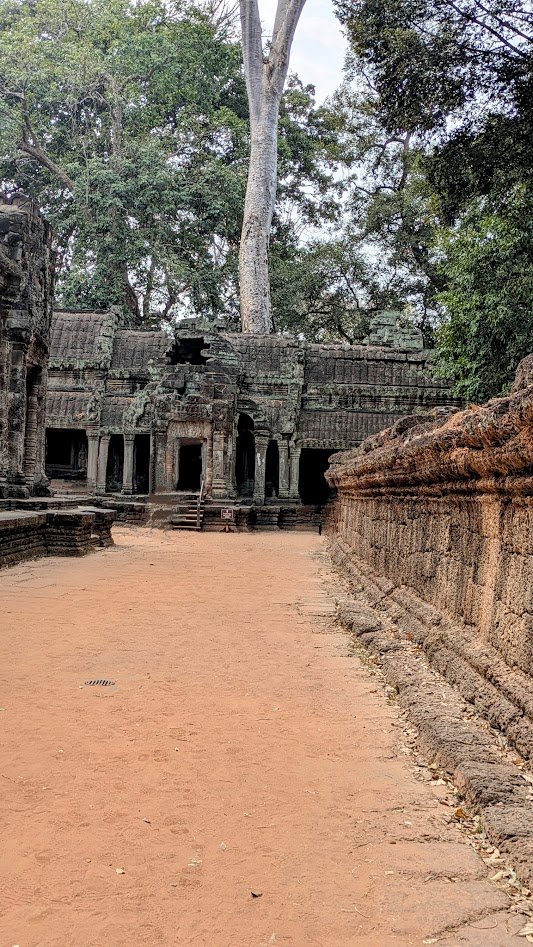
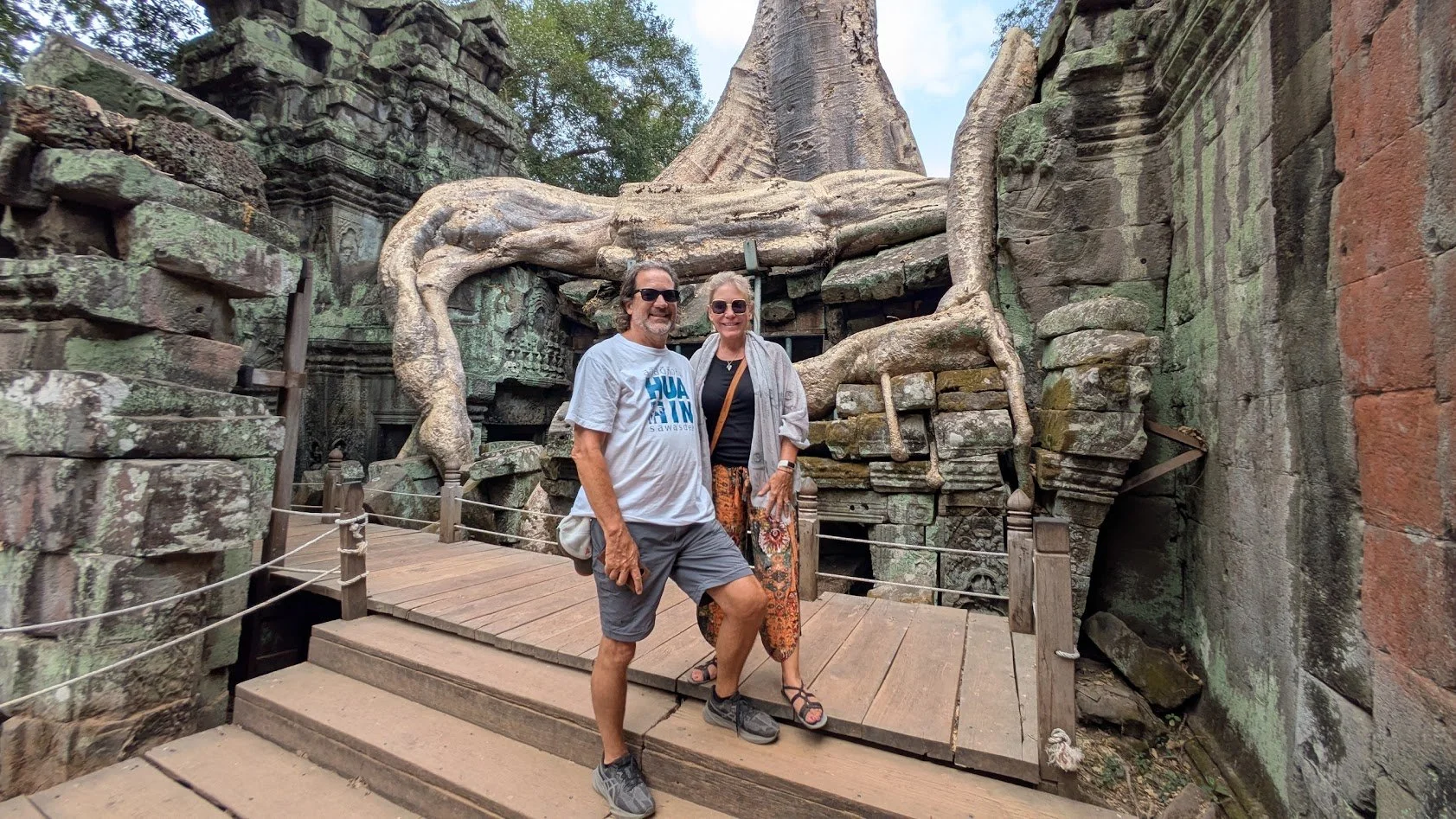
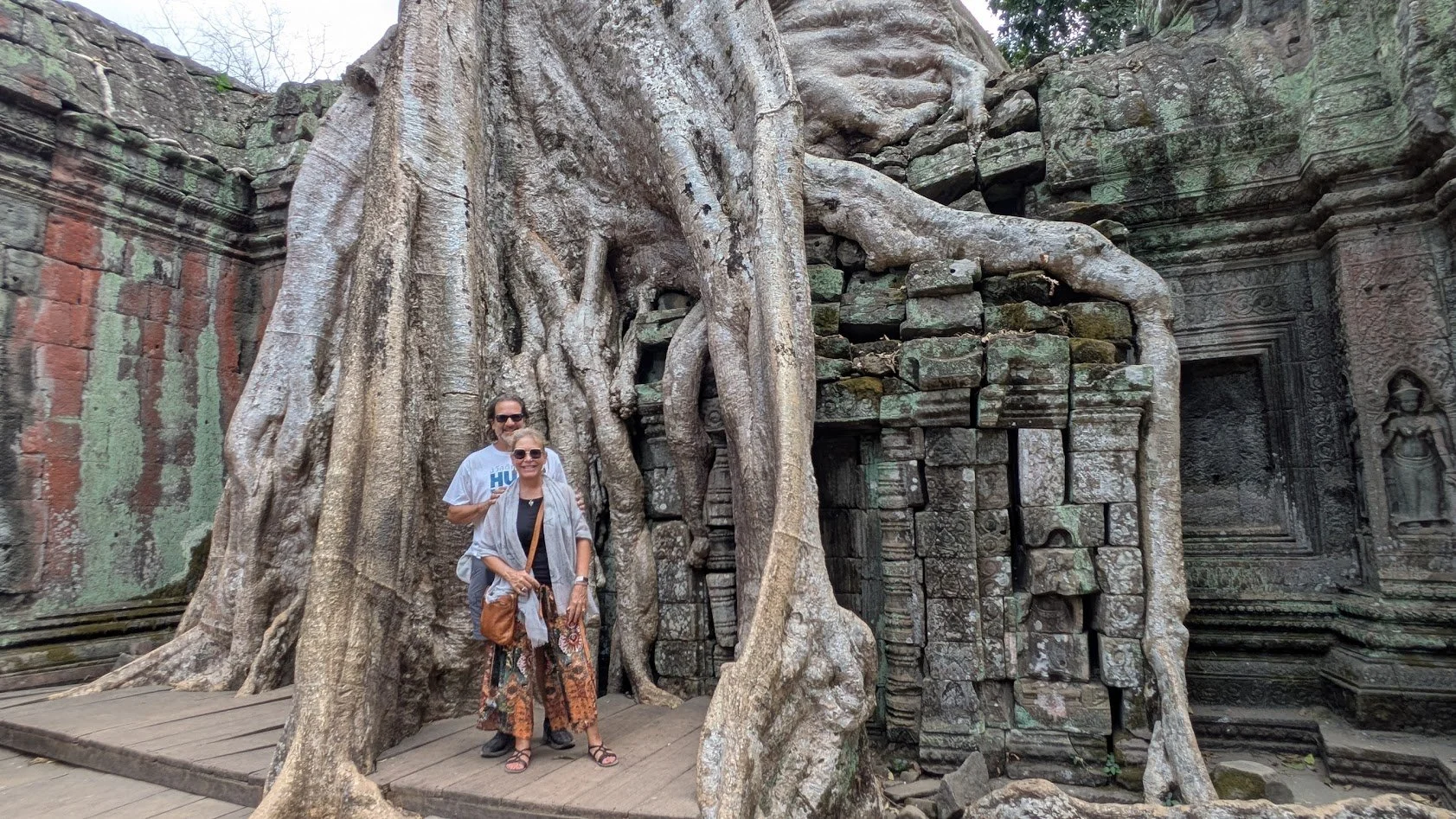
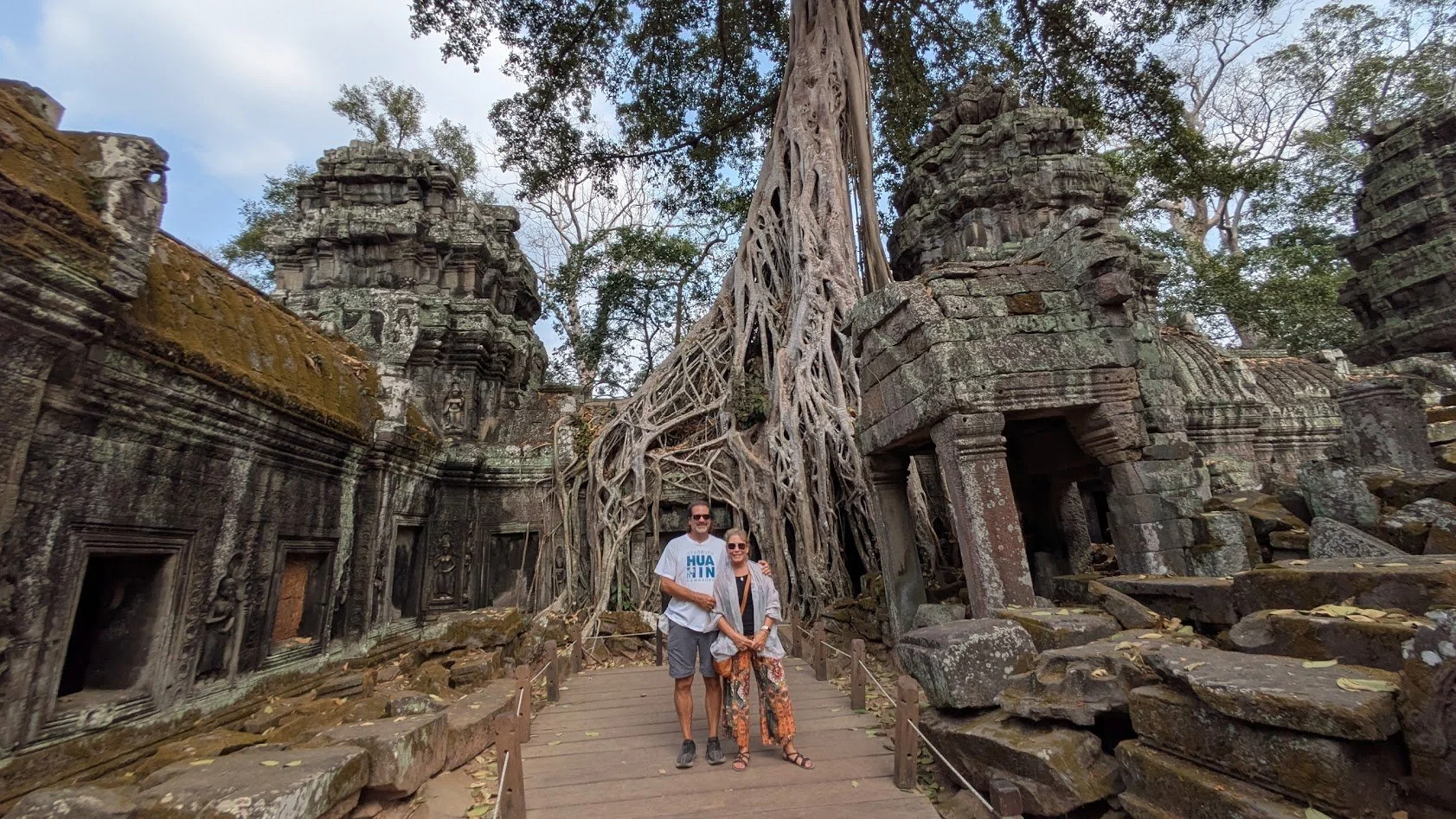
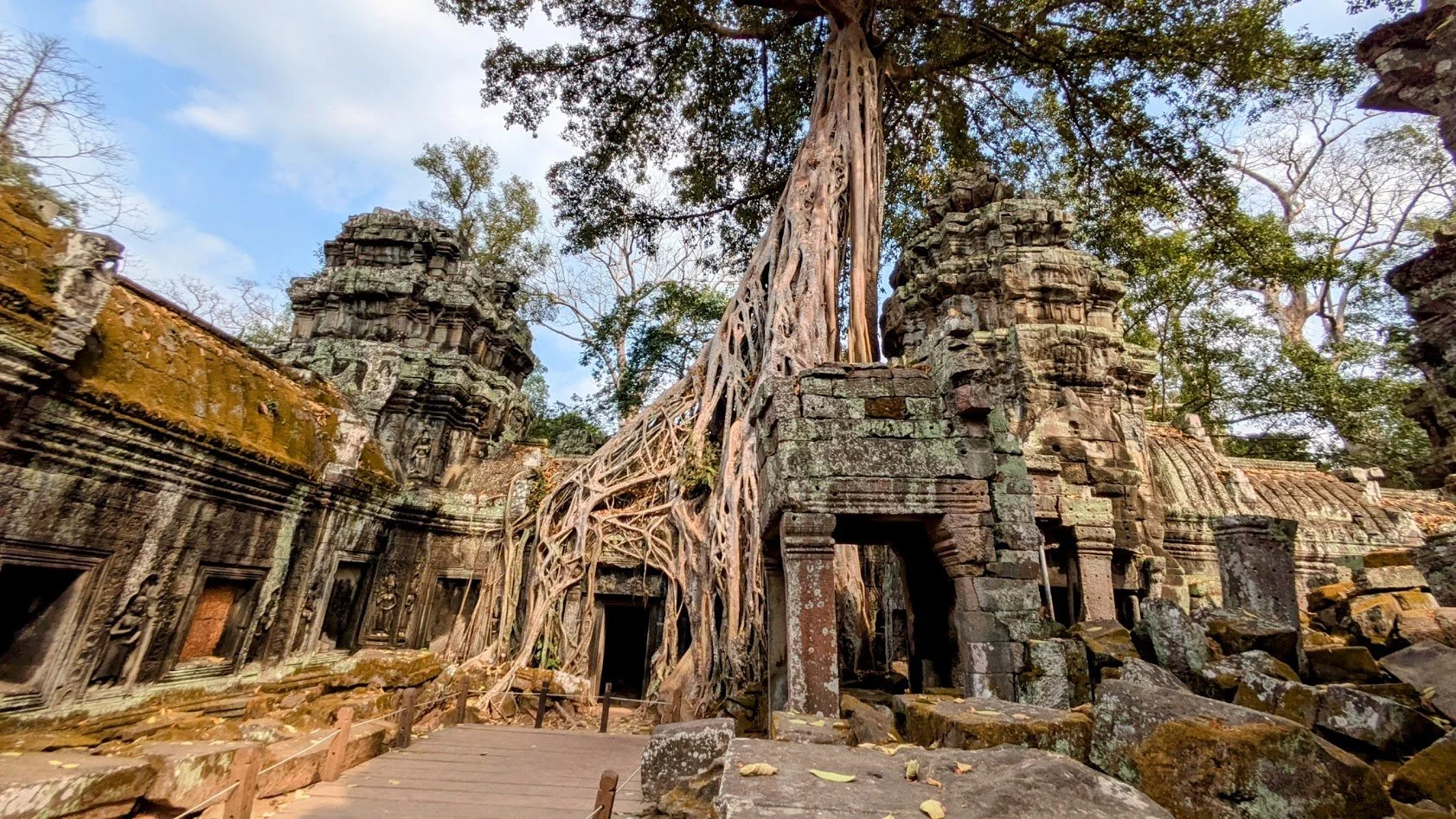
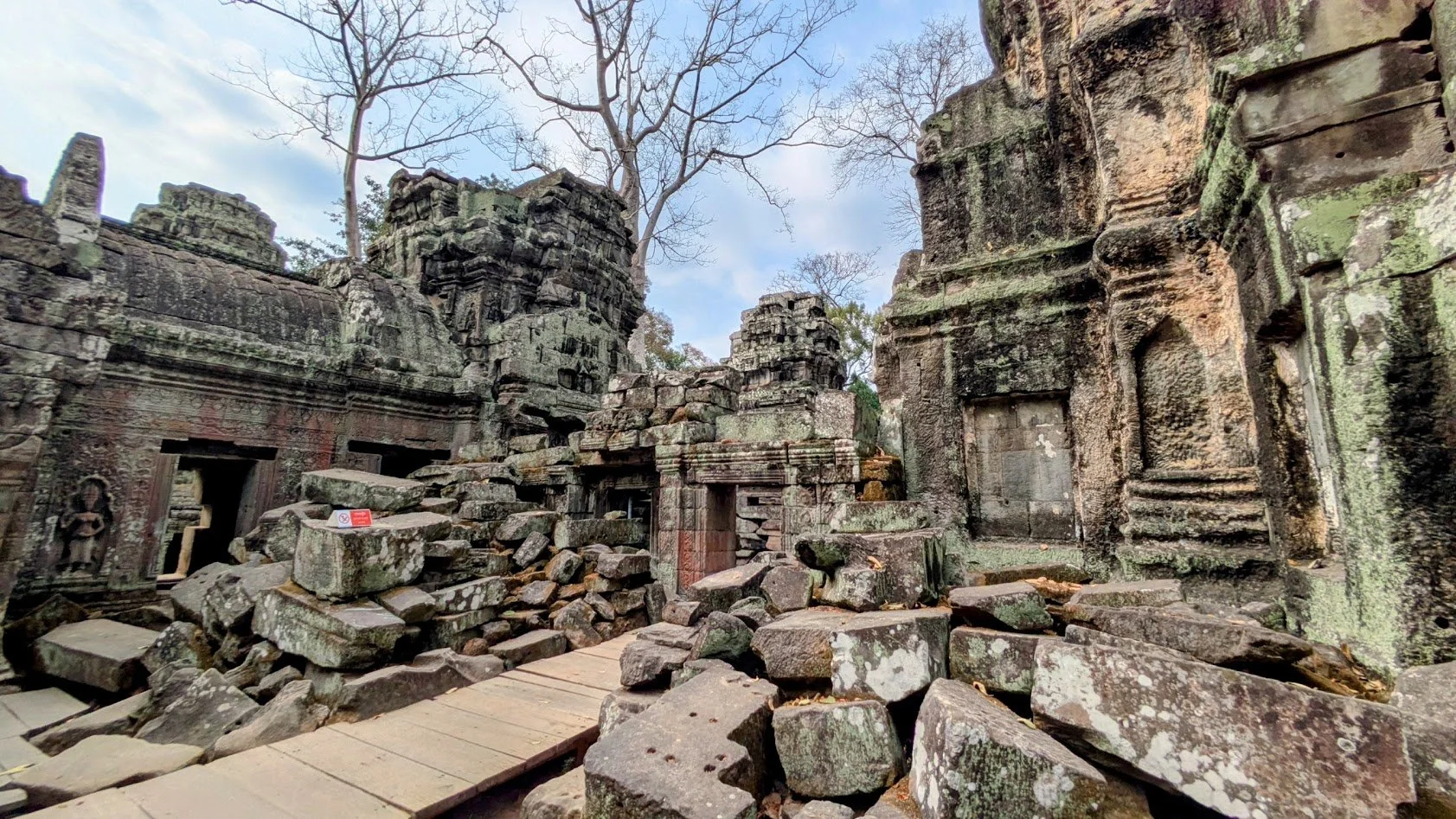
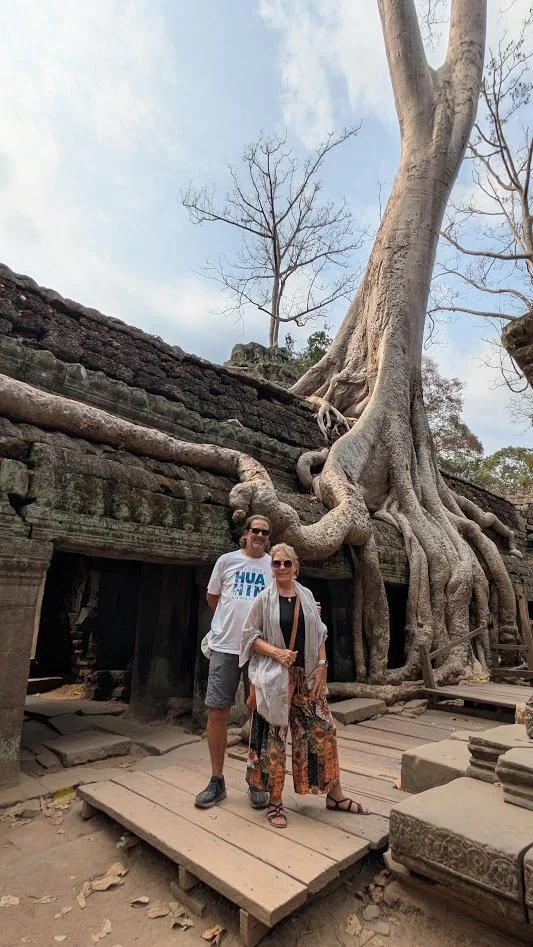
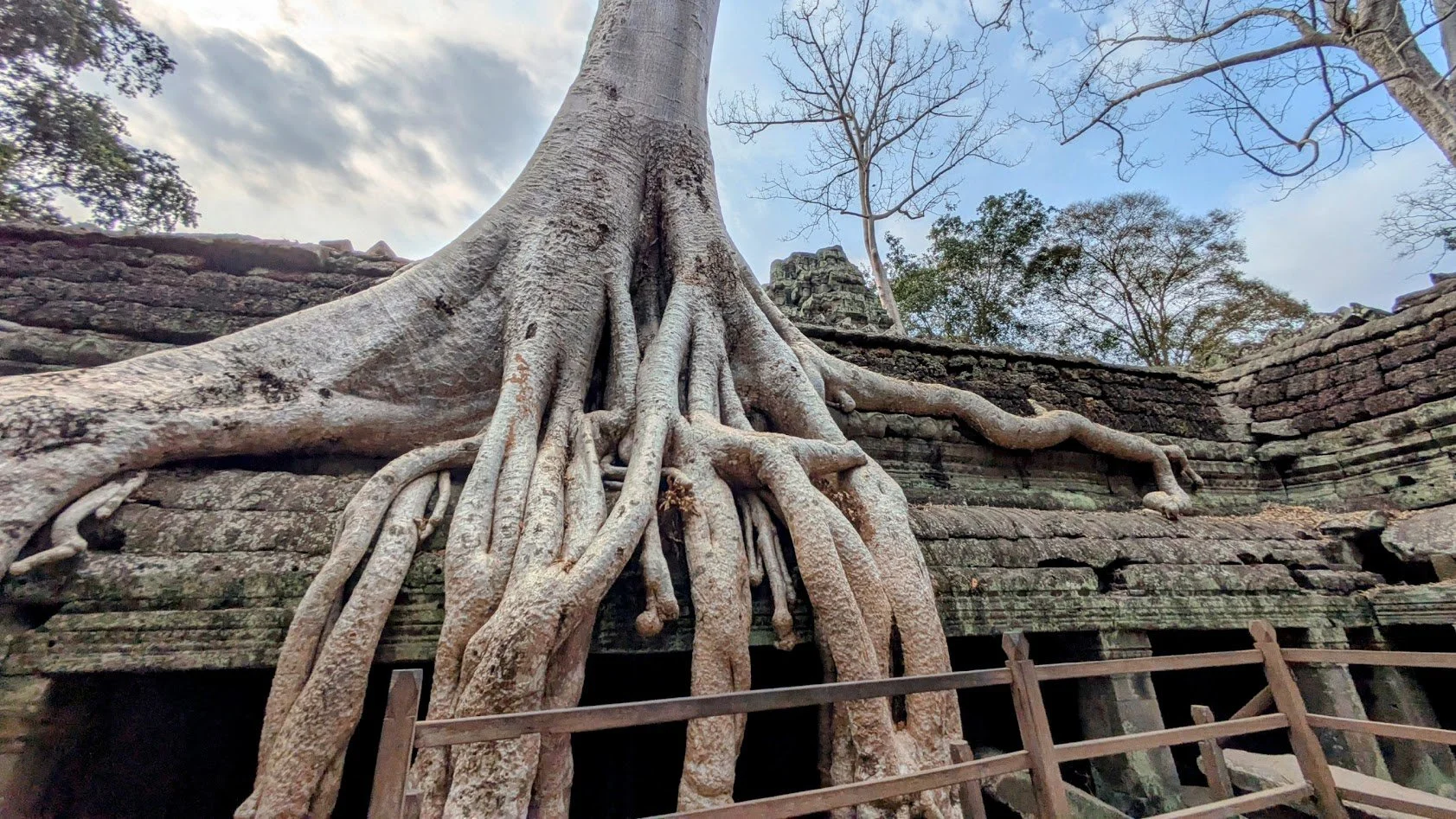
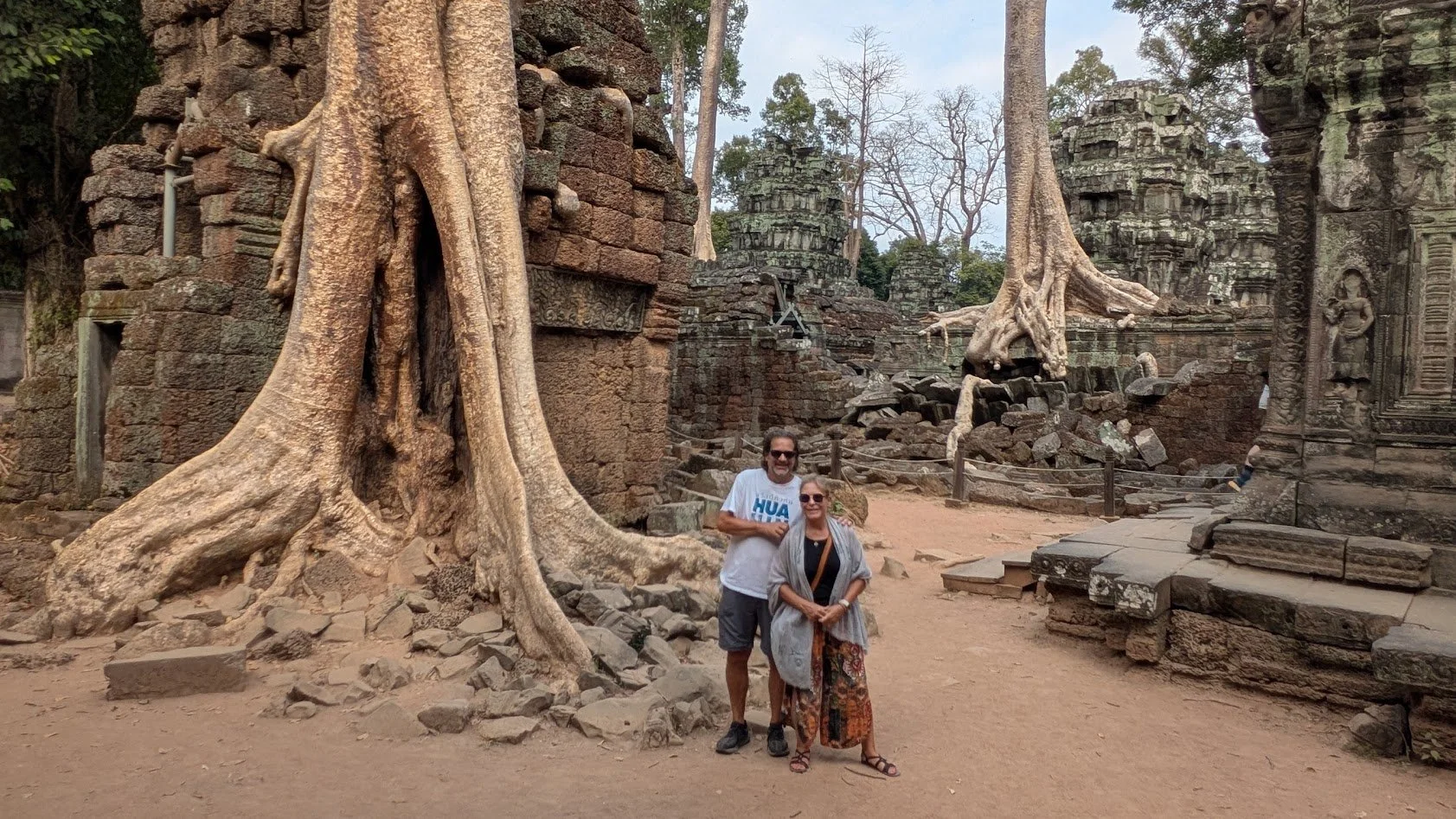
The second temple we visited was Ta Prohm which is known as the "jungle temple" for being left intertwined with trees. It is also known as the “Tomb Raider” temple where the 2001 Angelina Jolie movie was filmed.
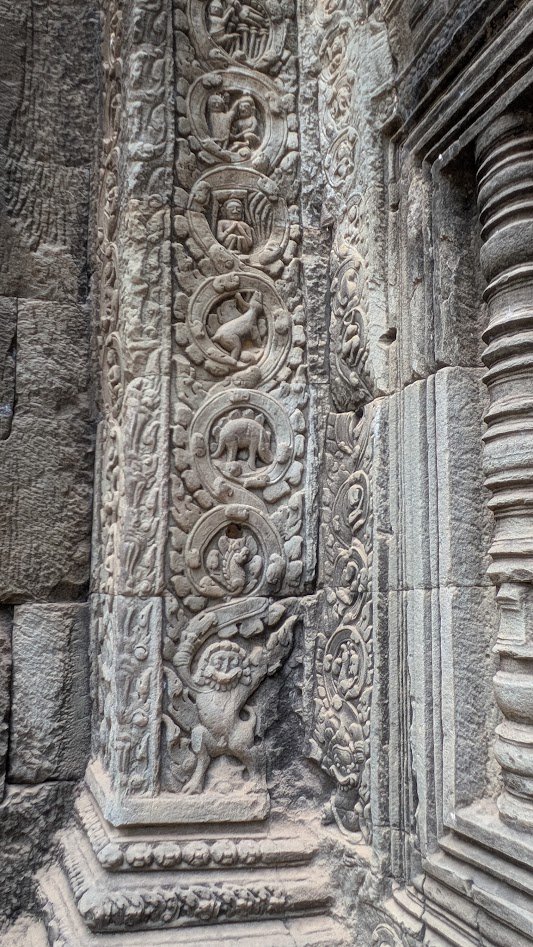
Ta Prohm is a 12th-century Mahayana Buddhist monastery and university, renowned for being left largely in its discovered state with, massive tree roots entwined with the stone ruins. The temple once supported over 12,500 people, including high priests and dancers. And interestingly, there is a carving of what appears to be a dinosaur on one of the walls. Which is kind of strange!
The trees and roots were so cool… this was my favorite of the temples!
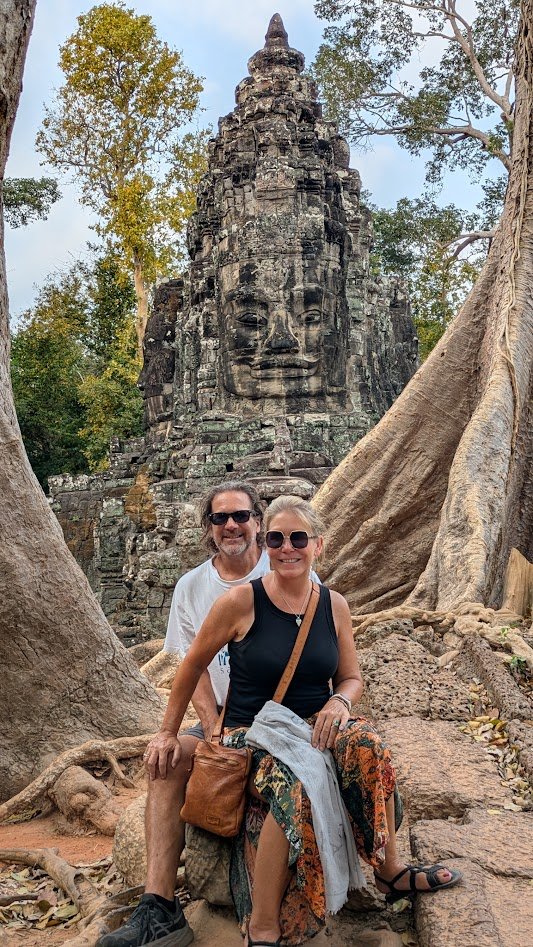
We passed through the Victoria gate which is one of five monumental entrances to the 12th-century Angkor Thom city. Situated on the east, it served as the route for returning soldiers and is characterized by four massive faces which symbolize the king's victory over the Cham enemy (circa 1181 AD). The faces on the gate are believed to represent the Bodhisattva of compassion or the king himself, watching over the four directions.
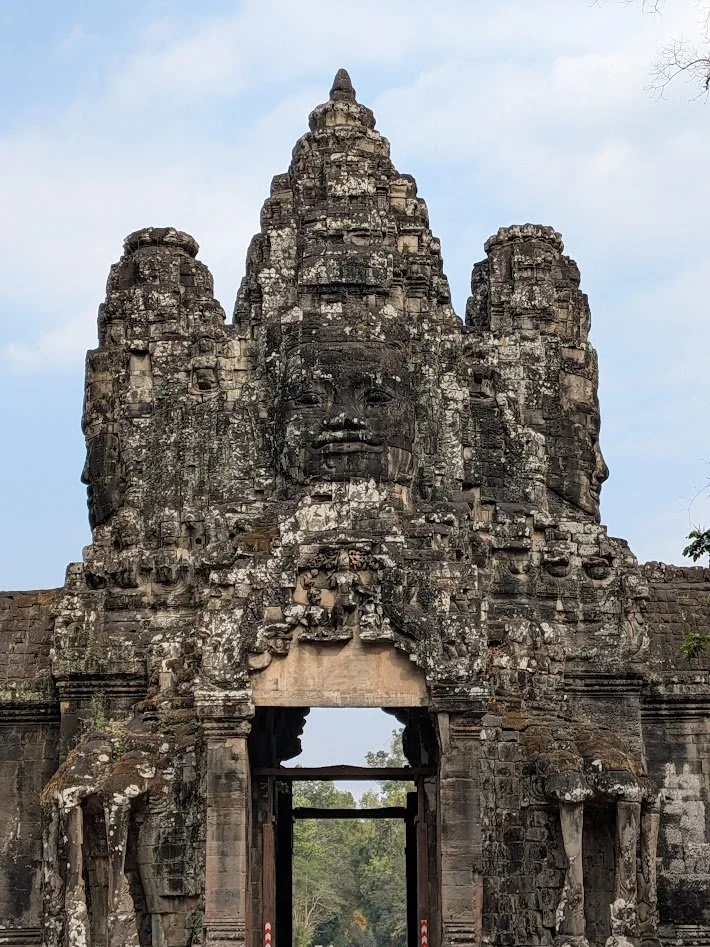
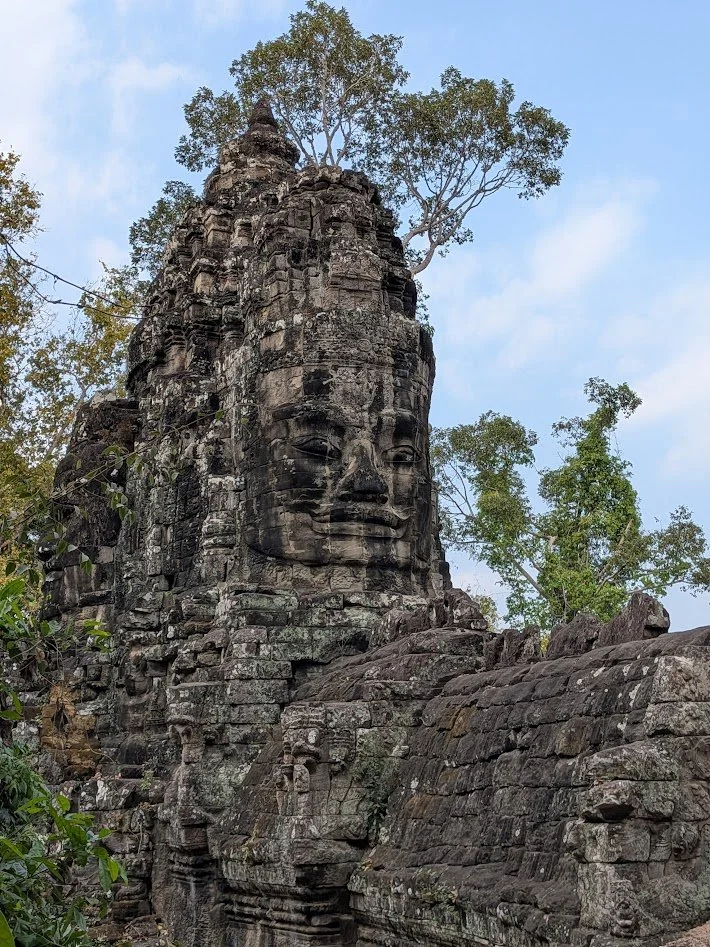
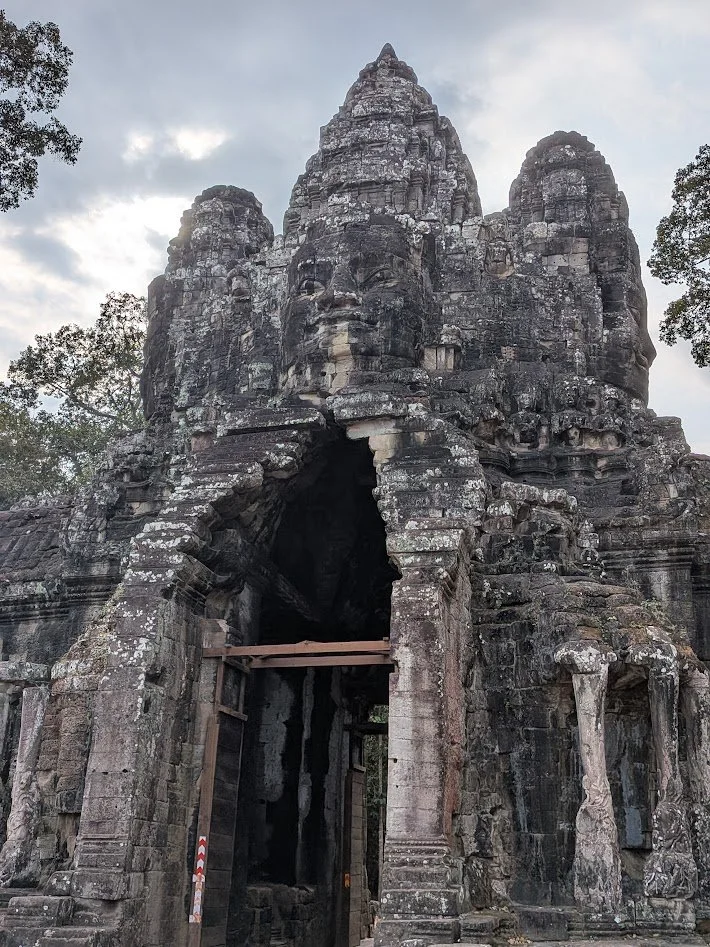
Once through Victoria Gate, the first place we saw in Angkor Thom was the Terrace of Elephants which is a 350-meter-long, 2.5-meter-high 12th-century platform built by King Jayavarman VII for public ceremonies and to view his returning army (through Victoria Gate). It is adorned with carvings of elephants and lions. The terrace is accessed by five sets of stairs, with the central, grandest staircase featuring elephants with three heads.
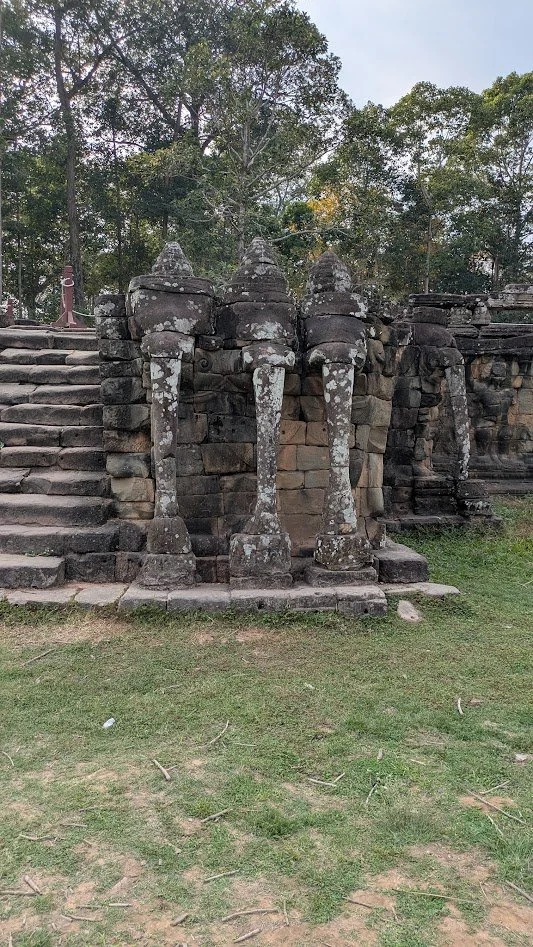
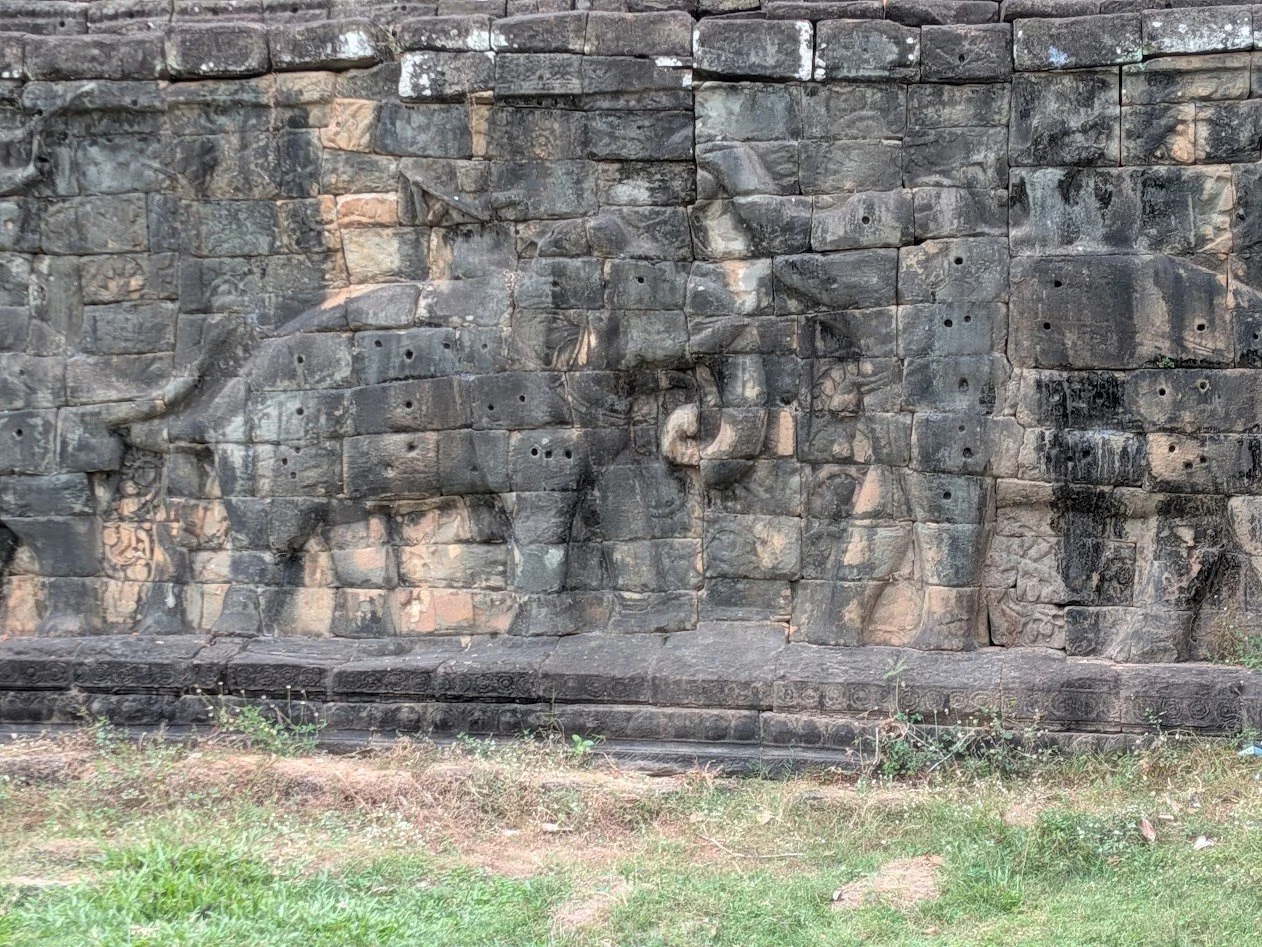
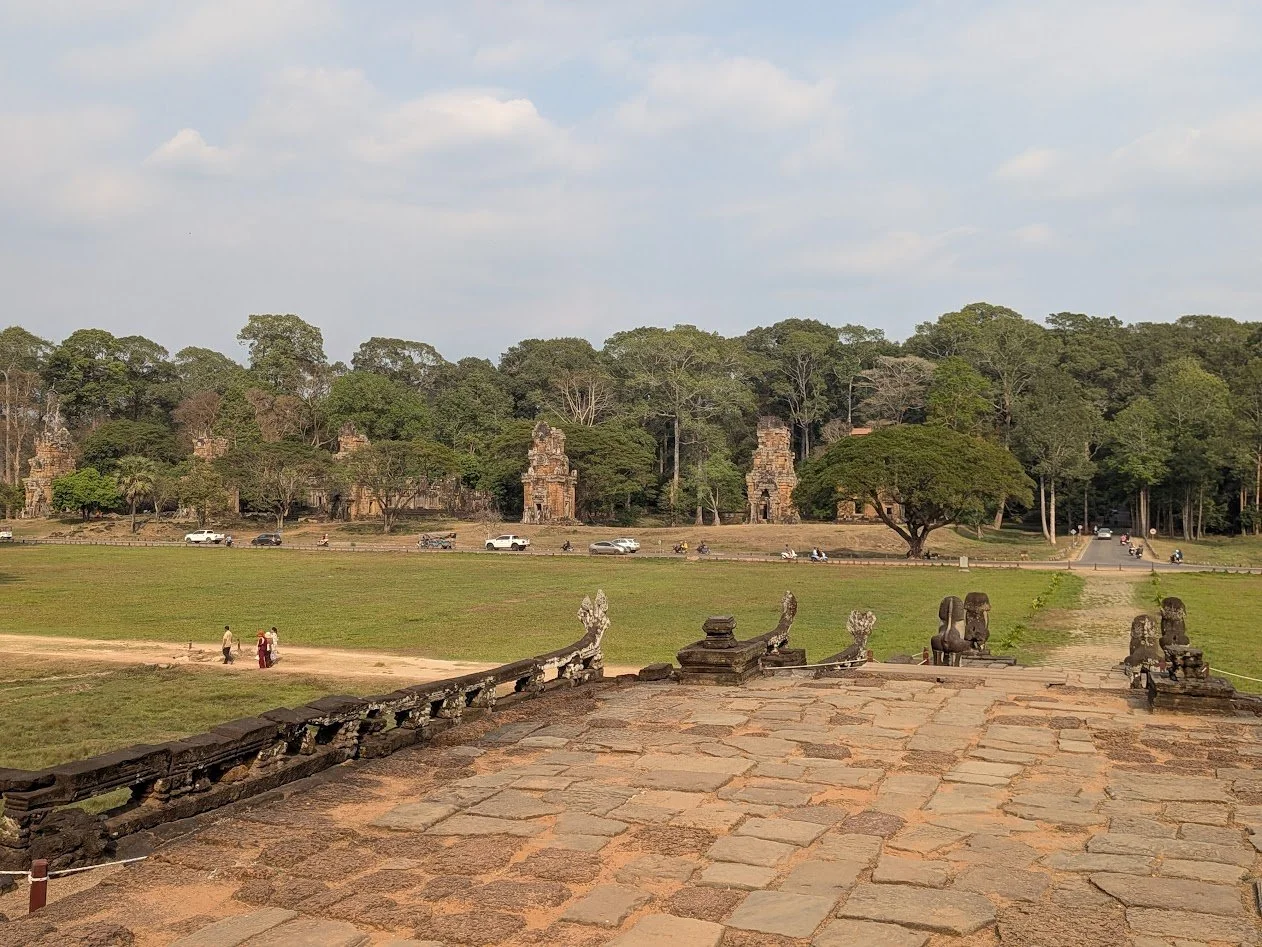
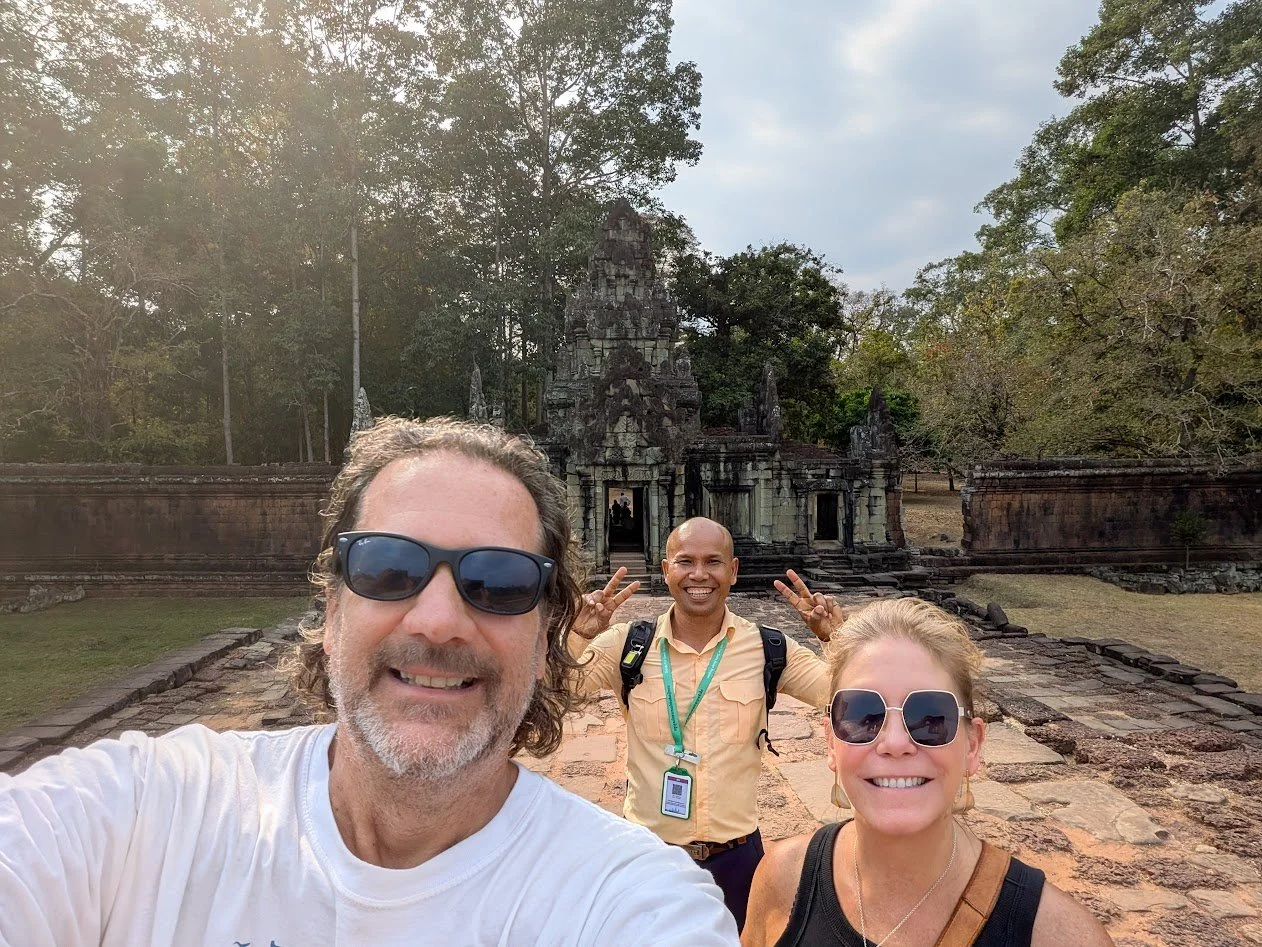
Just beyond the Elephant Terrace was the Royal Palace within the ancient city of Angkor Thom. This complex was the residential, ceremonial, and administrative center for Khmer kings. The main palace buildings were made of wood and have long since disappeared, with just the stone foundations remaining. The most prominent, surviving structure known as Phimeanakas is a 10th-century, three-tiered pyramid temple.
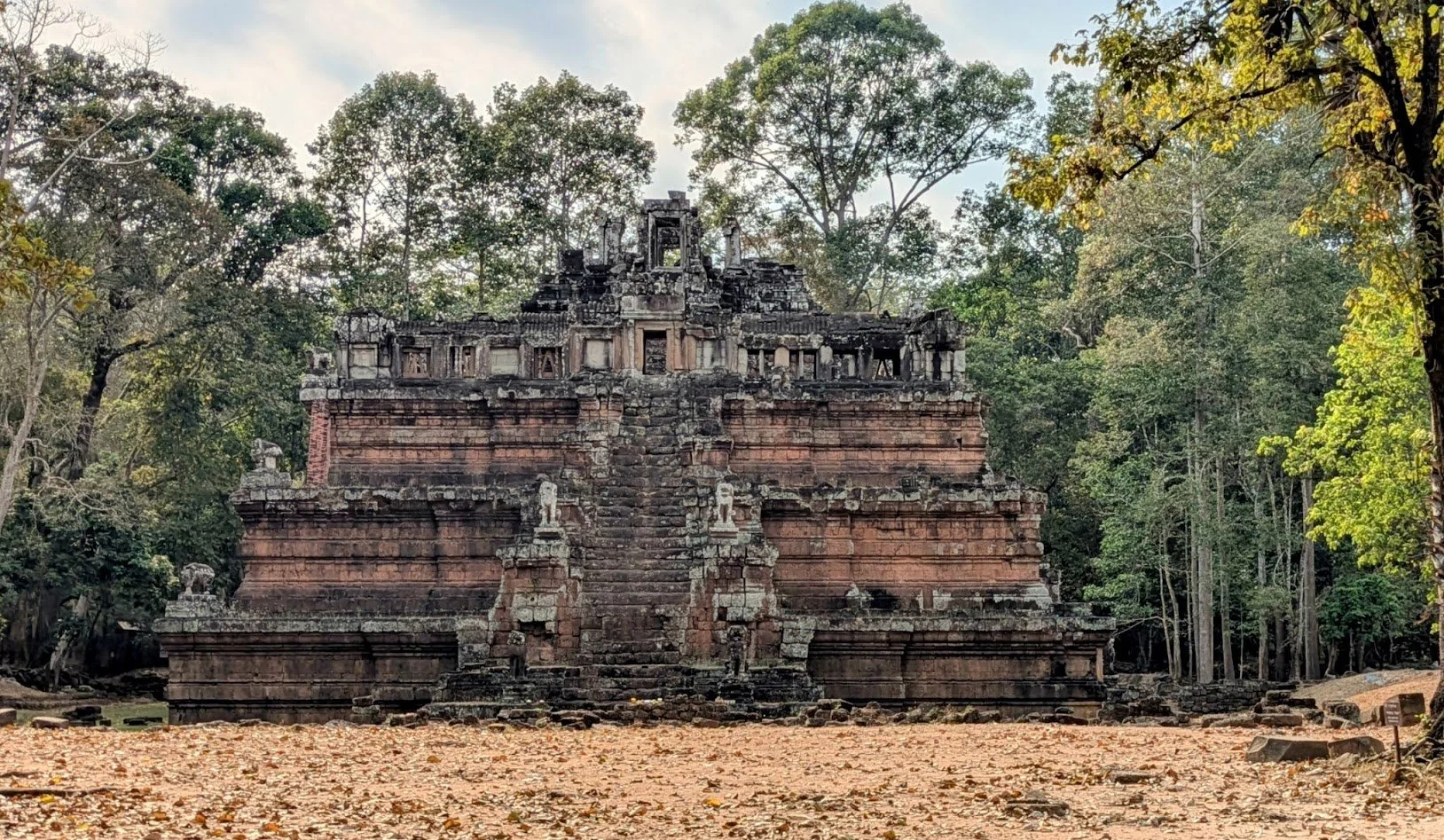
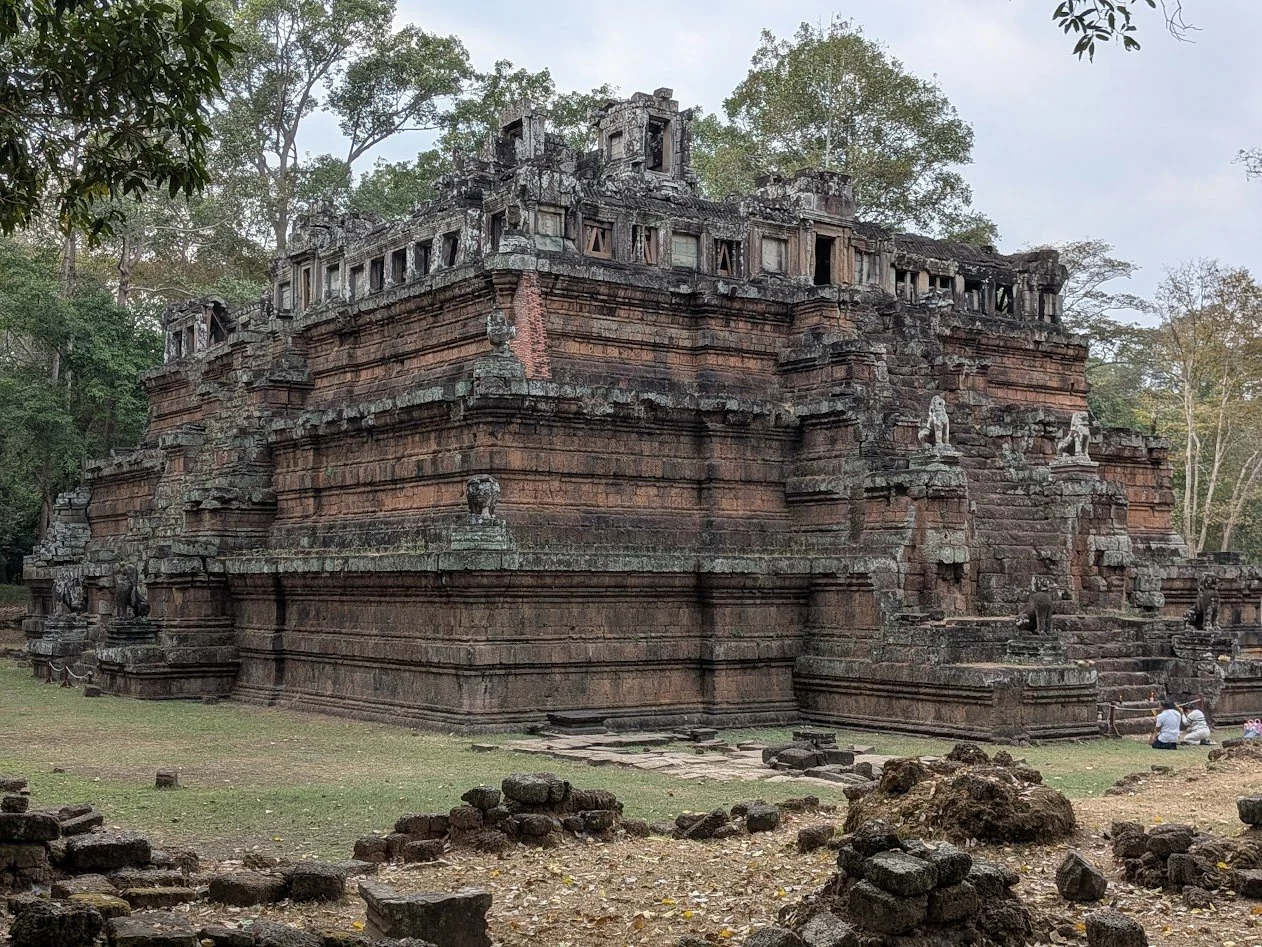
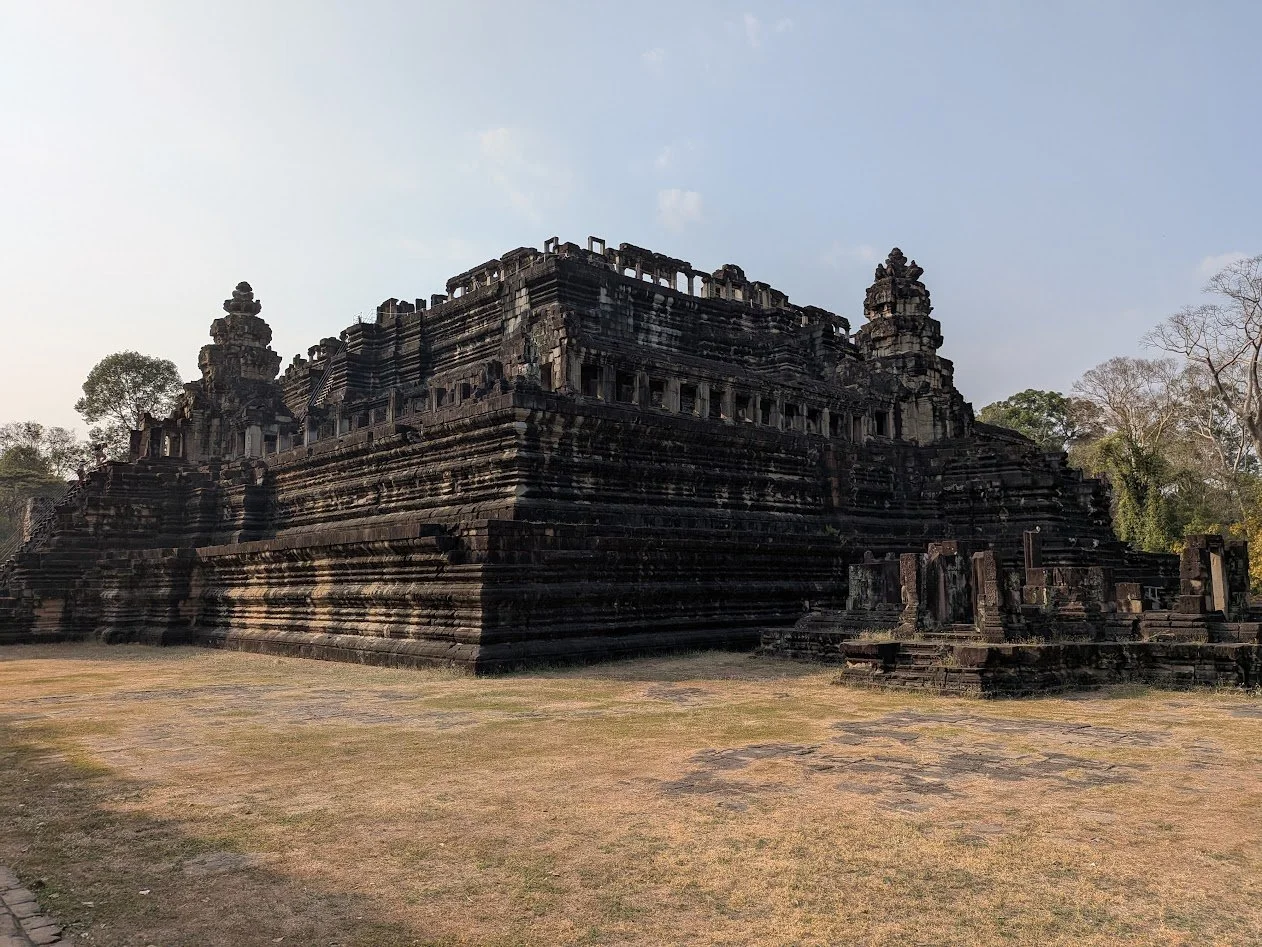
Next up was Baphuon, a 34-meter-tall "temple mountain" built in the mid-11th century (c. 1060) to honor the Hindu god Shiva. It is renowned for its 225-meter elevated walkway and intricate carvings. It was originally one of the largest Khmer temples, with a base measuring 120 by 100 meters.
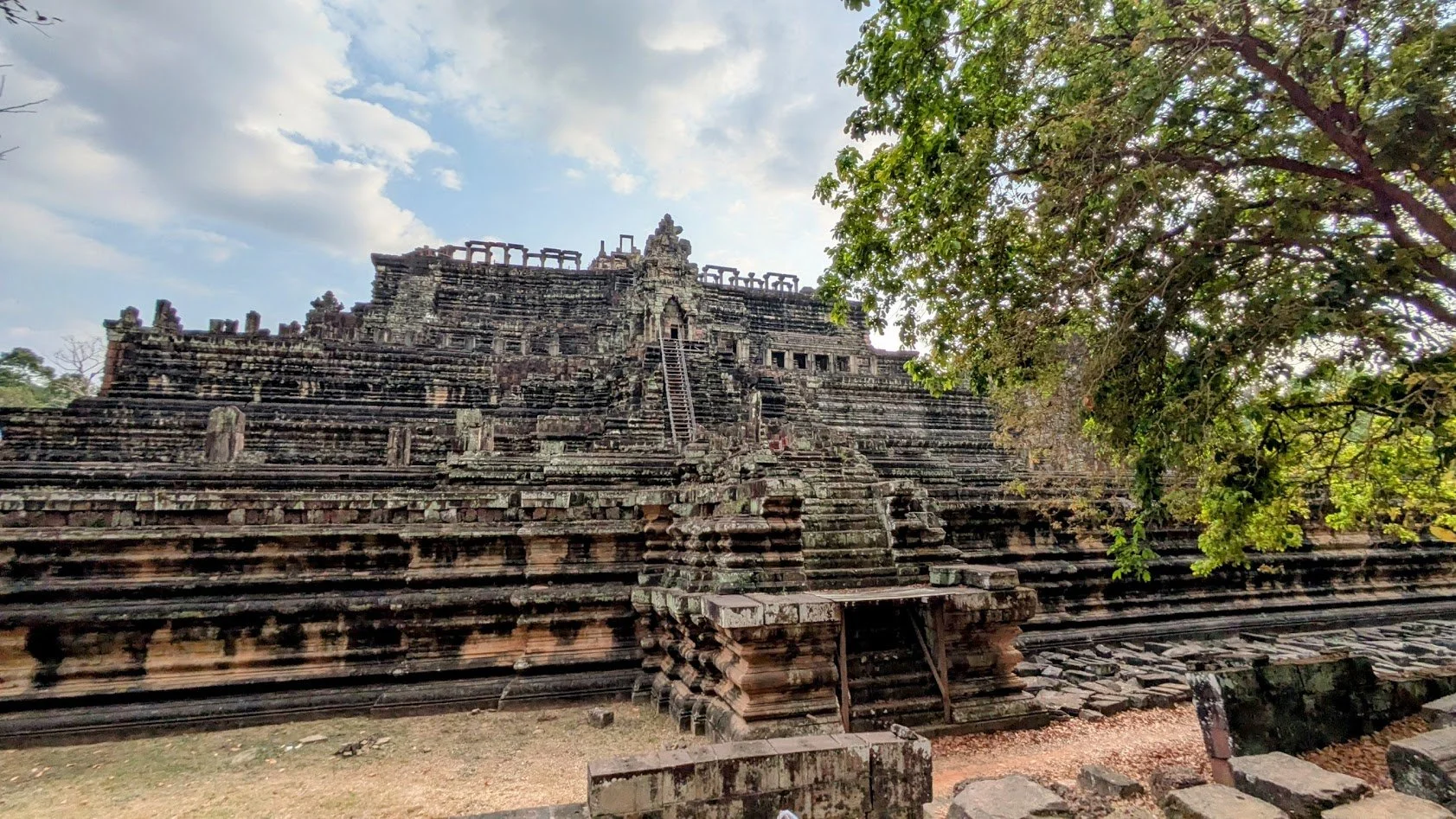
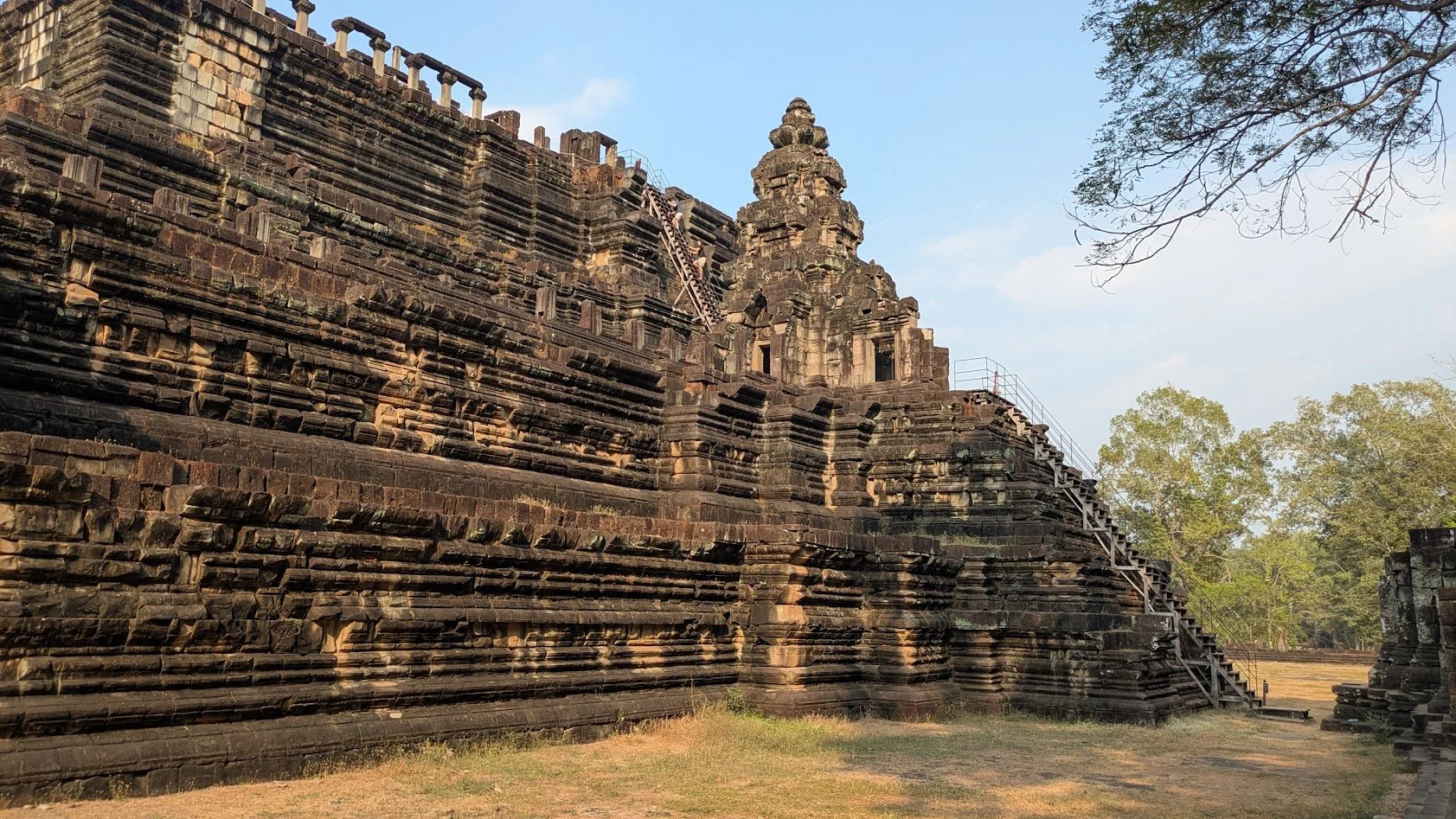
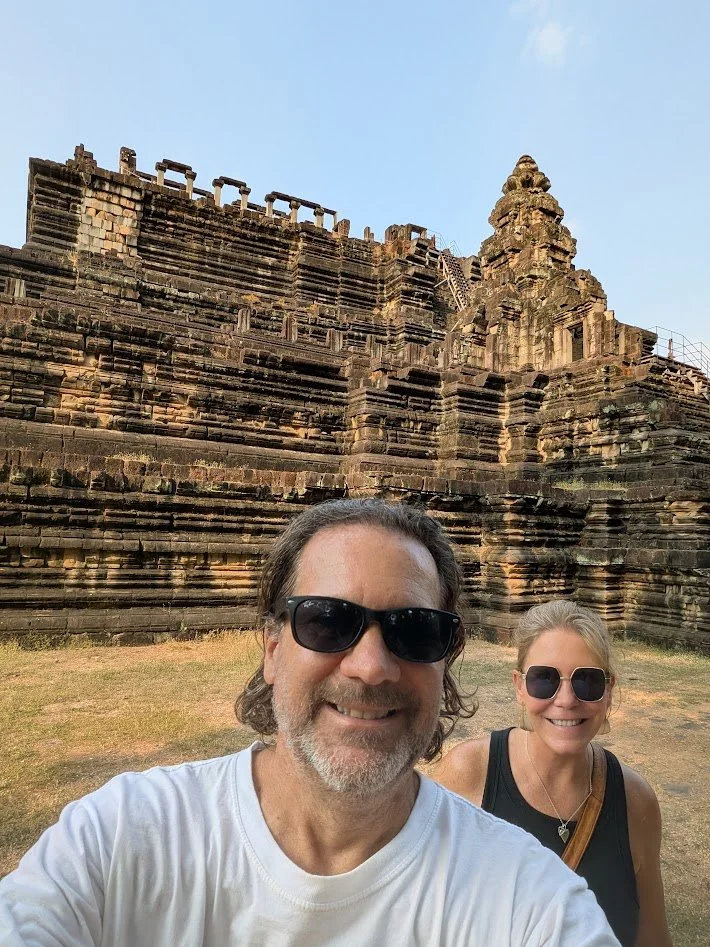
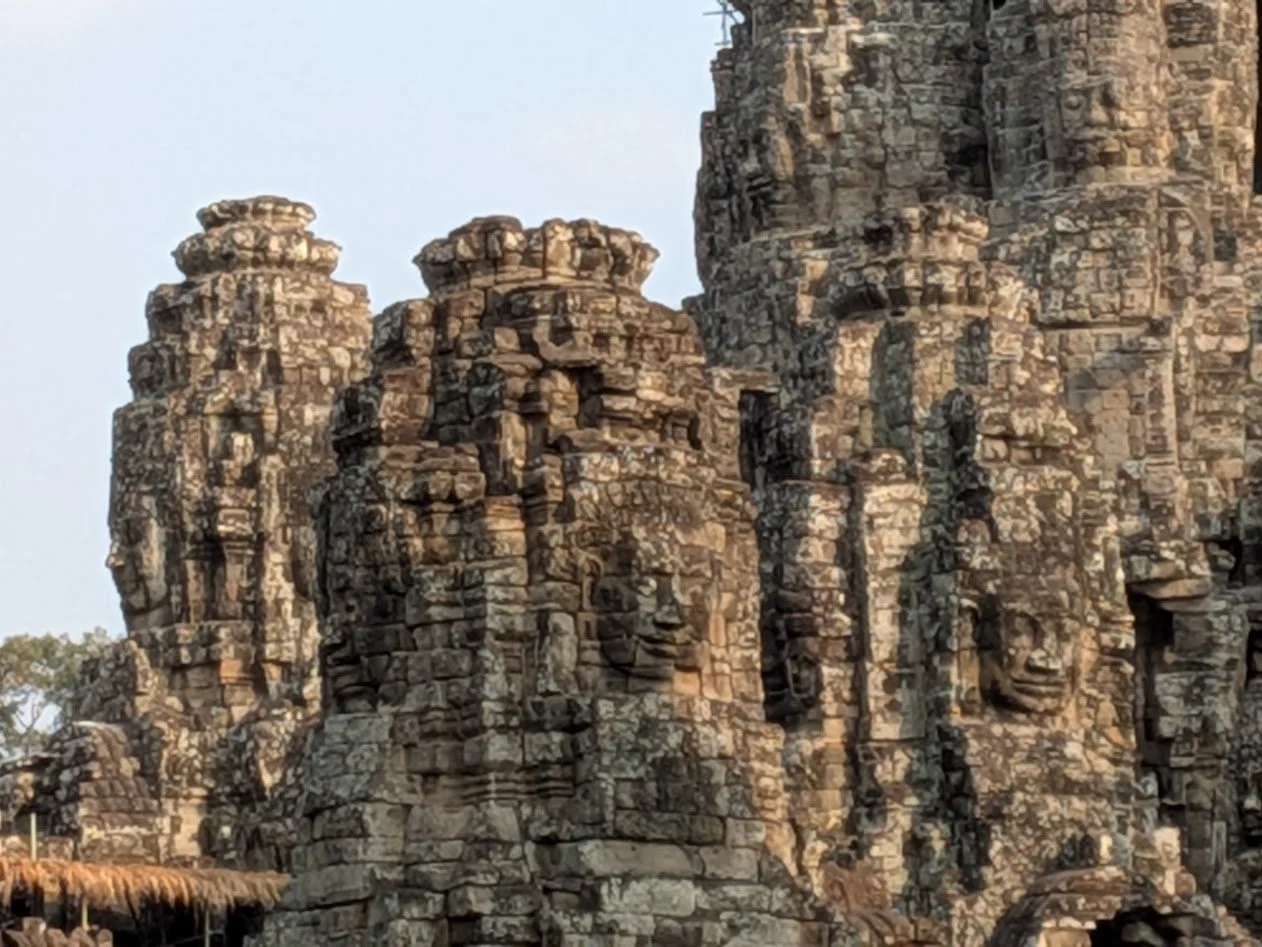
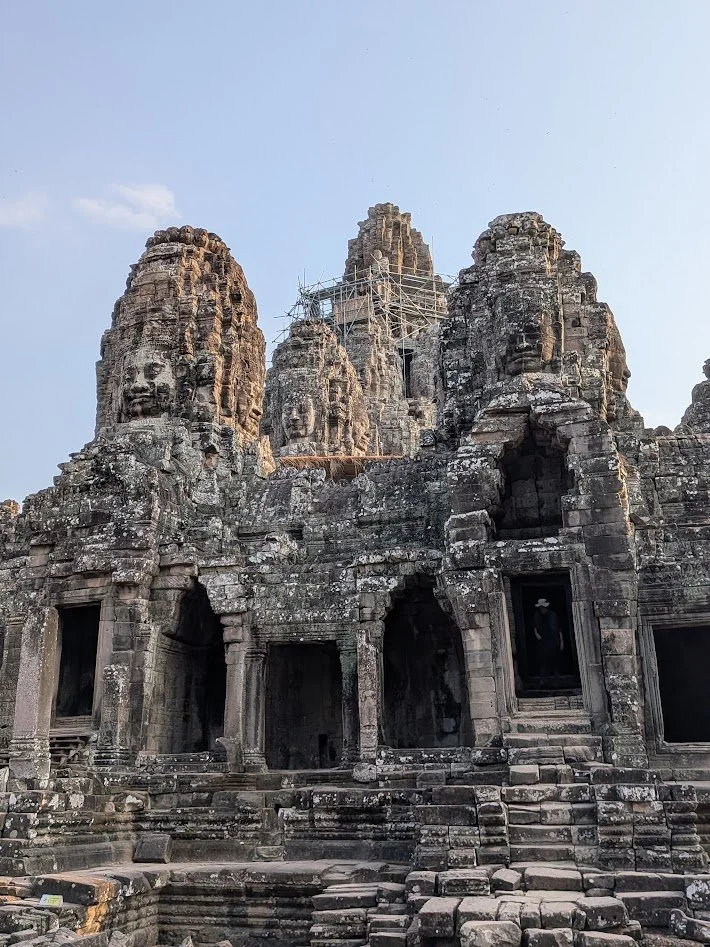
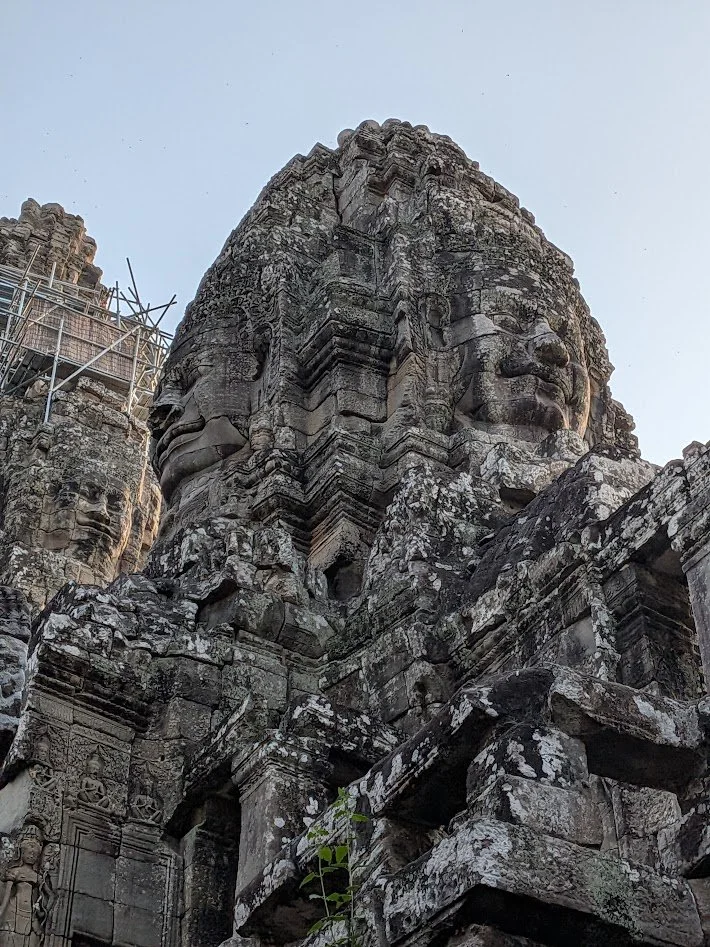
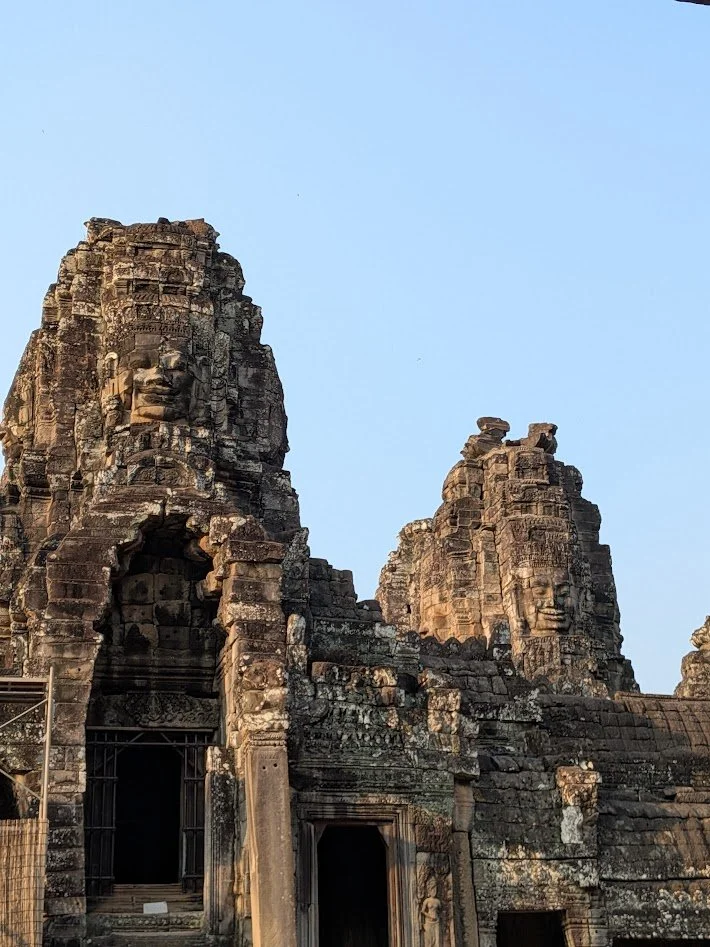
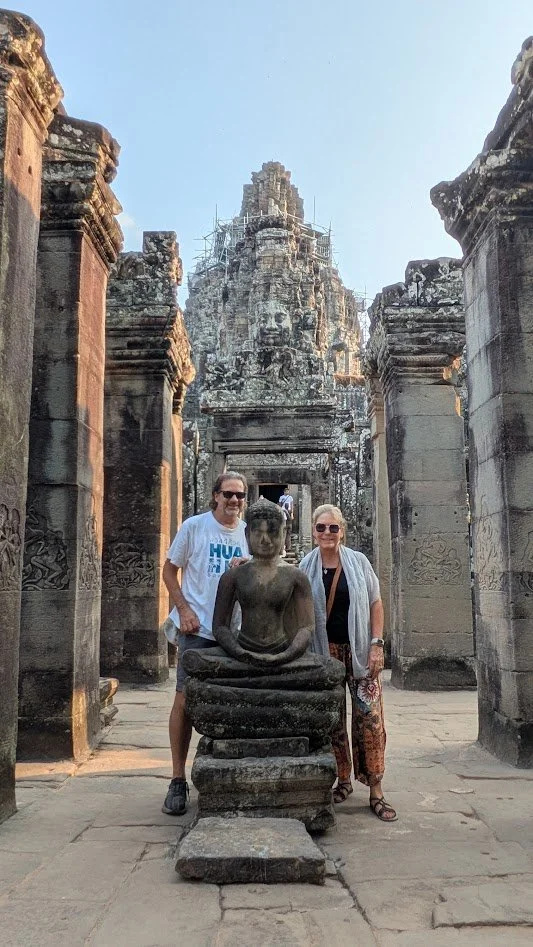
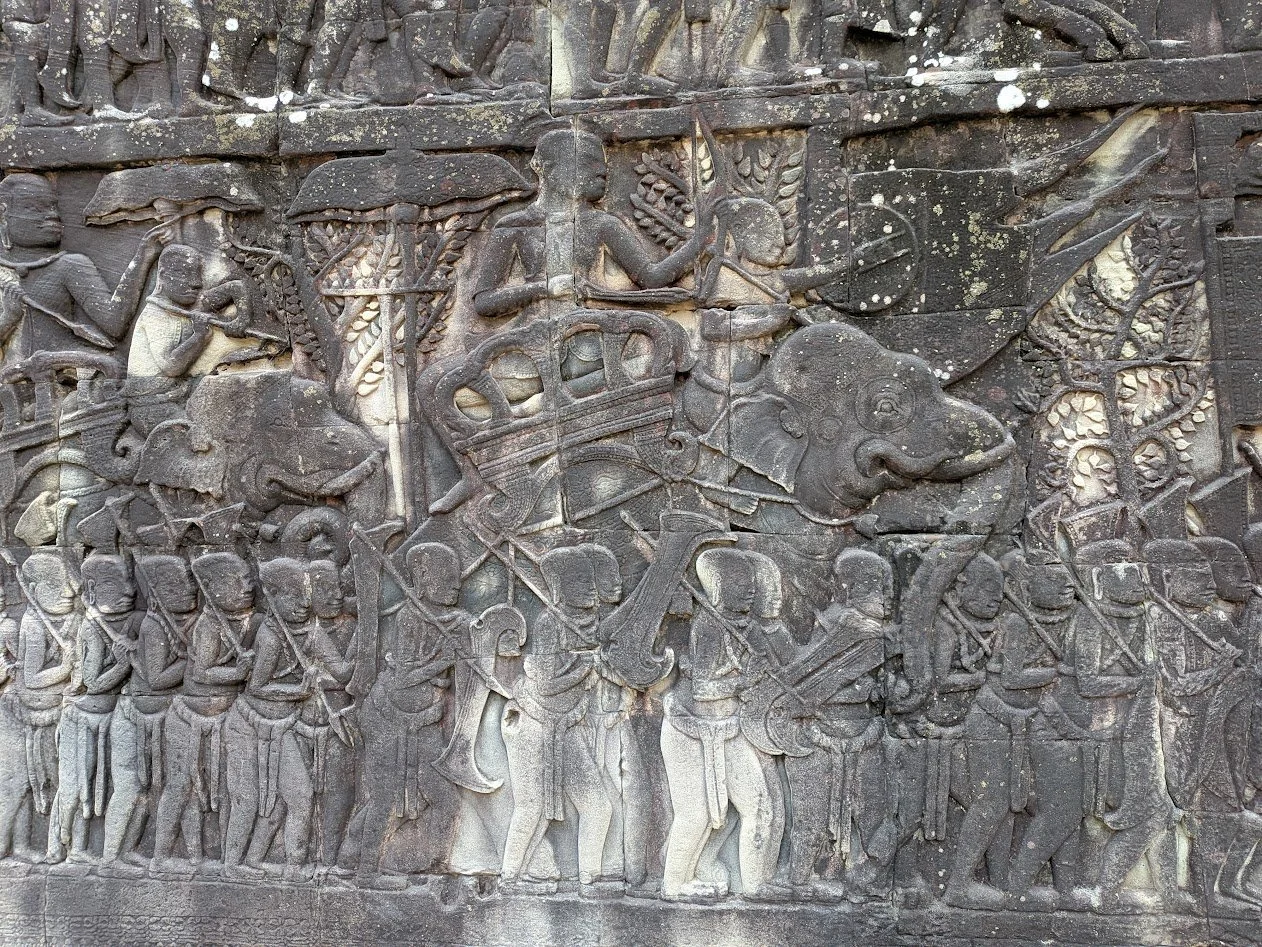
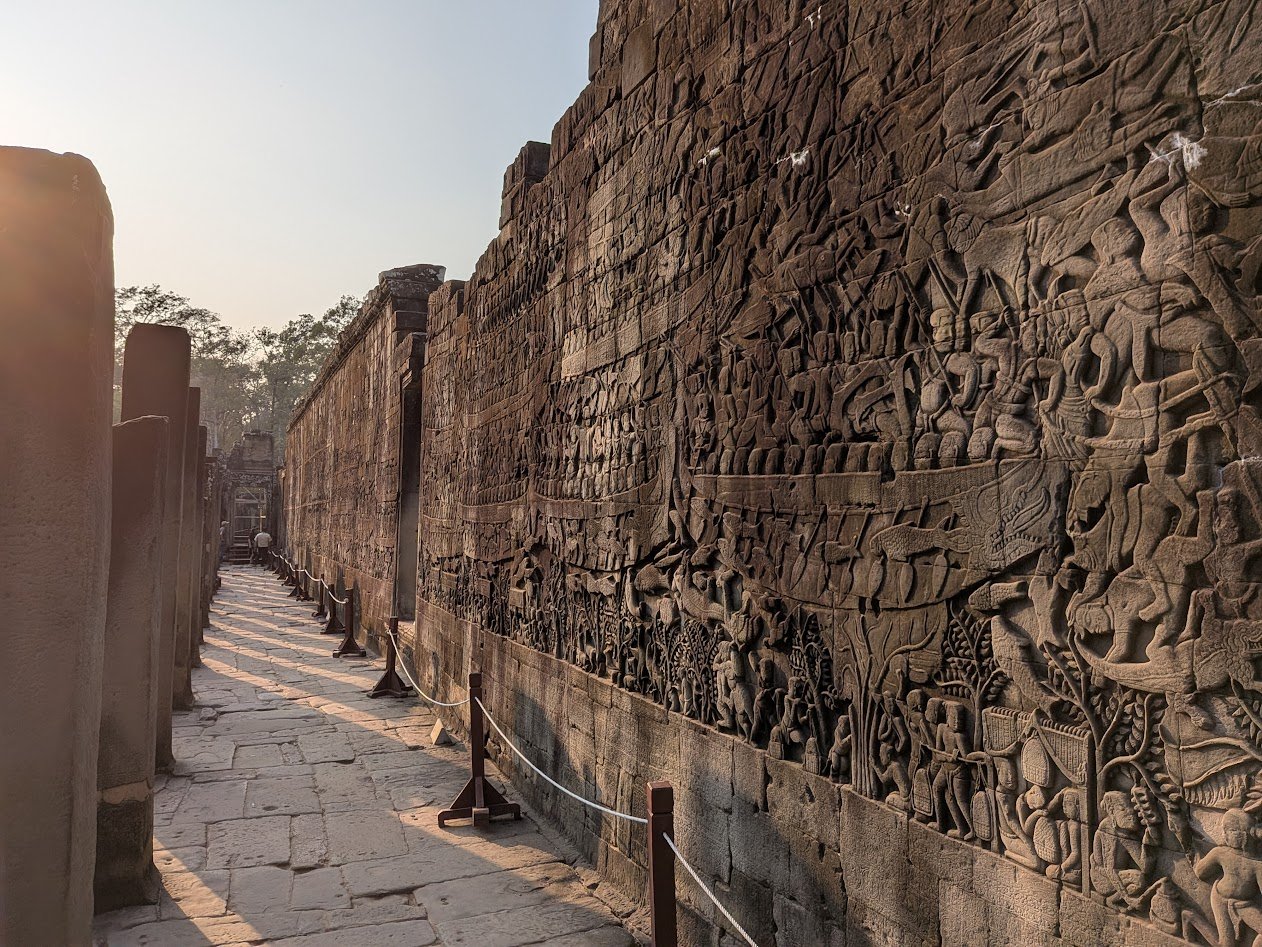
Grady’s favorite was the Bayon Temple, at the center of Angkor Thom, famous for its 200+ massive stone faces carved into numerous towers. The walls are covered with over 11,000 carvings, depicting scenes from daily life, market scenes, and historical battles of the Khmer Empire. Unfortunately, there was a lot of restoration taking place, so the scaffolding made it tough to get many really good pictures.
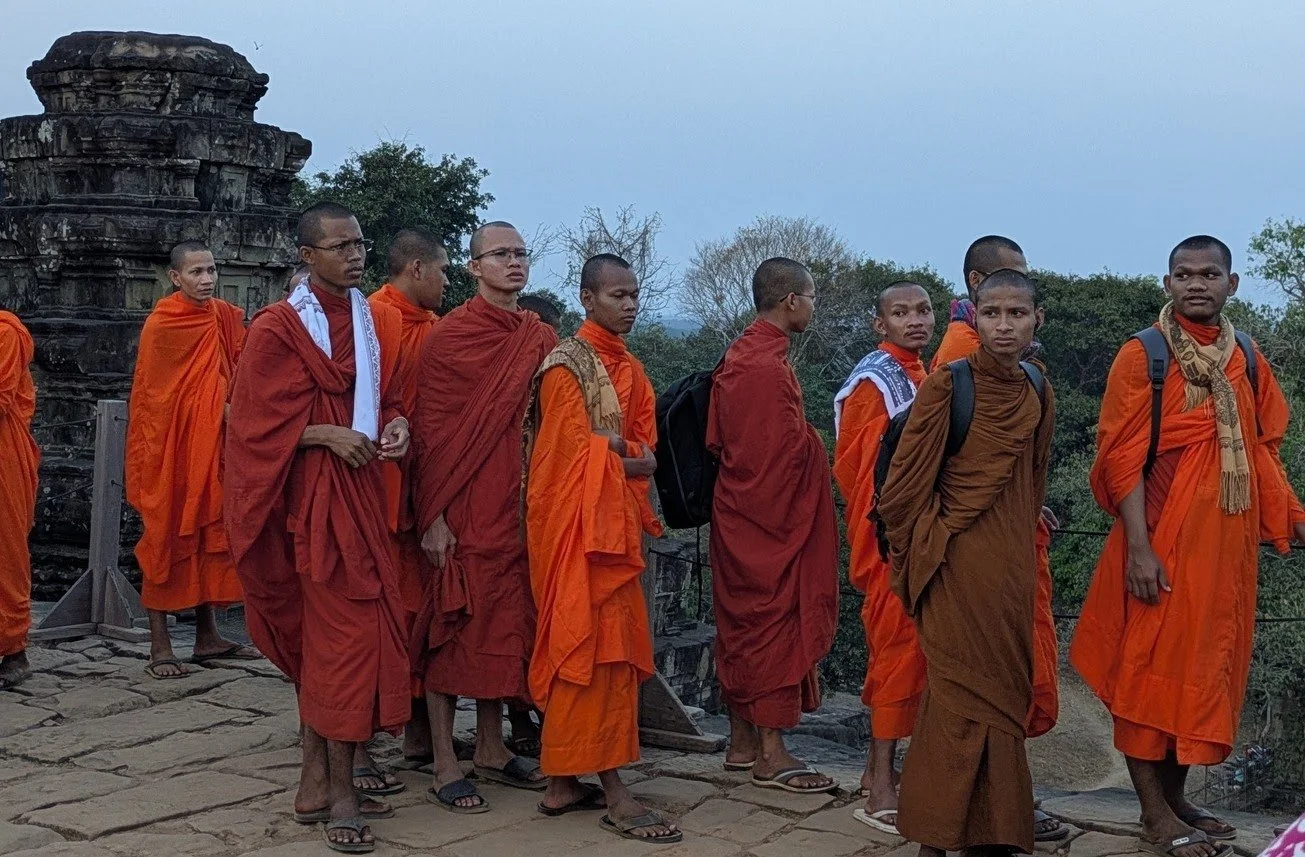
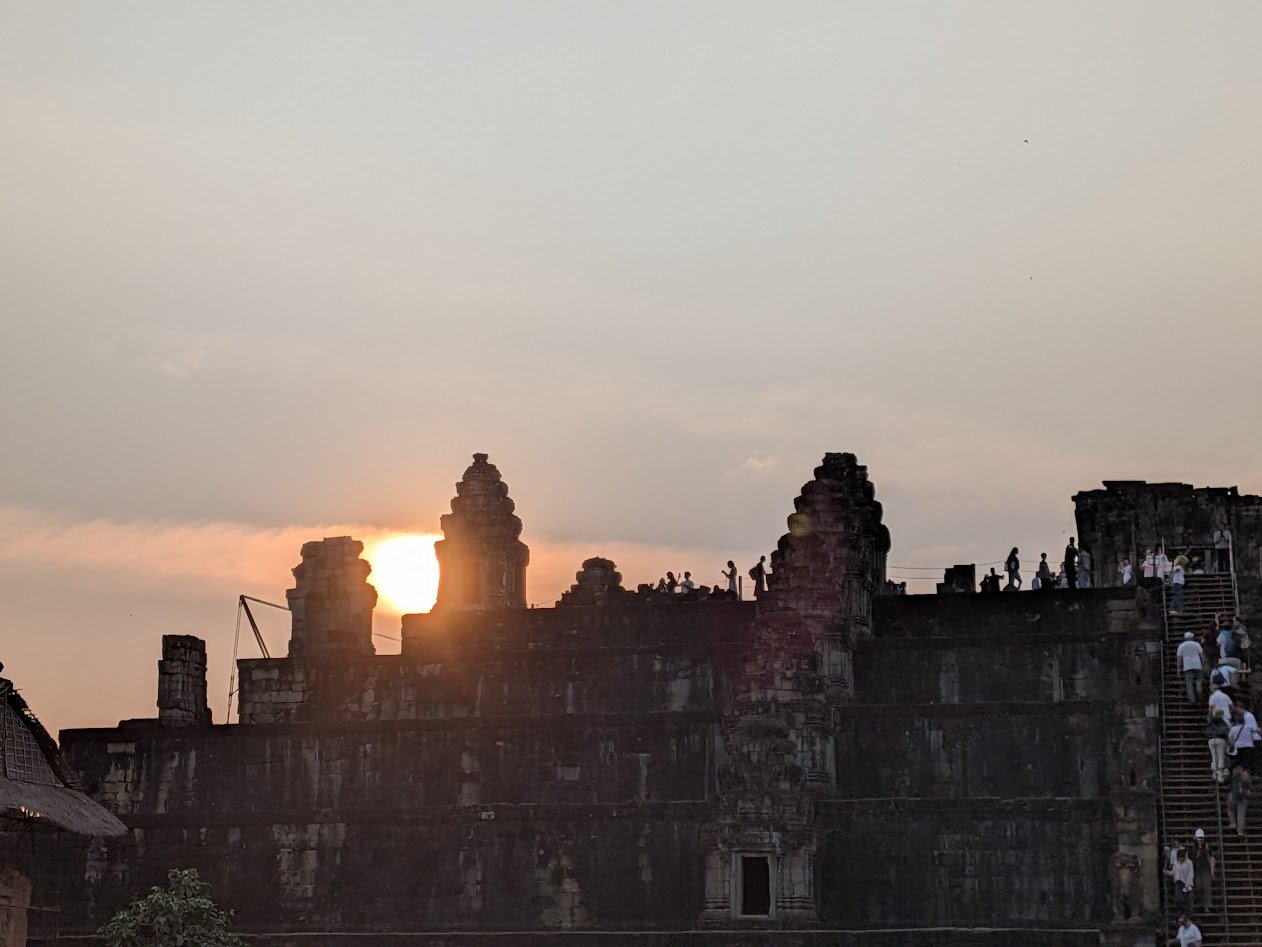
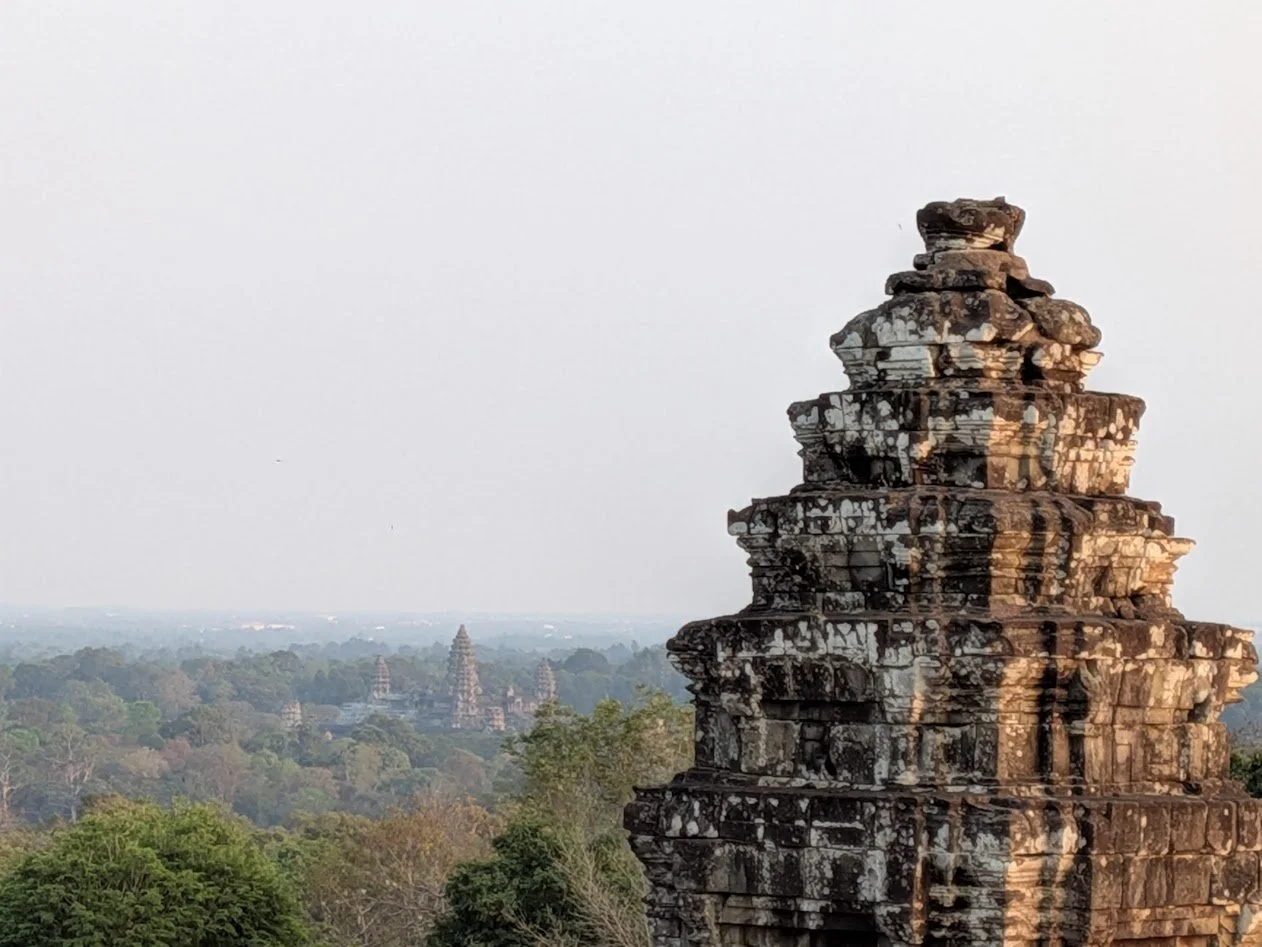
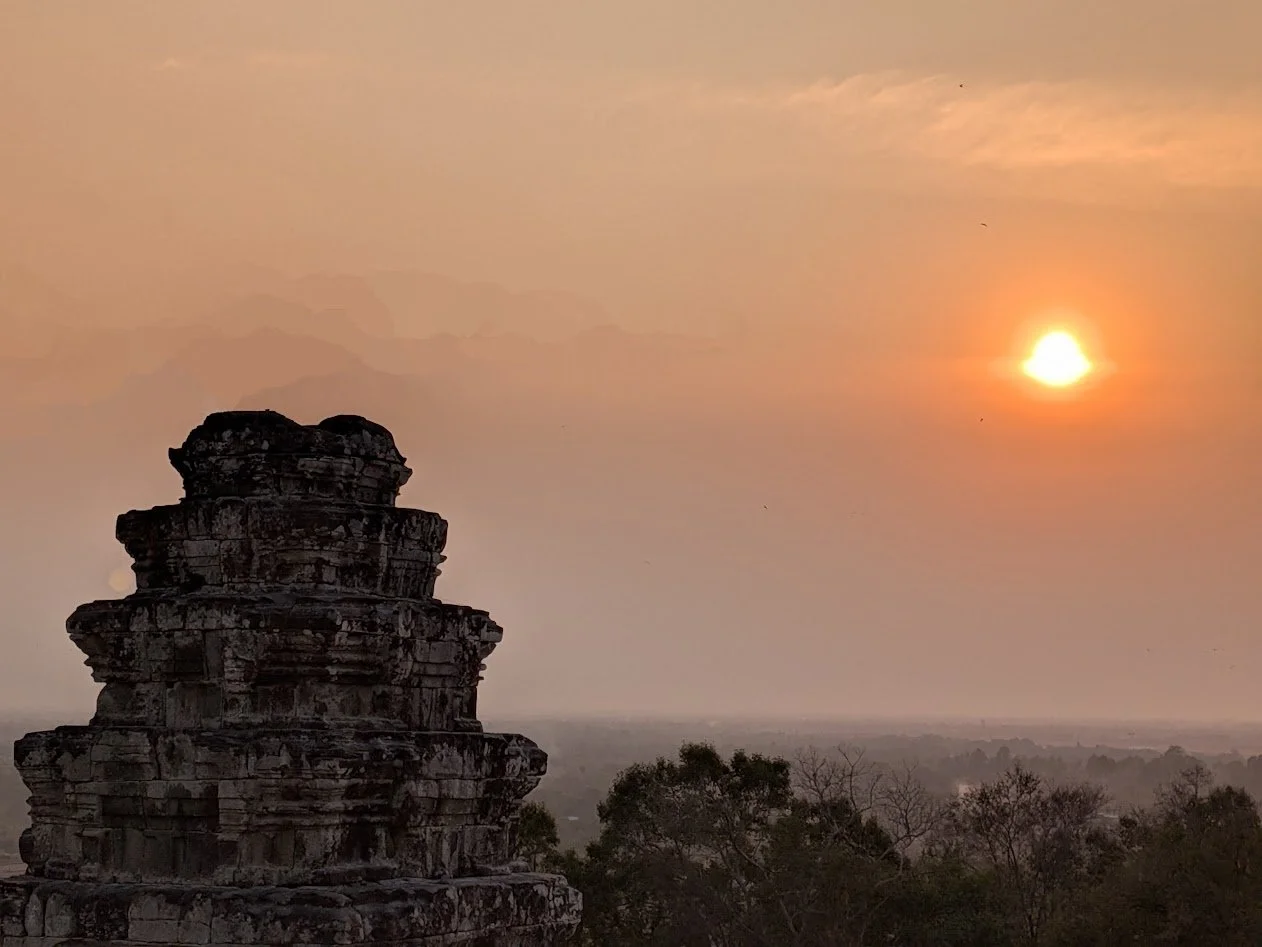
For our final stop of the day, we walked about 20 minutes up a big hill and then climbed the stairs to the top of Phnon Bakheng temple to watch the sunset. Phnom Bakheng is a 9th-century Hindu temple-mountain dedicated to Shiva, and considered one of the oldest in the Angkor Archaeological Park (built in 889–910). It is famous for panoramic sunsets over the surrounding jungle and Angkor Wat. It is situated on a 65-meter-high hill and the temple has five tiers and seven levels, representing the seven Hindu heavens. Unfortunately, there was a little cloud cover, so our sunset view was just ok.
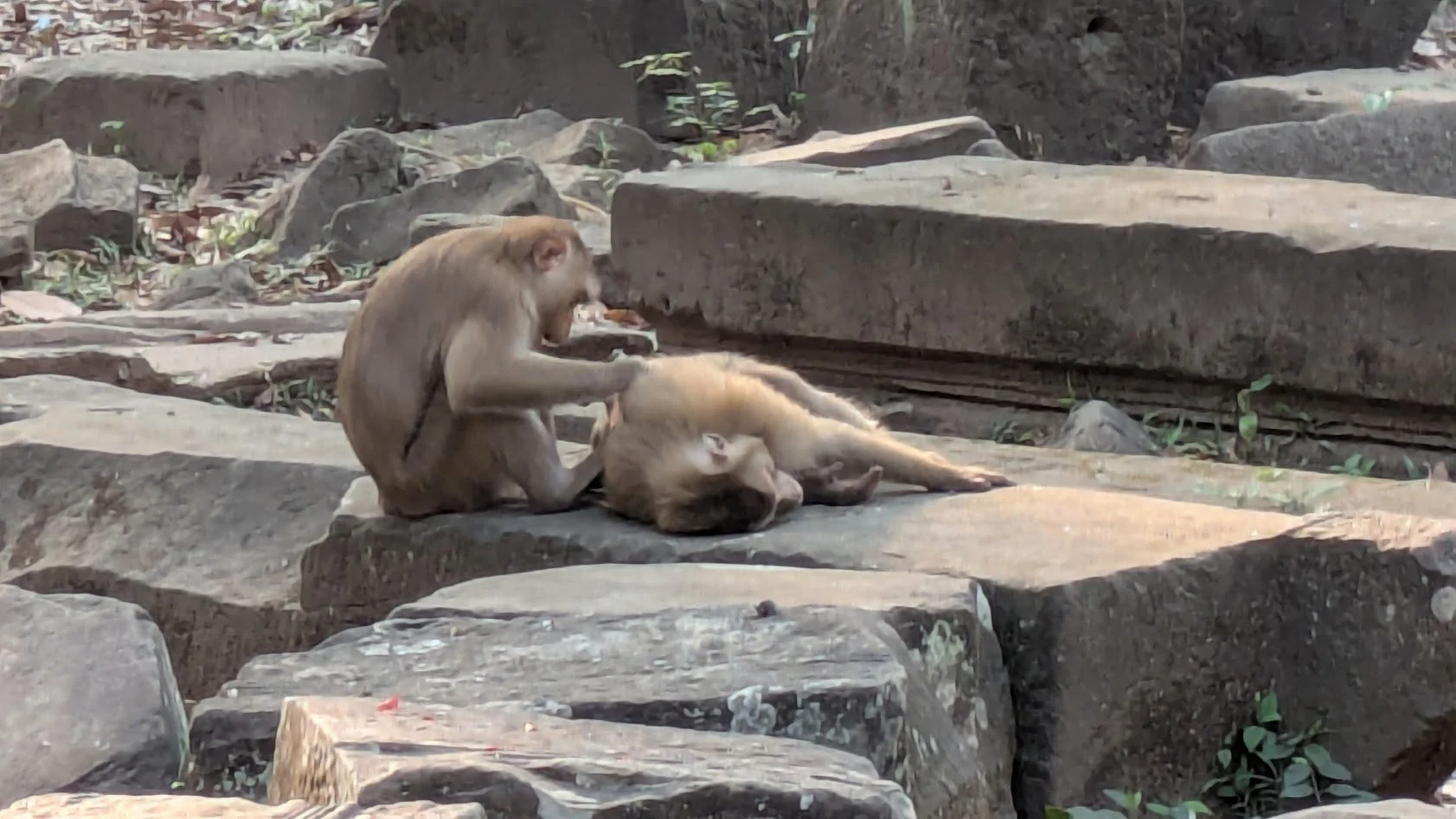
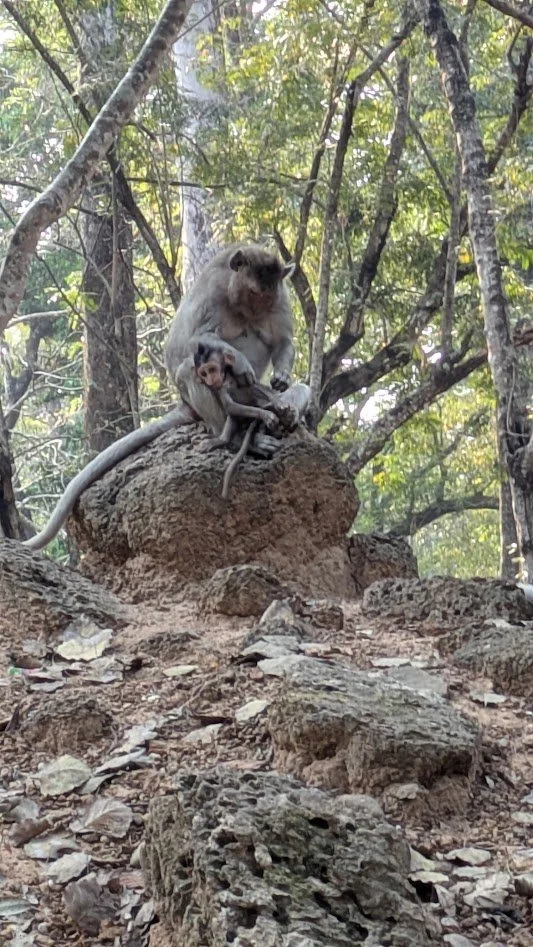
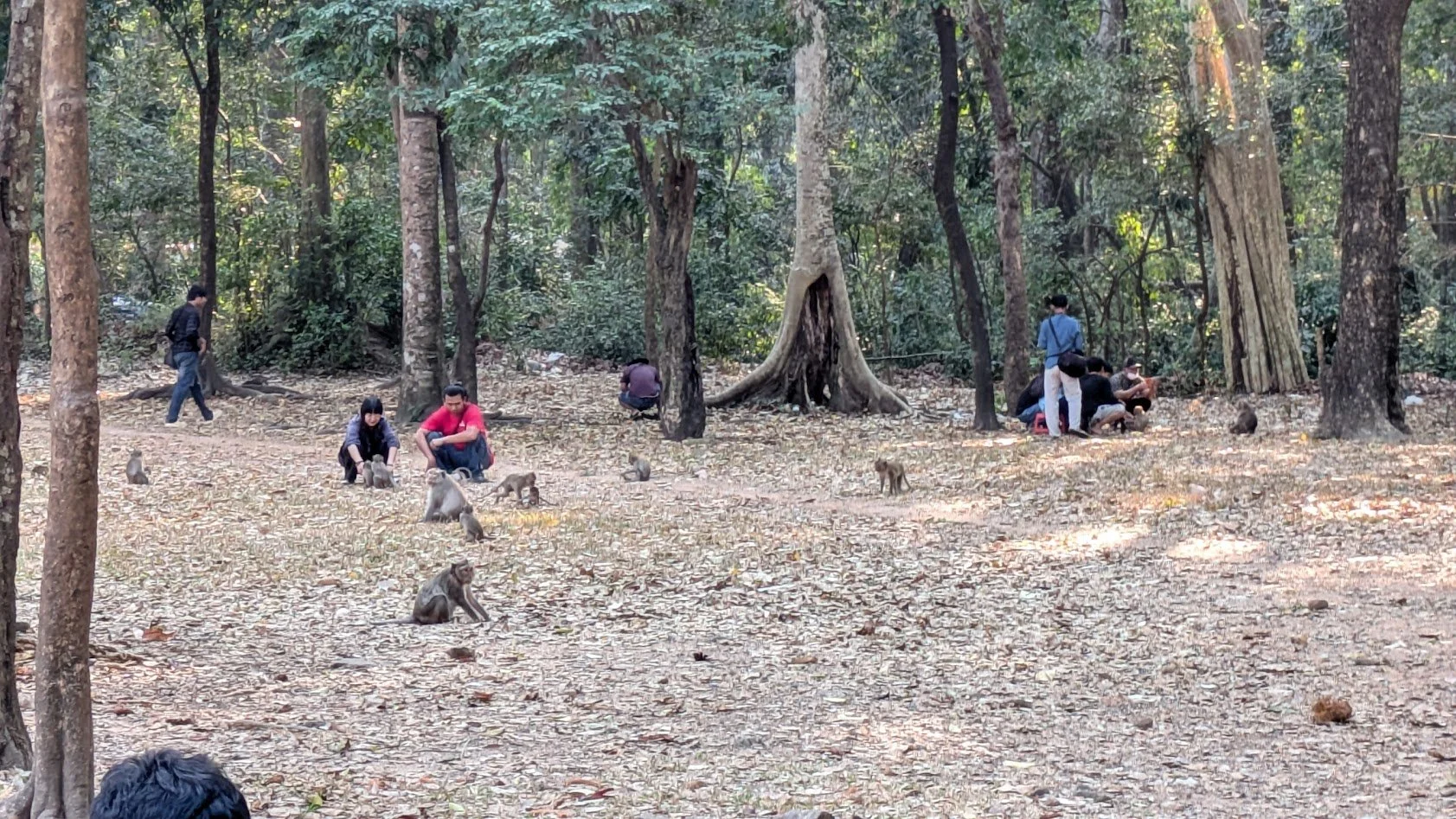
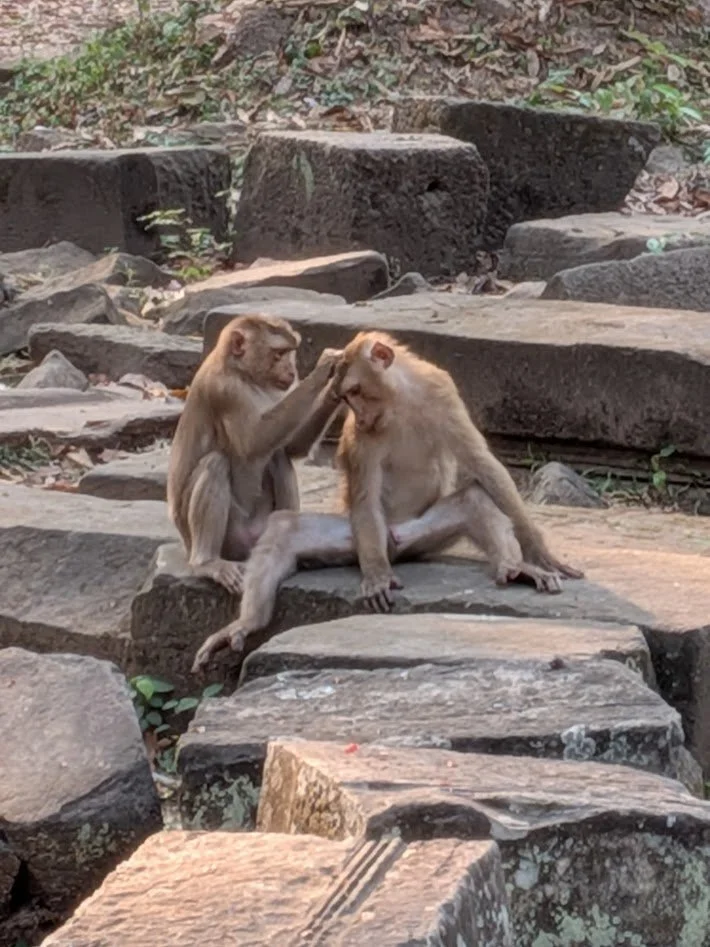
There were monkeys everywhere throughout the complex which were fun to watch!
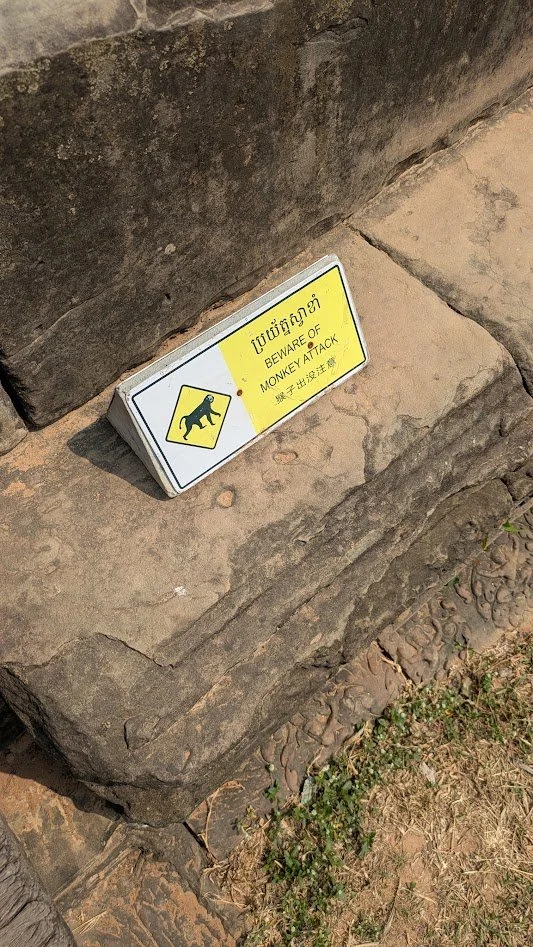
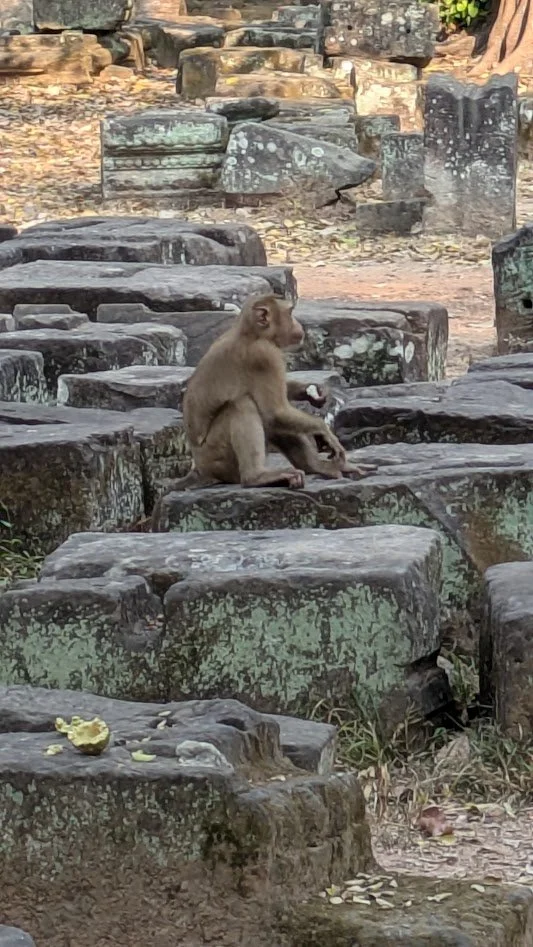
It was a fascinating day, but by the end, we were admittedly “templed out”! Many people get 3 and 7 day passes to explore a whole lot more of the park – 1 day was plenty for us!
Below you can add a comment: type your text in the white box and then Post Comment. If you get a second panel, you just need to enter your name and then hit ‘comment as guest’.
Be nice with your comments, we can always delete them 😊
