Vietnamese food didn’t stand a chance after coming from Thailand (for us anyhow). It’s characteristics are very similar (fresh ingredients, and a balance of five fundamental, tastes: sweet, salty, bitter, sour, and spicy) and a lot of fresh fruits. But in our book, it still didn’t quite measure up. Like Thai food, it relies heavily on herbs, rice-based noodles, fish sauce, and fresh vegetables. Restaurant food was pretty good, but some of the street food was a little suspicious looking!
The further south we got, the safer the food looked. In the far north, they ate ANYTHING! That said, we have strategically put the gross stuff at the bottom of the page, so if you have a weak stomach, you might not want to scroll all the way to the bottom! But let’s talk a bit about the disgusting foods in the north… these people were (and still are) SO POOR! They come from an era where their parents and grandparent had to live on monthly rations that were equivalent to what most of us would eat in a couple days. Many MANY people literally starved TO DEATH. Needless to say, they had to do what they had to do to survive… and some of that culture hasn’t gone away entirely.
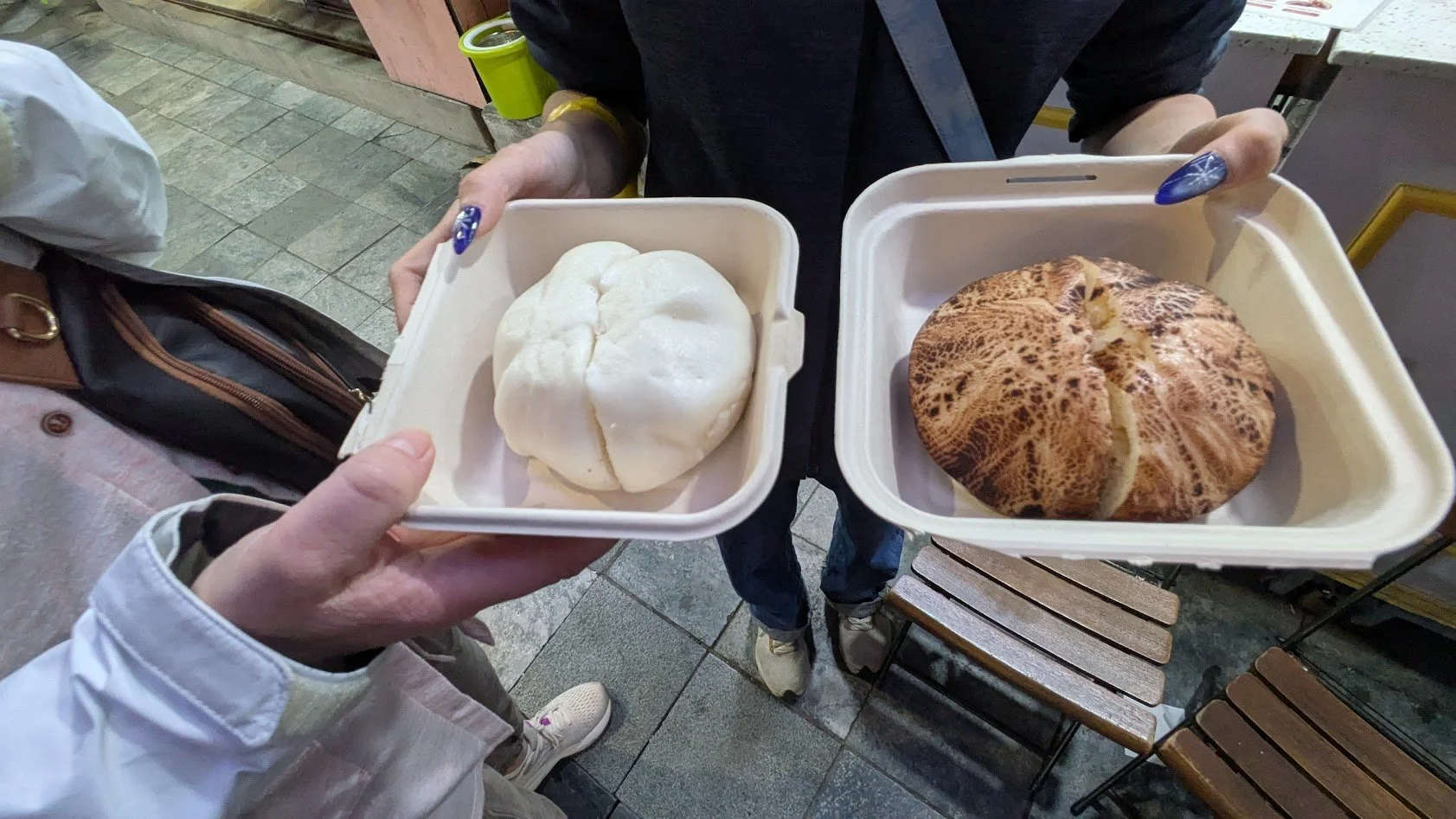
Bánh bao is a steamed bun that is a fluffy, slightly sweet white bread filled with a mixture of minced pork, onions, and mushrooms. It's a common snack or breakfast item. We tried it on a food tour in Hanoi. It was pretty good, but we were so full at this point that we could barely take more than a bite or two! I think even Dan stopped eating at this point of the tour... something I had never witnessed!
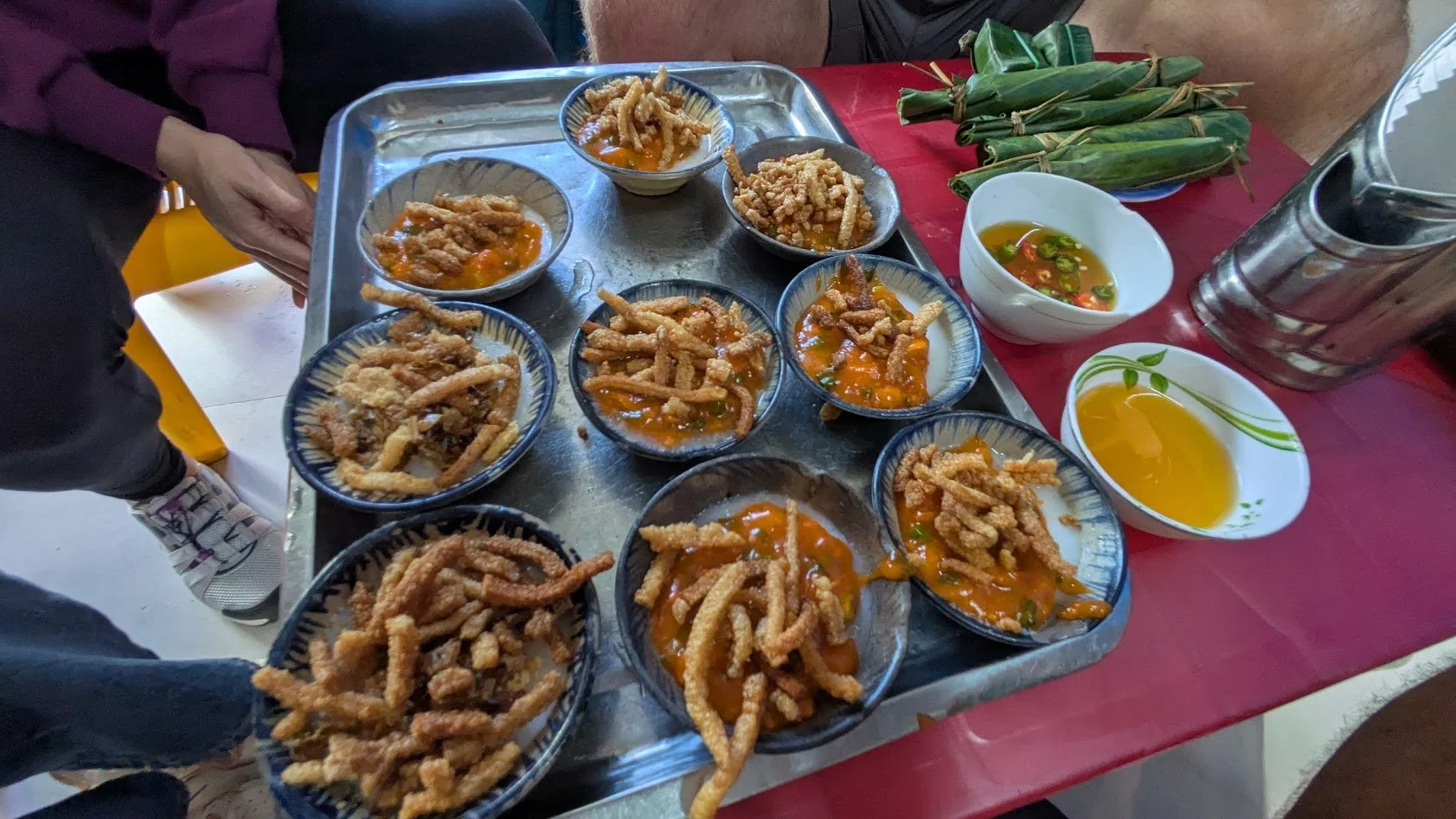
Bánh bèo are delicate, small Vietnamese steamed rice cakes, served as a popular snack with savory toppings like shrimp, crispy pork skin, scallion oil, and a sweet-savory dipping sauce. The cakes are made from rice flour, steamed in small ceramic dishes. They were kind of weird to eat as the base is pretty firm and you had to cut it in fourths and scoop it out. We tried these on a food tour in Hoi An. They were actually pretty good.
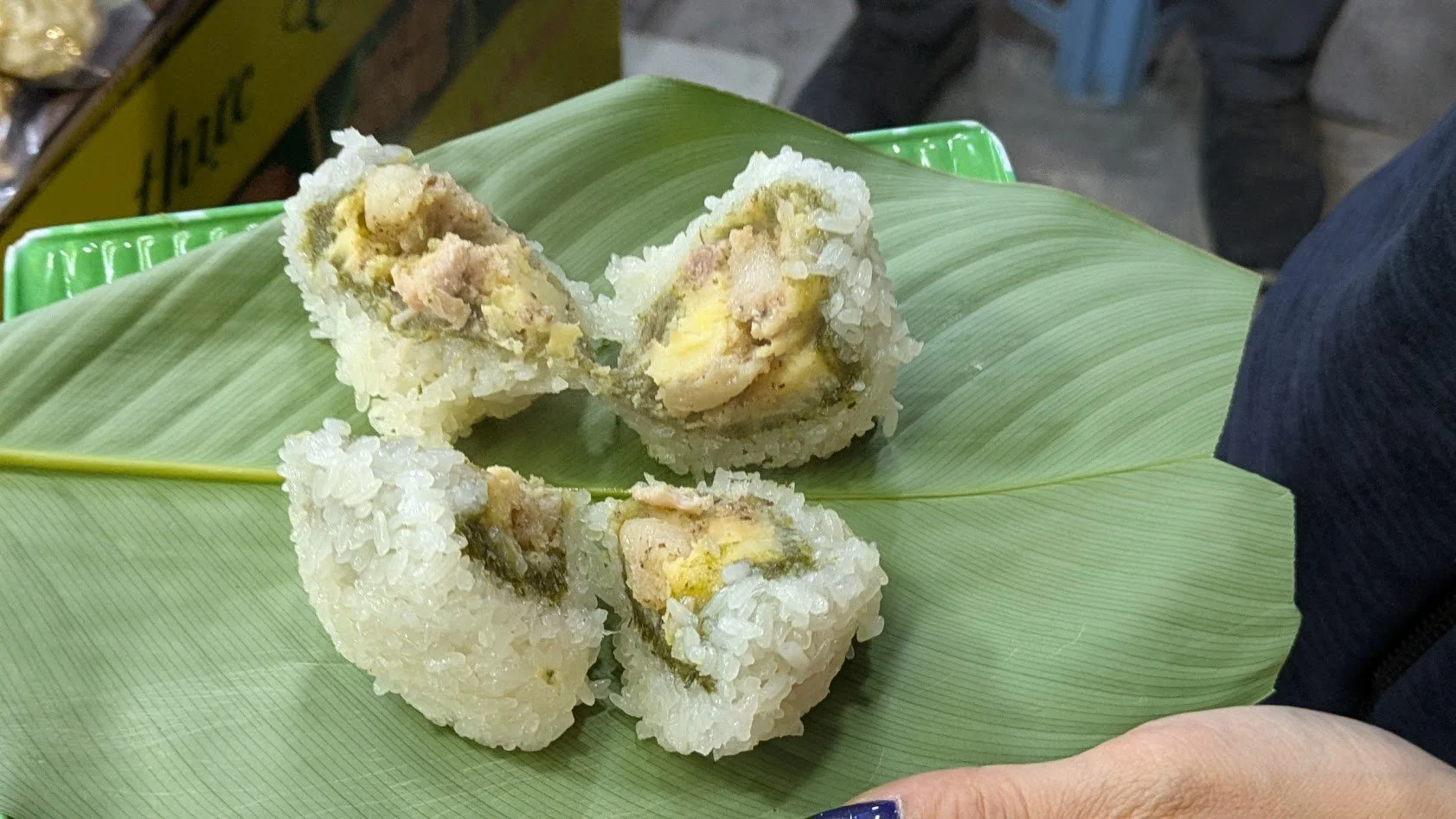
Banh khuc, or Vietnamese cudweed sticky rice cake, is a traditional dumpling from Northern Vietnam, particularly popular in Hanoi. It consists of mashed cudweed (which is literally a weed!) mixed with rice flour, filled with mung bean paste, pork, and pepper, then coated in steamed glutinous rice. We tried it on our food tour in Hanoi. It was ok.
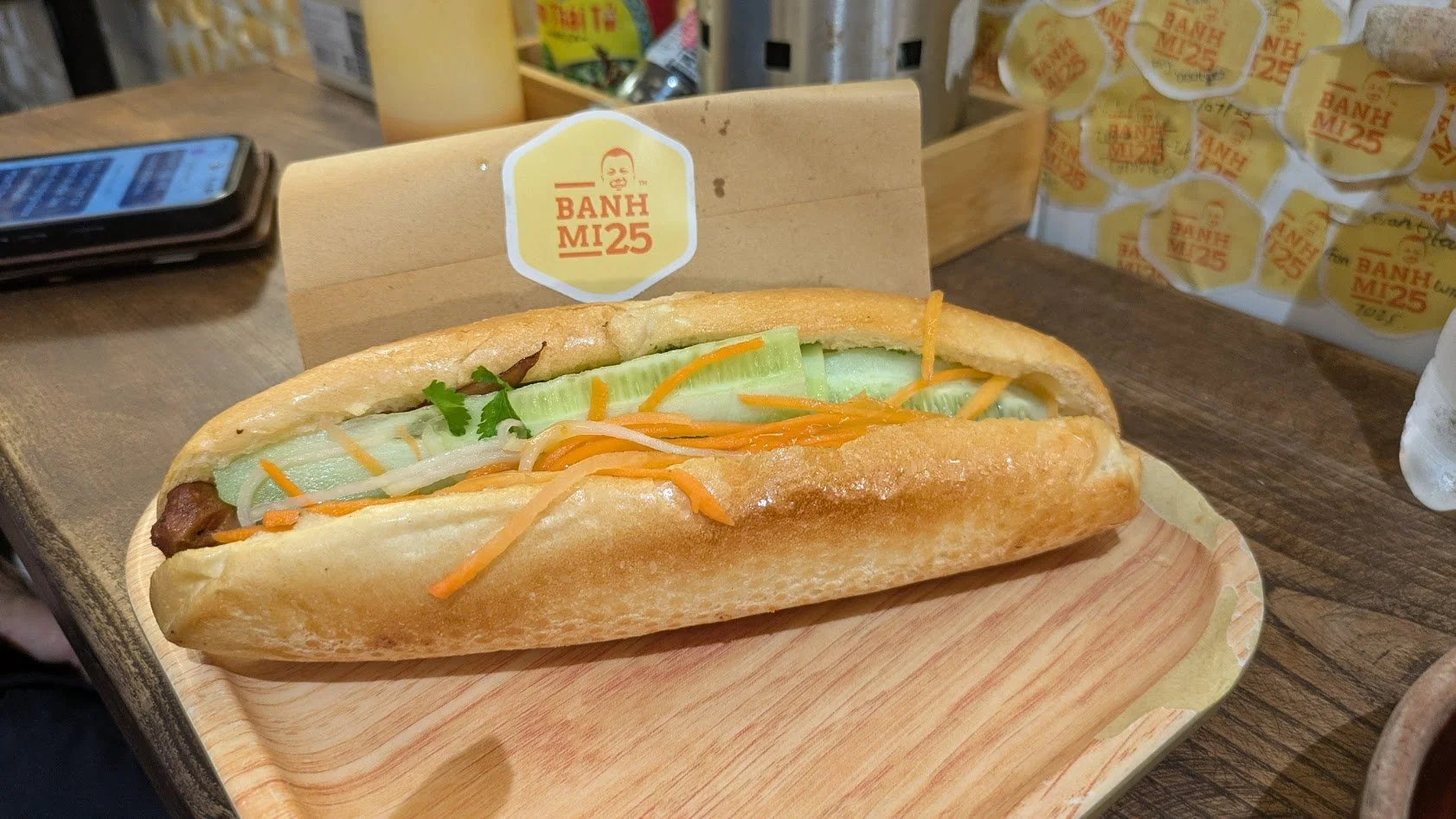
Bánh mì is Vietnam's version of a sub sandwich! But it is all about the bread which is a crisp-on-the-outside, soft-on-the-inside baguette made with rice and wheat flour for an airy texture (a French-colonial legacy). Of course some of the fillings are a bit different than what Subway offers, but in the end, it's a sandwich ... a really stinking good sandwich!
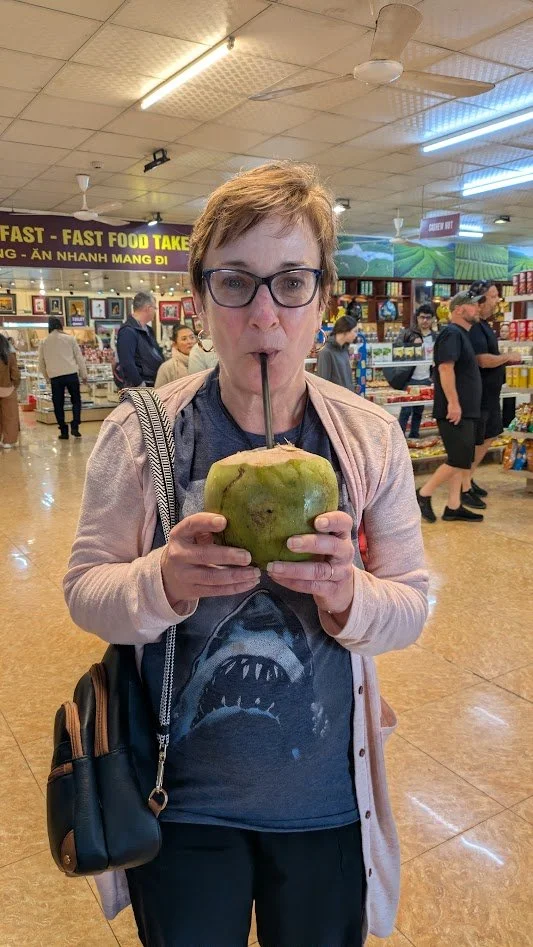
Coconut water is considered a staple in Vietnam, with the Mekong Delta producing high-quality, sweet, and nutty varieties. Vietnam is a major global exporter of coconut water, particularly to the U.S..
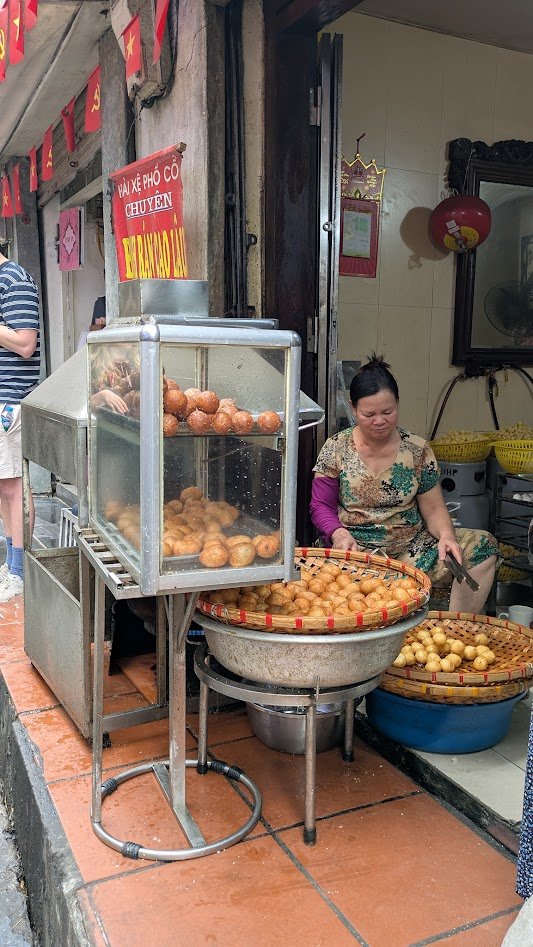
Banh ran is a Vietnamese deep-fried glutinous rice ball originating from Northern Vietnam, often called a "Vietnamese donut". It consists of a crispy, golden-brown shell—often coated in sesame seeds—and typically comes in two varieties: a sweet version filled with mung bean paste and a savory version stuffed with minced pork, wood-ear mushrooms, and vermicelli. Both really good!
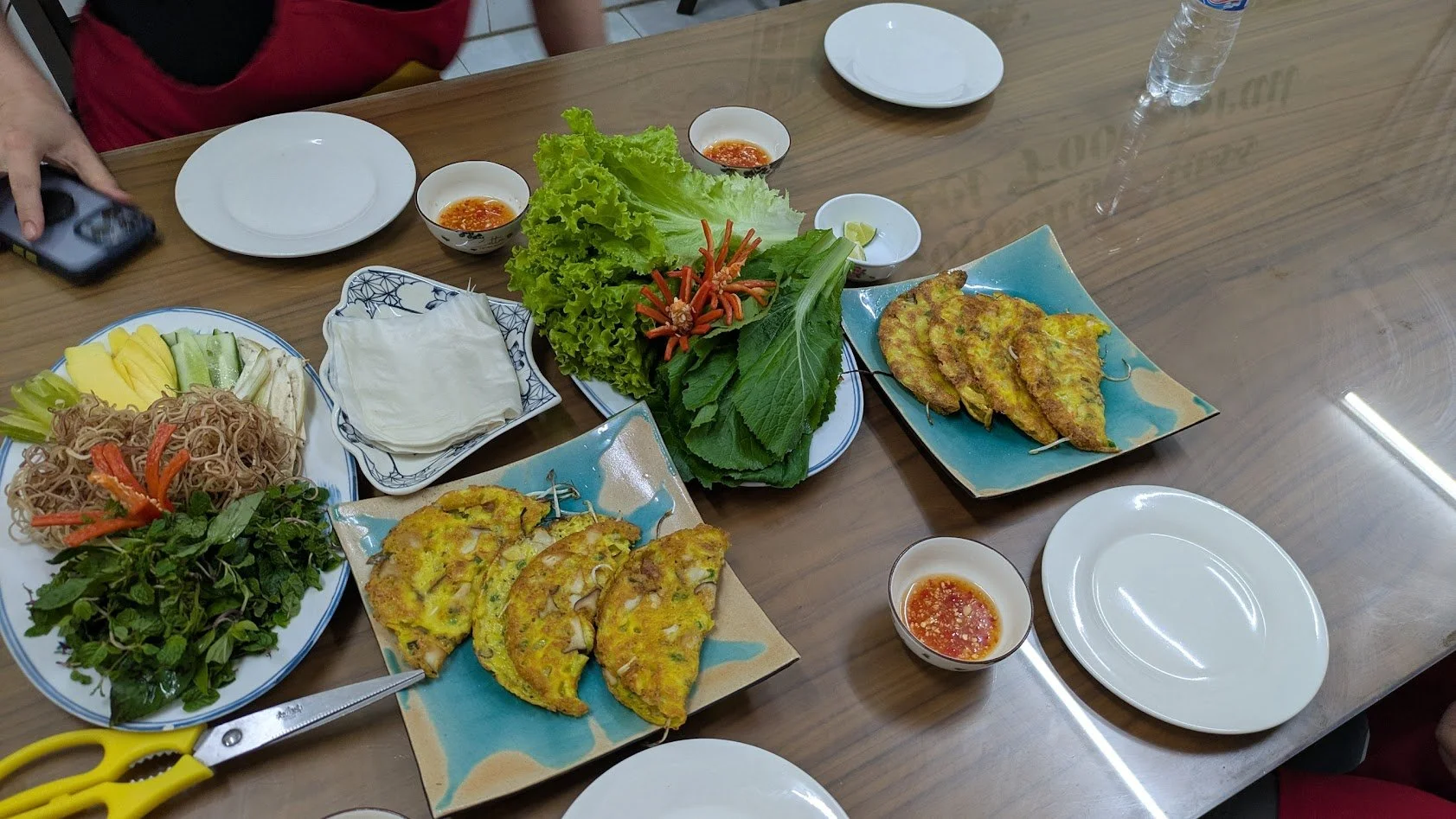
Bánh xèo is a savory, crispy crepe or "sizzling pancake" made from rice flour, water, and turmeric powder (which gives it its yellow color). It's known for its color and "xèo" (sizzling) sound when cooked. It is filled with pork, shrimp, bean sprouts, and green onion. We made these in our cooking class in Da Nang. They were outstanding!
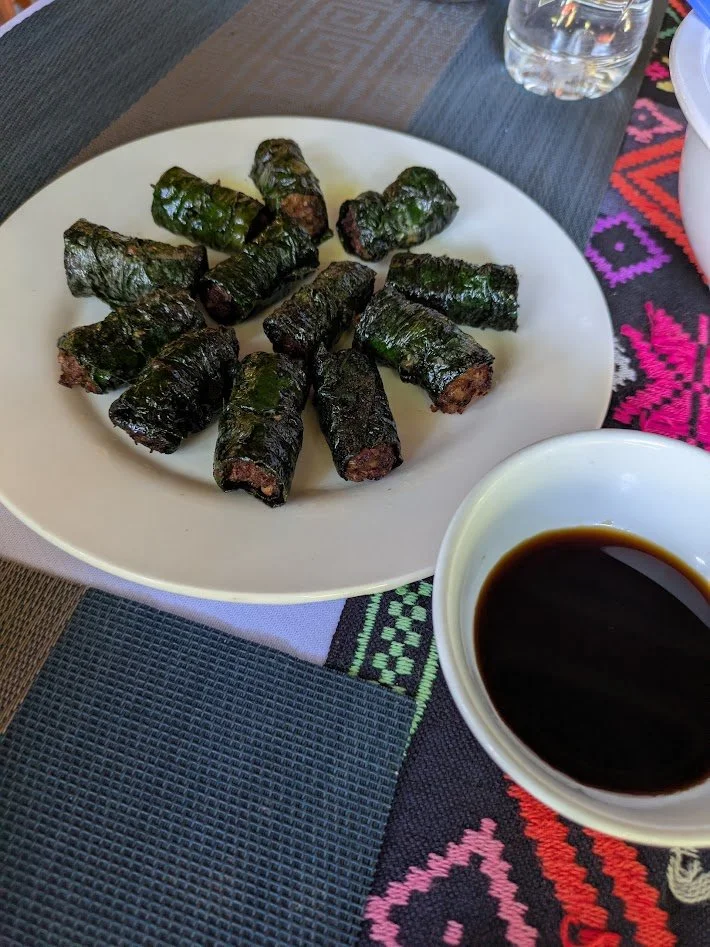
Bò lá lốt is a popular Southern Vietnamese dish featuring minced beef mixed with garlic, shallots, and spices, wrapped lolot leaves and grilled over charcoal. There wasn't a vegetarian version for me, but Grady thought they were pretty good.
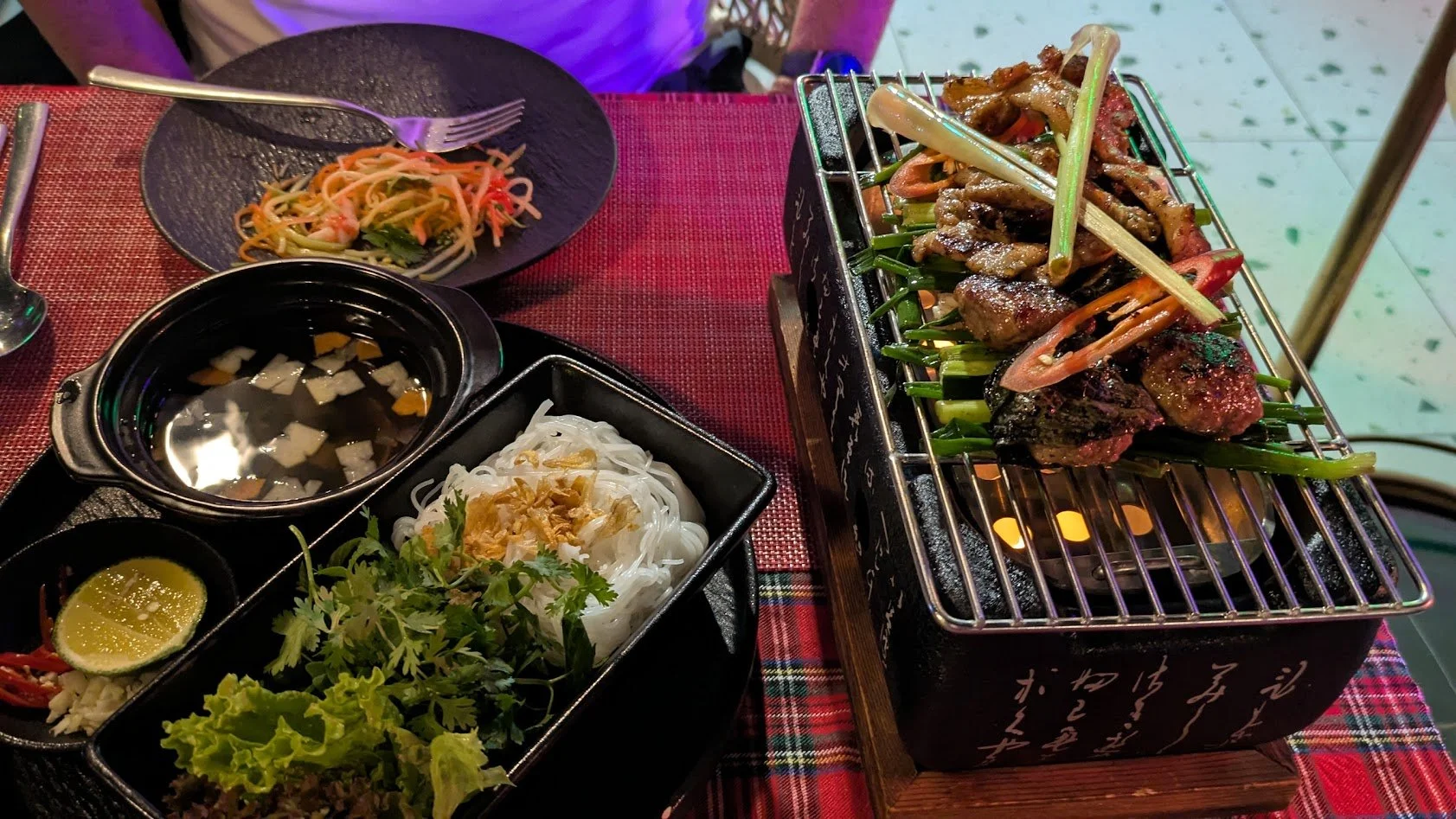
Bún chả is a really popular North Vietnamese dish originating from Hanoi (which was made even more popular when Obama came to Hanoi and had it!). It features grilled pork patties (chả) and pork belly served in a bowl of fish sauce-based broth alongside rice vermicelli noodles (bún) and fresh herbs. Grady had it at a cool rooftop restaurant in Hanoi and loved it.
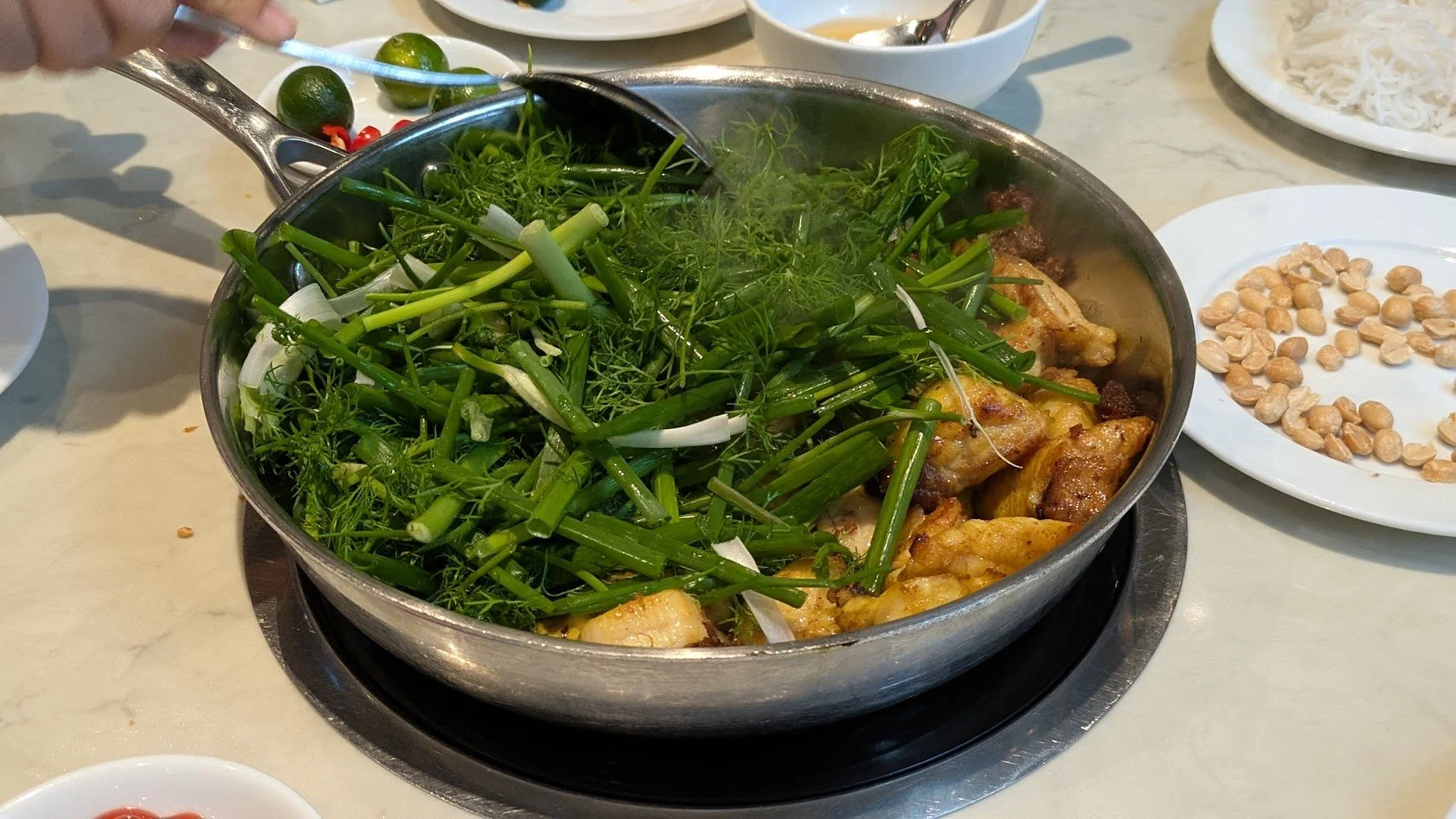
Cha Ca La Vong is a famous, historic Hanoi dish of marinated fish grilled and served sizzling with dill, scallions, rice noodles, herbs, peanuts, and shrimp paste. The fish was already cooked, then they threw everything else in the pan on a burner at our table and we cooked it up and ate it. It was SO stinking good!!!
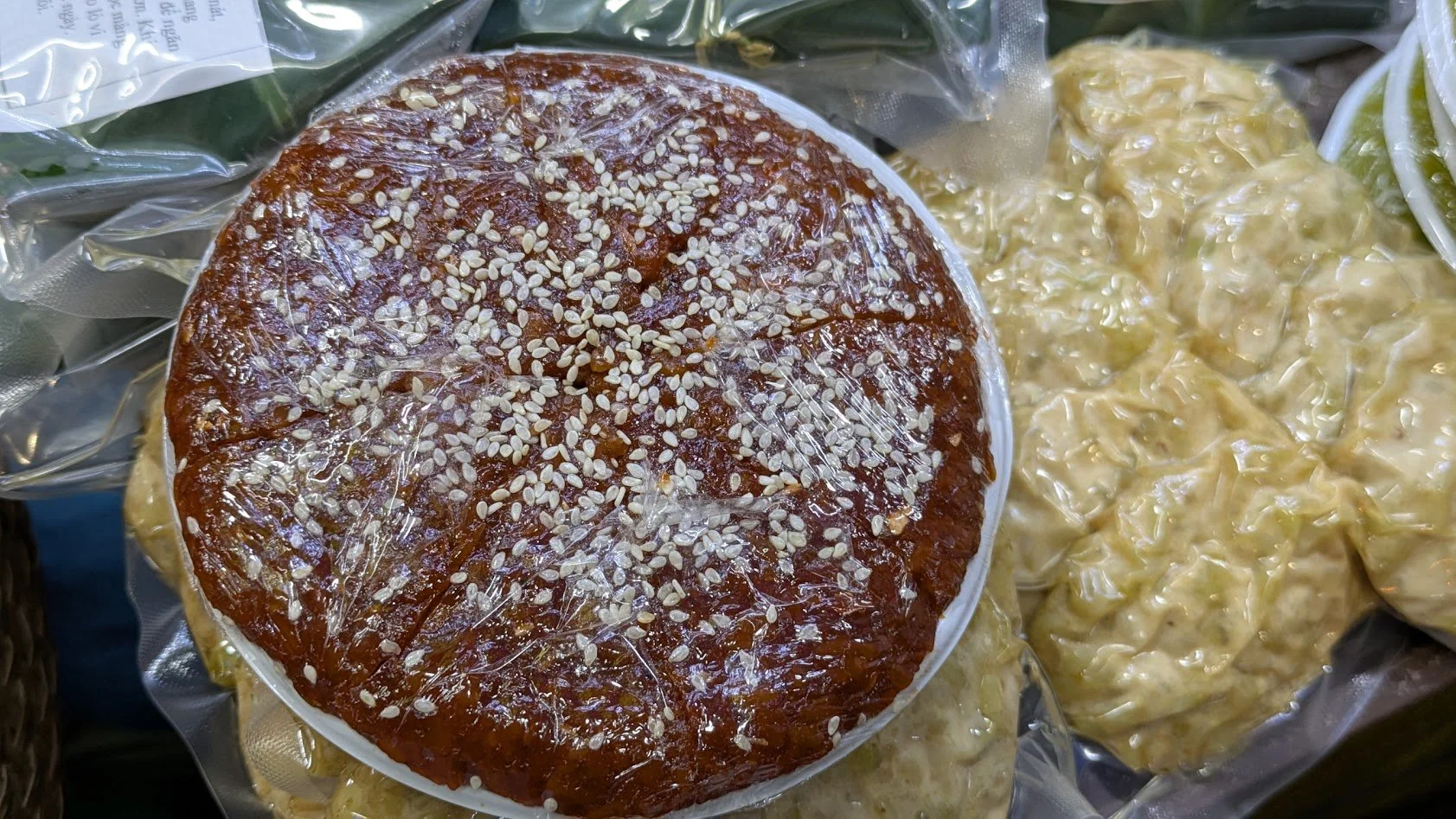
Chè kho - a traditional Vietnamese dessert popular in Northern Vietnam, particularly during the Lunar New Year (Tết). It is made from finely ground, steamed mung beans, sugar, and sometimes coconut milk, then pressed into molds and topped with sesame seeds. We had this on our food tour in Hanoi and actually really liked it.
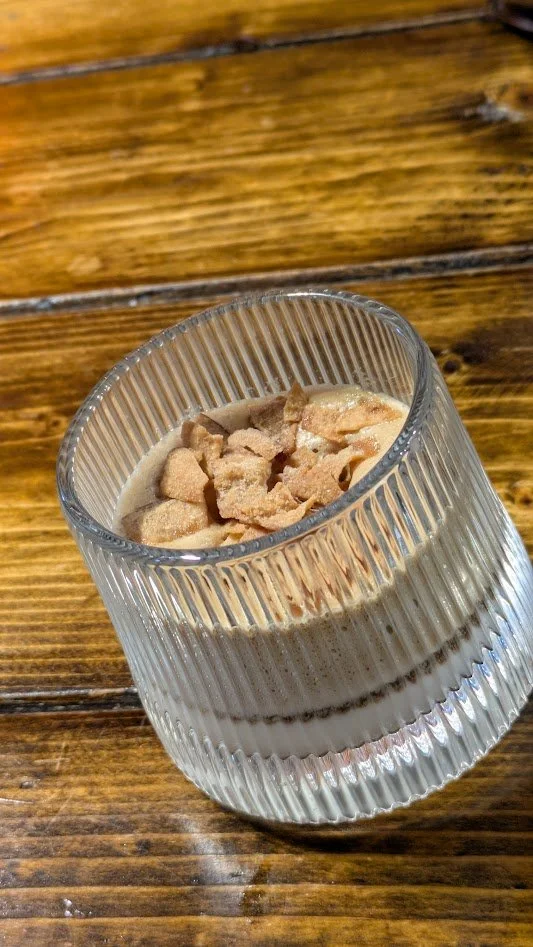
Coconut coffee - this stuff was so delicious. We could have drank it every day! It can be hot or cold and is made with Robusta coffee (really strong!) and coconut milk and condensed milk usually with some sprinkles of roasted coconut as a garnish. We actually made it in one of our cooking classes!
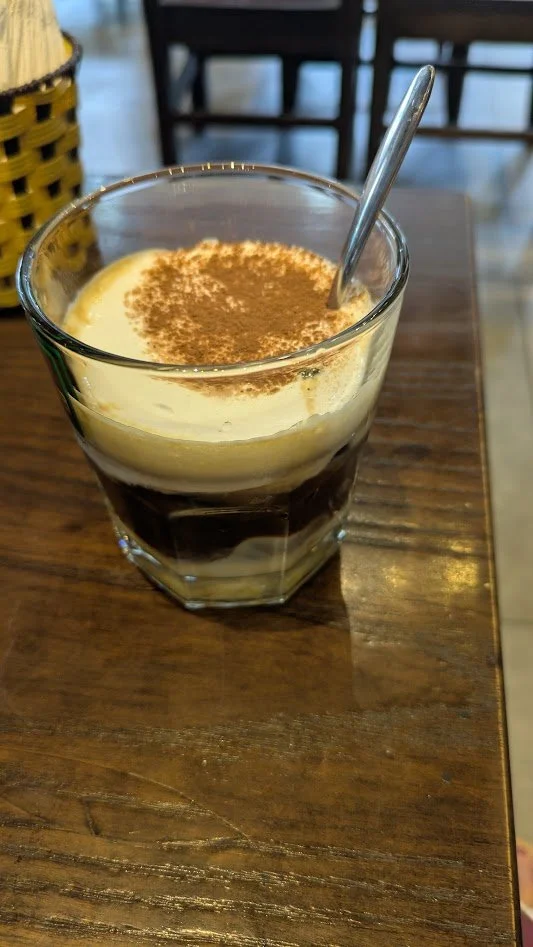
Egg coffee - This was every bit as delicious as the coconut coffee! It sounds a little weird, but they whip an egg yolk with condensed milk and vanilla (and maybe something else) and put it on the coffee. It is SOOO good!
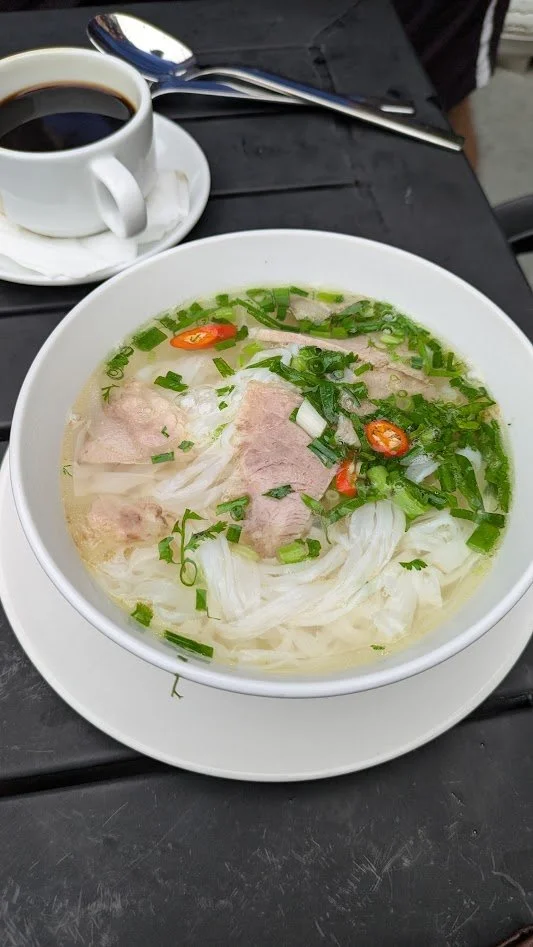
Phở (pronounced Phu - if you say it wrong, you are ordering up a prostitute!). It is a traditional Vietnamese noodle soup consisting of a slow-simmered broth, flat rice noodles, herbs, and meat. Then you add whatever you want to spice it up (lime, chili pepper, soy sauce...) It is considered Vietnam's national dish! Grady ate a lot of this with his breakfast!
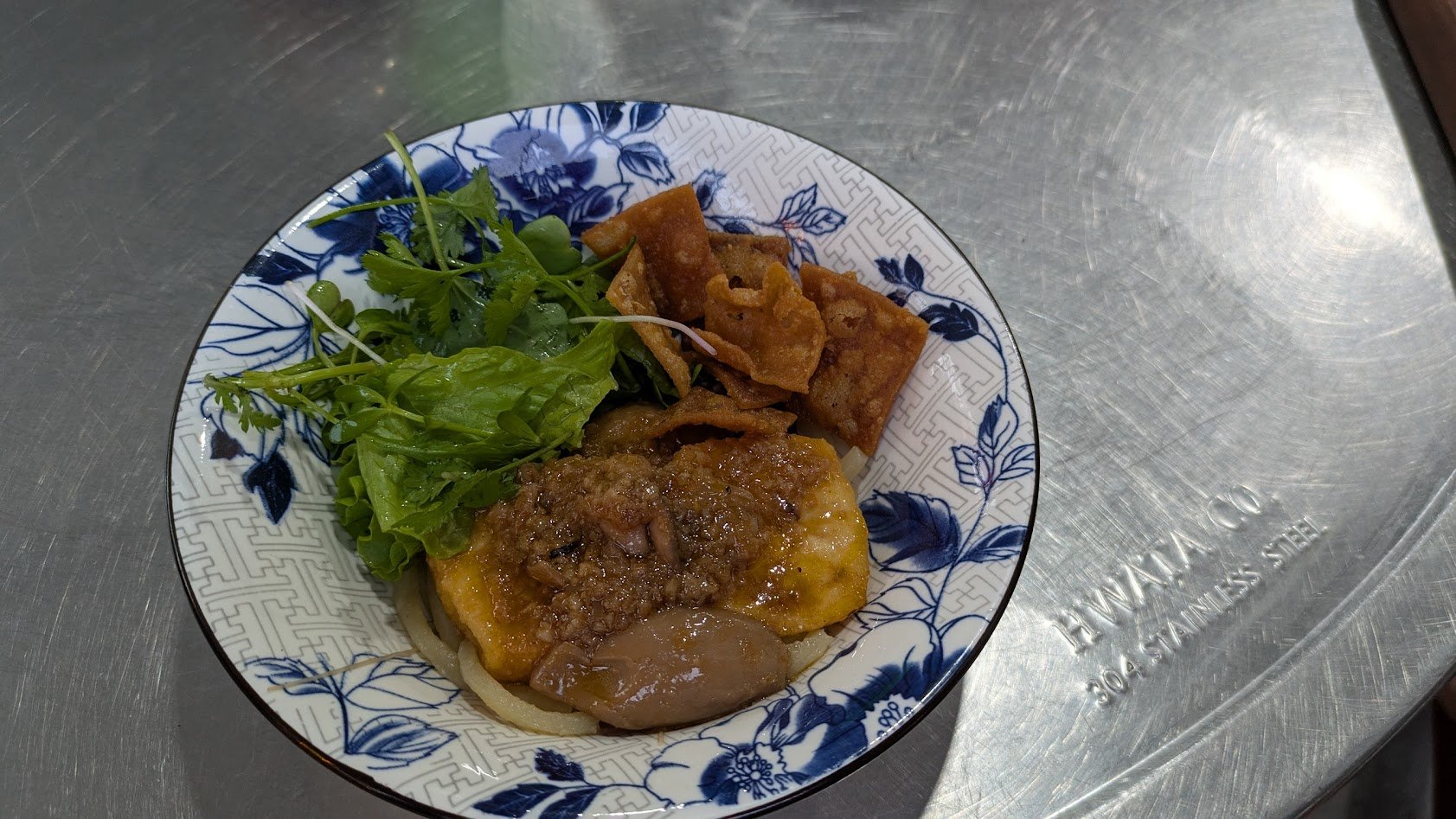
Cao Lau is a noodle dish made of thick, chewy rice noodles, pork, and herbs, served in a five-spice broth. It is unique to Hoi An because the traditional noodles are made using water from the ancient Ba Le well in Hoi An which is a 10th-century Cham-era well renowned for its, design, and having never dried up. It is considered the best source of water for authentic Cao Lau noodles, due to its specific mineral-rich water, which is believed to have magical properties. We saw the well and tasted the Cao Lau on a food tour. They were good... not sure if they were magical.
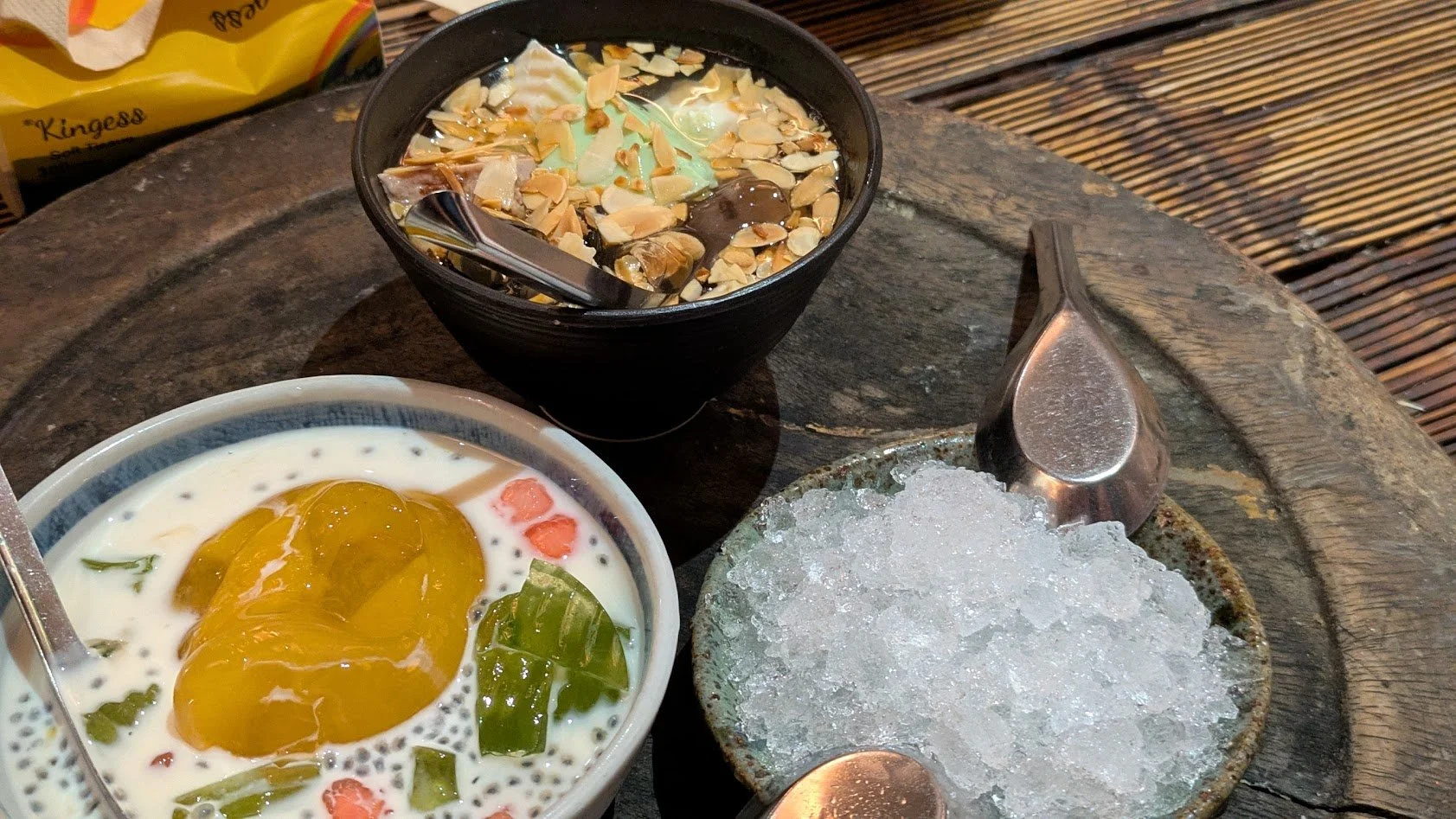
Chè is a traditional Vietnamese dessert served as a sweet soup. It was weird, but really good. It can have a variety of ingredients, including beans, glutinous rice, fruits, tubers, jellies, and tapioca starch, and is sweetened with sugar and served with coconut.
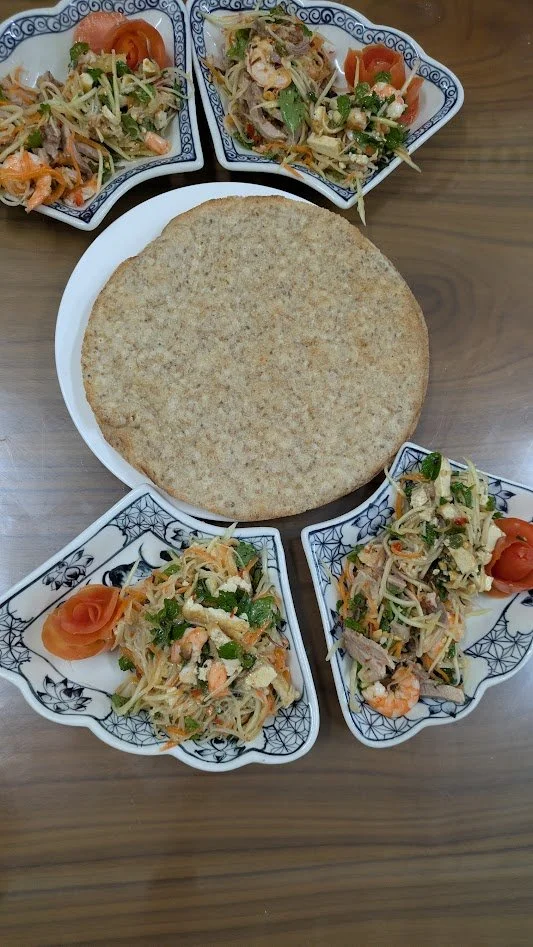
Gỏi đu đủ is a Vietnamese green papaya salad. We made this in our cooking class in Da Nang and it was delicious!.
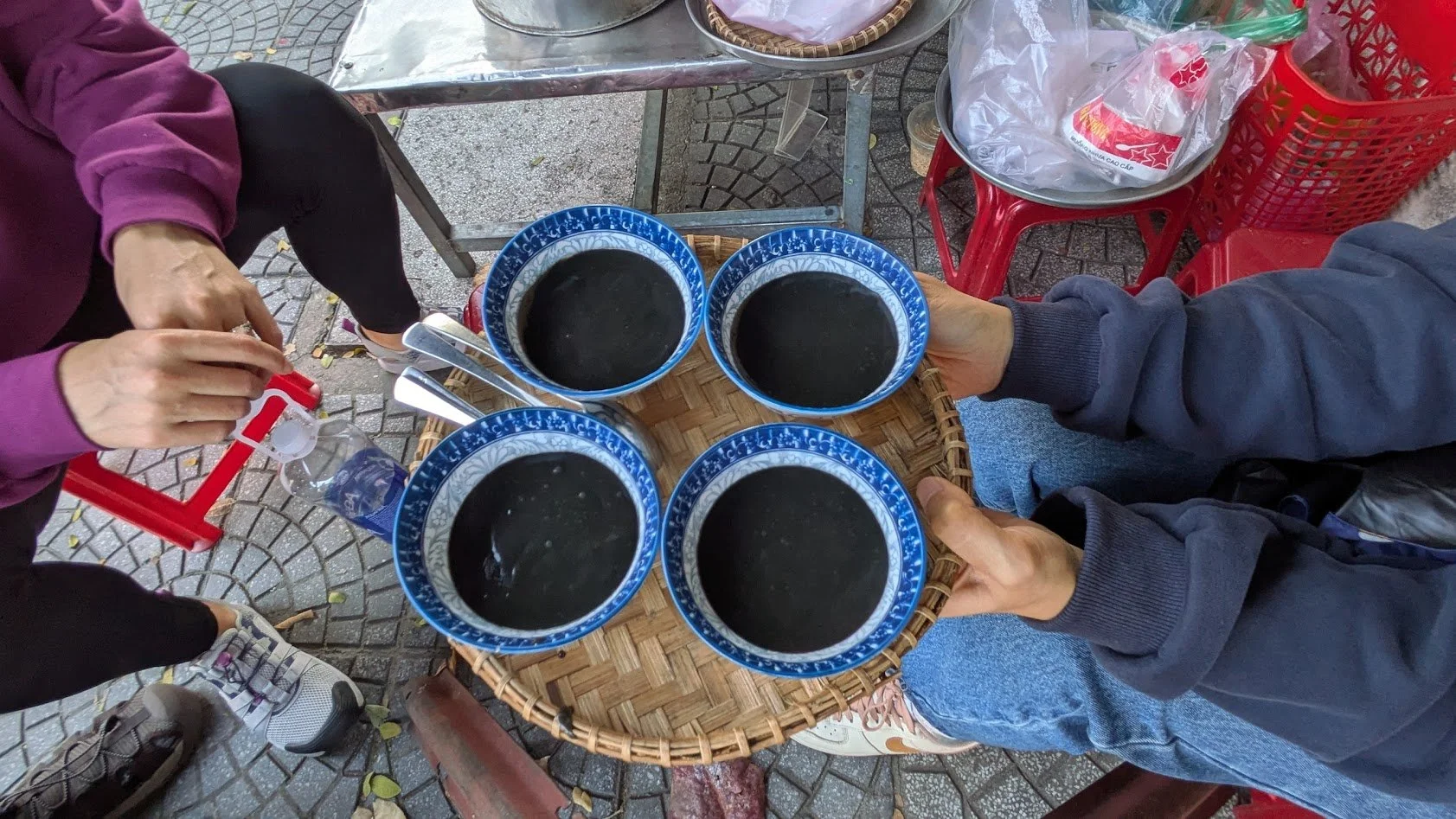
Xi ma is a black sesame pudding found in Hoi An that is served warm and is slightly sweet. It is a thick, black pudding made from ground black sesame seeds, coconut, rice flour, and traditional Chinese medicinal herbs. We got it during our food tour from a little old lady who has sold it on the street for years. It was really good!
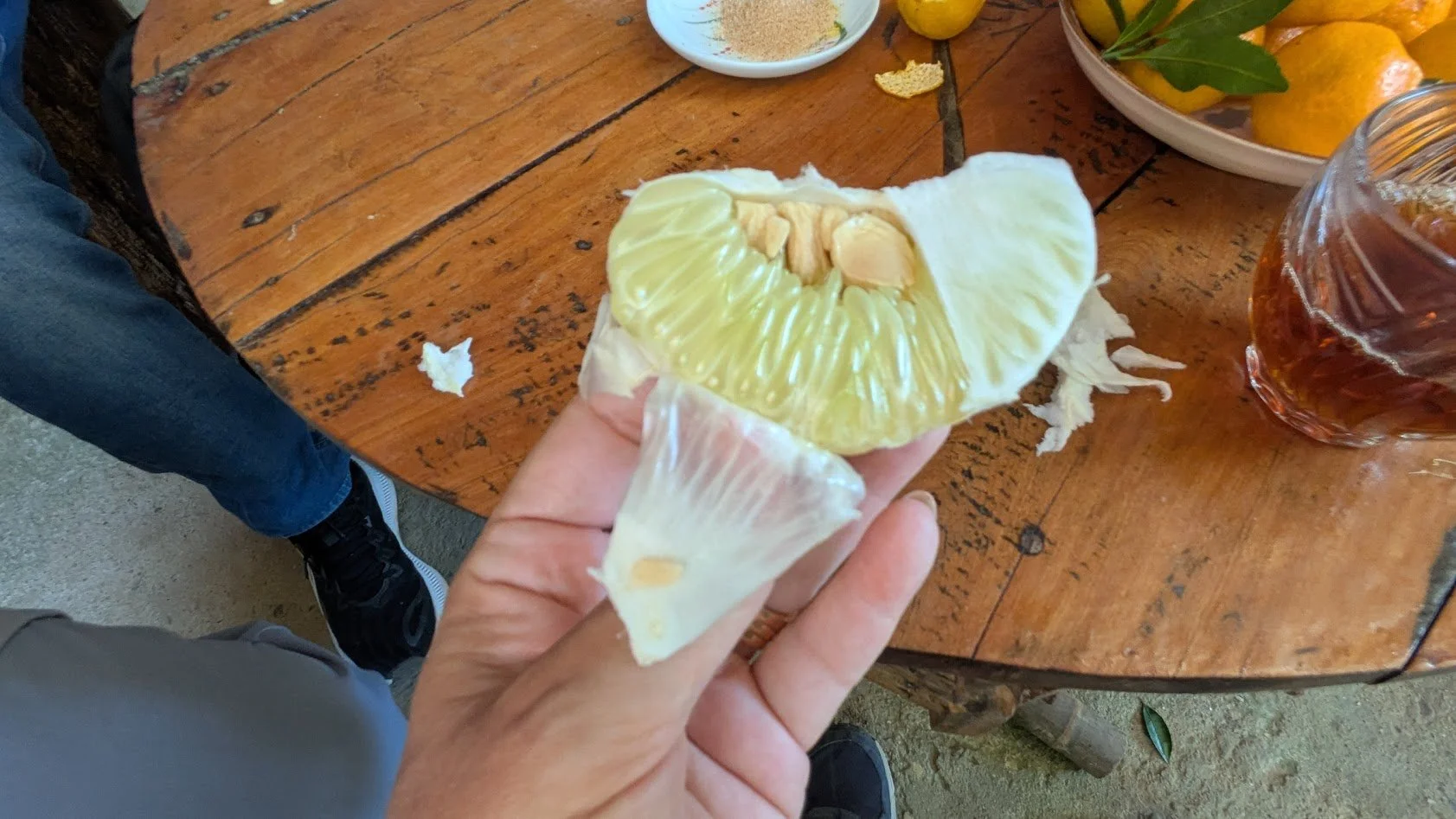
Pomelo is a citrus fruit native to Southeast Asia, where it has grown wild since ancient times. It is considered the largest citrus fruit and is believed to be an ancestor of the grapefruit. Its good, not as bitter/sour as grapefruit.
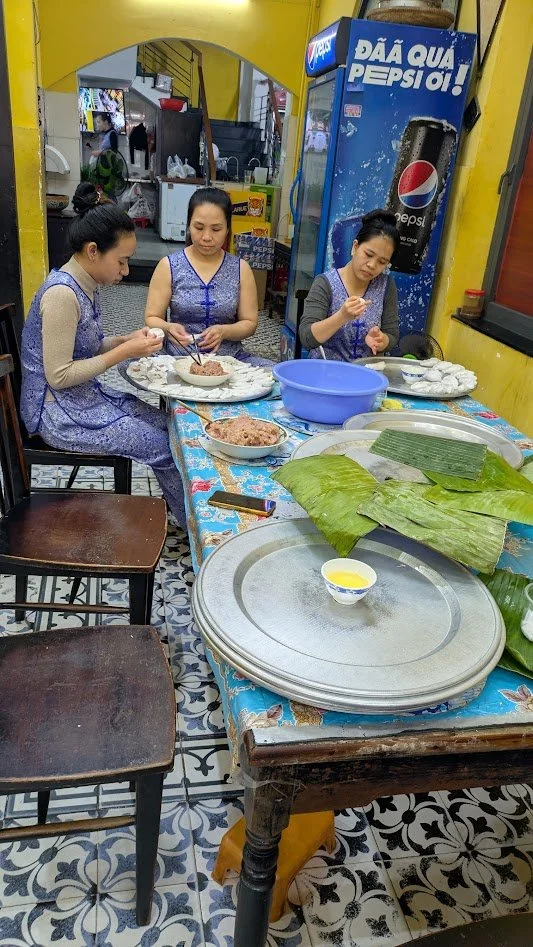
White Rose Dumplings - an iconic Hoi An specialty consisting of translucent rice flour dumplings filled with spiced shrimp or pork. Shaped to resemble white roses. On our food tour, we visited the original white rose restaurant. It's the only thing they make here. And they make ALL the white rose dumplings for ALL the restaurants in town. So you can get them elsewhere, but they are not as fresh. These three ladies make them all!
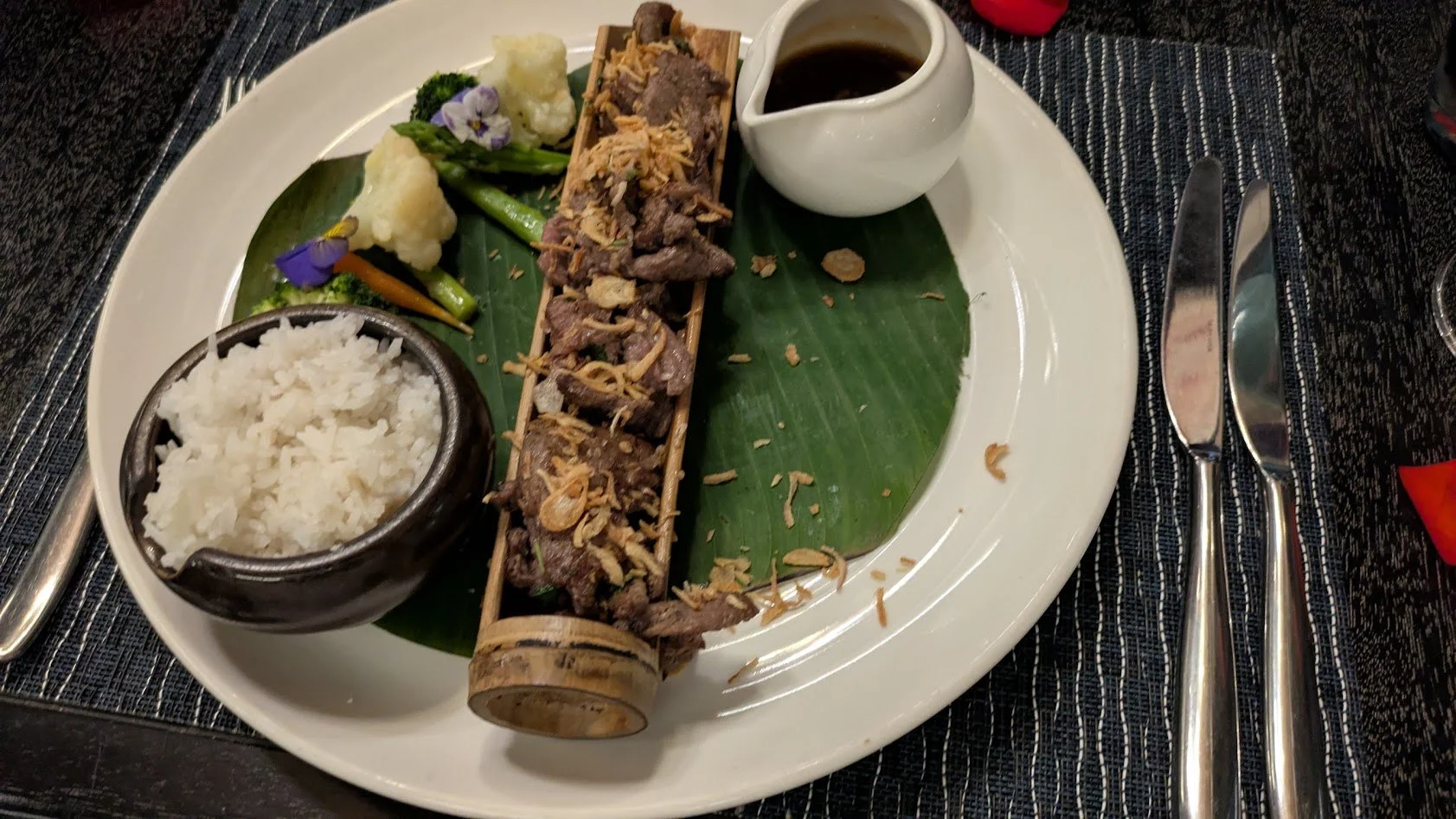
Vietnamese grilled beef in bamboo - It is exactly what it sounds like. Seasoned chunks of beef grilled in a bamboo shoot. Grady had it for his birthday dinner and said it was amazing.
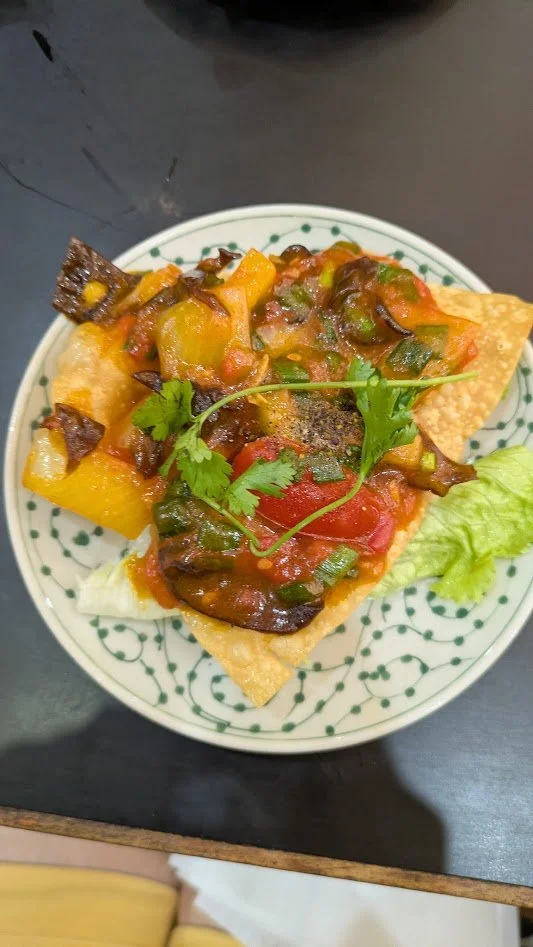
hoành thánh chiên is a signature, crispy appetizer from Hoi An, often described as "Vietnamese nachos." It features a deep-fried, crunchy wonton wrapper topped with a mixture of minced pork, shrimp, spices, and a sweet-and-sour sauce made from stir-fried tomatoes, onions, and coriander. It was so good.
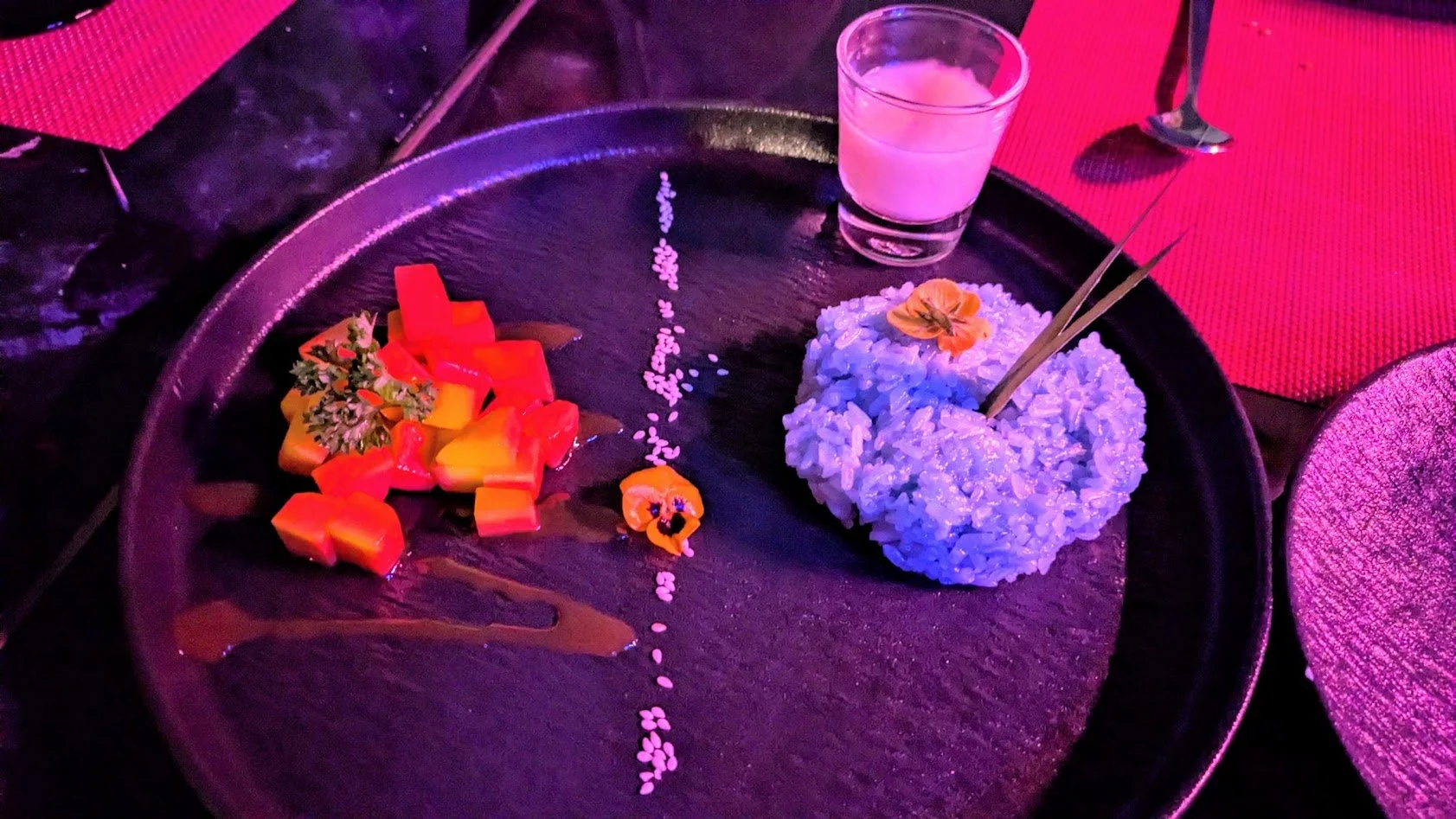
Mango sticky rice is a popular, traditional dessert featuring glutinous (sticky) rice cooked in sweetened coconut milk, served with fresh, ripe mango slices. They don't do a lot for desserts in Vietnam, and most revolve around fruit and/or rice.
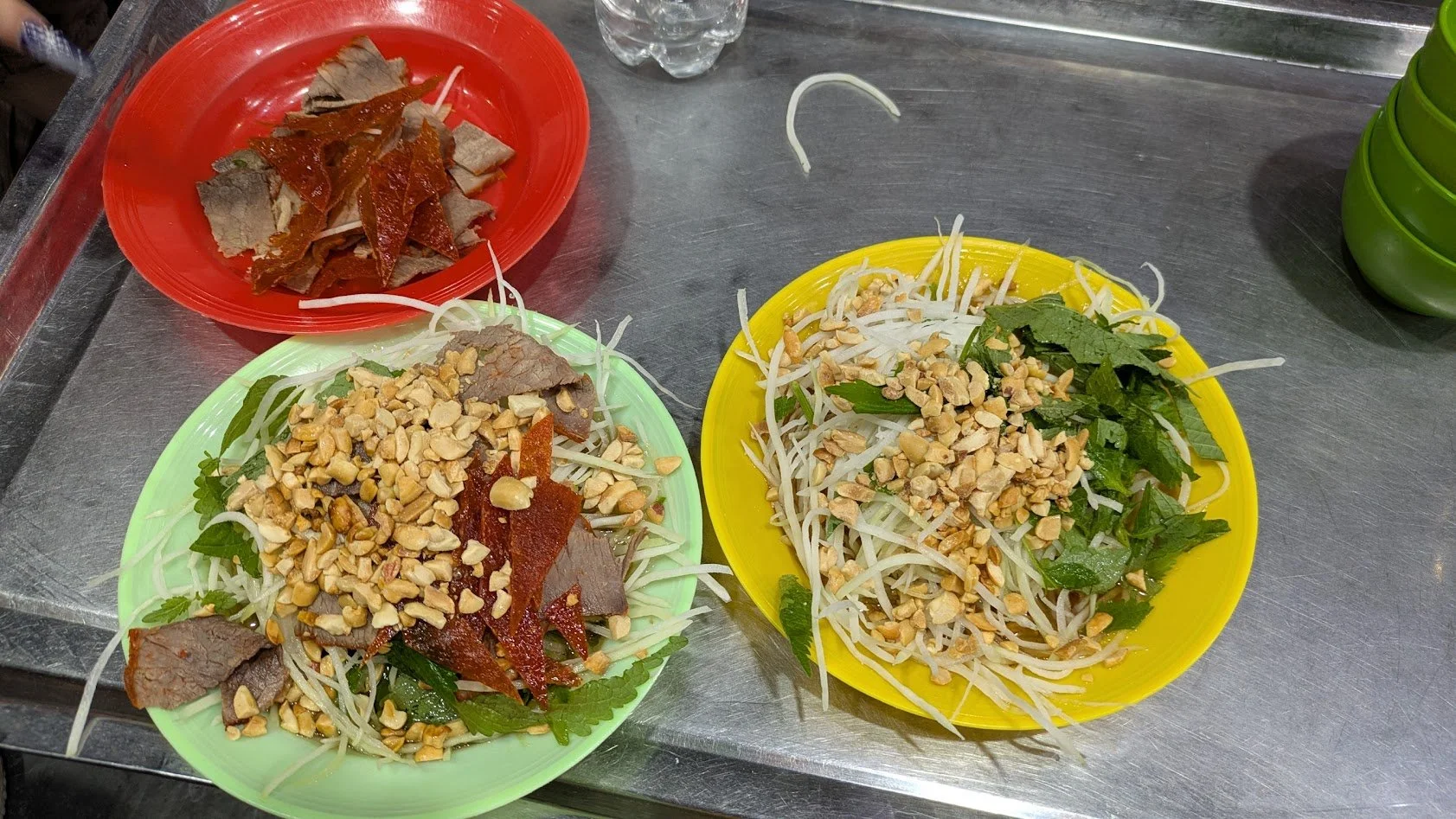
Nộm thịt bò khô is a popular Vietnamese street food salad from Hanoi, featuring dried beef jerky mixed with crunchy shredded green papaya, herbs, and a savory-sweet dressing. We had it on our food tour in Hanoi. I think we all liked it!
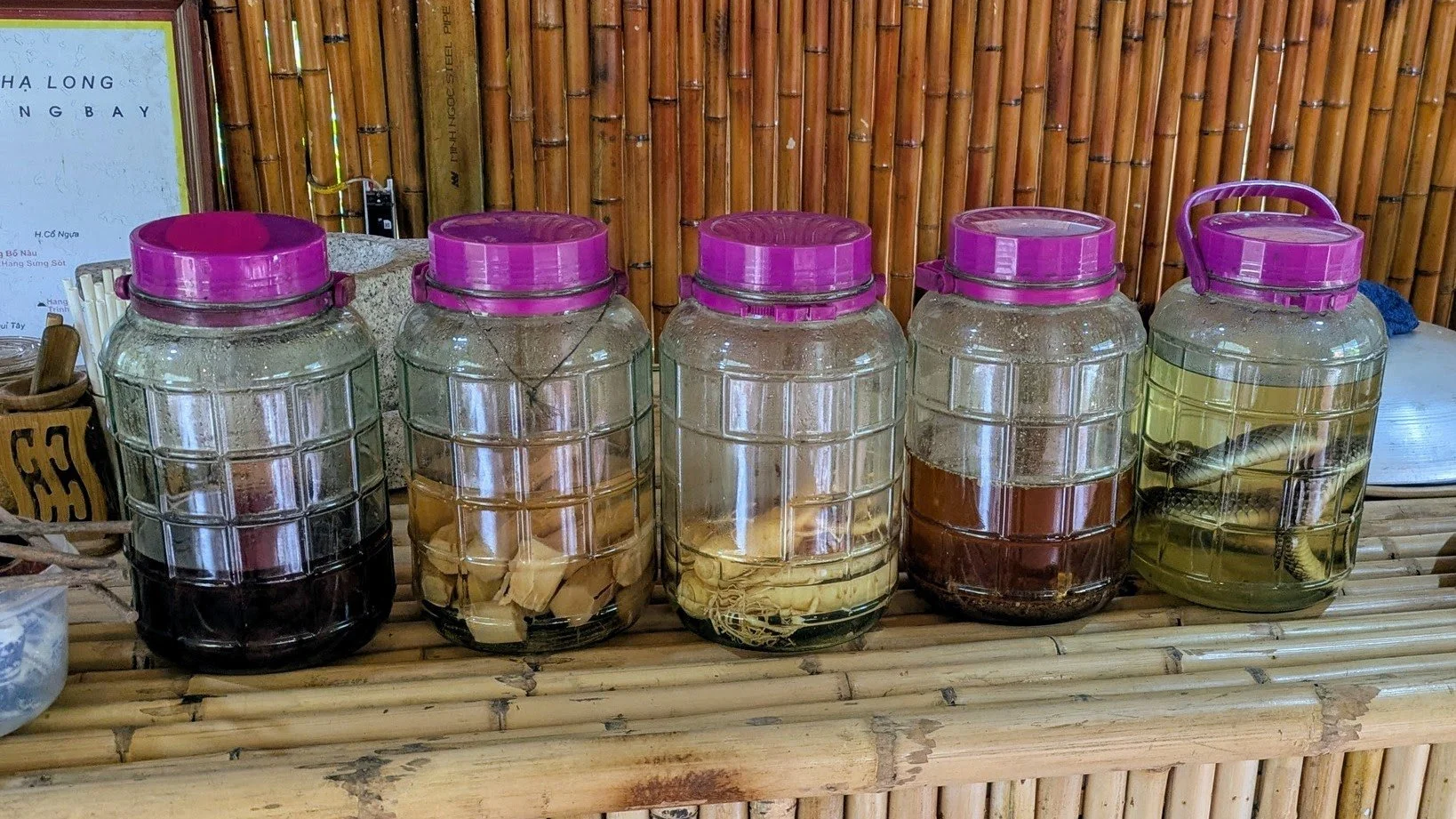
Vietnamese rice wine is like moonshine! It's a traditional, potent distilled spirit made from fermented rice, commonly containing 20% to 50% alcohol by volume (ABV). It is a staple of Vietnamese culture. They infuse different things into it... fruit, turmeric, ginger, snakes!
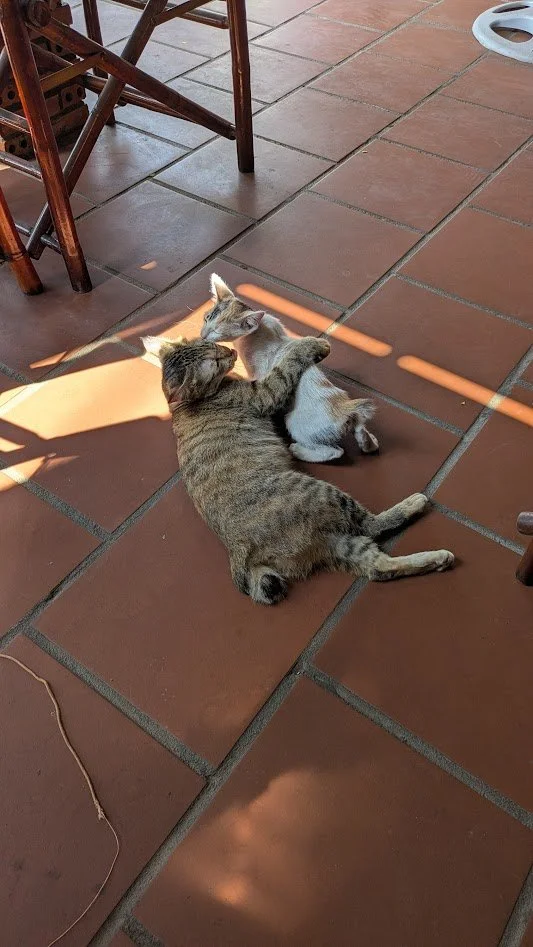
"tiểu hổ ("baby tiger") - yes, cat! We didn't see any roasted or on menus, but they absolutely eat them - particularly in the northern regions and around Hanoi. It's not a daily meal for most, but an estimated 1 million cats are killed annually for meat (usually stolen pets or strays).
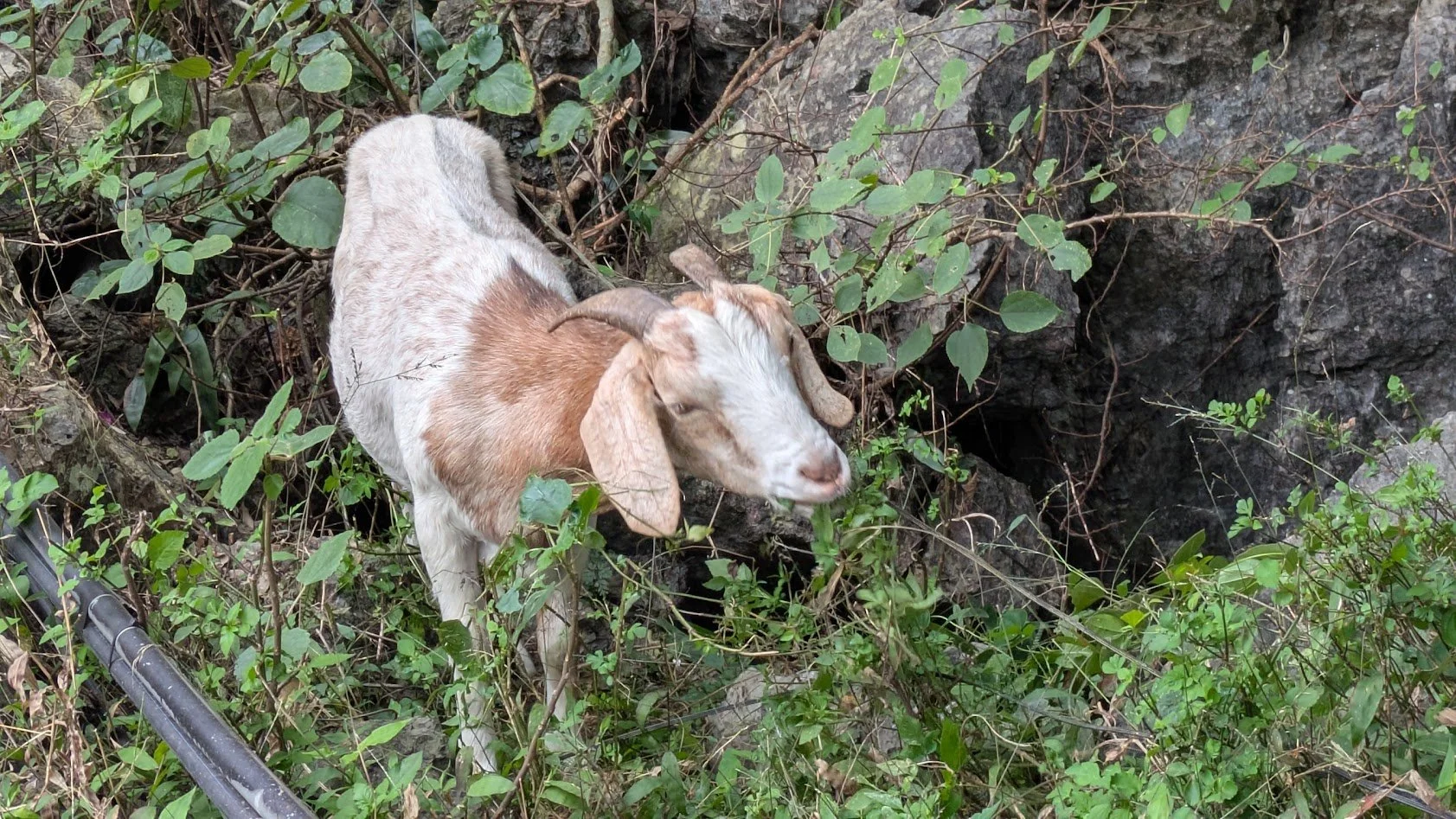
Goat is commonly eaten in Vietnam. It is a specialty in Ninh Binh. Literally every restaurant sold it there. The meat eaters among us tried it and said it was pretty good. I forgot to get a photo of the cooked version. But since the free-roaming mountain goats are what they eat, this cute little guy has probably found himself as someone's dinner by now.
Bunnies - sold in the market as food :(
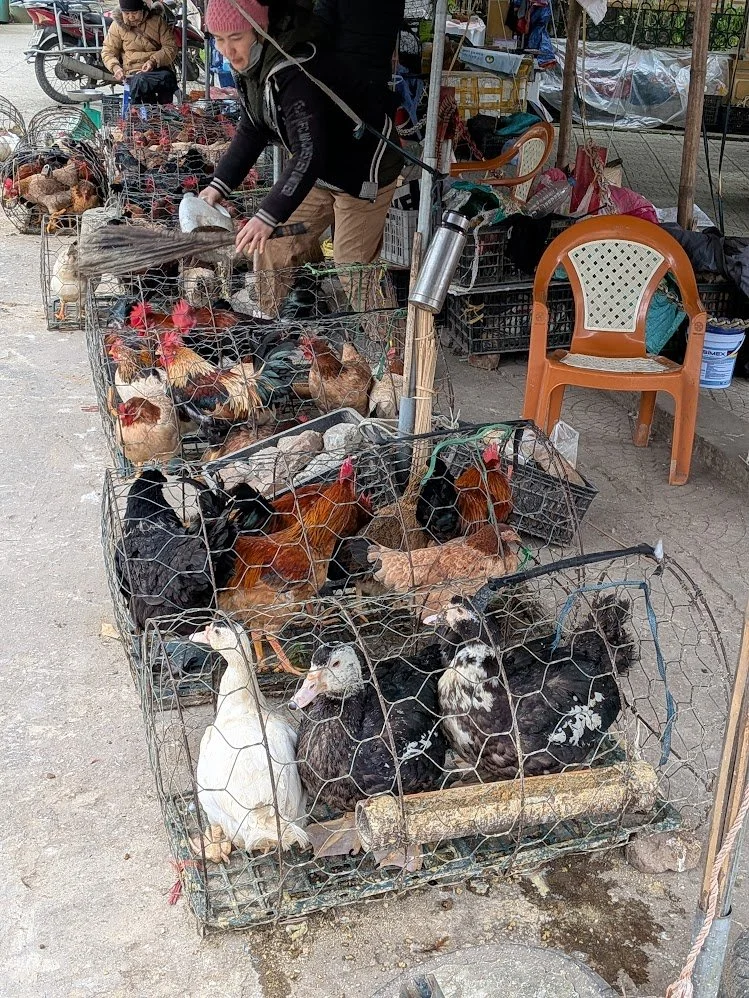
Chickens and ducks - I know, people eat them in the US (and everywhere), but it is just yucky to see them sitting in little crates at the market waiting to go home and be someone's dinner.
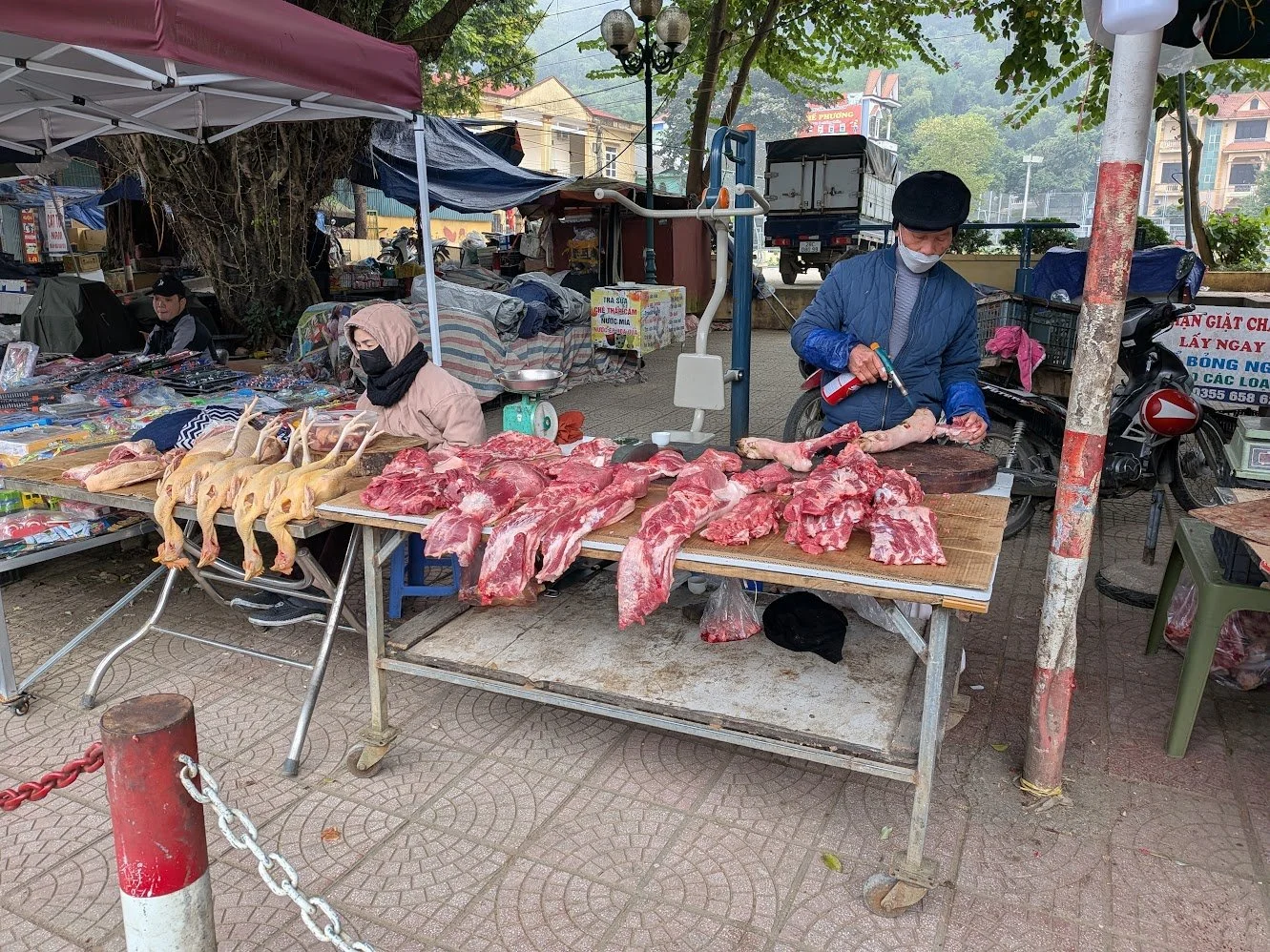
Food at the market - chicken and other gross stuff are featured in this photo. They literally just had dead animals and hunks of meat laying out uncovered and with no temperature control. It was so disgusting!
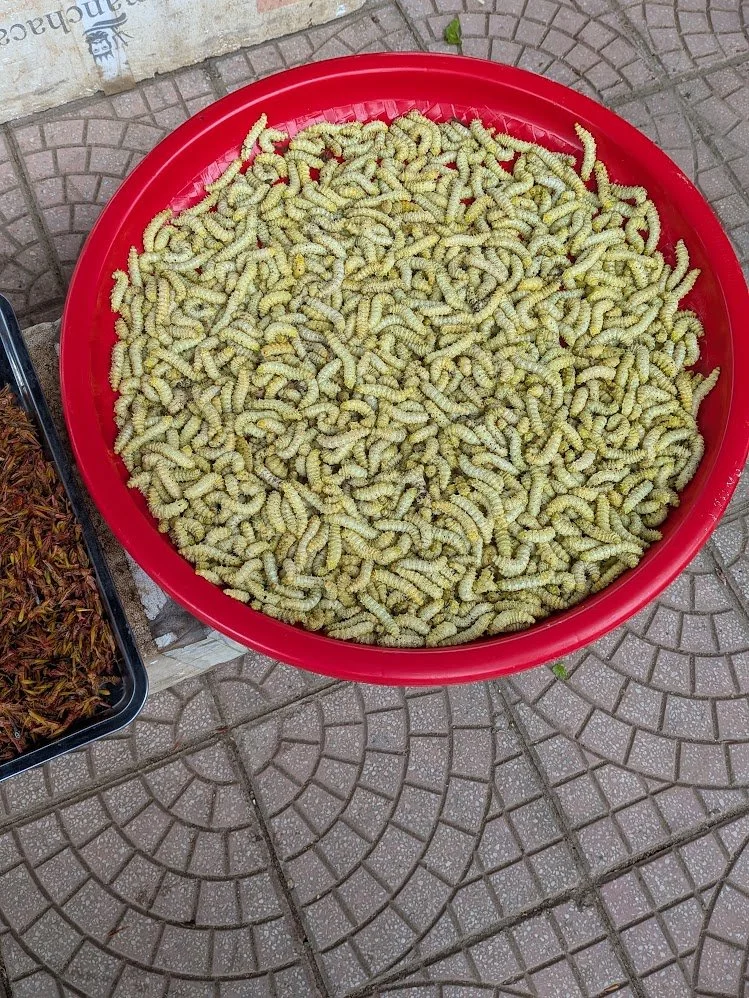
Silkworms - Commonly eaten in rural areas and northern regions. They are typically fried with fish sauce, salt, lemon leaves, or lemongrass. They have a crunchy exterior and soft interior. GROSS
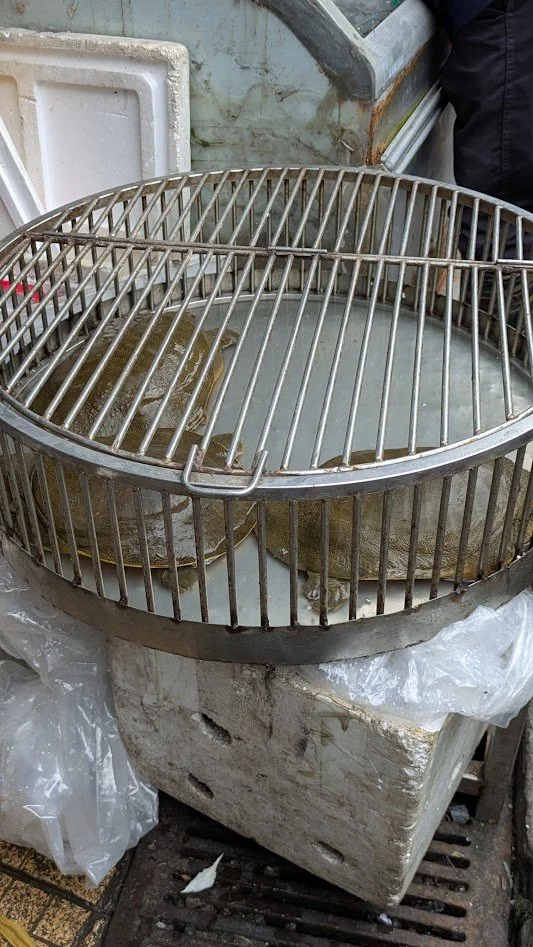
Soft shell turtles - these guys were in the market waiting to go home with someone and become turtle soup.
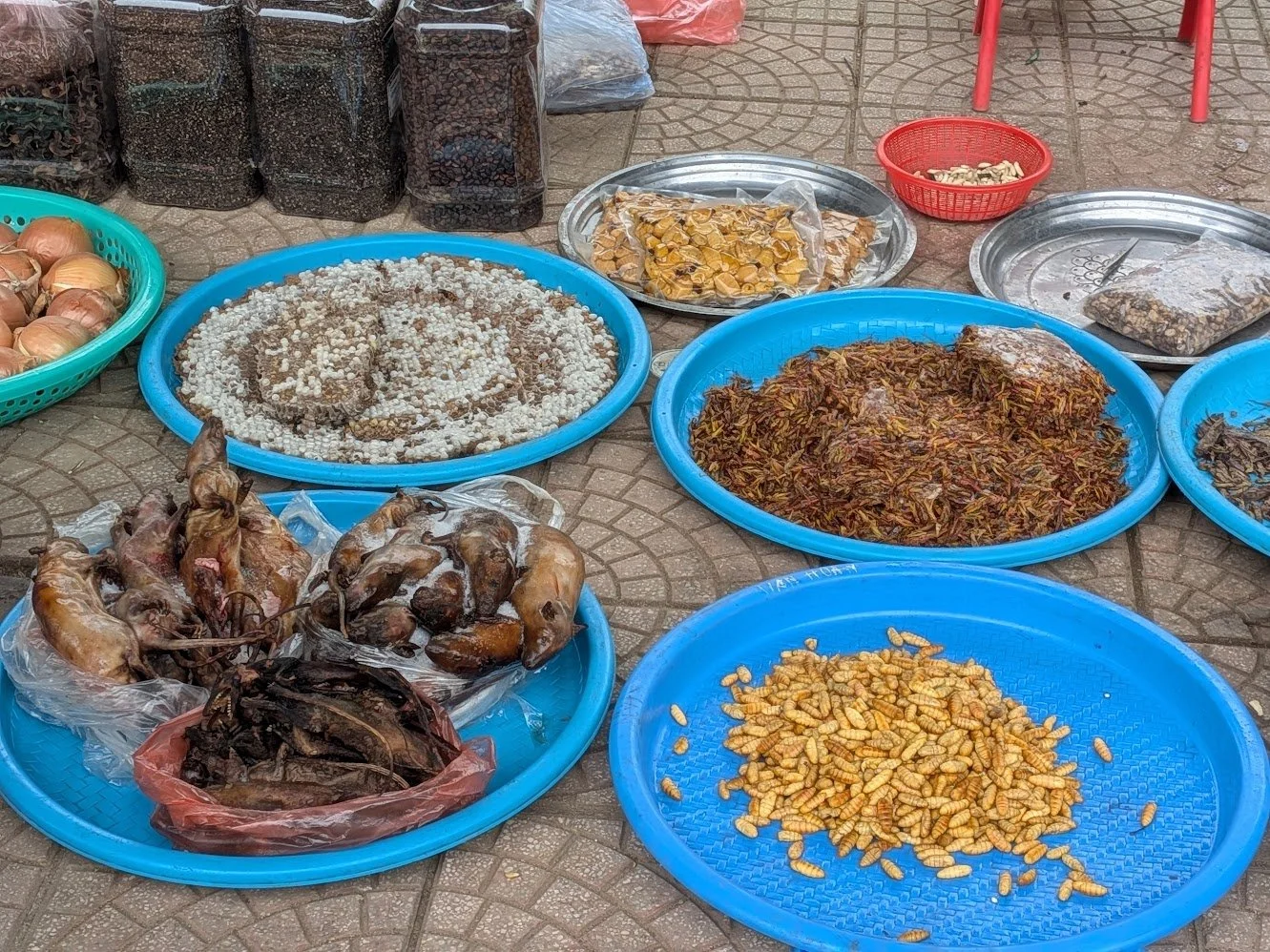
Rats - Yes, some people in Vietnam eat rats, specifically in parts of Northern Vietnam. These were in the market, and are actually considered a delicacy by some! UGH!
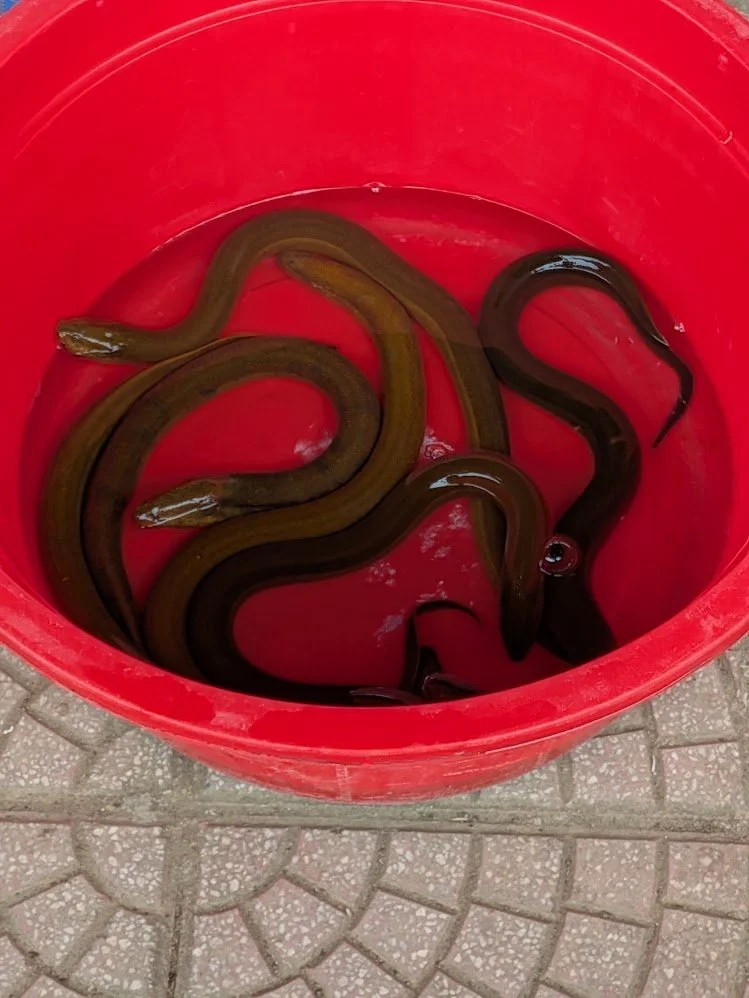
Eel - so nasty!! I mostly had to hide my eyes through the markets and Grady took the pictures! They use eel mostly in soup. I stopped ordering any kind of "seafood" soup once I learned that!
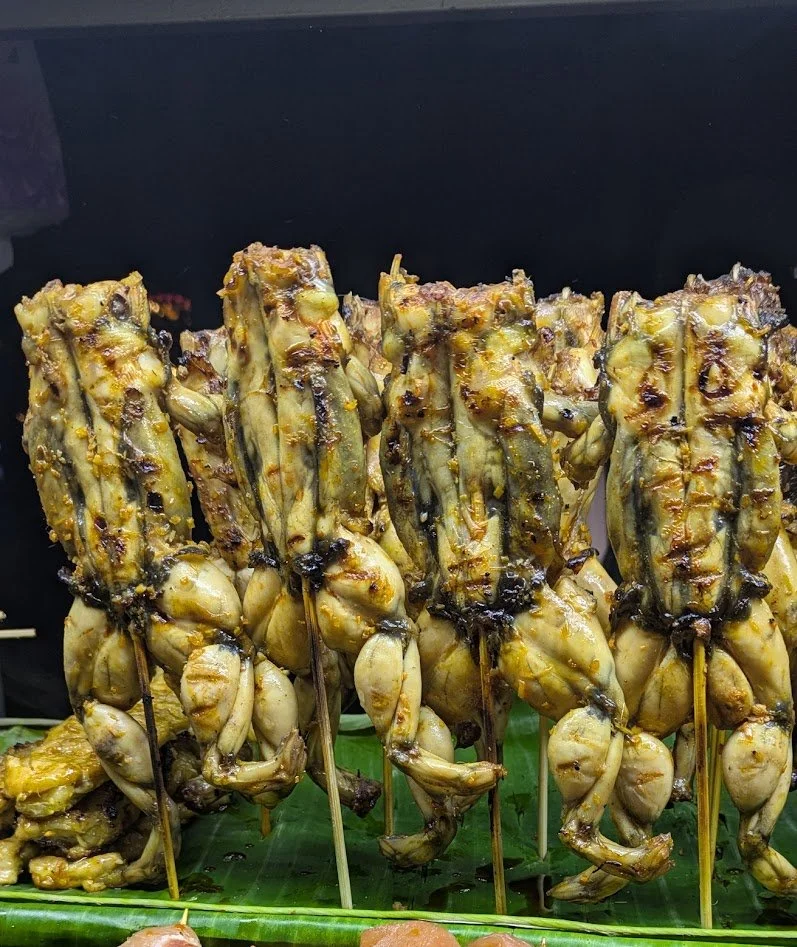
Frog - Skewered and grilled and sold by street vendors. YUK
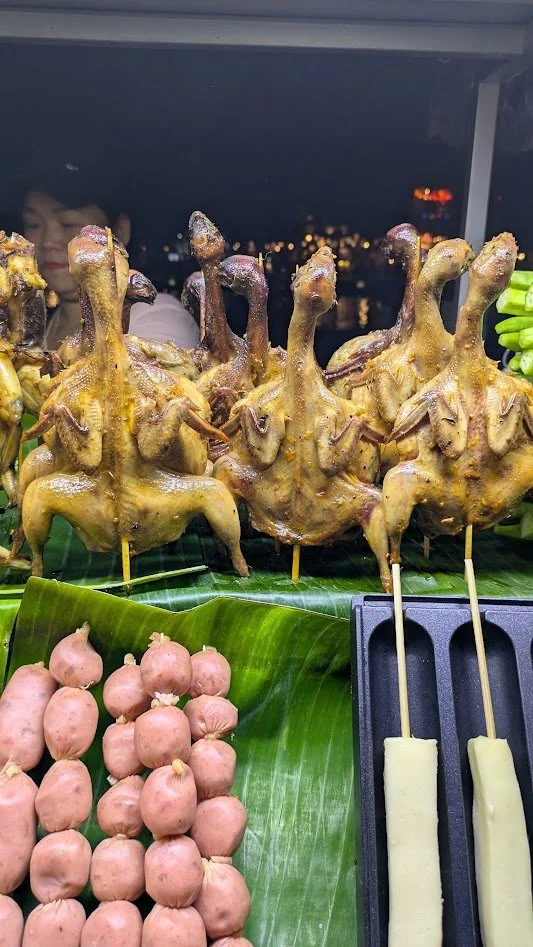
Chim cut - small grilled birds (usually quail). They are a popular street food, marinated then roasted. We (Grady) didn't eat these, but to be fair, for those of you that eat meat, it's probably no different than eating a chicken or duck. Just saying.
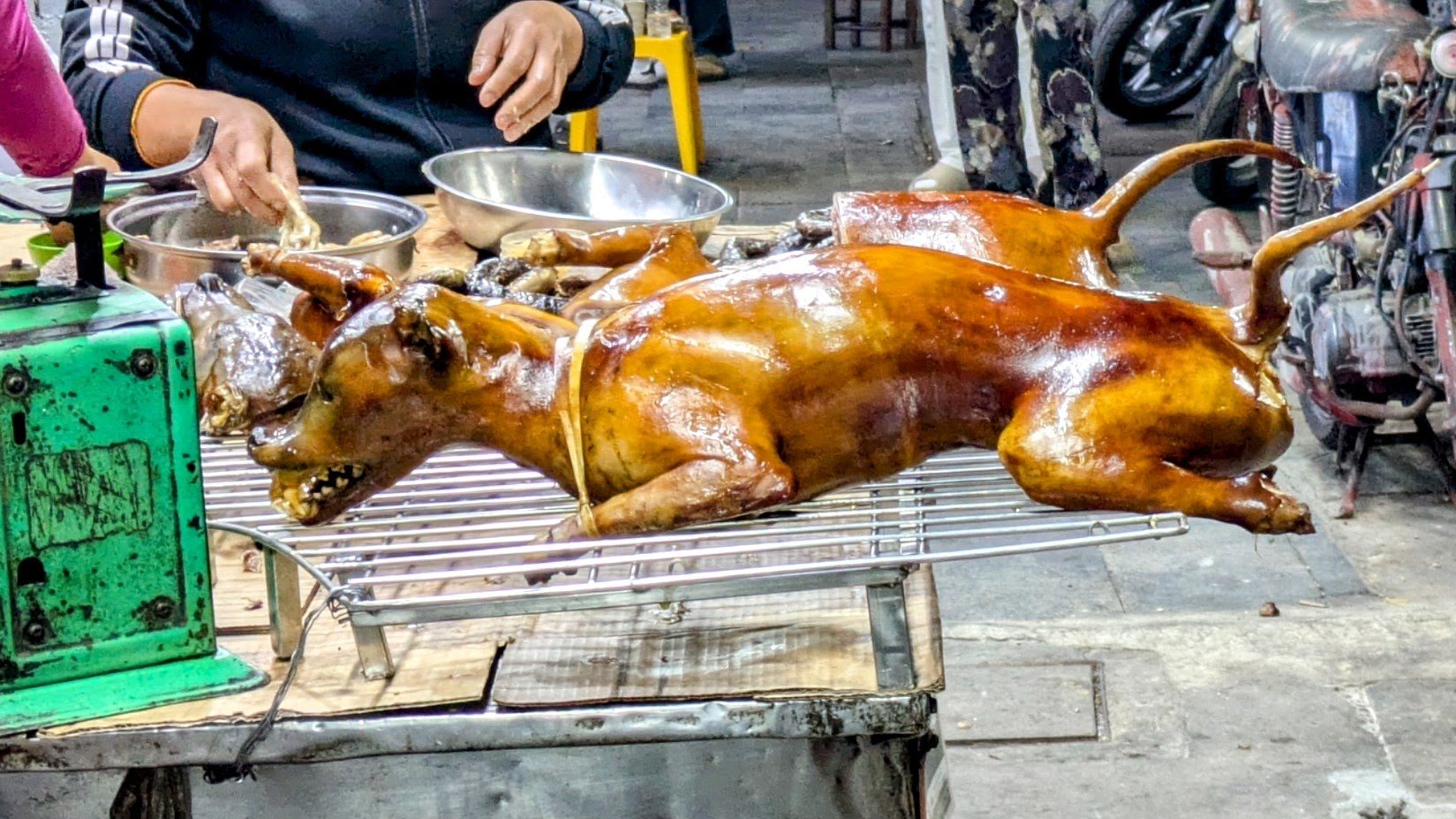
Thịt Chó (dog) - Yep, people eat dog meat in Hanoi. It's a diminishing practice, but there it is in the photo... at a street vendor. There is growing local opposition, but vendors and consumers still exist, especially among older generations, though younger Hanoians increasingly view dogs as pets.