Chiang Rai
11/25/2025
We did a really long day trip about 3.5 hours away to Chaing Rai to see some of the famous temples. Chiang Rai is in the far north of Thailand fairly close to the Myanmar and Laos borders.
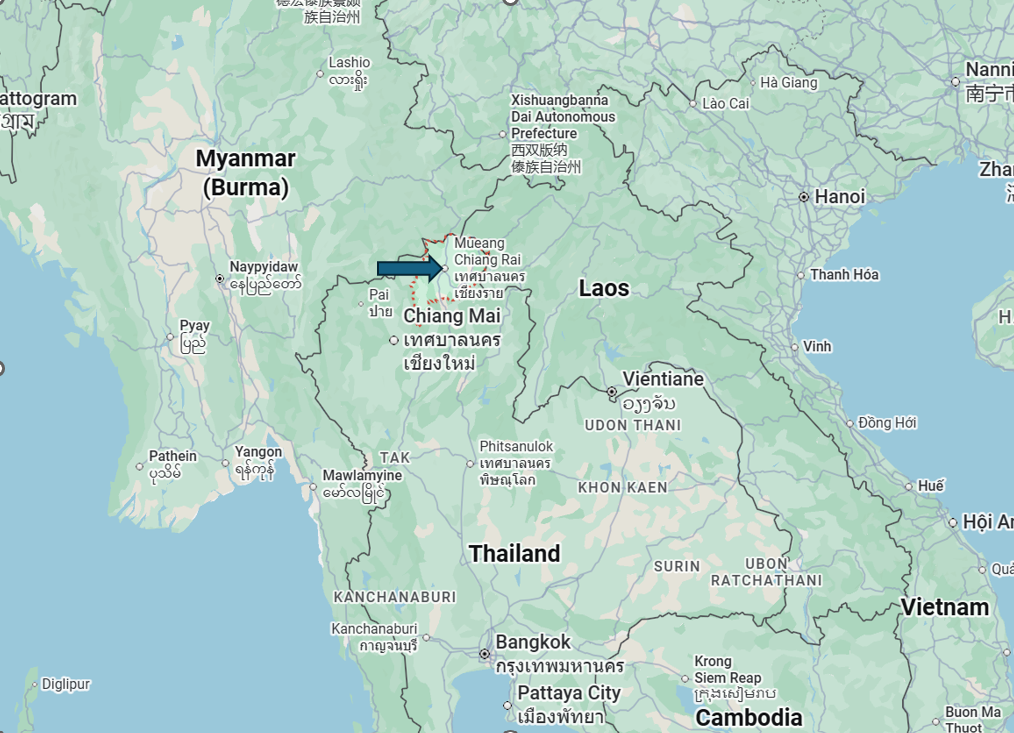
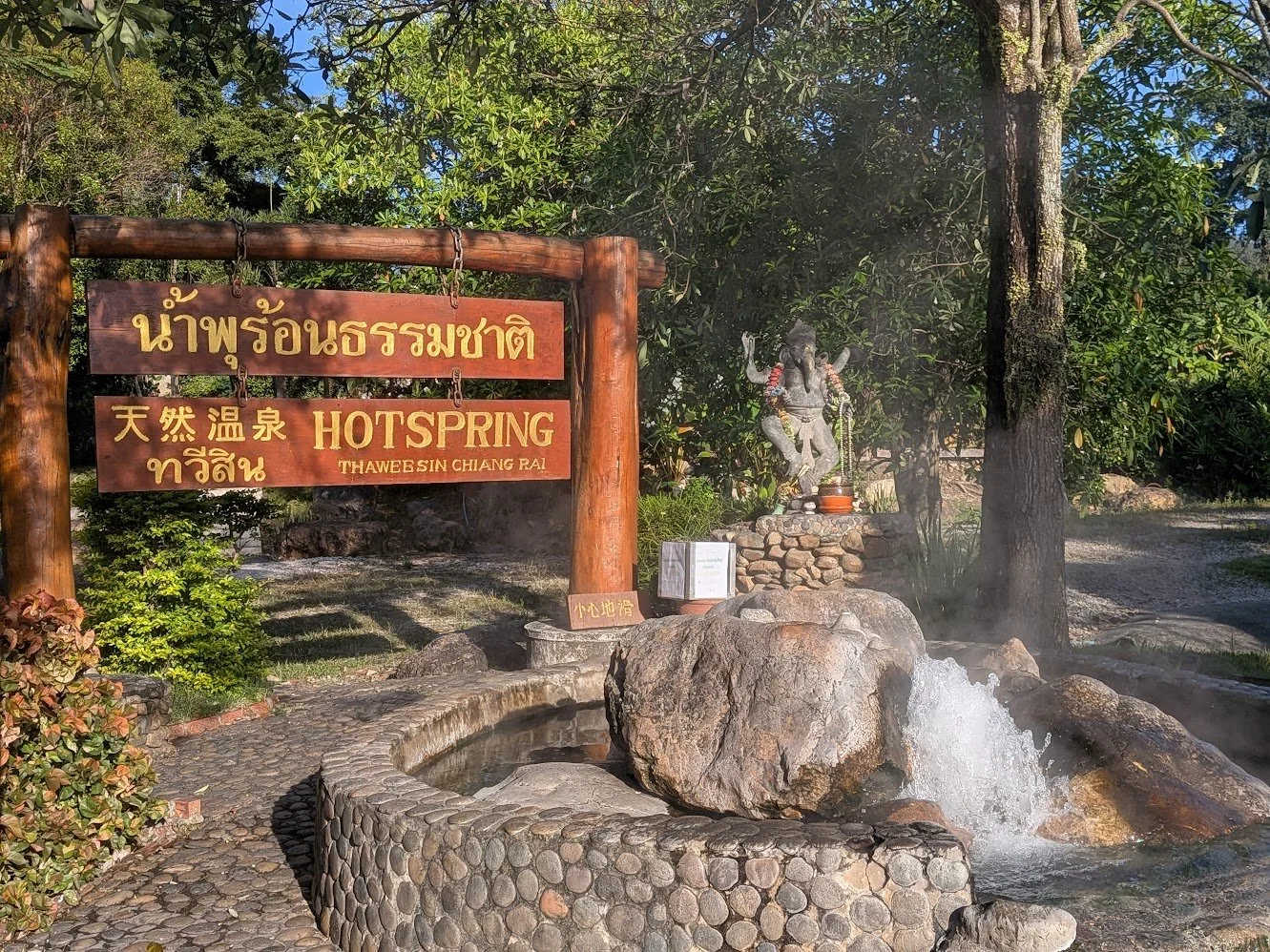
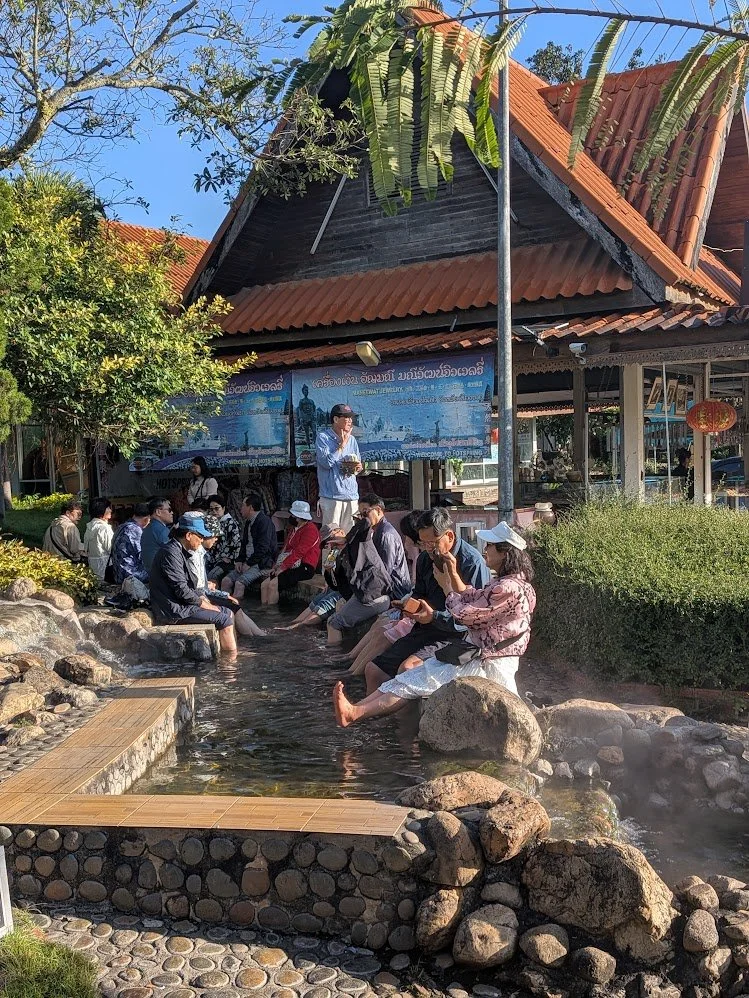
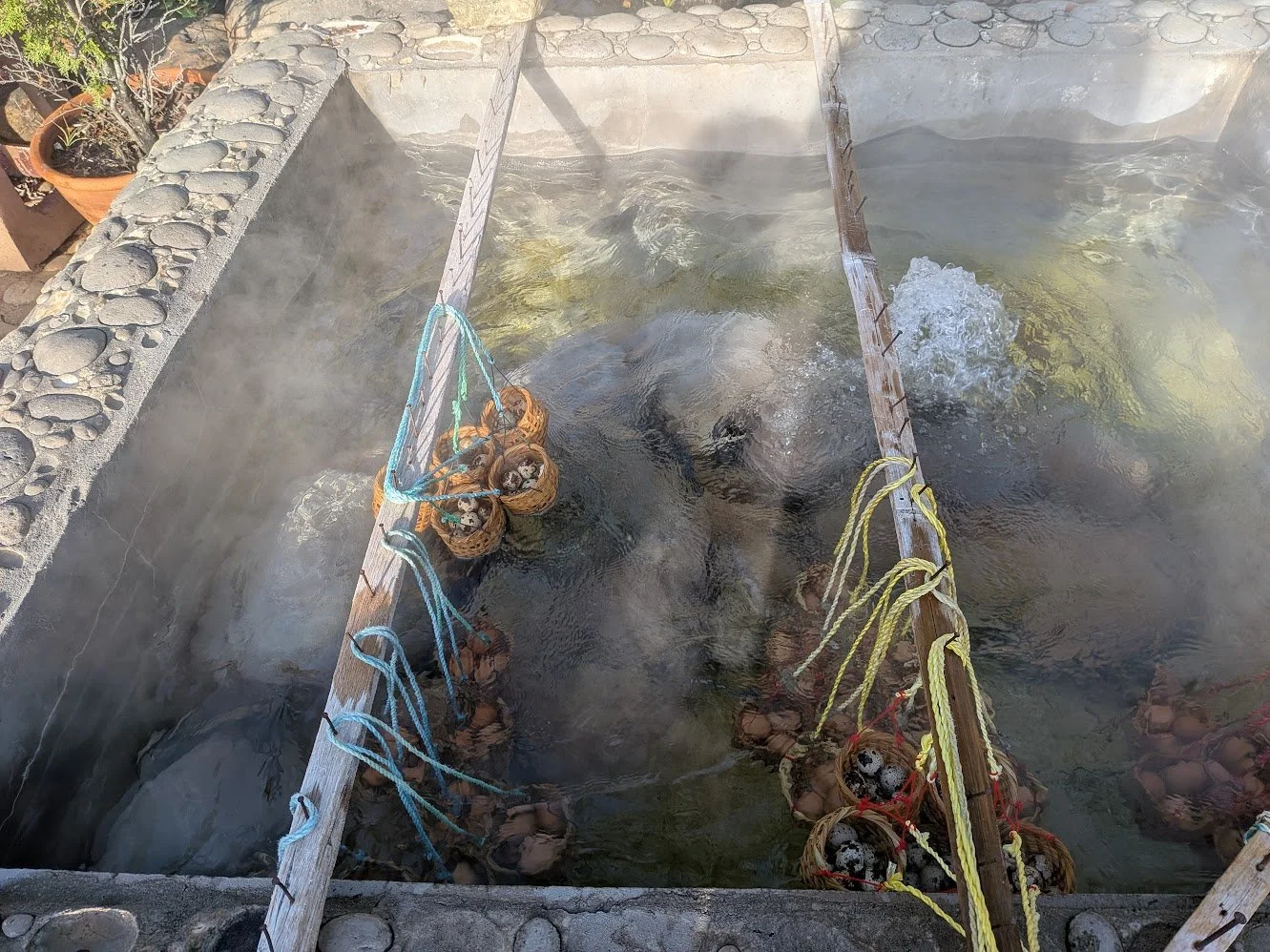
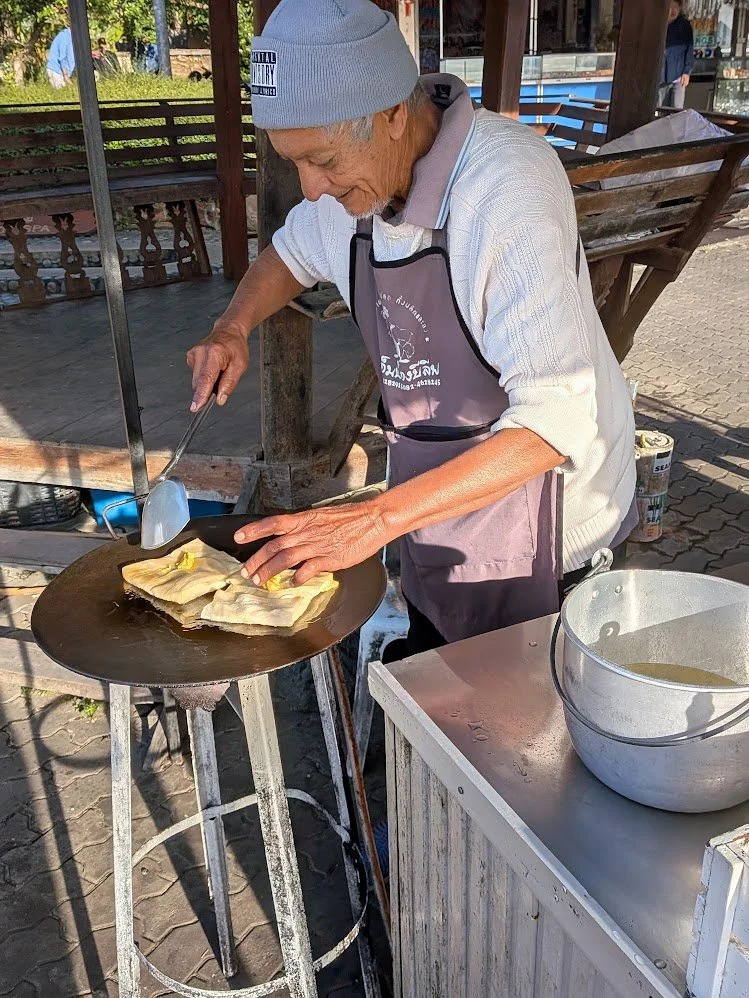
We were picked up at 7am and made a brief stop for coffee and a bite to eat about an hour into the drive. Our stop was at a location where there were multiple hot springs as well as vendors, cafes, and street food stands. There were little old ladies selling hard boiled eggs that they were cooking by hanging them in baskets in the hot springs. We got roti (one of my favorite Thai foods) for breakfast from the cutest little man ever! Then we continued on our journey.
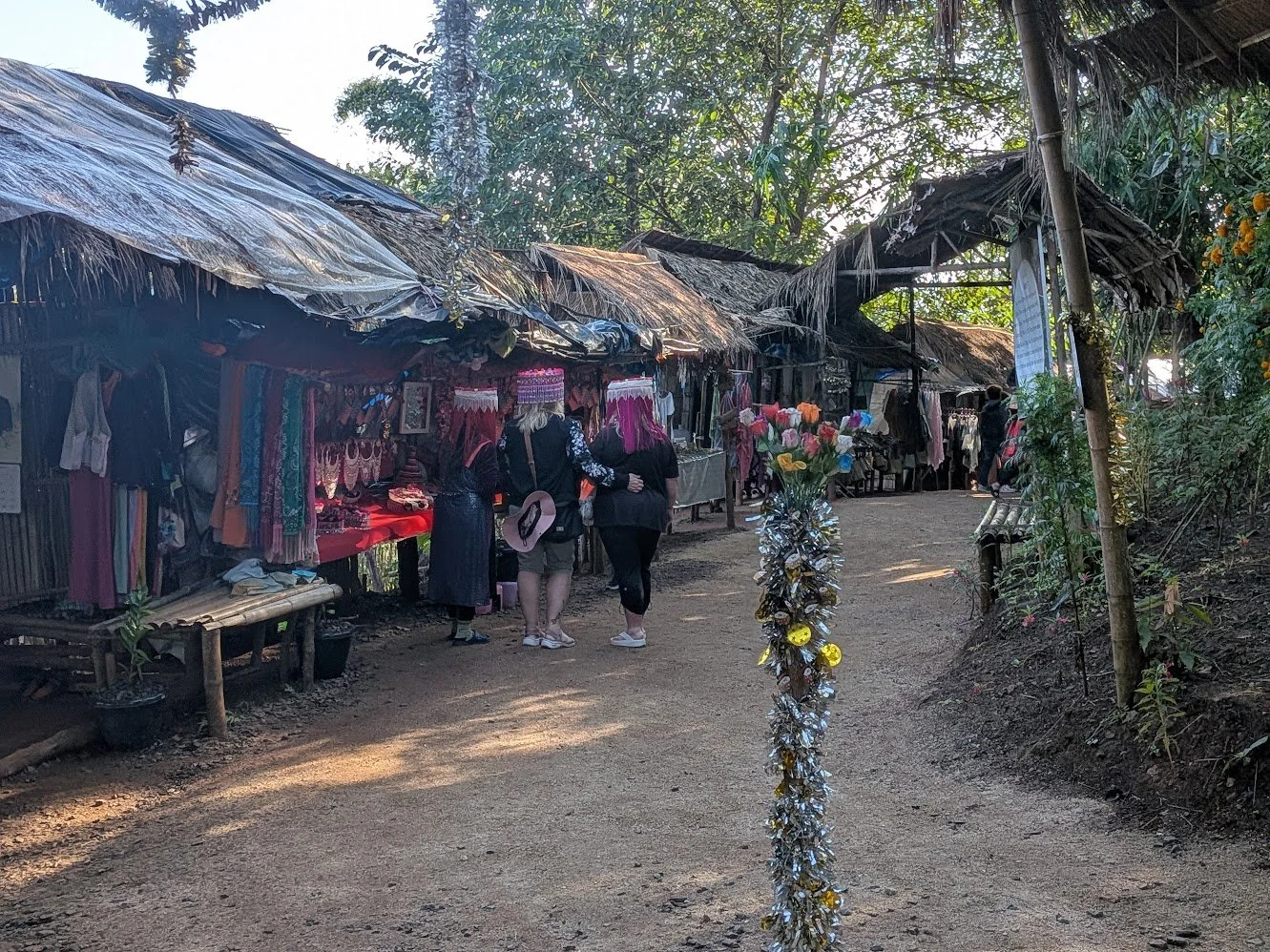
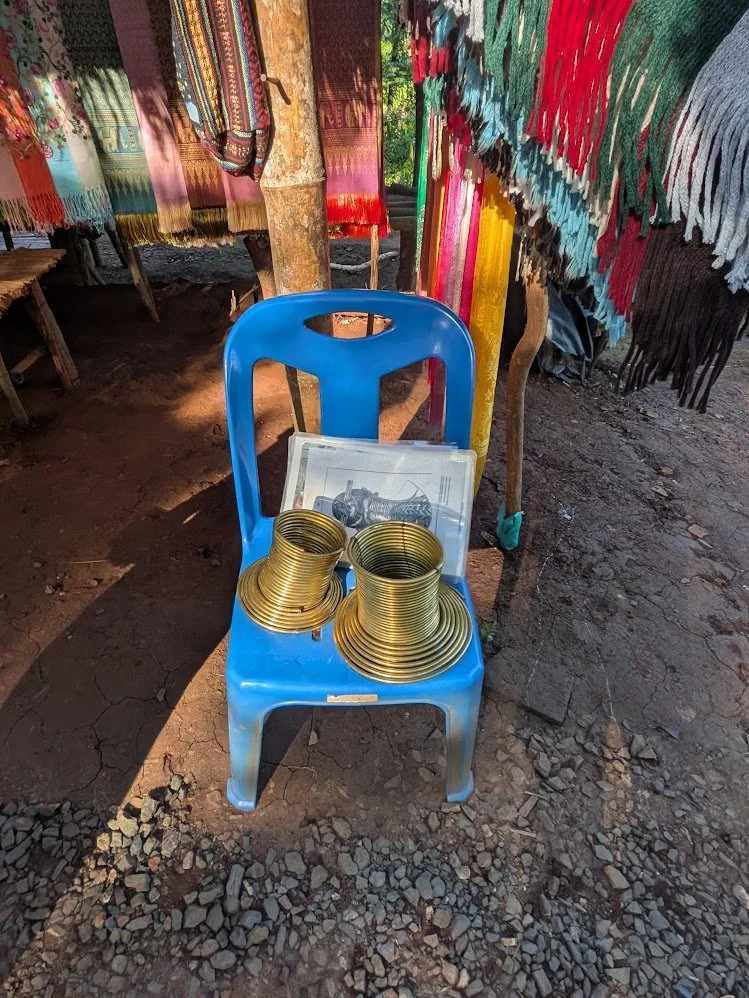
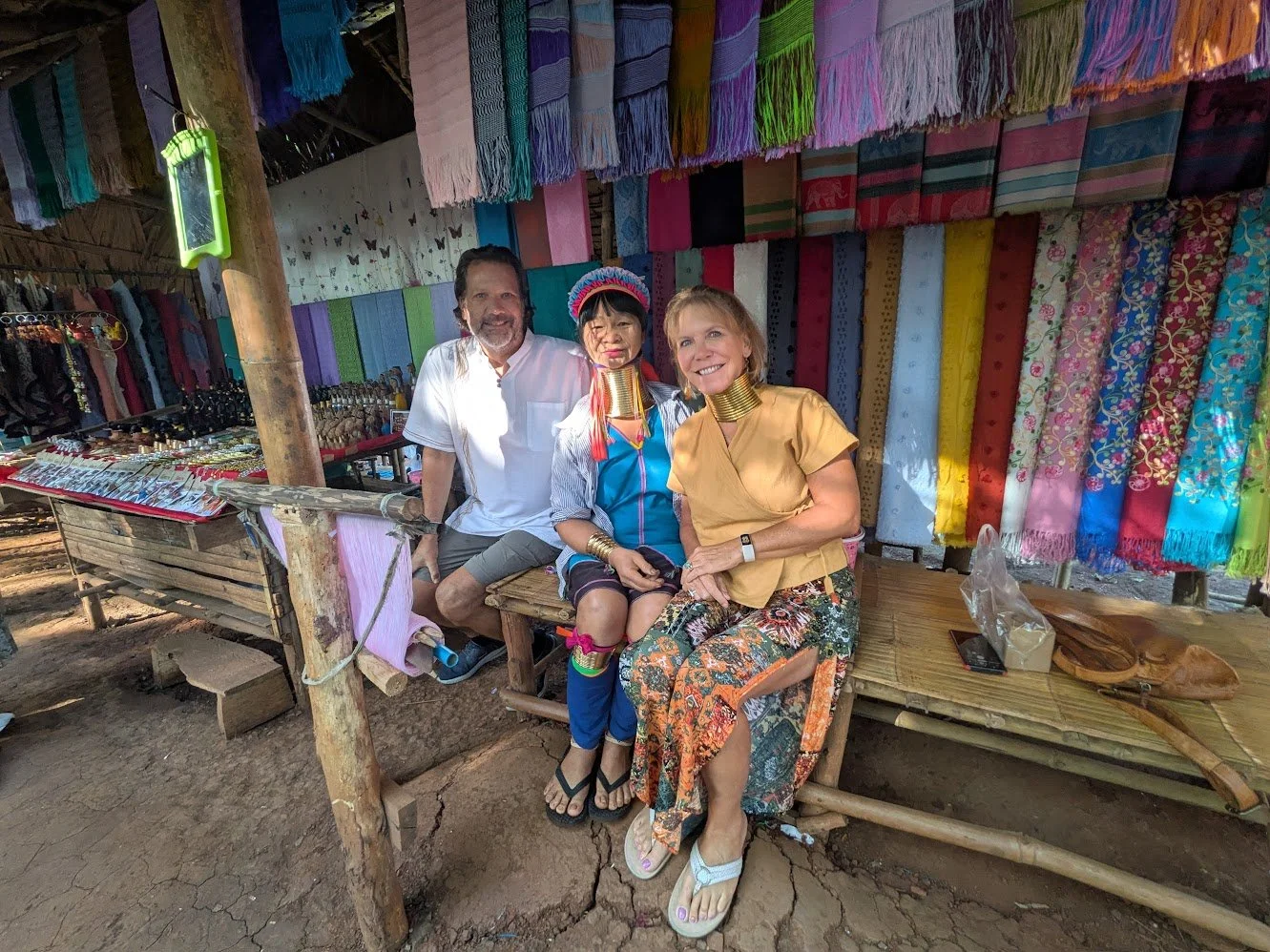
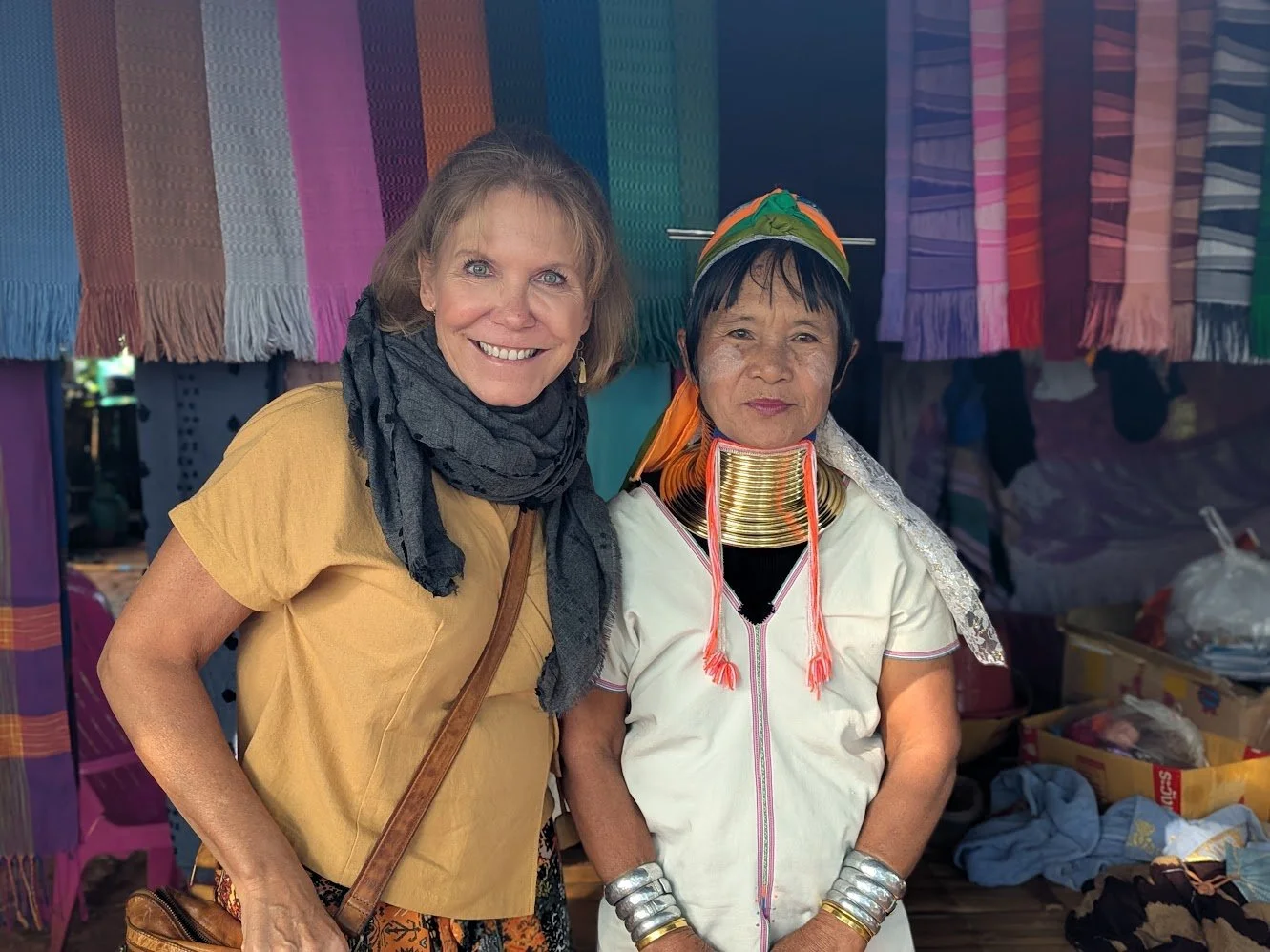
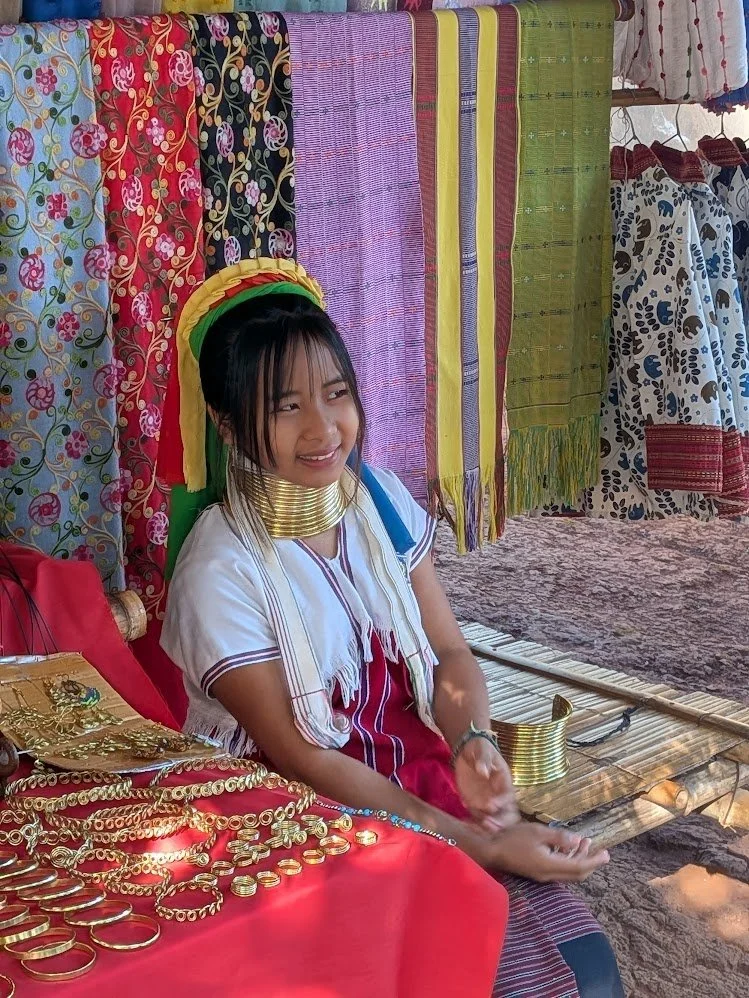
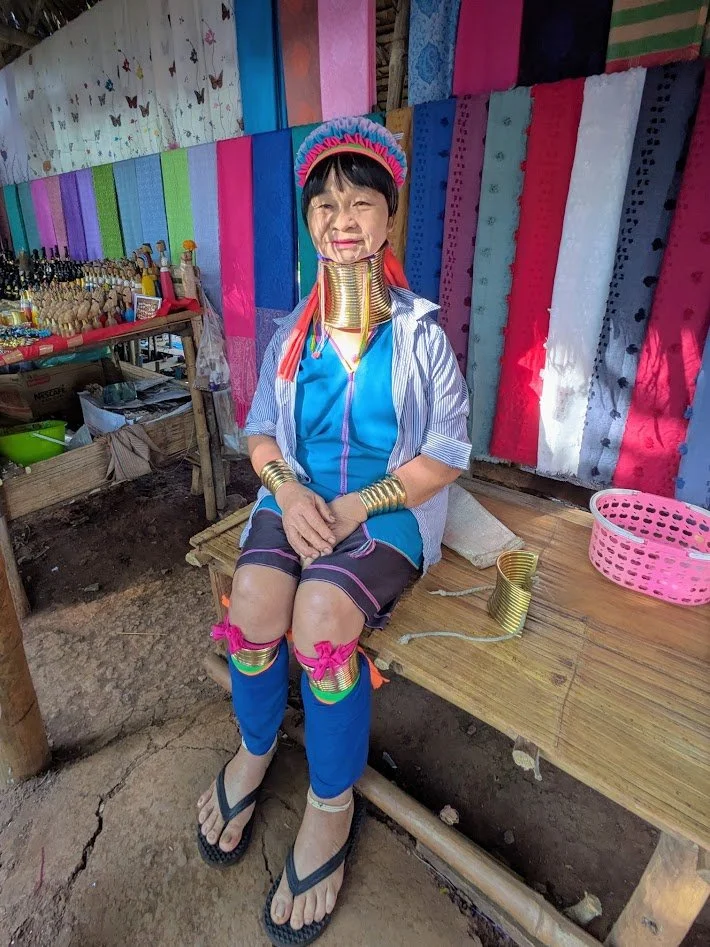
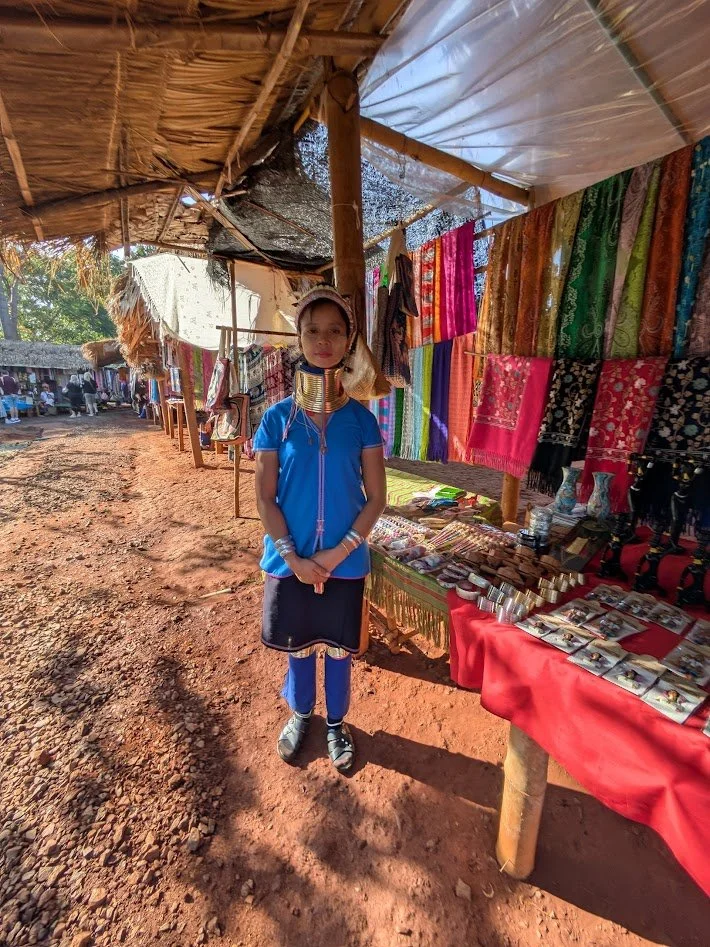
Our next stop was to the “Long Neck” Kayan Village which we had to think long and hard about visiting. I had read multiple Facebook posts that said NOT to visit and NOT to support these villages. They referred to them as “human zoos” and by visiting, we would be supporting the exploitation of these women. Beginning at the age of 5 or 6, the females have a metal ring placed around their neck and continue to have them added throughout their lives. This makes them appear to have really long necks (actually their collar bones and shoulders are shoved down rather than their necks being lengthened – still not good). By the time they are adults, the collection of rings is VERY heavy (about 10 pounds!)
The idea of going and gawking at them was pretty unappealing to me and since it was a private tour, it was entirely our choice. But we read up on it and talked to a few local Thai people and, after learning more, we saw it from a different perspective and decided that by visiting, we would be offering them much needed financial support.
We learned that these tribes had escaped civil wars in Myanmar (formerly Burma) and are refugees in Thailand. The Thai government took them in, provided land for them to live on, and provides healthcare and a basic education. They can apply and get permission to go other places in Thailand, but for the most part they prefer to stay in their own village among their own people. They do, however, visit larger towns for healthcare and sometimes send their children to school and even university in larger towns.
Now that they are in Thailand, the women are no longer forced to put the rings on their necks. Those that continue to do it are doing it by choice. When a little girl gets a bit older, she can choose to keep them on or remove them. Most opt to keep them on because it is their culture and they believe it is attractive. While they receive healthcare and land to farm and live in (but not own), they don’t receive money and still need resources for the basics - to build houses (huts), to run plumbing and electricity, and for other essentials that they cannot grow or make on their own. So… they rely on tourism.
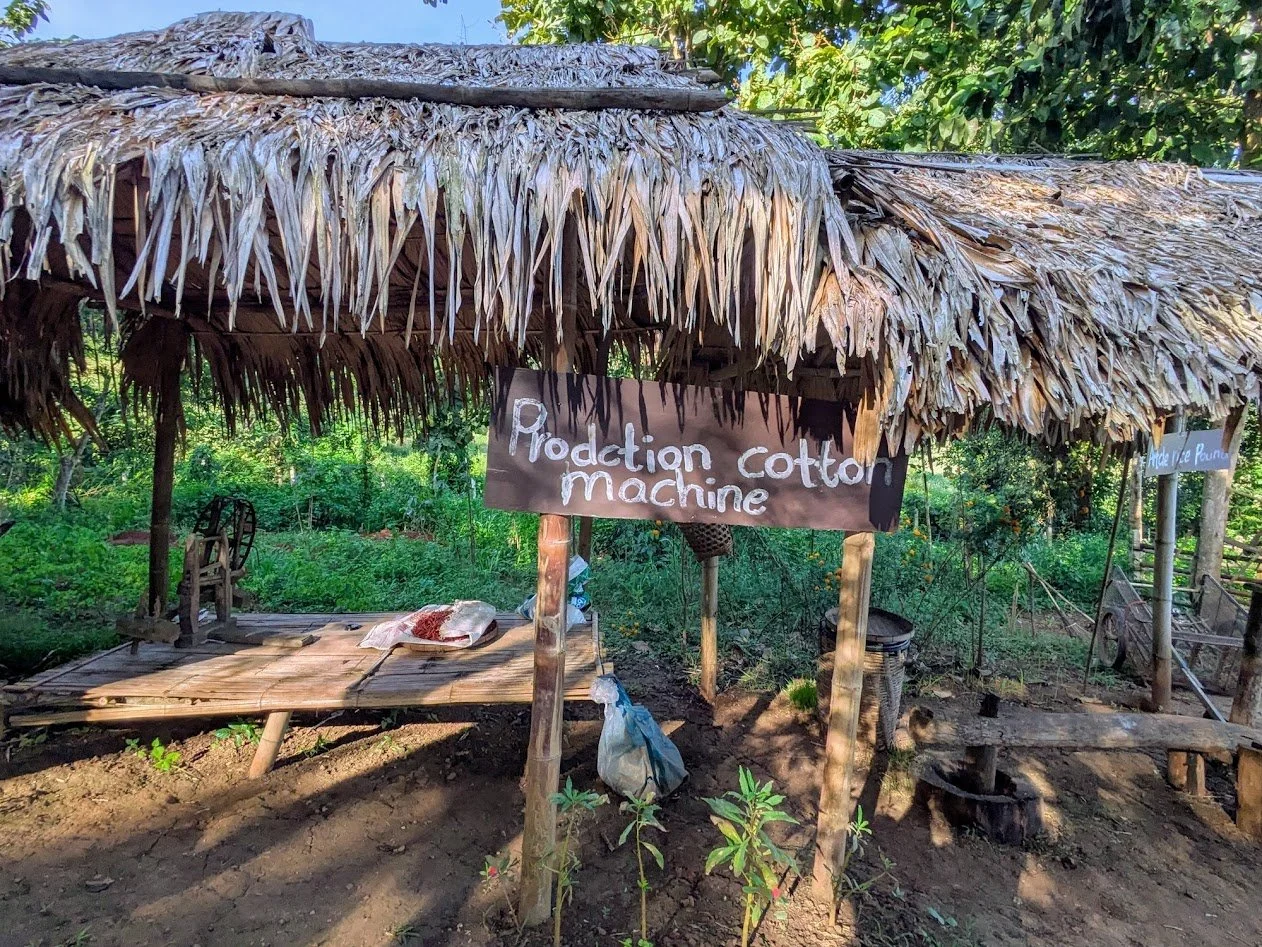
The village we visited had multiple different tribes living there (not just the “Long Necks”). We paid an entrance fee of roughly $9.00 per person and walked through the village in a big loop where they had little stands set up selling their goods - hand made scarves, ponchos, hats, wind chimes, magnets (yes, Emmy – we got one for you!), and other trinkets. We visited with them and bought as much of their goods as we could justify. We respectfully asked before taking any photos, and if we took a photo of someone who we didn’t purchase anything from, we offered a tip. It is unclear how much of the admission fee goes to support the village, but 100% of the tips and purchases go directly to them.
It was super interesting and we felt good about visiting and supporting them!
Next we finished the journey to Chiang Rai where we visited 3 enormous temples in town. These temples were recently built (within the last 25 years) and don’t feel the least bit authentic. They were beautiful, but very crowded and touristy. We enjoyed seeing them, but were glad we just did it as a day trip (we had considered doing an overnight because of the long drive)
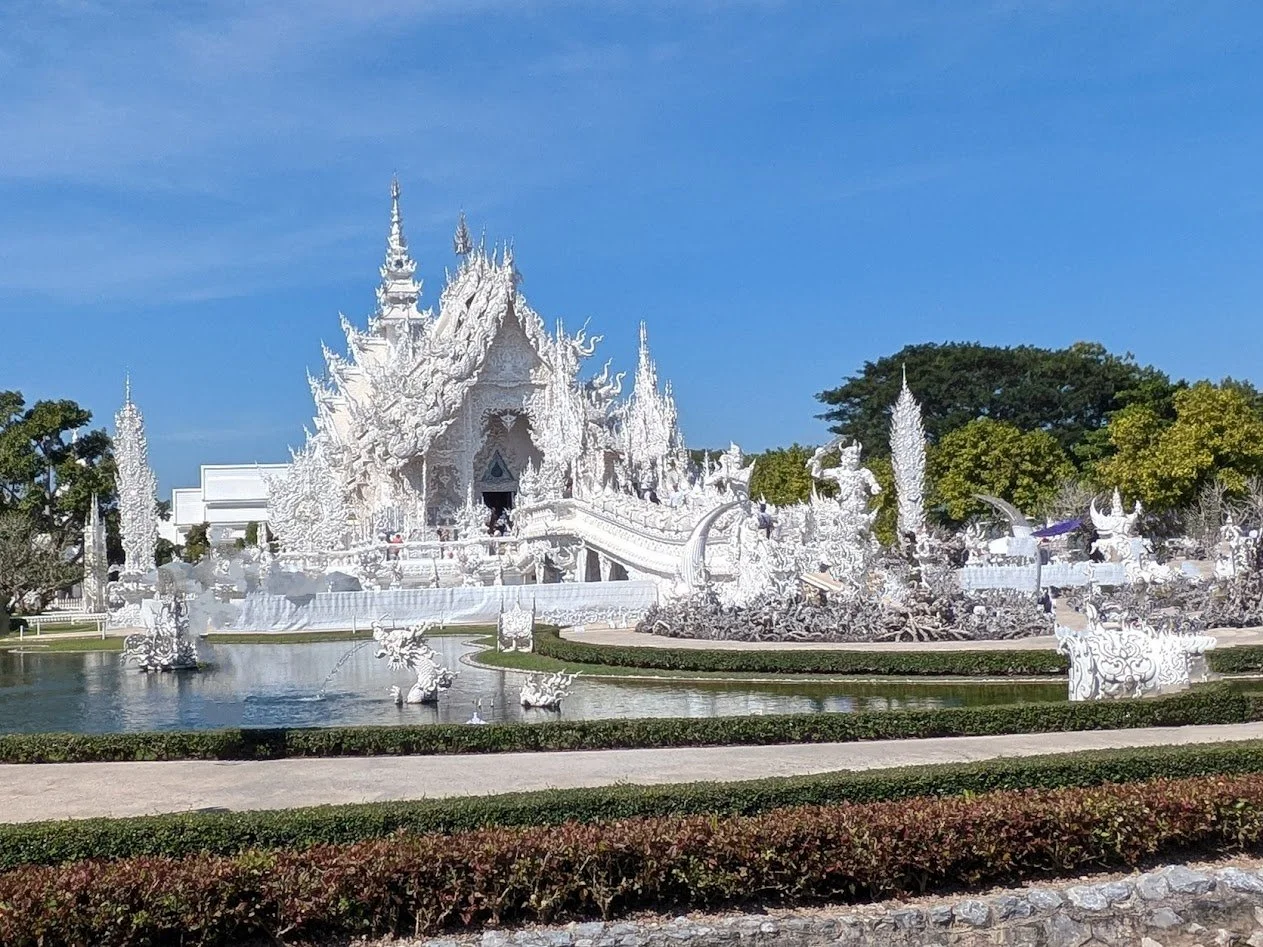
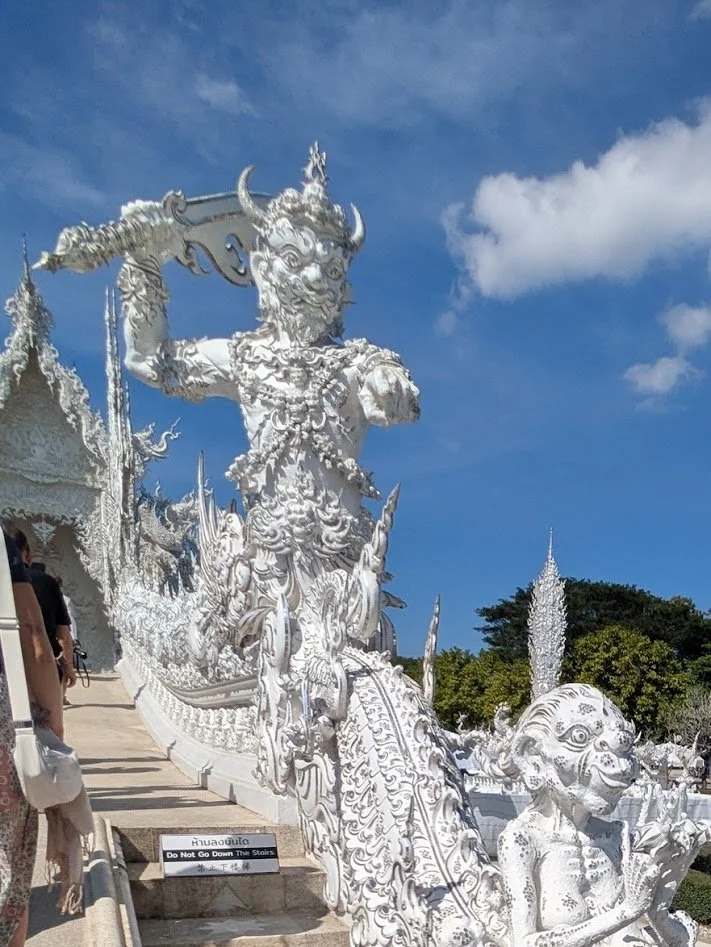
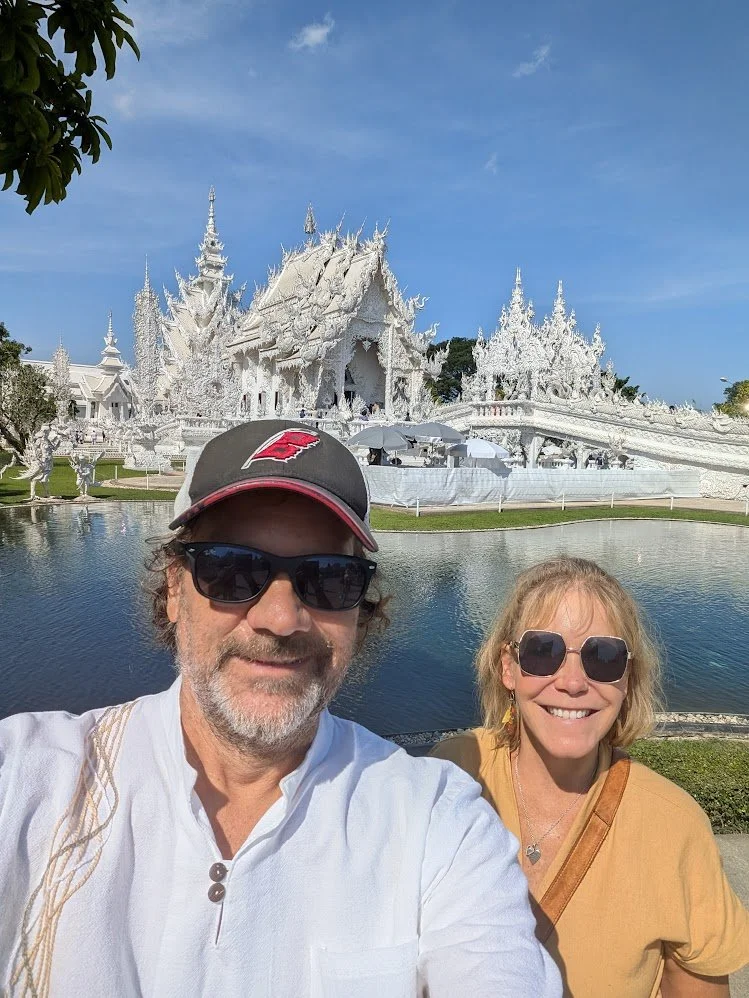
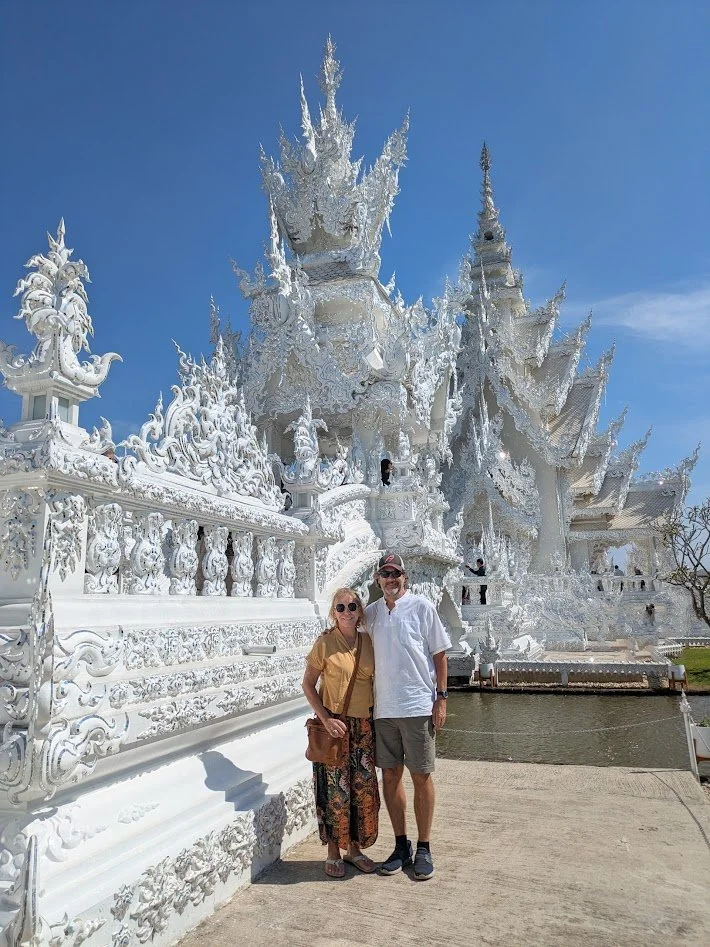
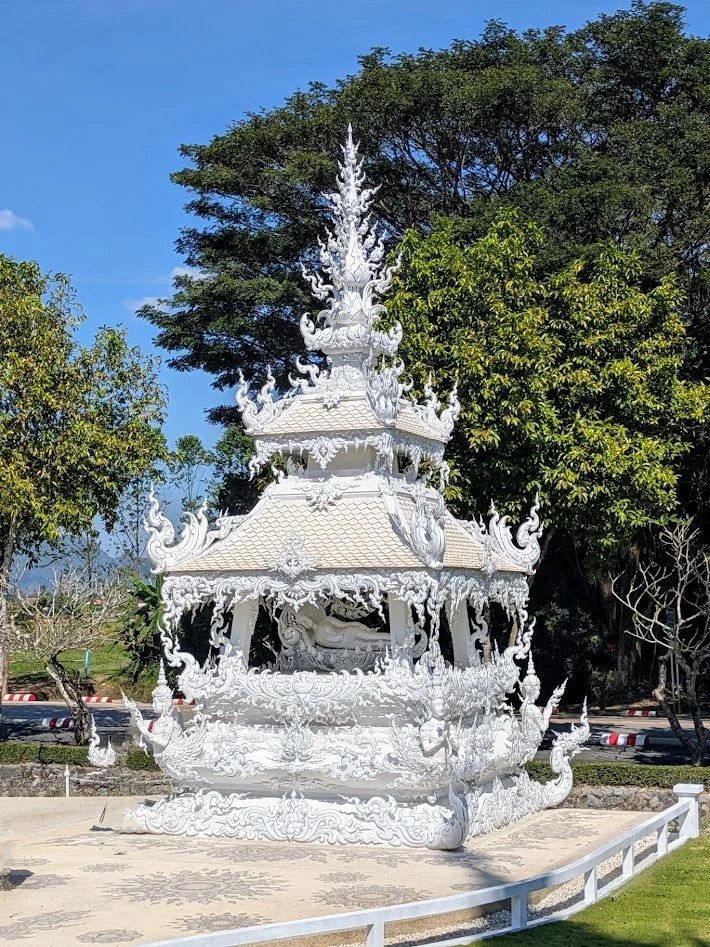
The first temple was a contemporary temple called Wat Rong Khun (better known as the White Temple). The design of the buildings symbolizes purity with white plaster and glass/mirrored mosaics representing the Buddha's wisdom. It is a work in progress that was begun in 1997 and is not expected to be completed until 2070.
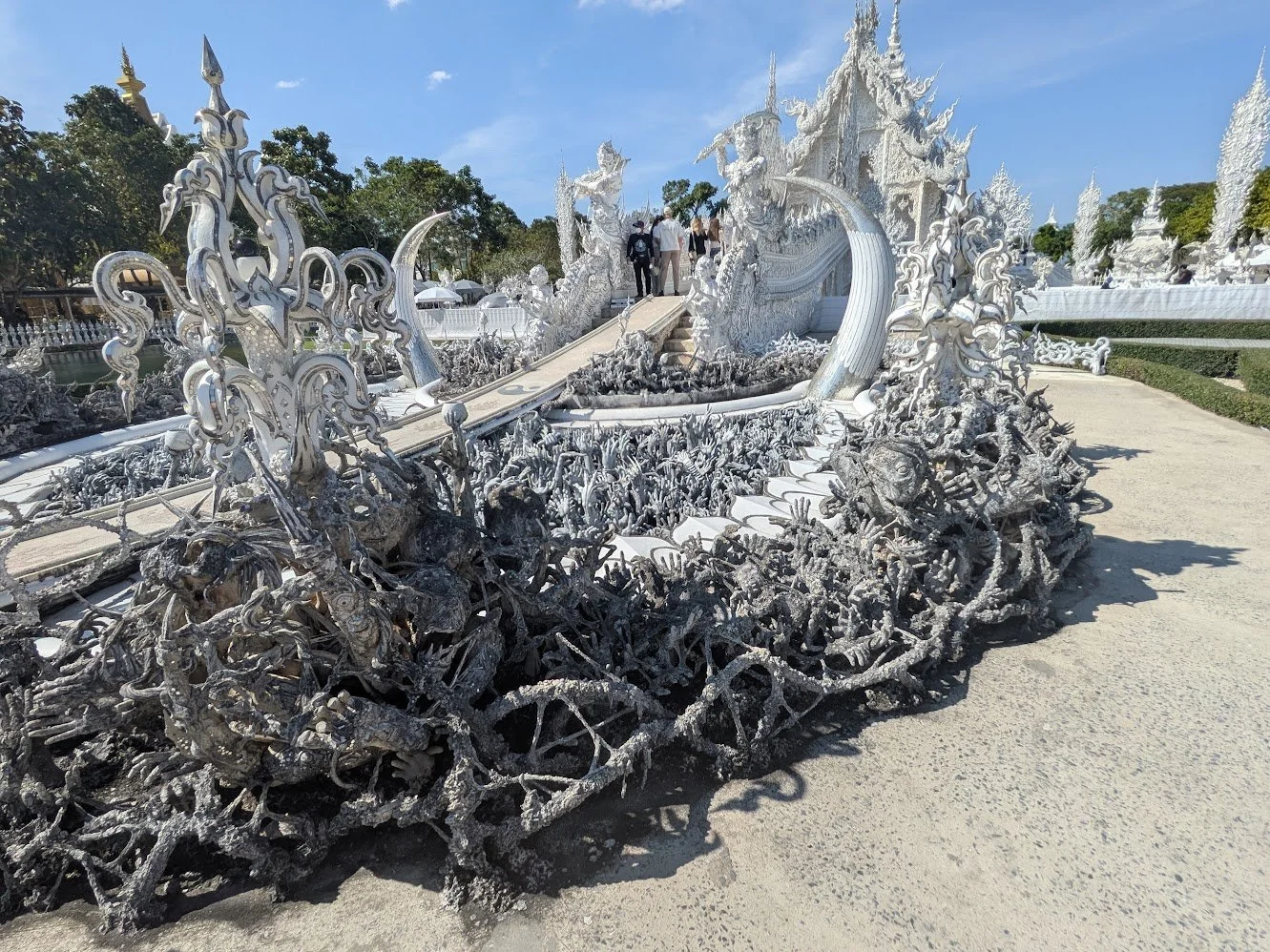
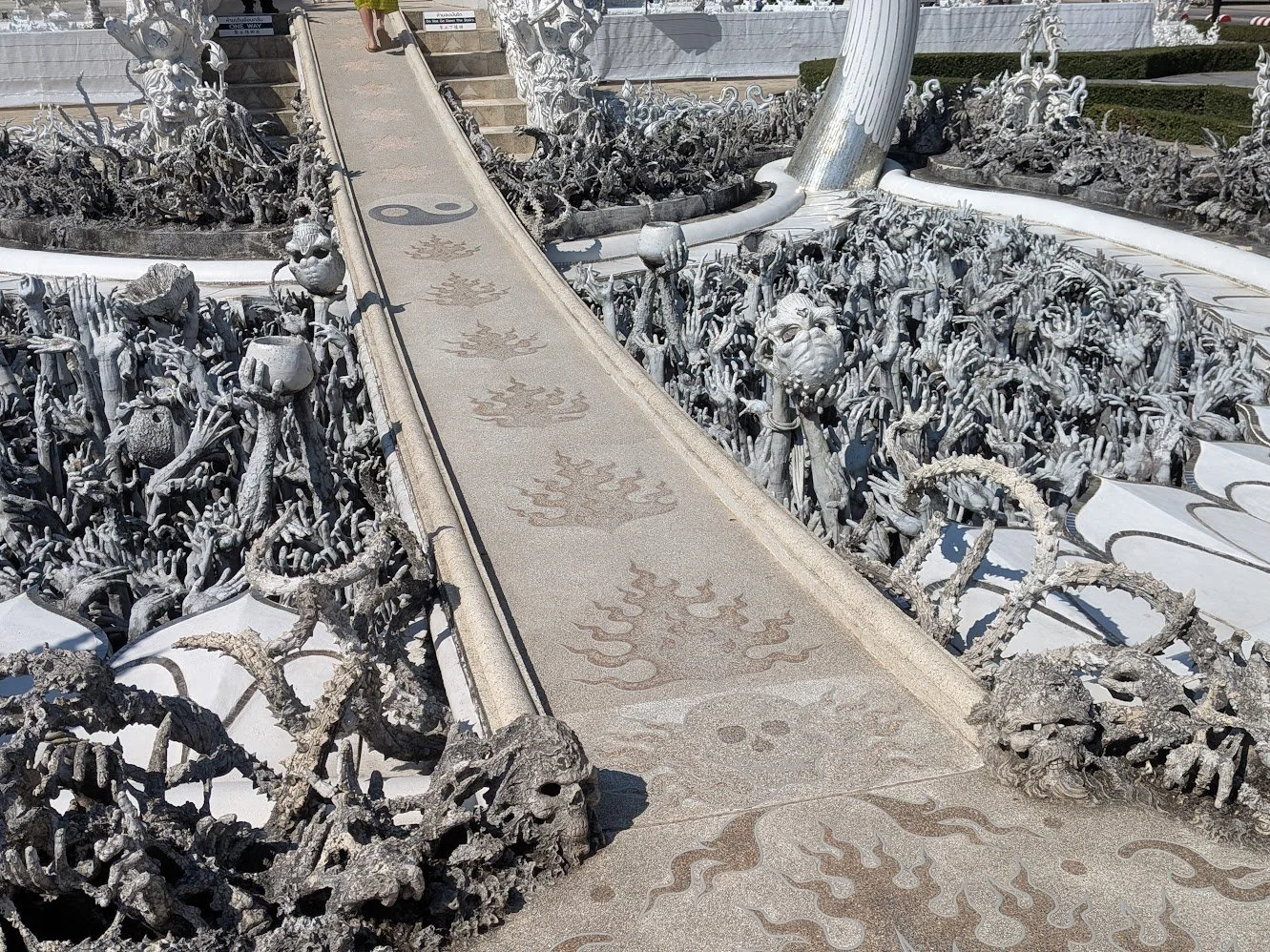
The complex is huge and there are a lot of weird aspects to it and odd random statues. The main building is reached by crossing a bridge over a pond filled with super creepy hands reaching up apparently from hell. The bridge itself symbolizes the passage from the cycle of rebirth to Buddhahood.
We couldn’t take photos inside, but it was frankly kind of weird! There were obviously the traditional Buddha things, but also all kinds of very modern (and mostly American) themes in the murals on the walls… Michael Jackson, Superman, and the 9/11 terrorist attack (apparently to represent the struggle between good and evil).
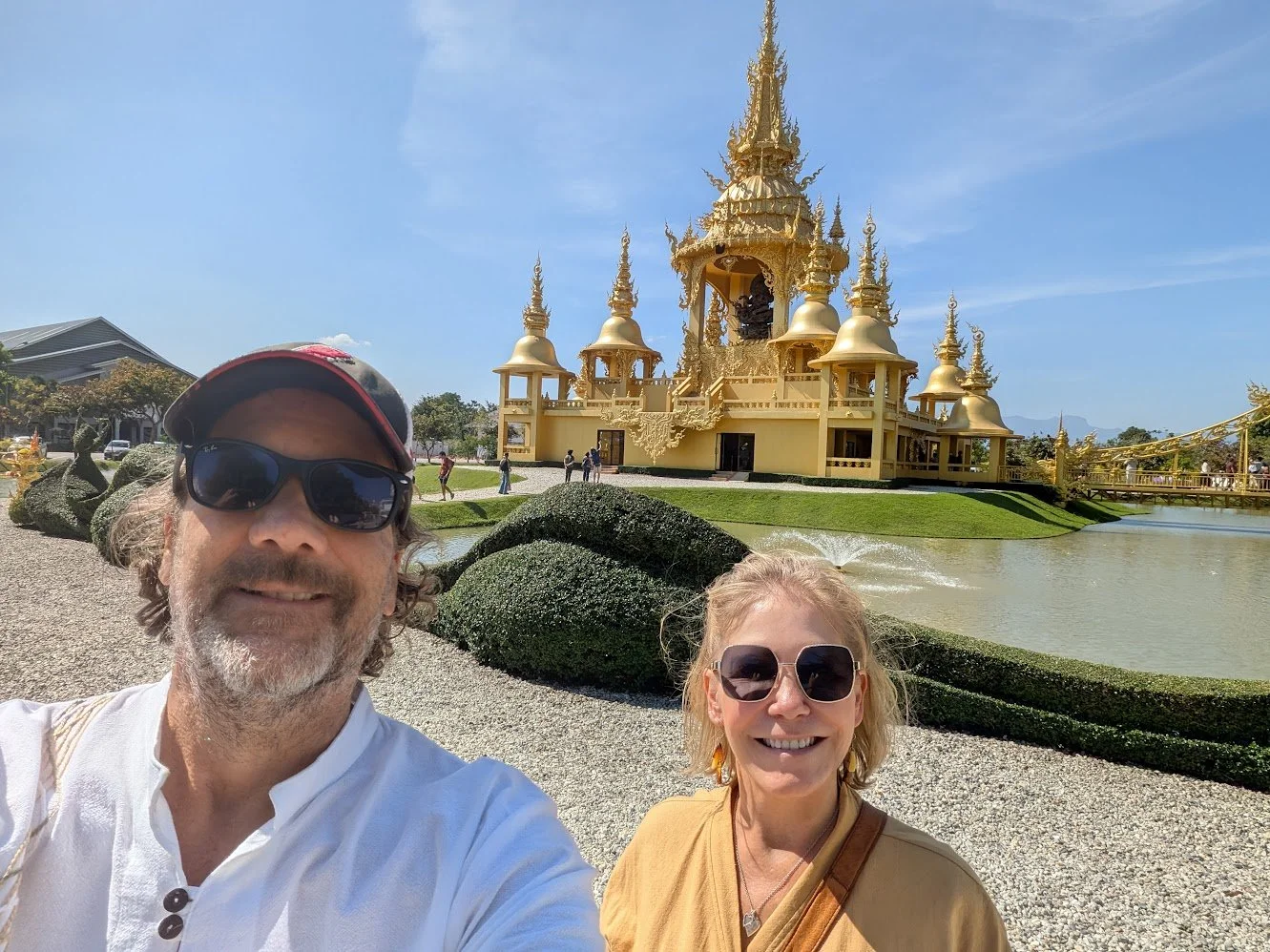
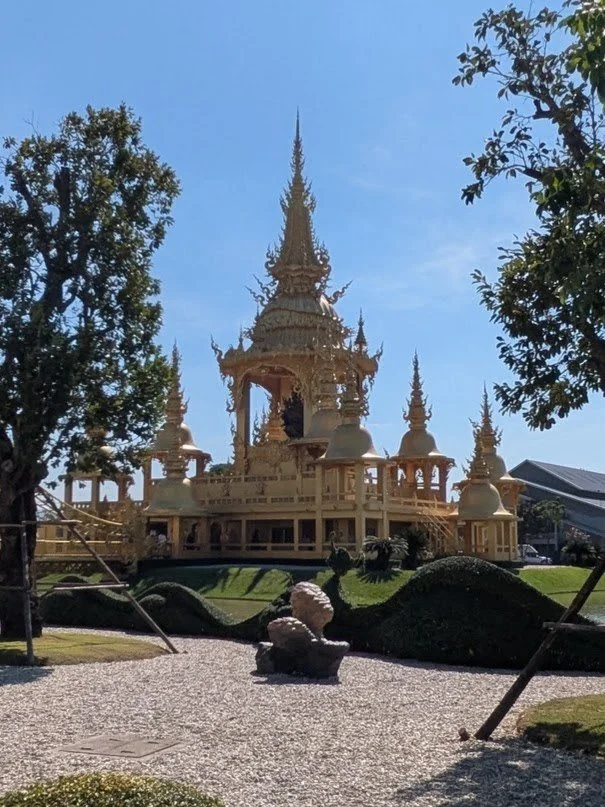
There was also one random gold temple on the grounds.
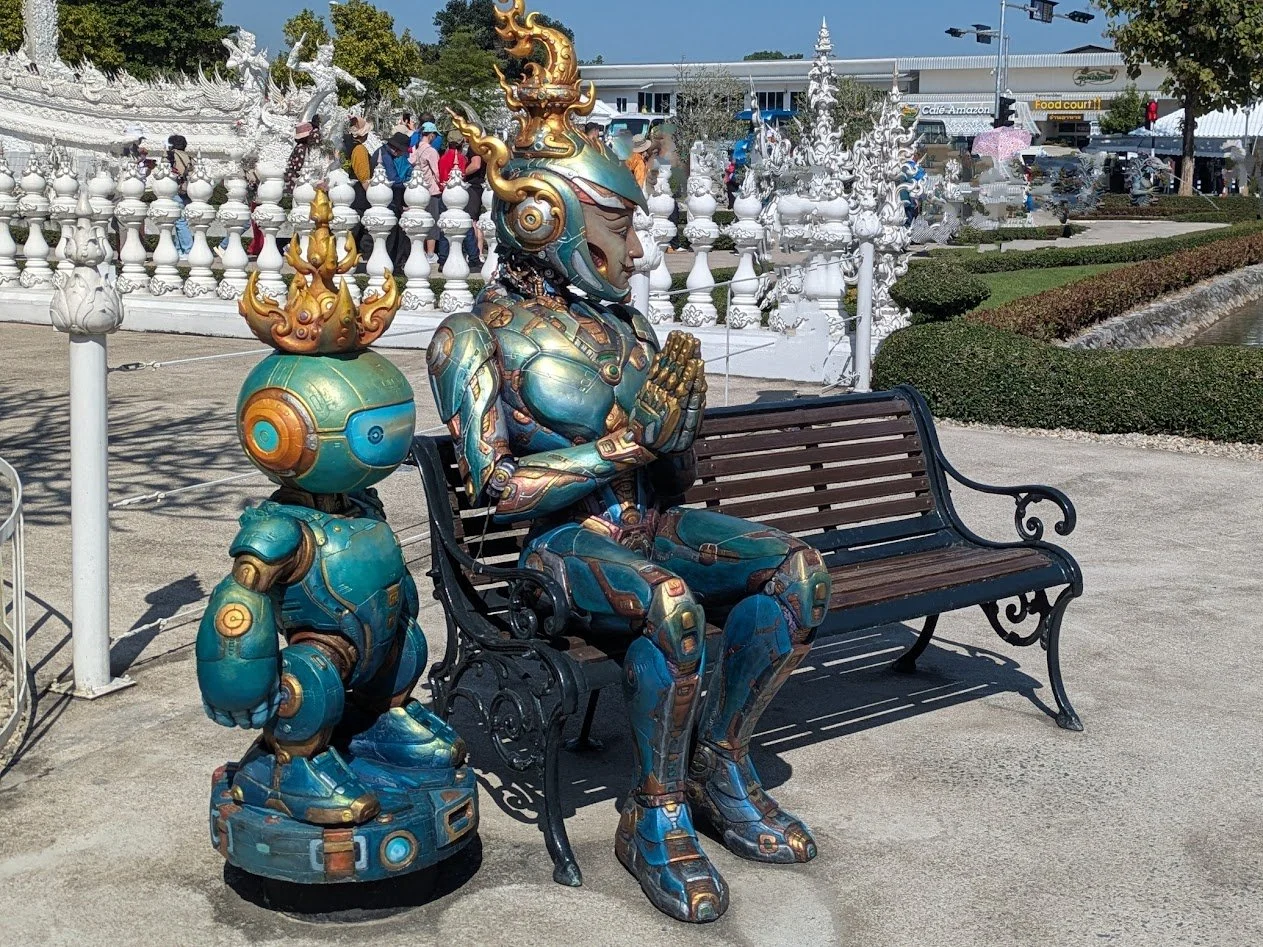
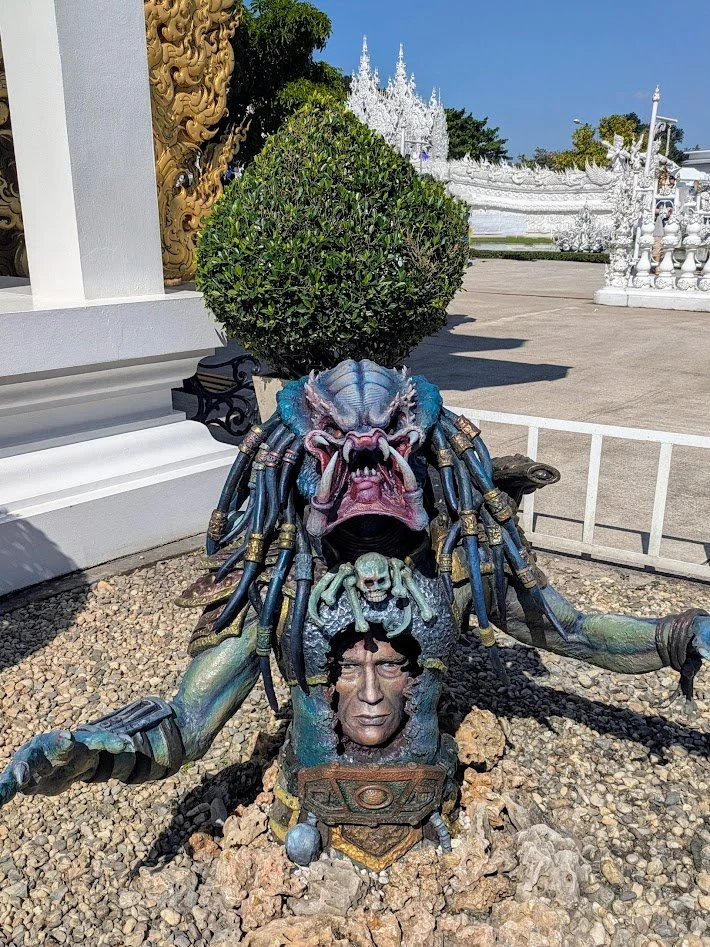
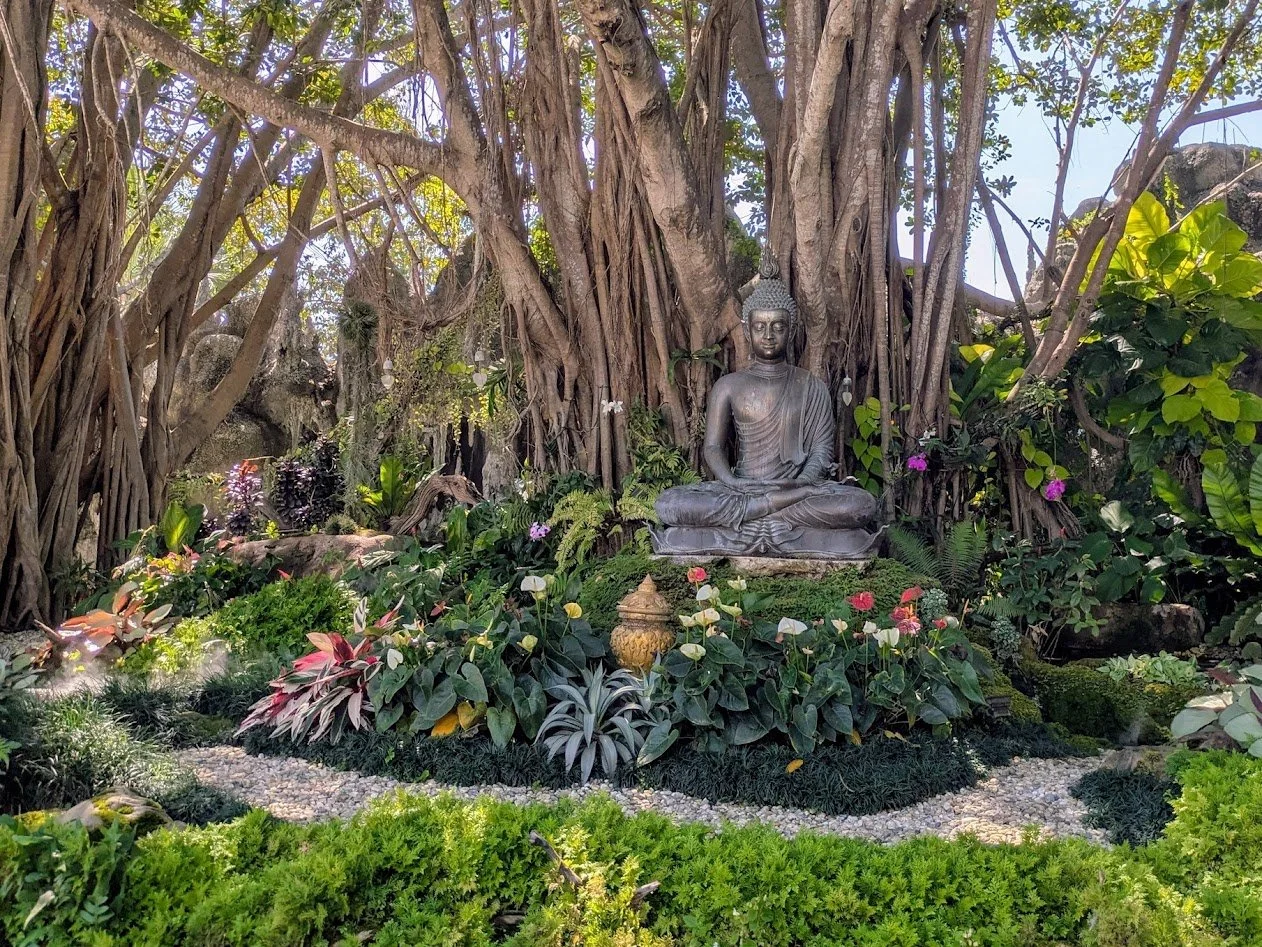
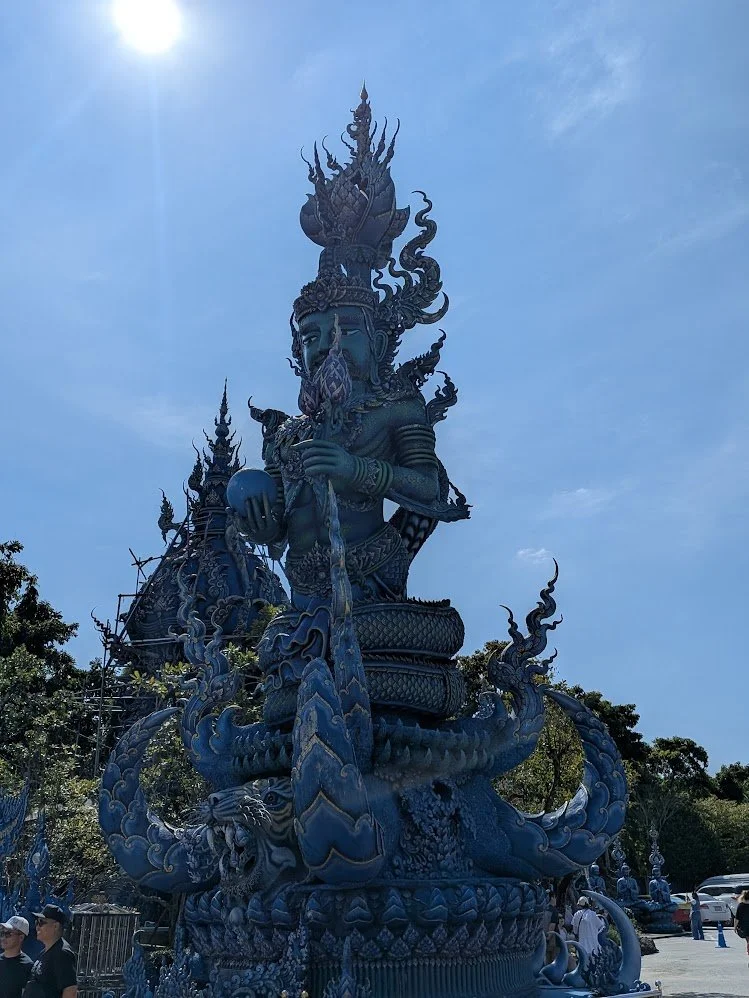
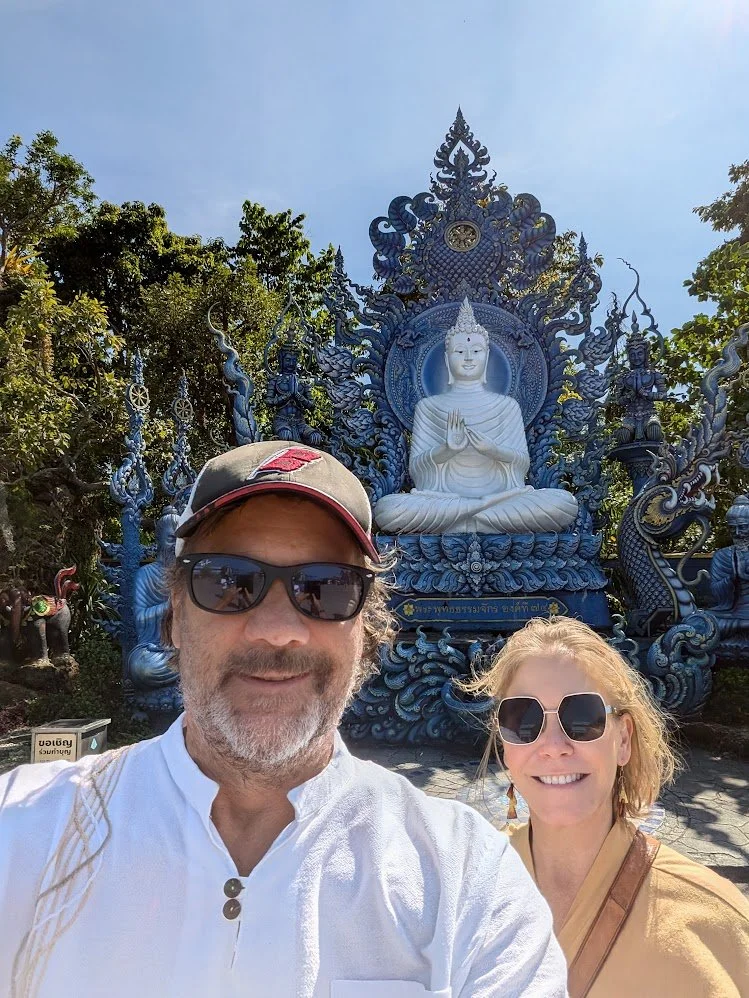
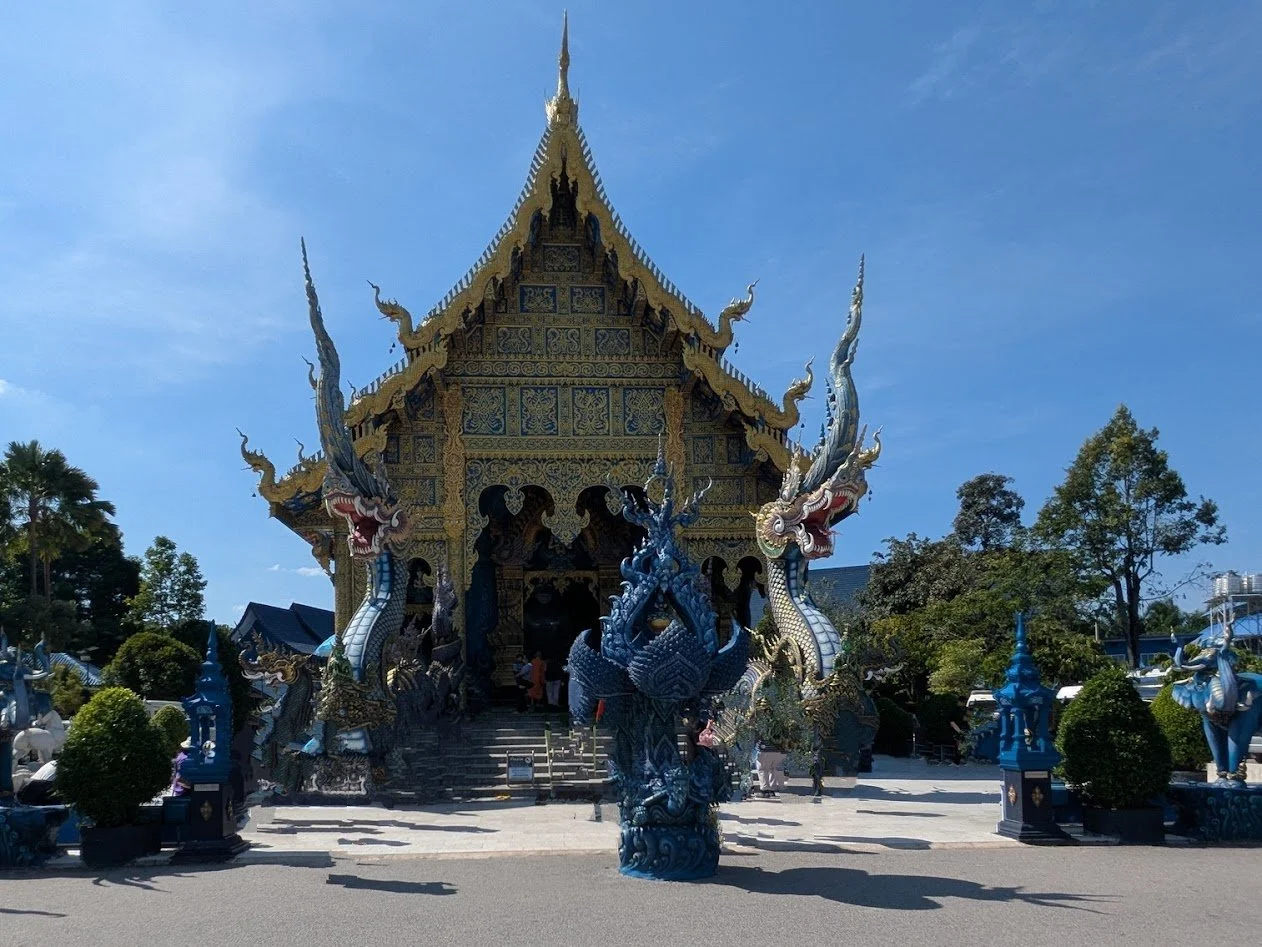
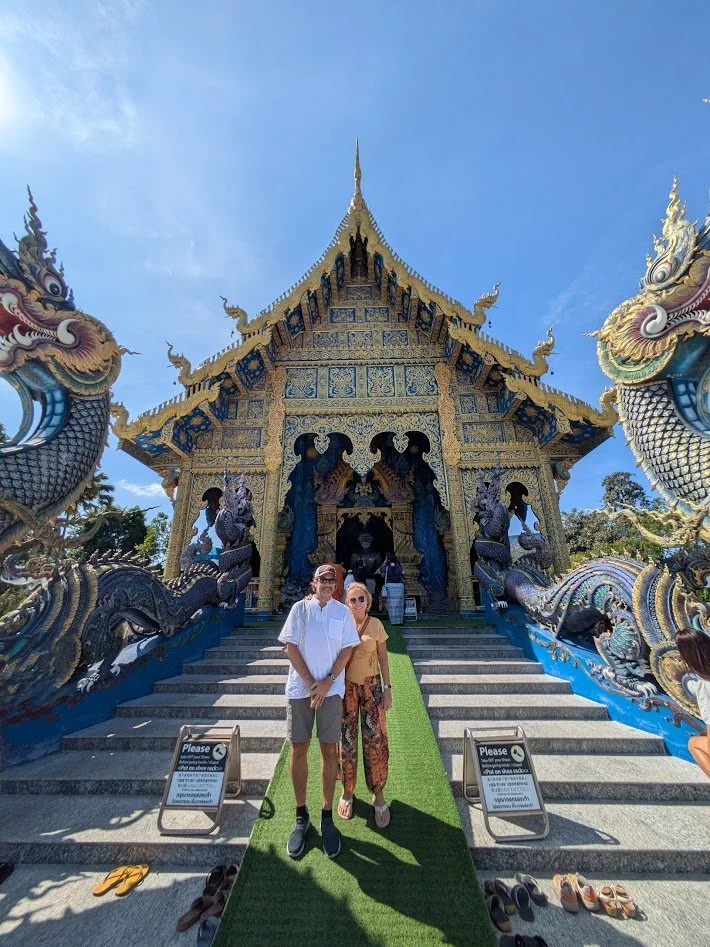
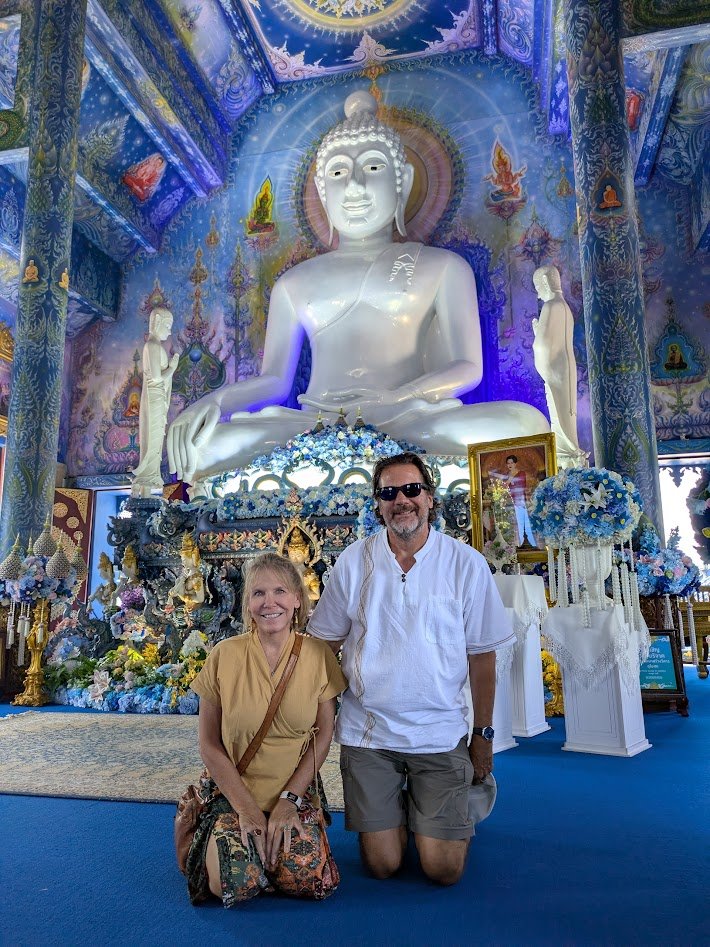
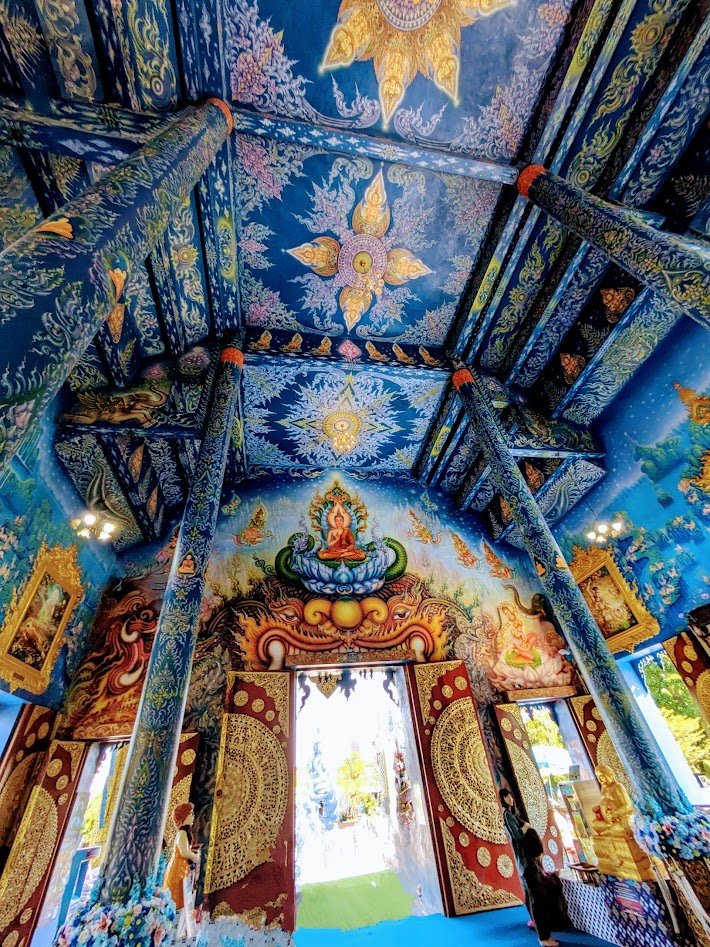
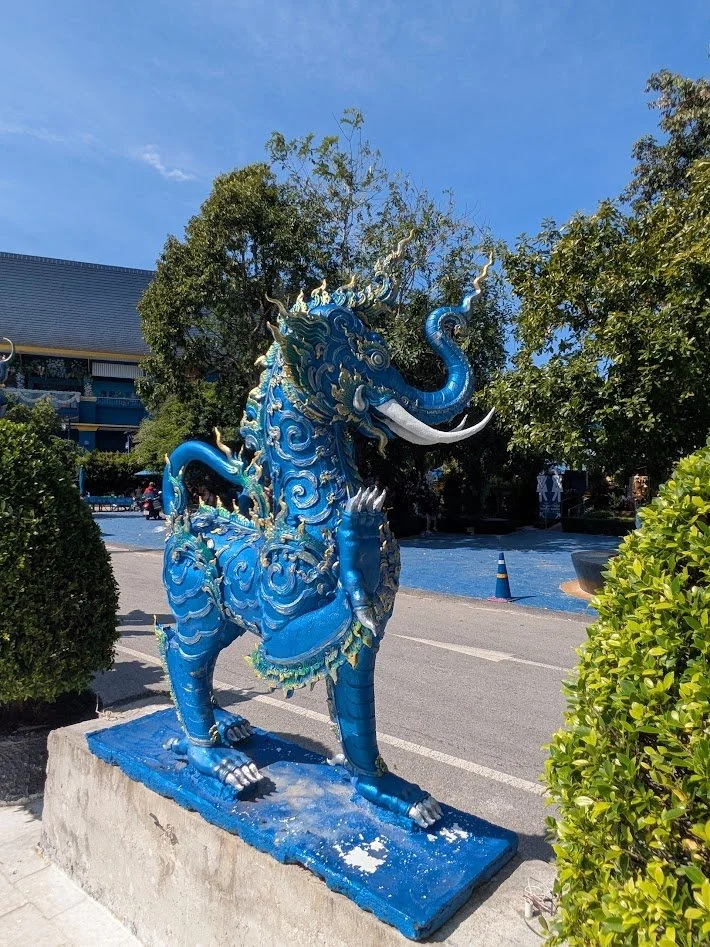
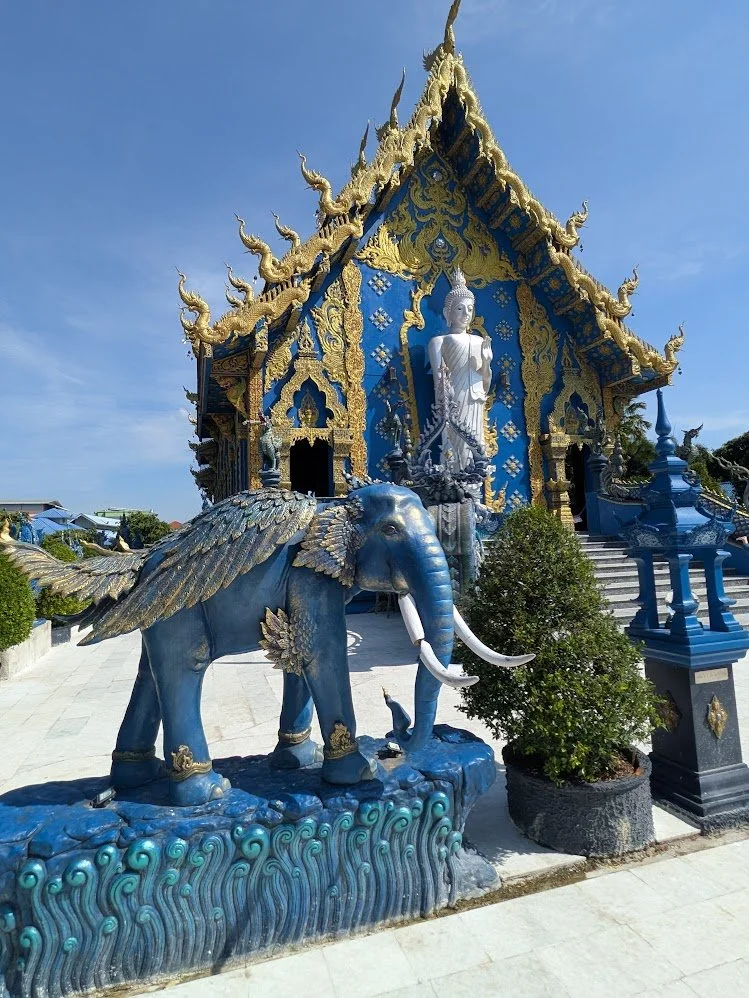
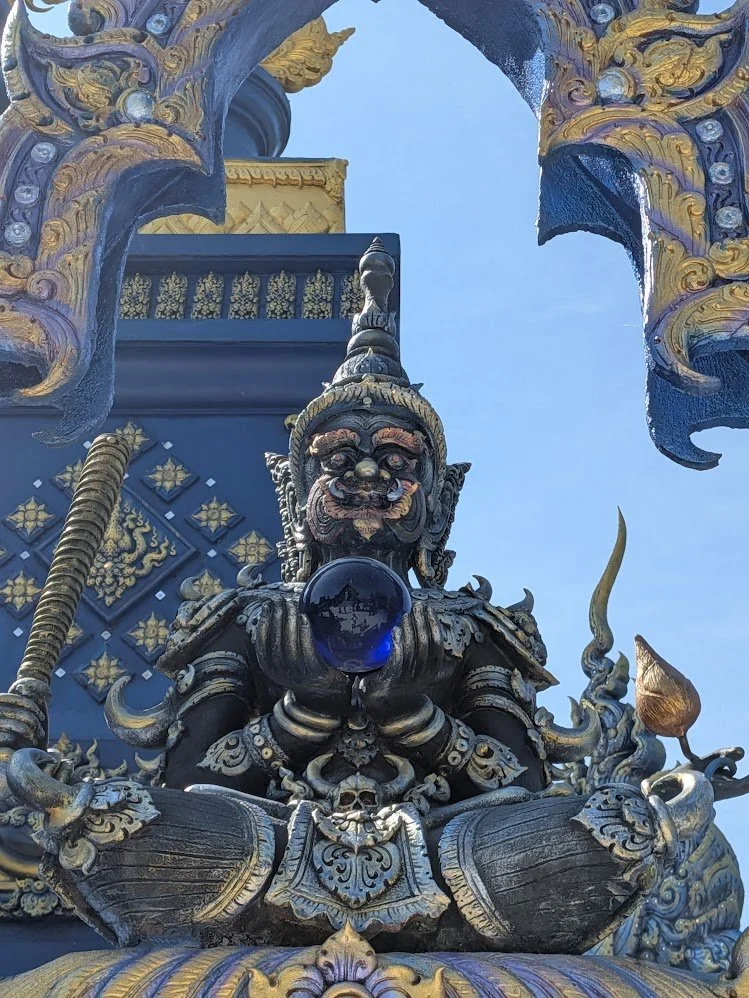
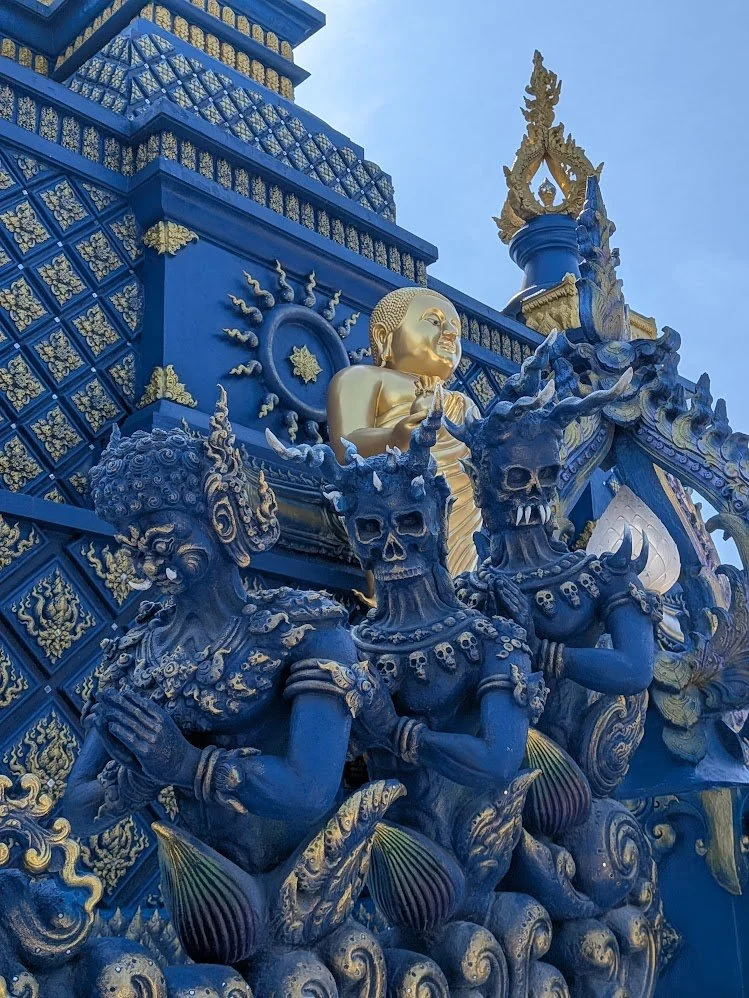
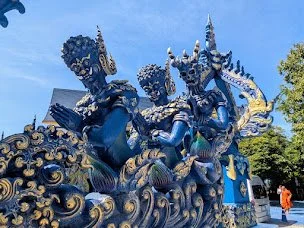
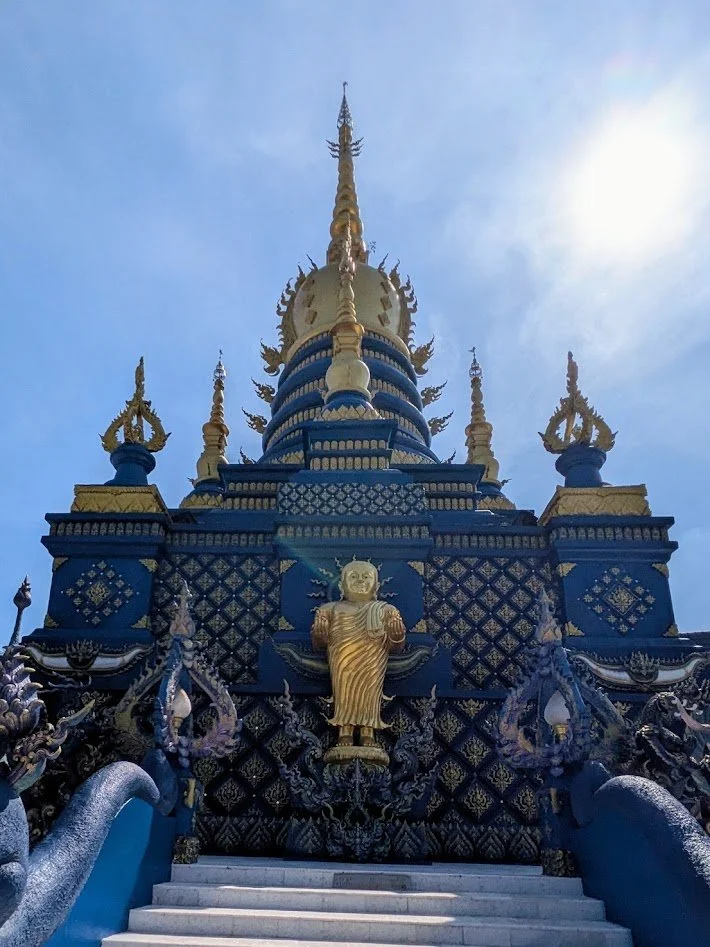
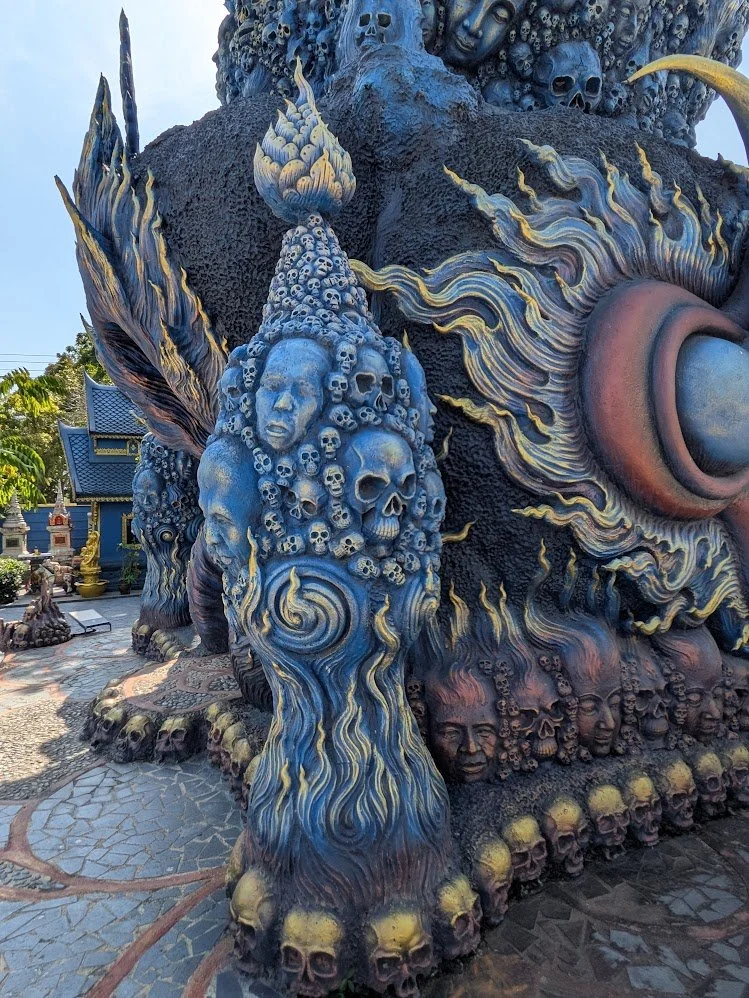
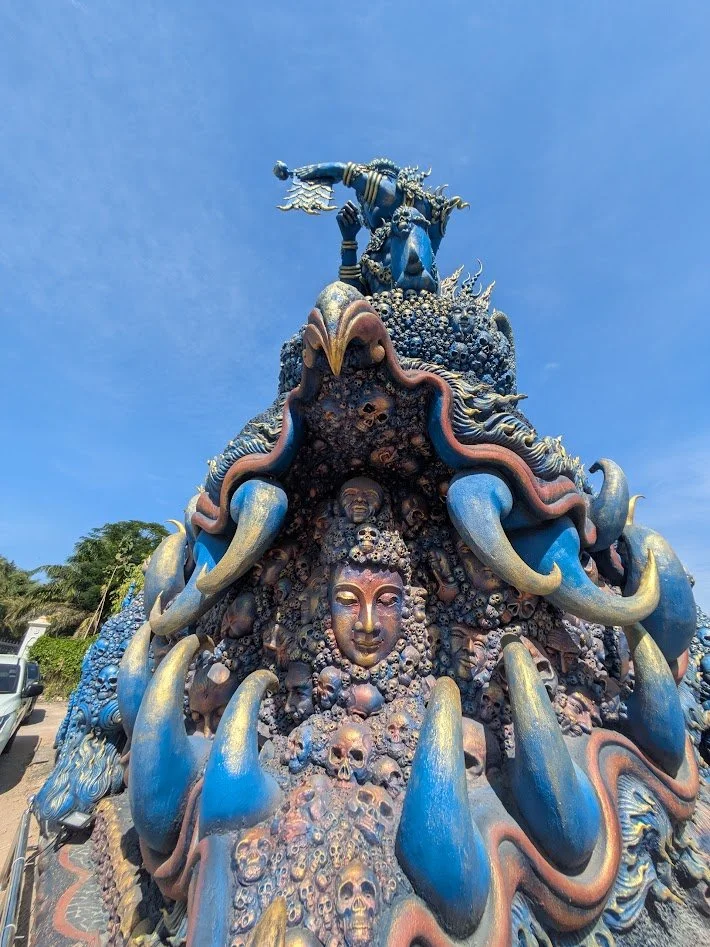
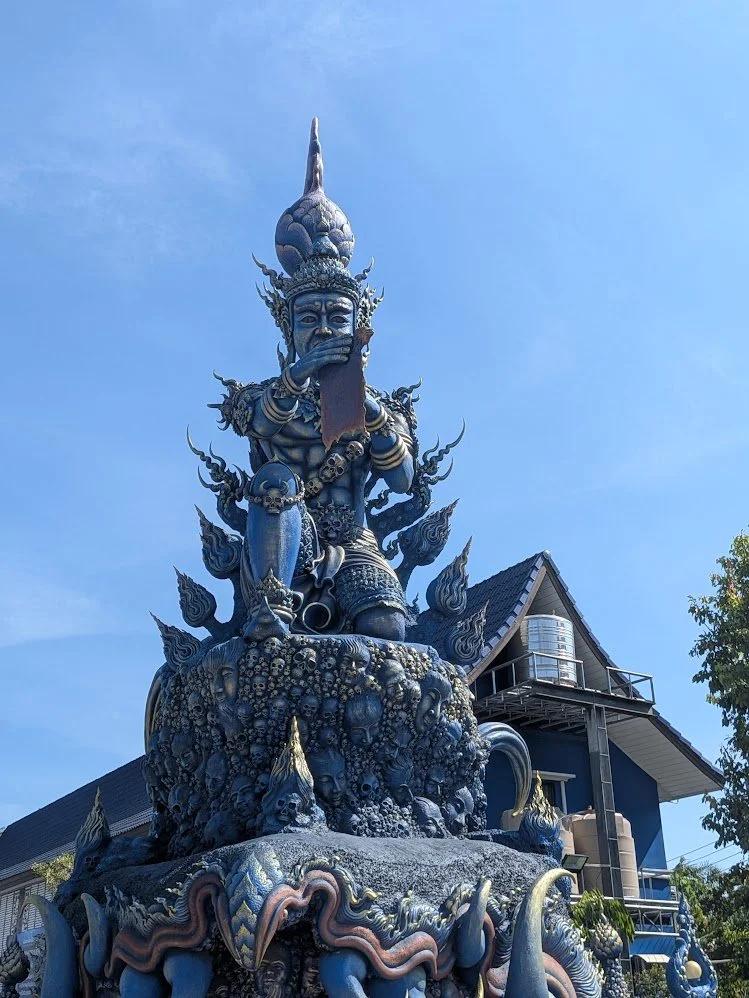
Our next stop was Wat Rong Suea Ten (better known as the Blue Temple) which was completed in 2016. Again, very new and very touristy! Its name, which translates to "House of the Dancing Tiger," comes from the tigers that once roamed the area. The temple's design was led by artist Putha Kabkaew, who is a student of the artist who designed the White Temple… kind of easy to see based on some of the weirdness!!
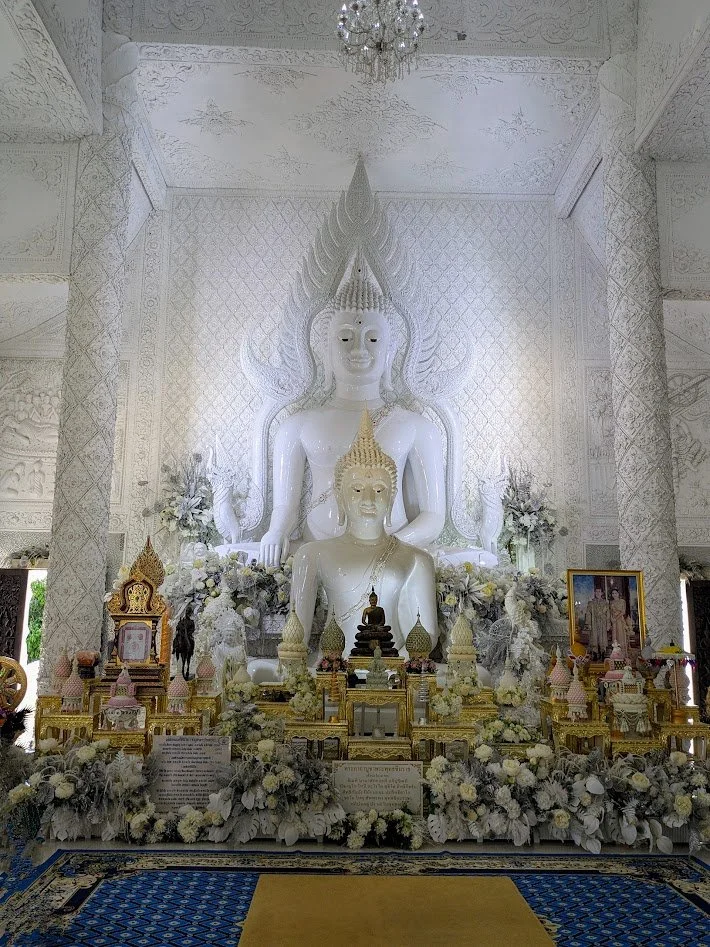
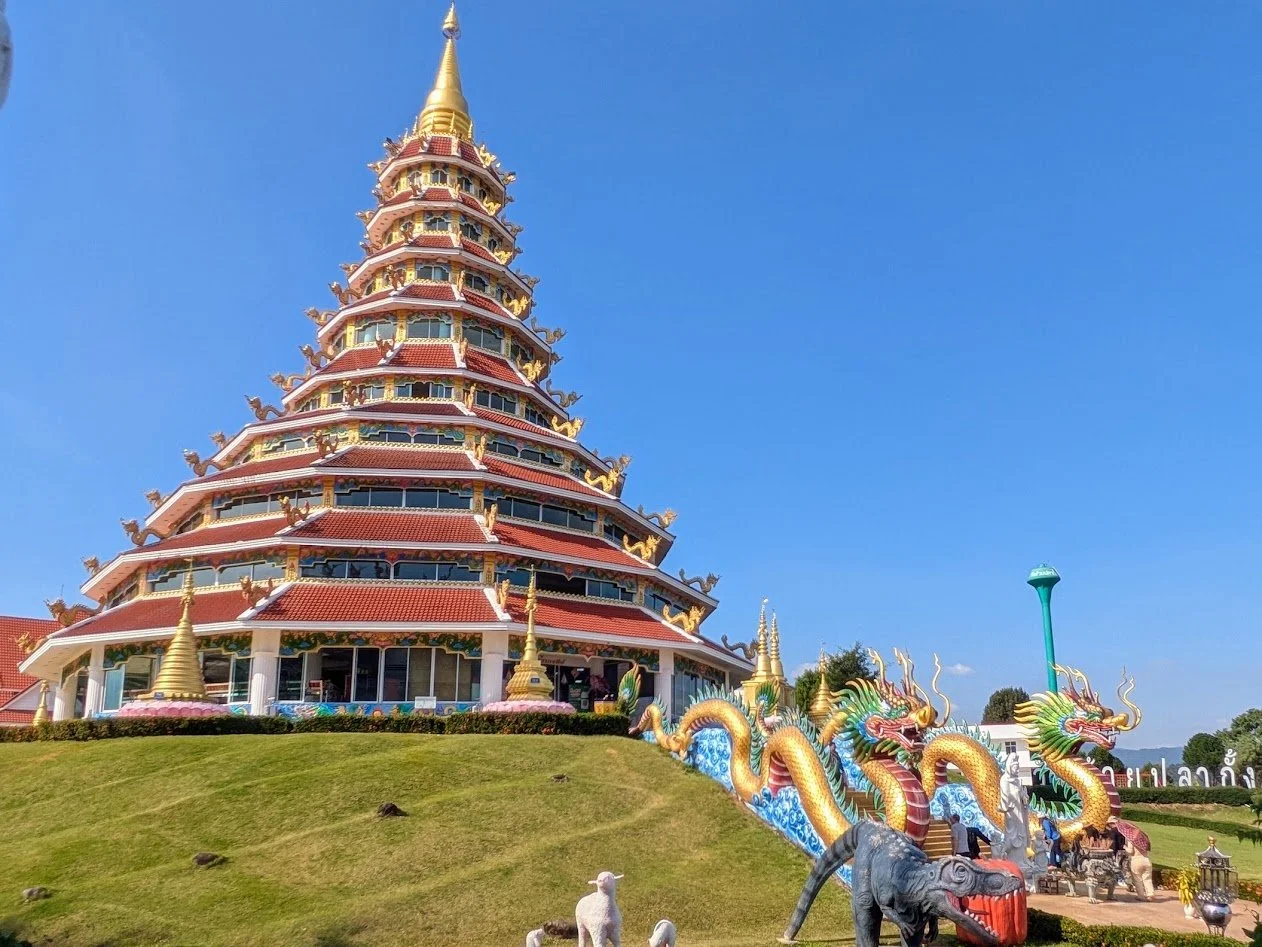
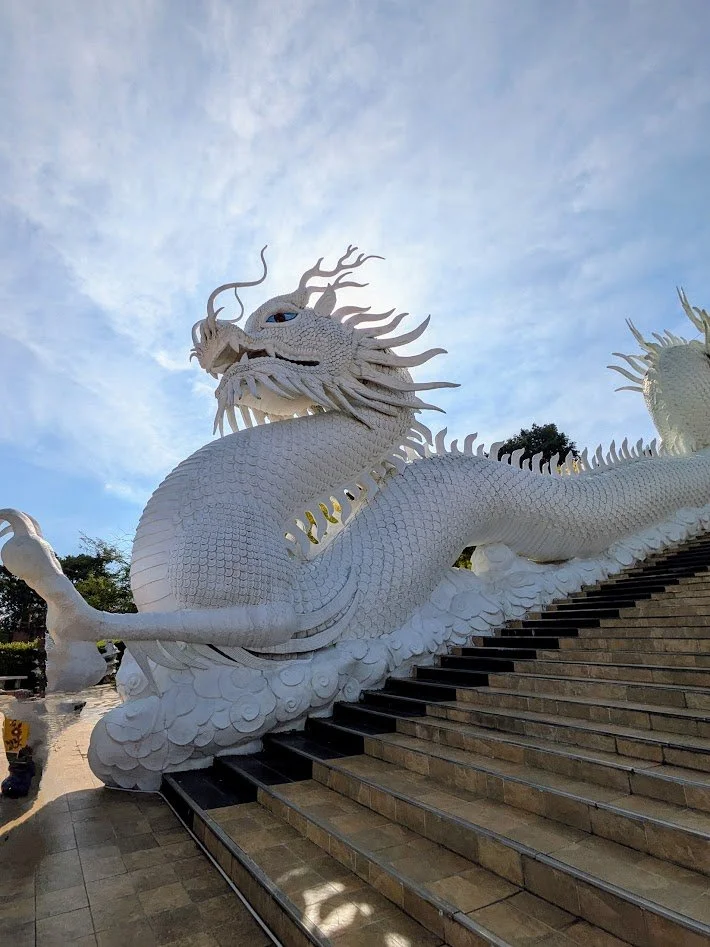
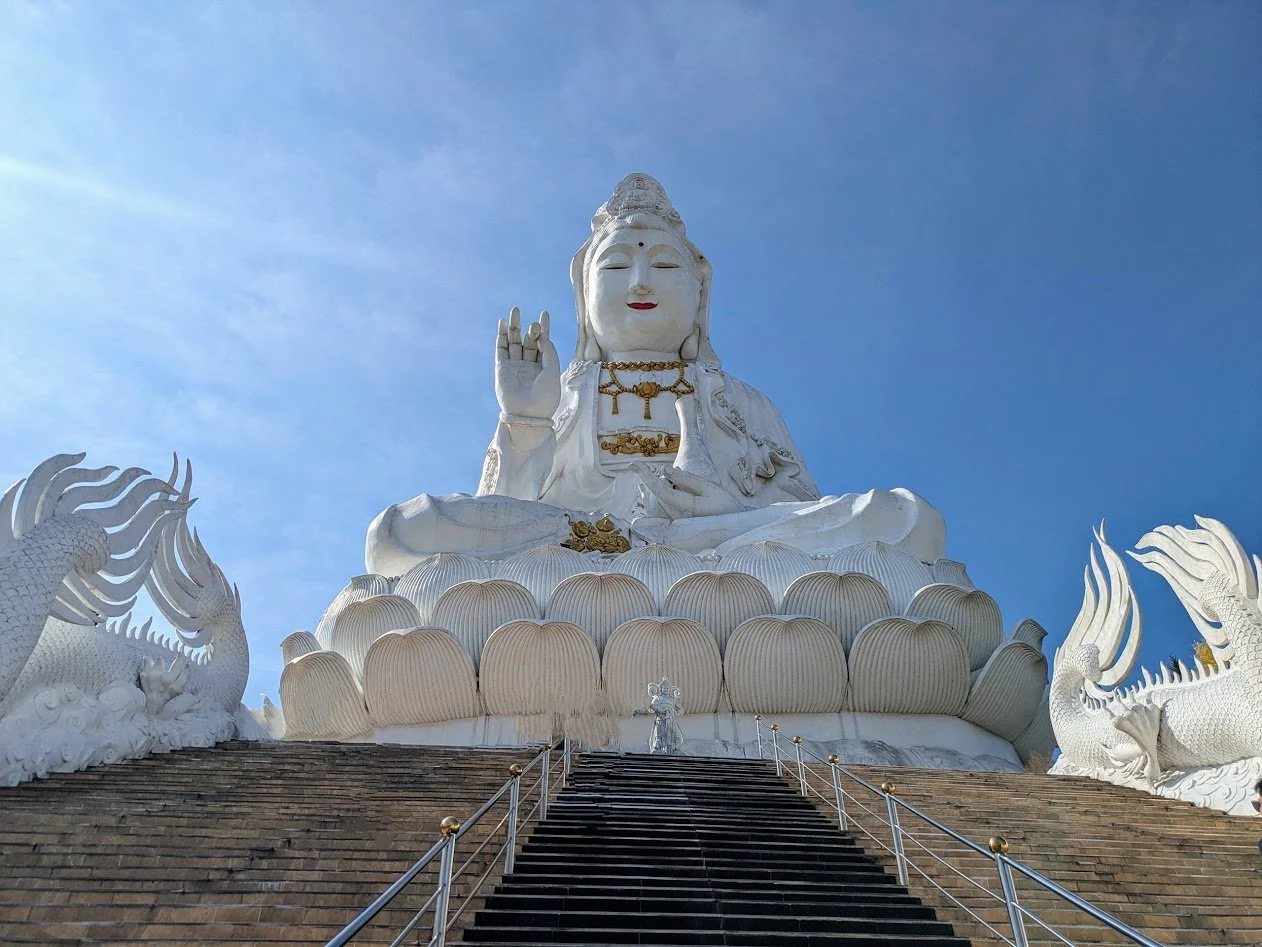
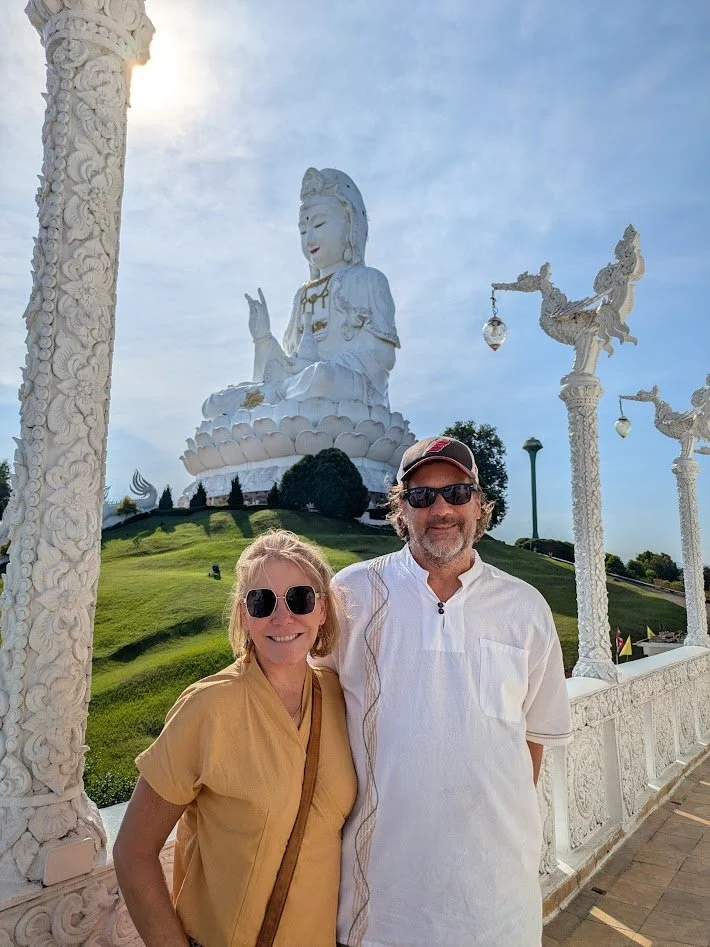
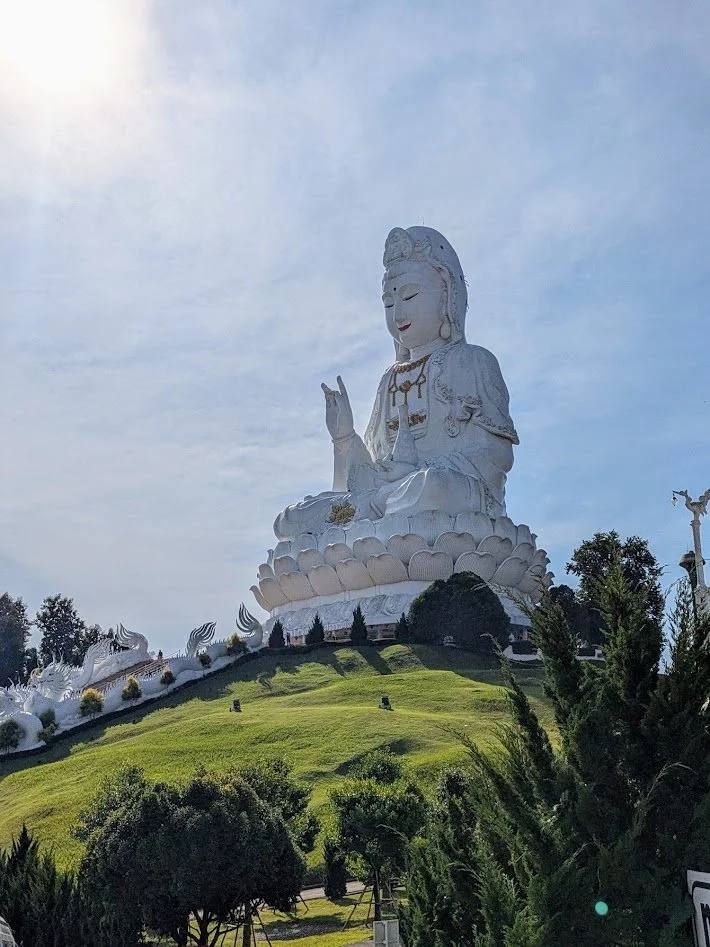
The third temple we saw was Wat Huay Pla Kang - better known as the Red Temple, which is mostly white, but there is a red pagoda. And since the name “White Temple” is already taken, they refer to this one as the Red Temple.
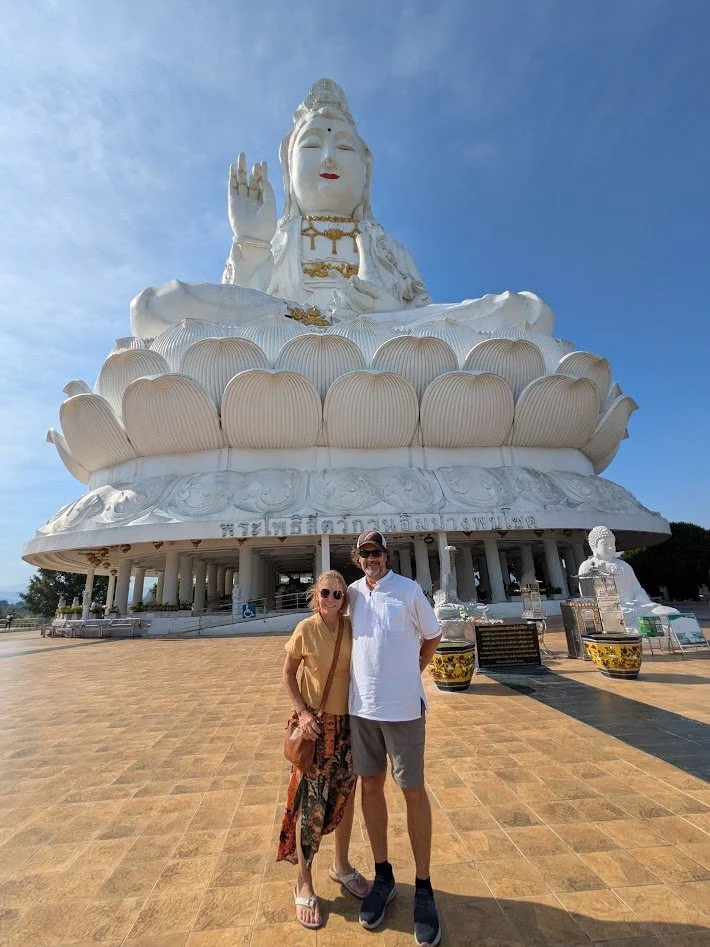
The highlight of this temple isn’t actually the temple, it’s the HUGE (90 meter) statue of Guan Yin, the Buddhist ‘Goddess of Mercy’ — a being who achieved enlightenment but remained here in the physical world to help the rest of humanity do the same. She sits here at Wat Huay Pla Kang, “observing the sounds of the human world”. You can actually go inside the statue and up 25 flights to look out at the panoramic views through its eyes! The inside is decorated in white and is really pretty.
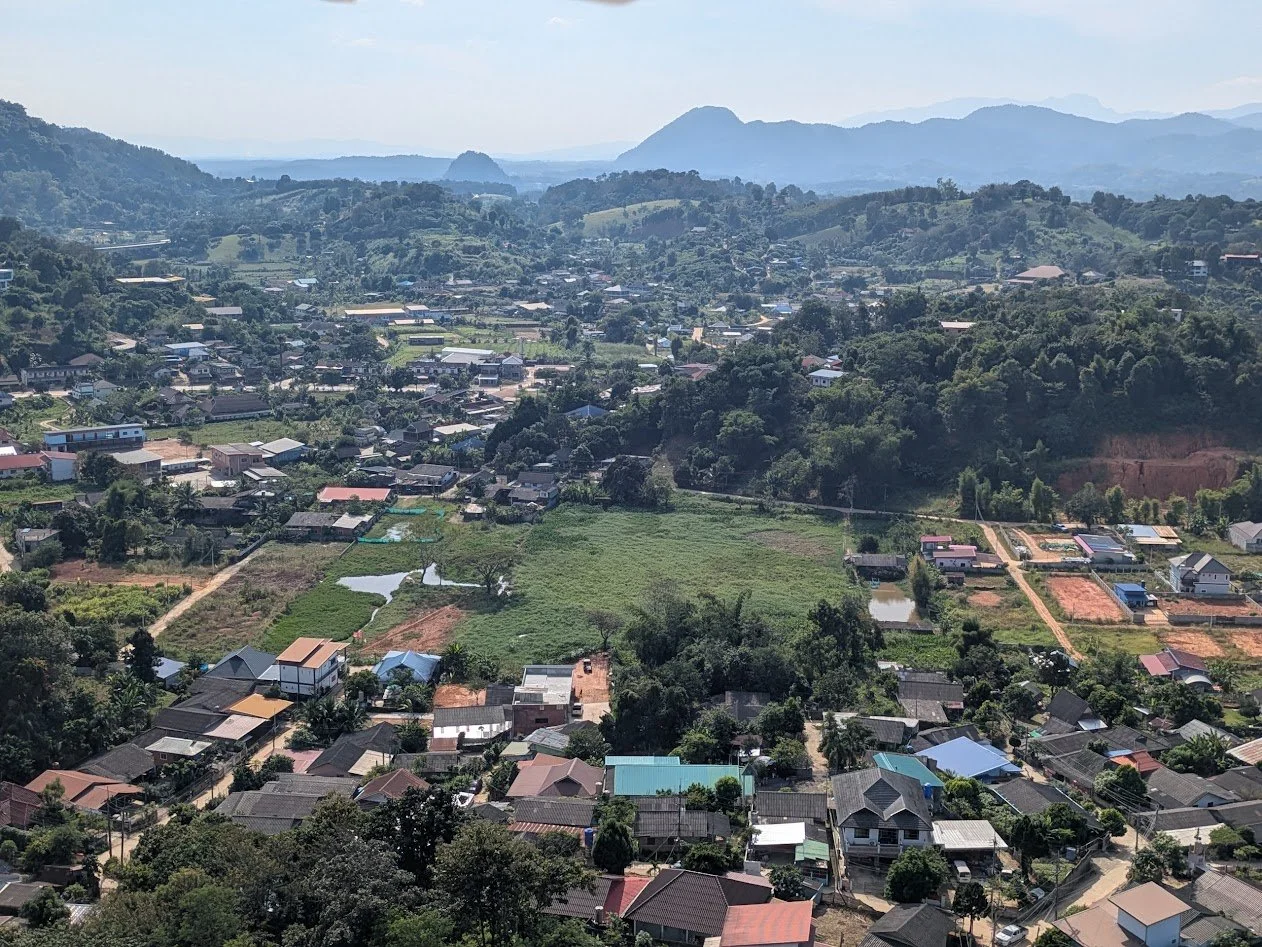
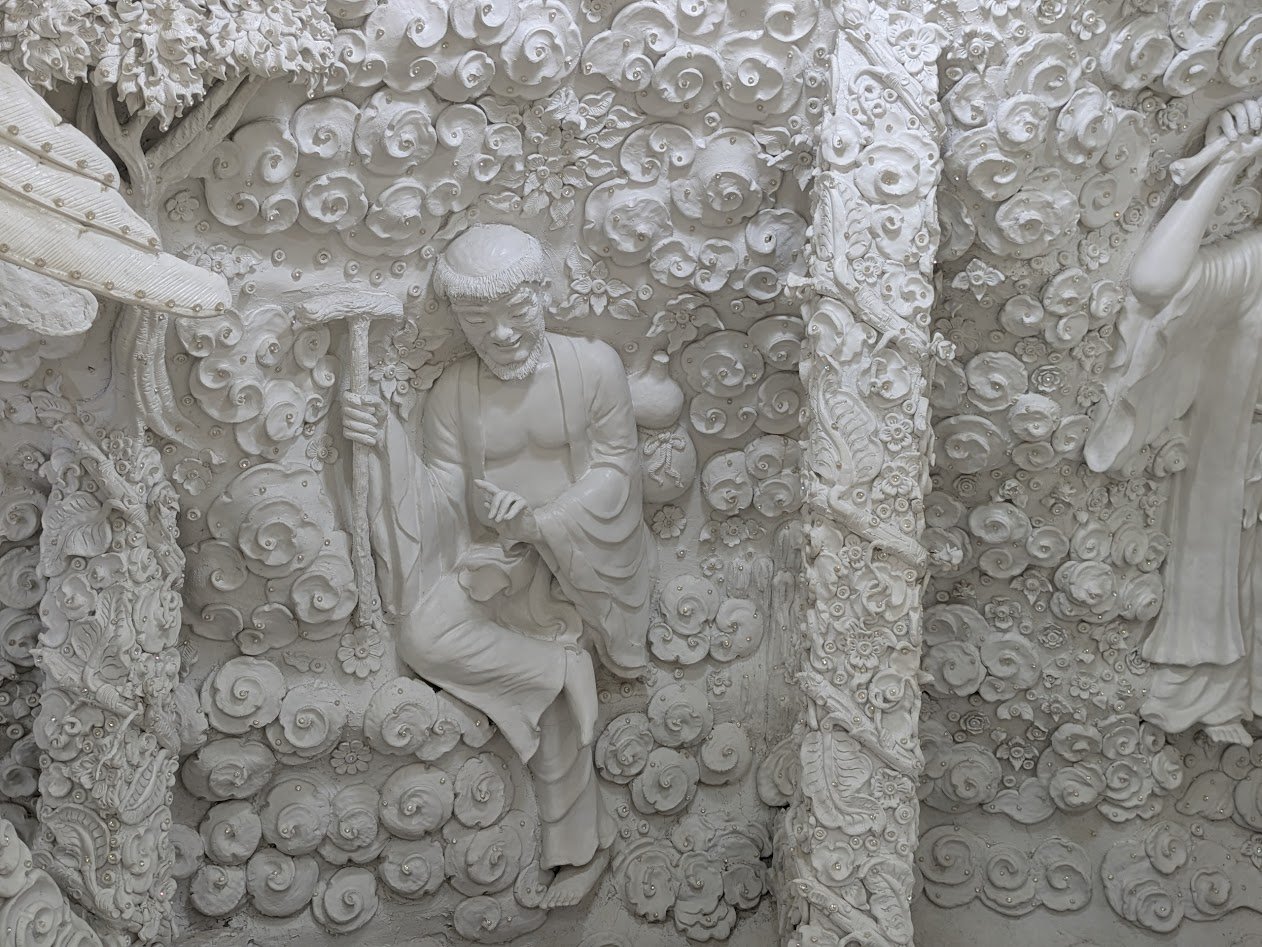
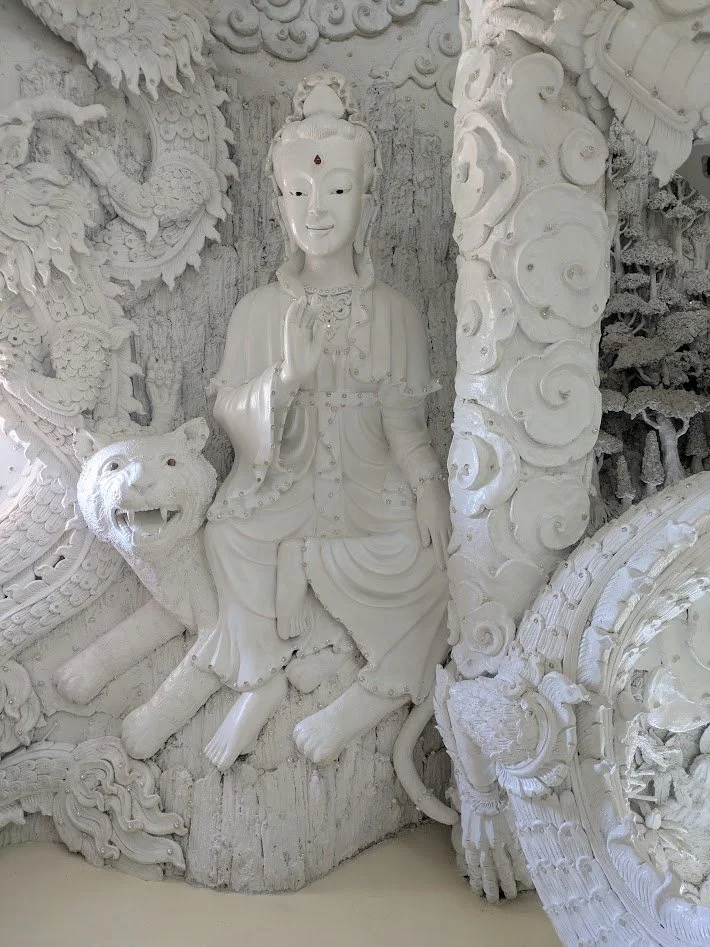
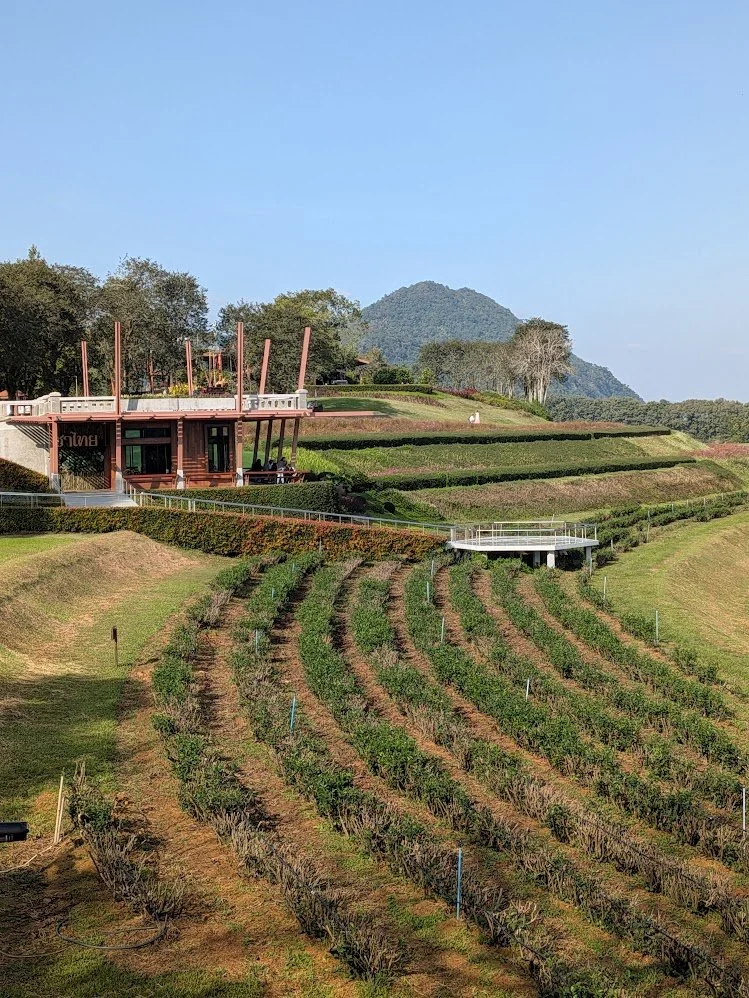
We made a brief stop about 20 minutes south of Chiang Rai at a tea plantation for tea and dessert, but really didn’t learn anything about tea production… we definitely enjoyed the dessert though!
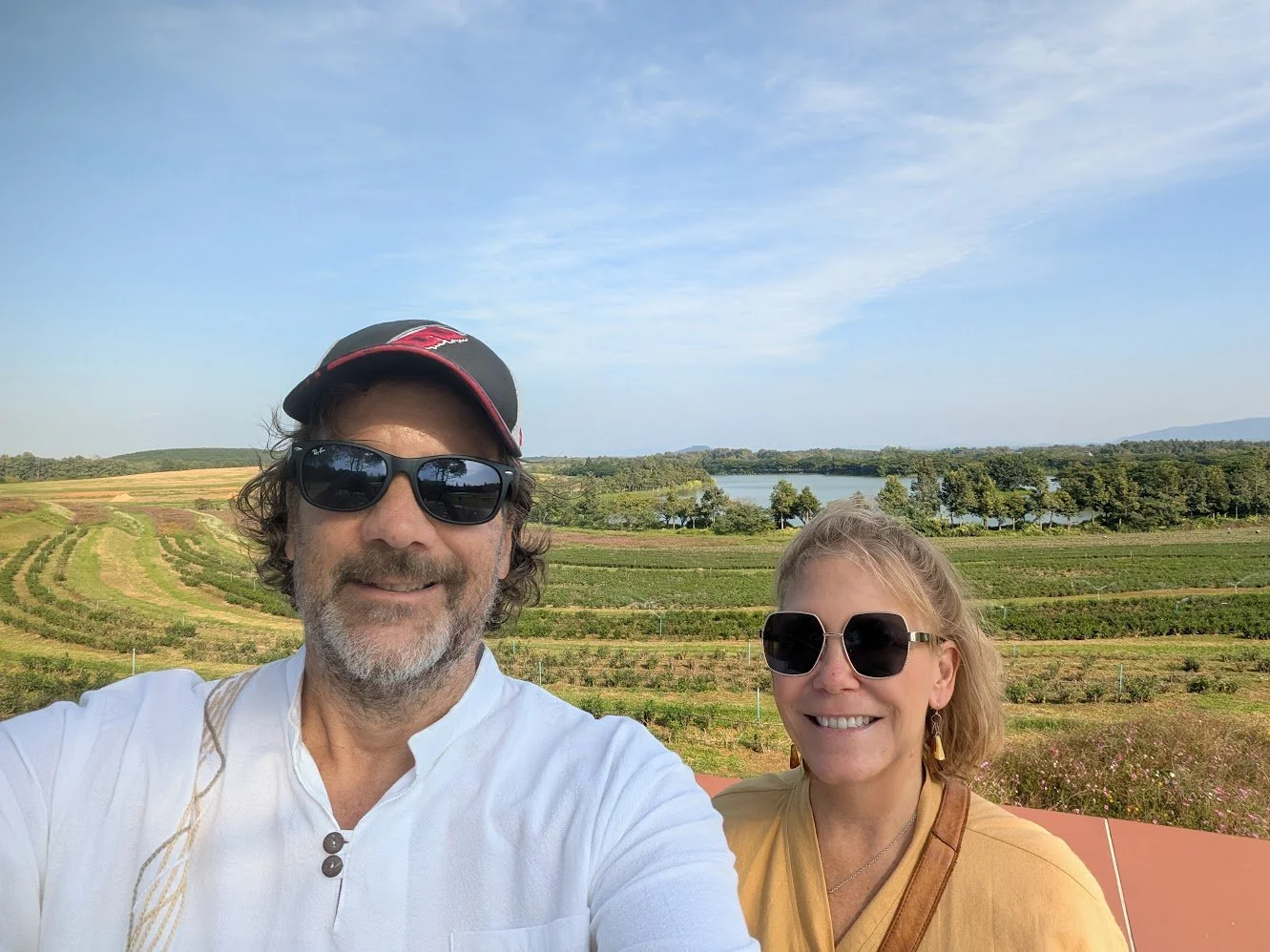
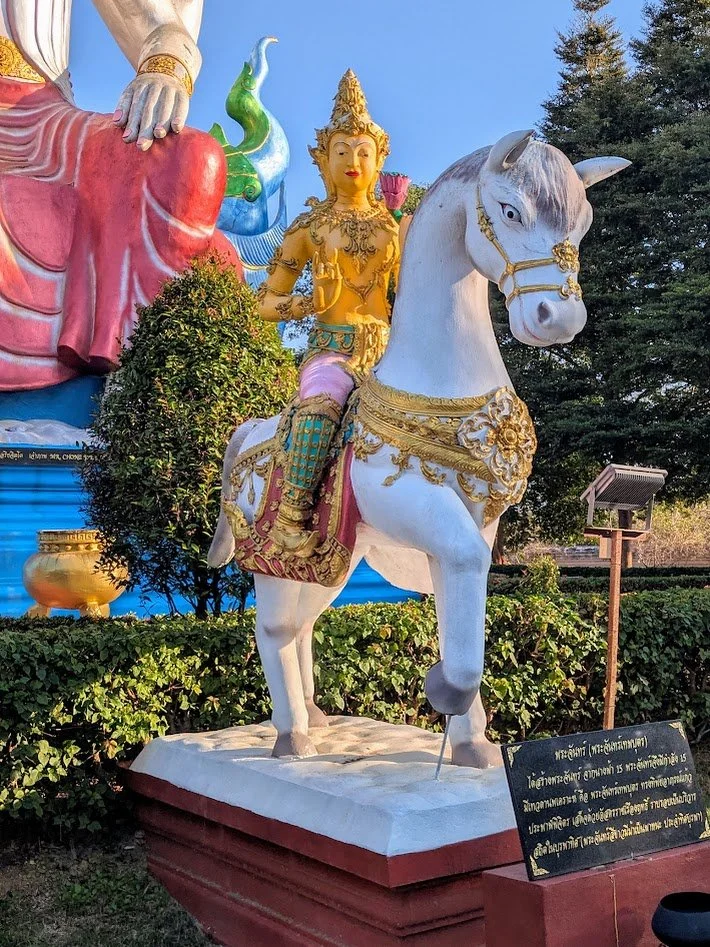
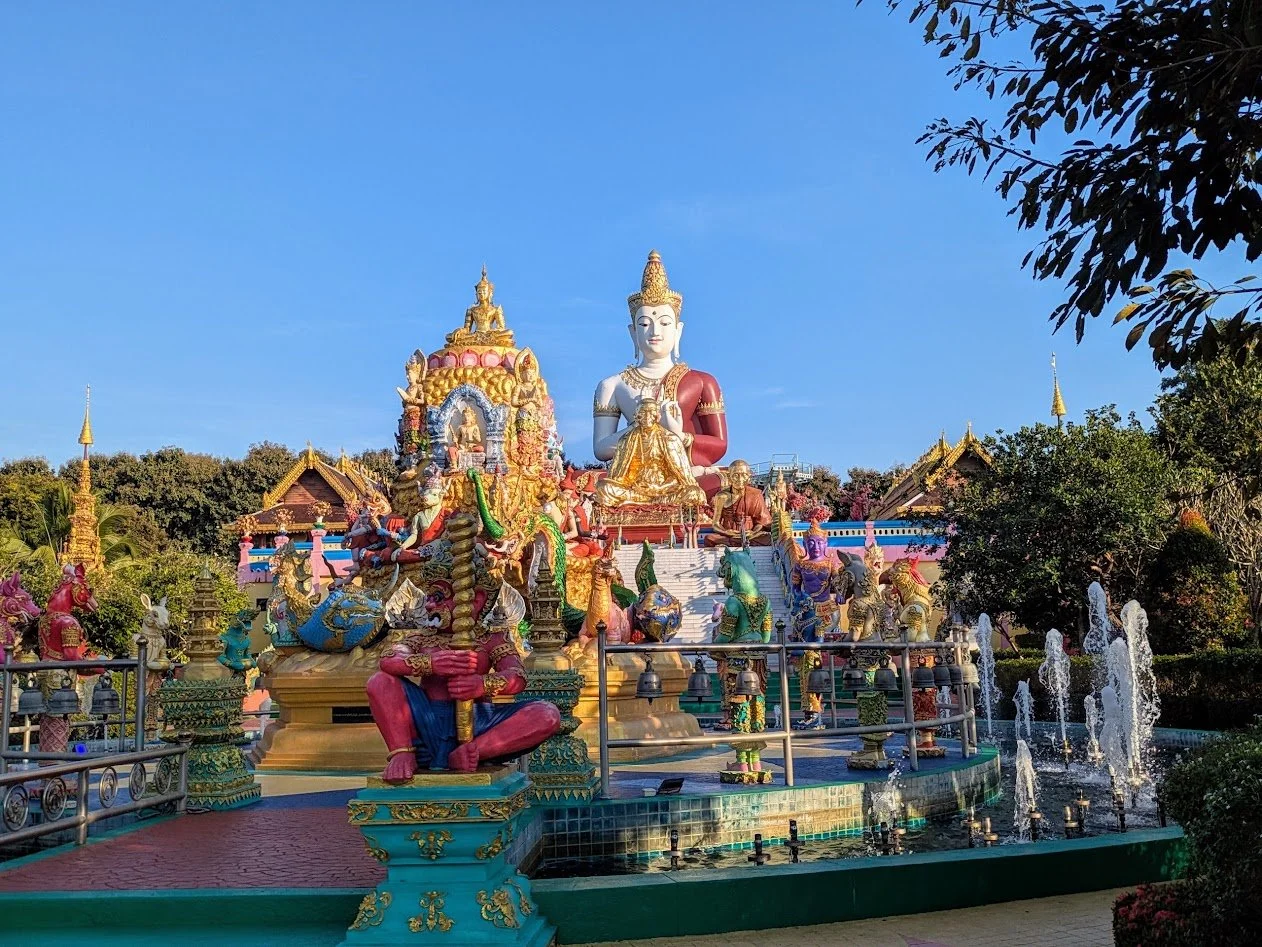
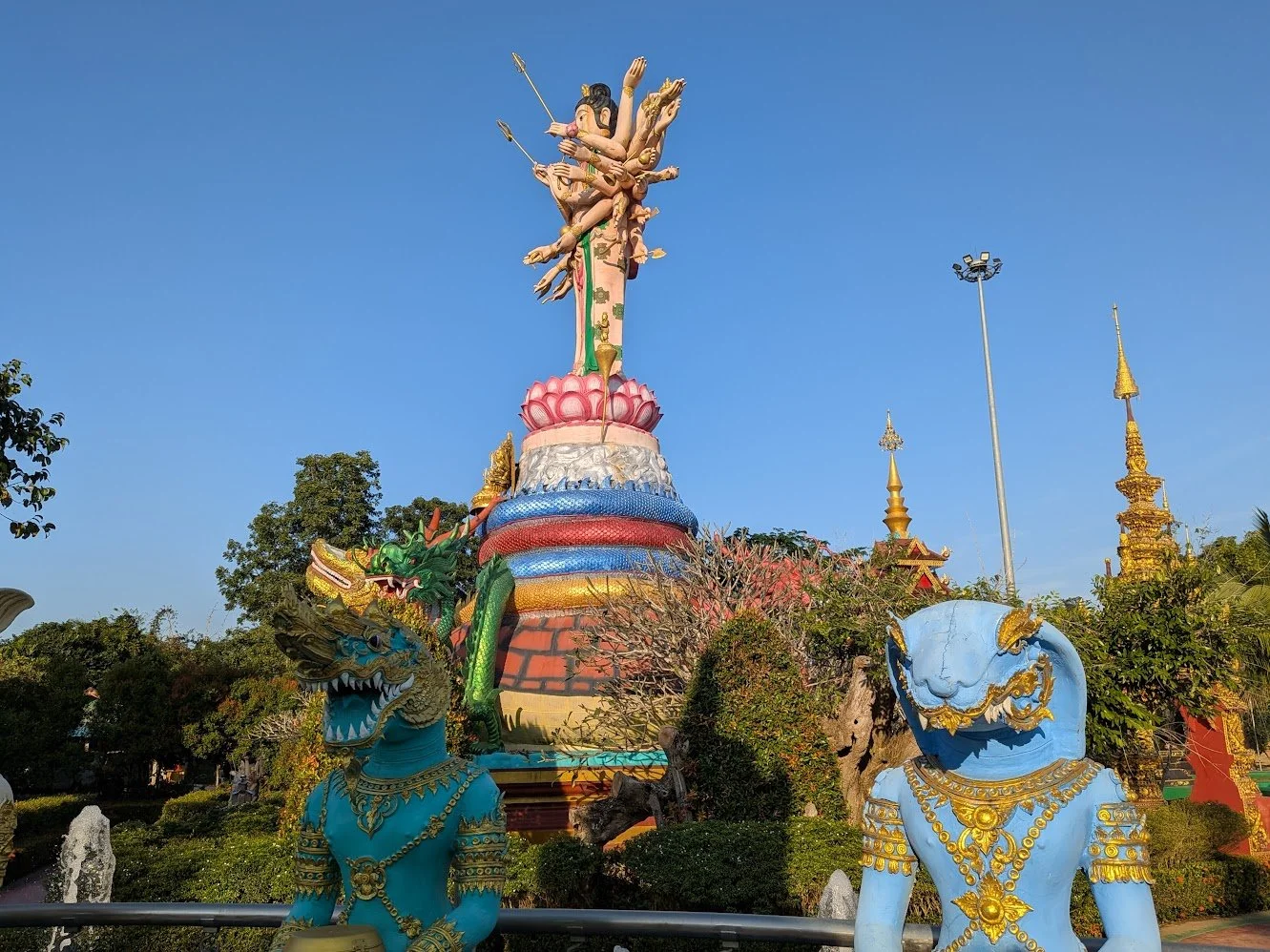
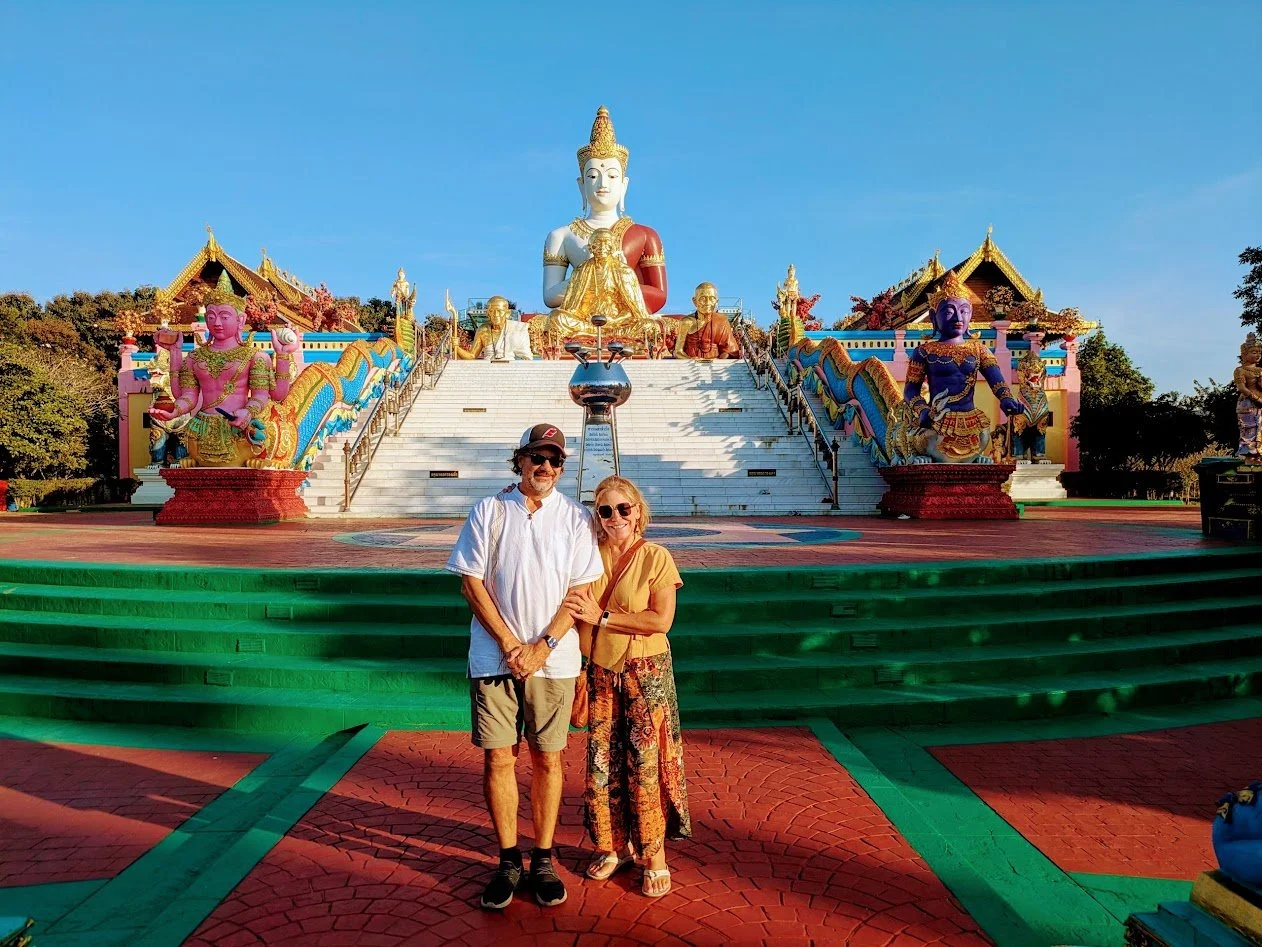
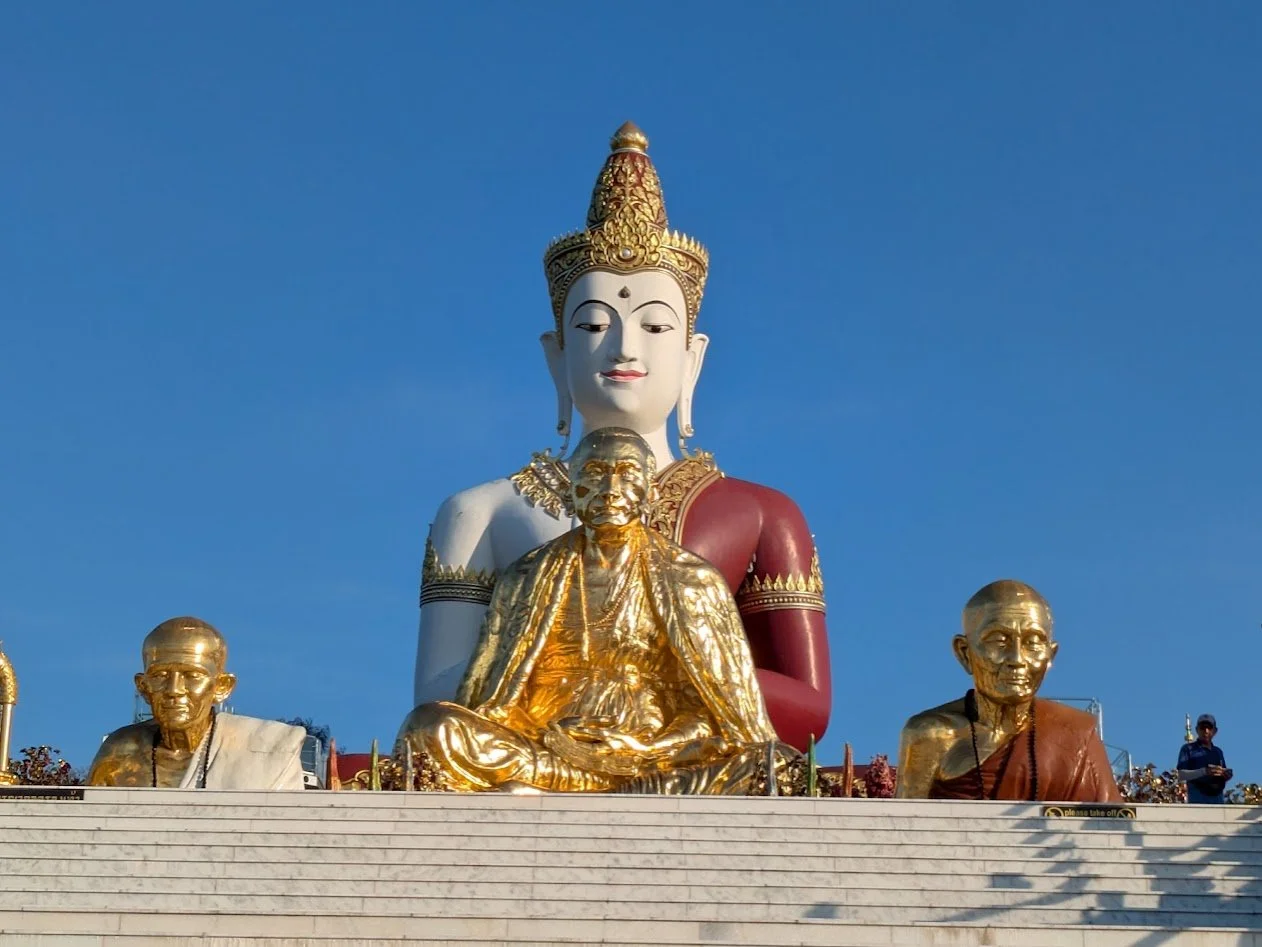
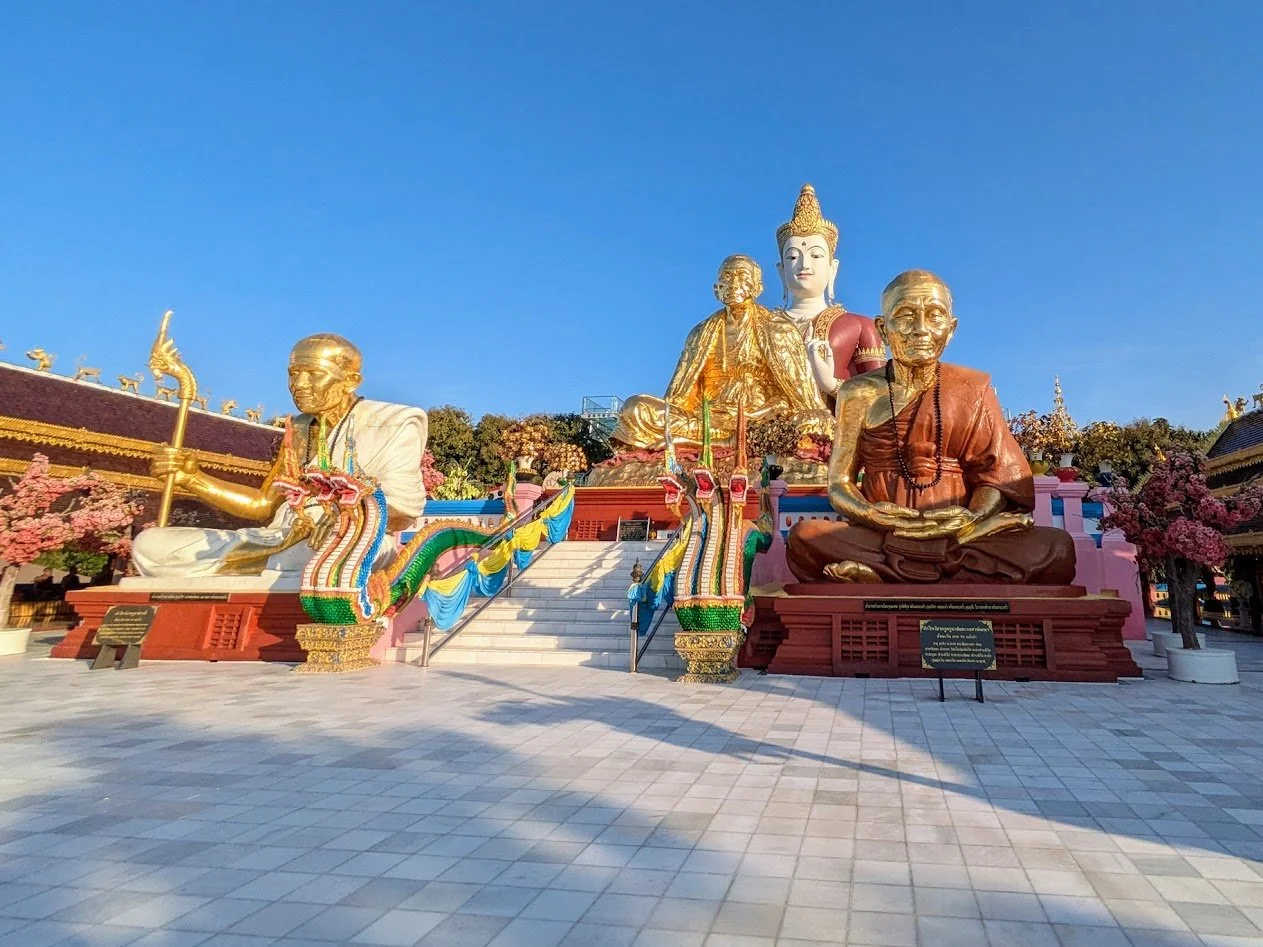
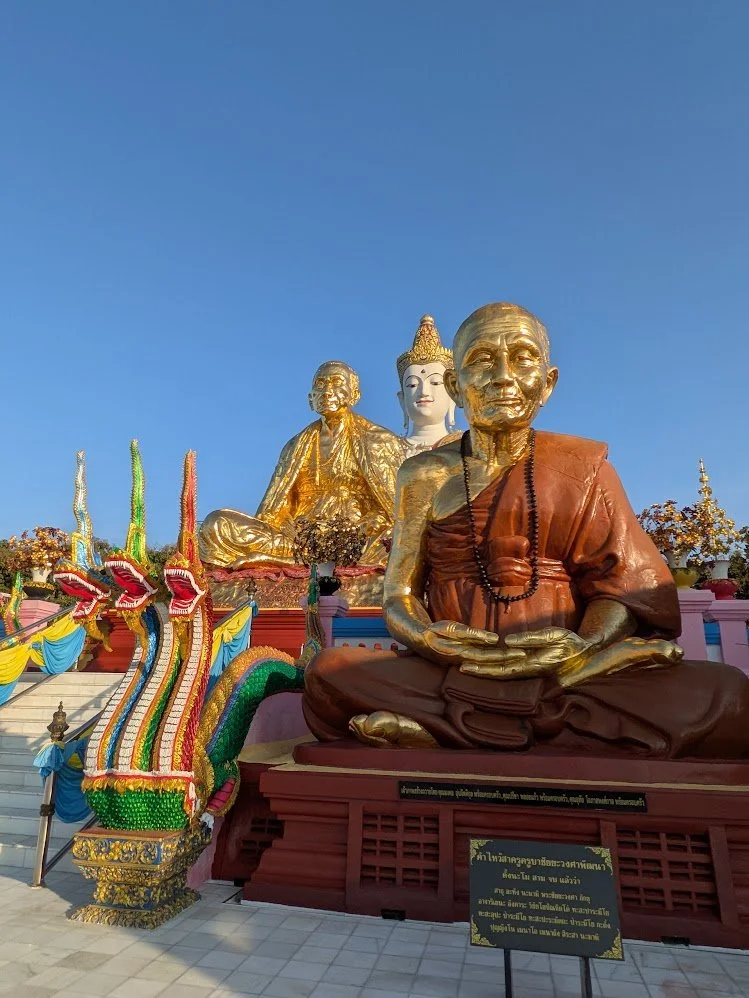
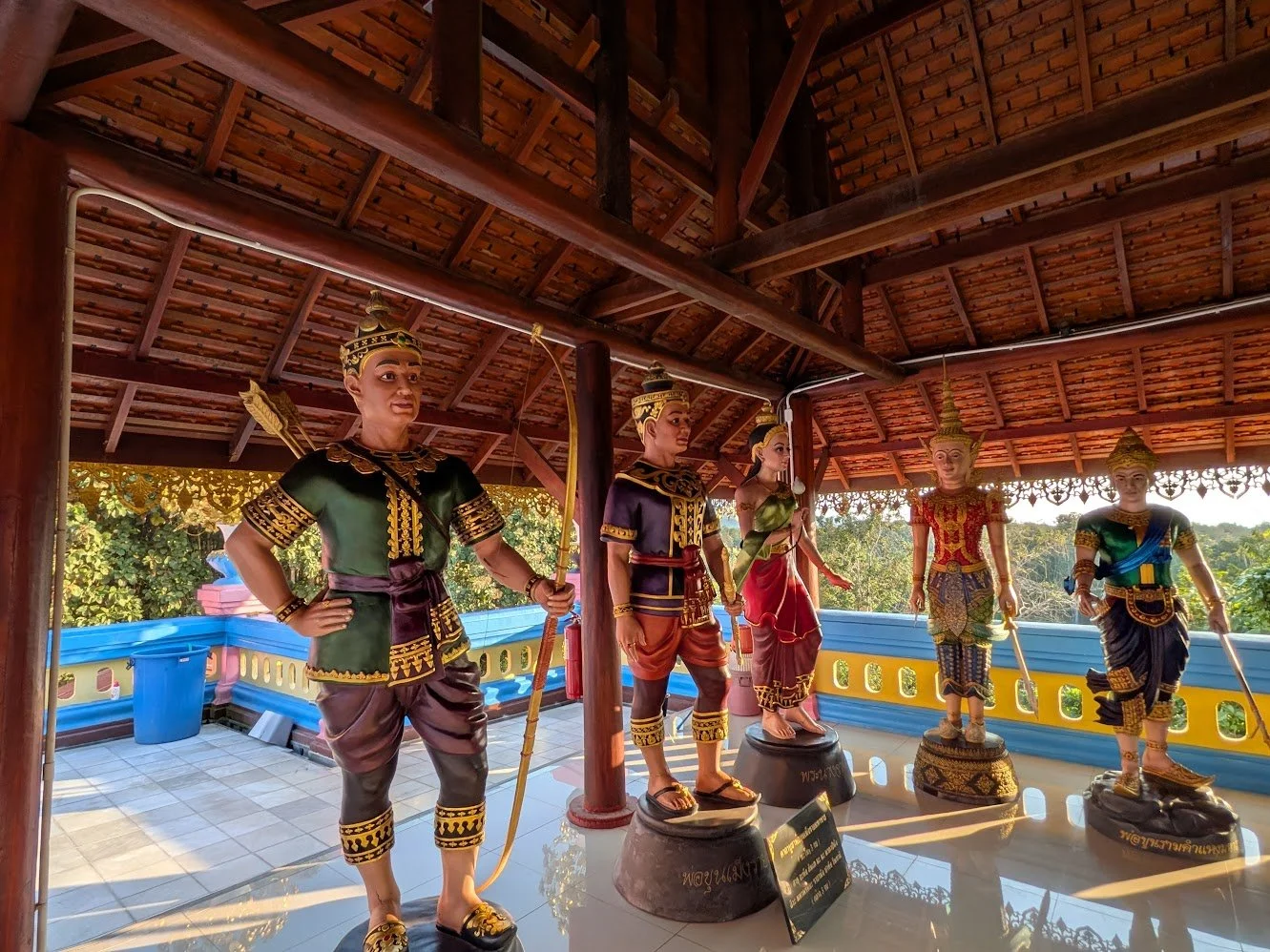
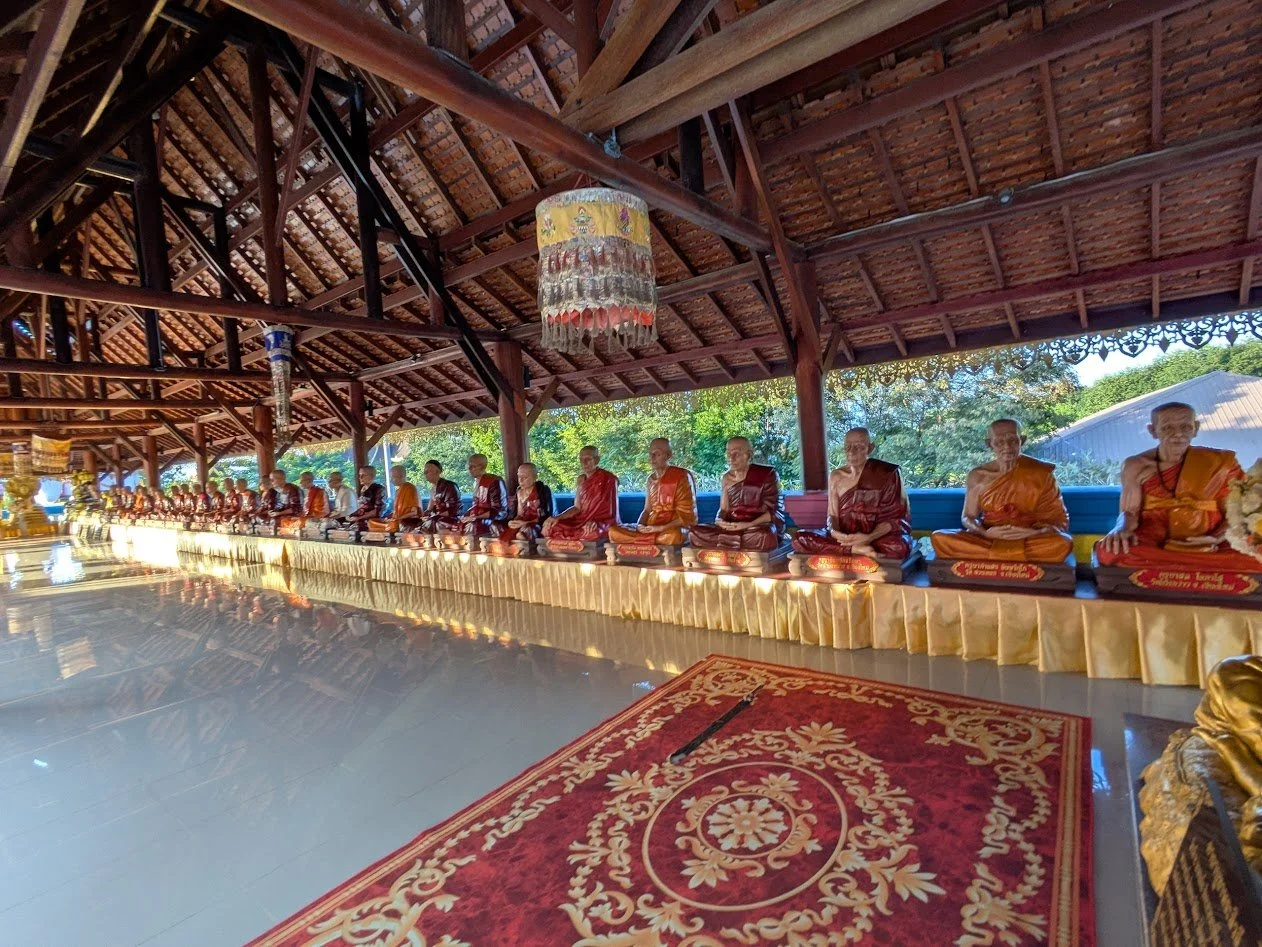
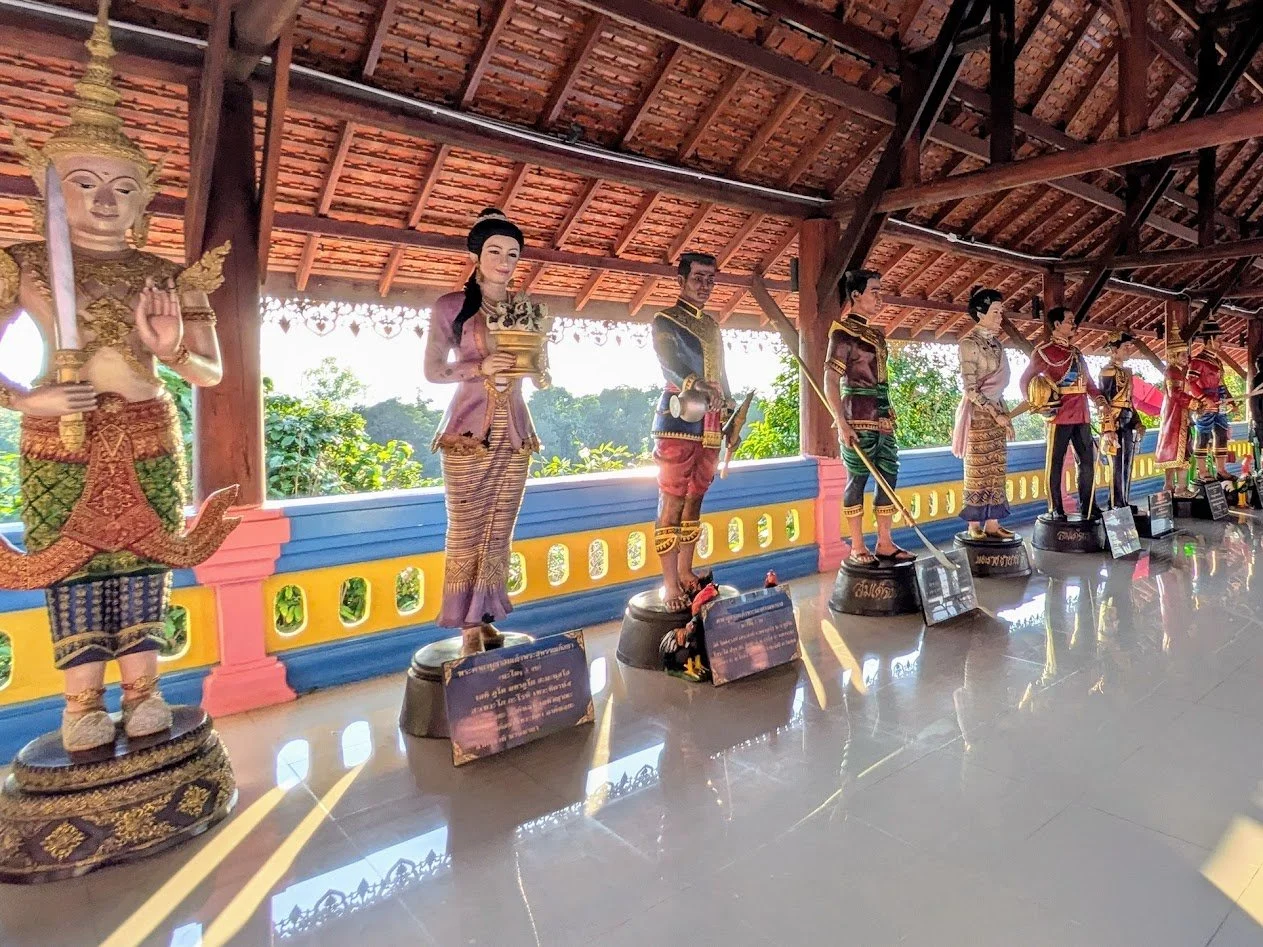
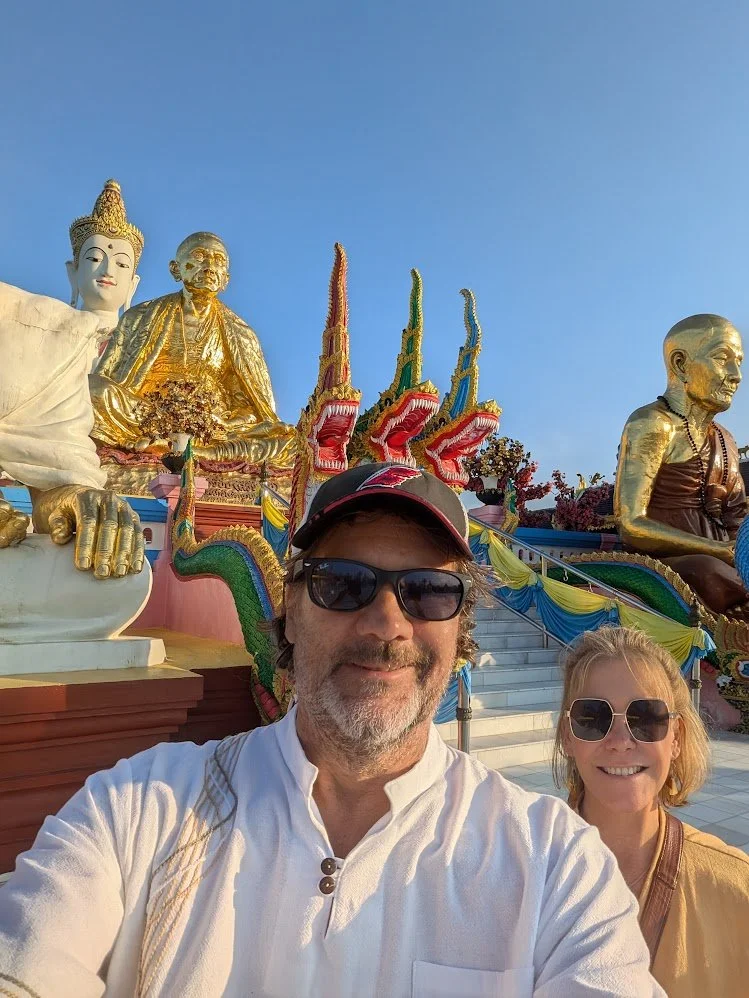
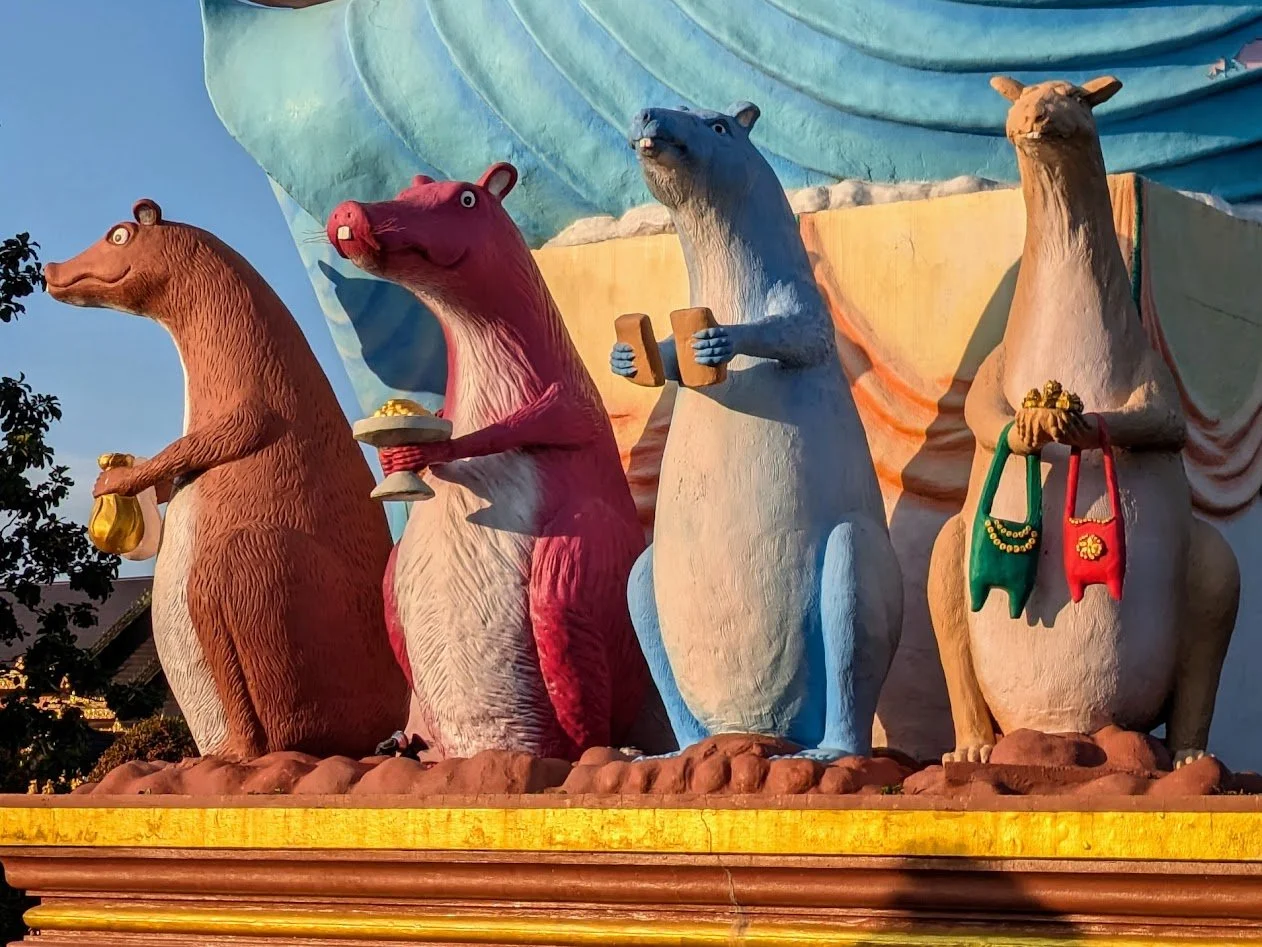
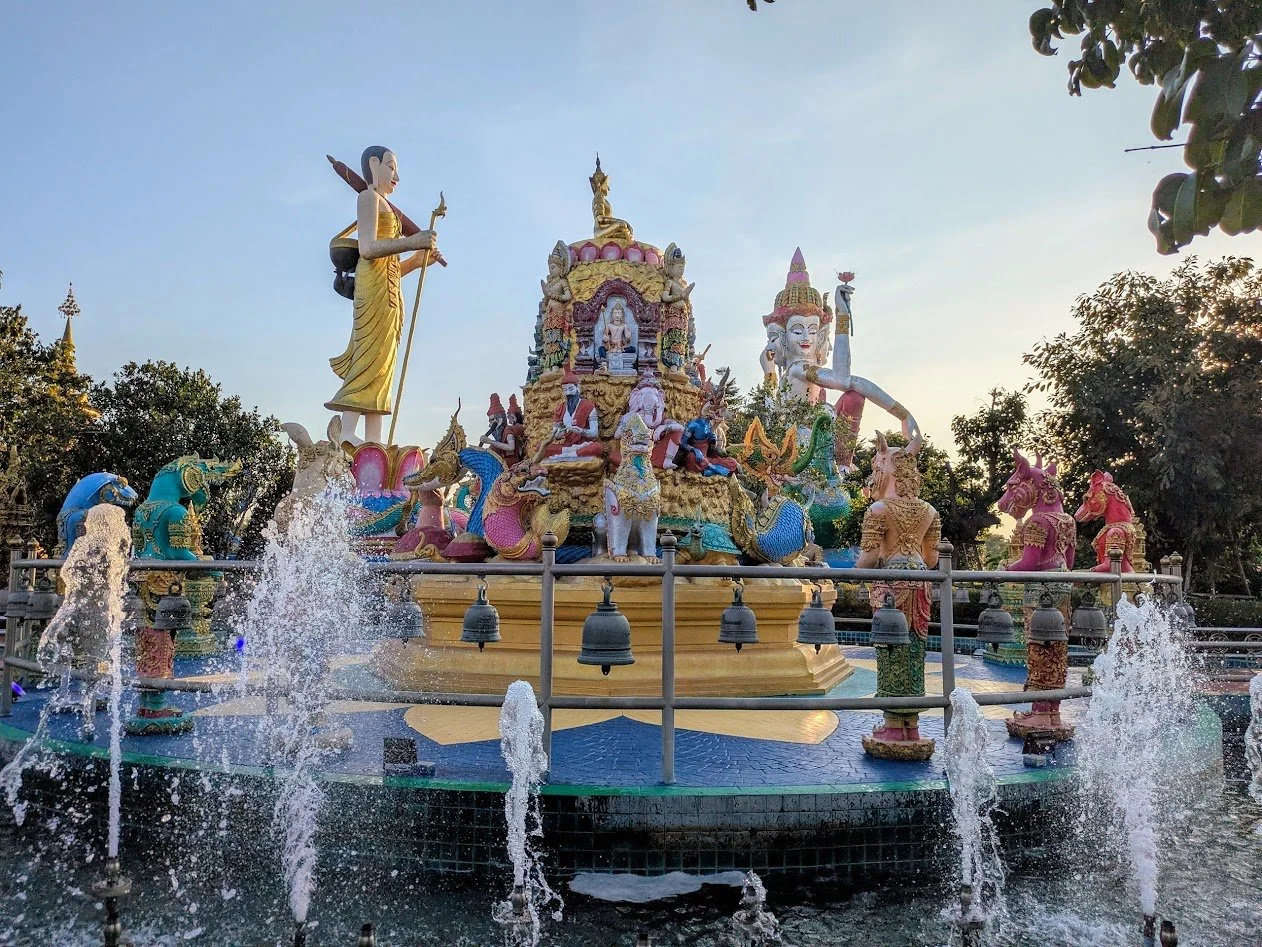
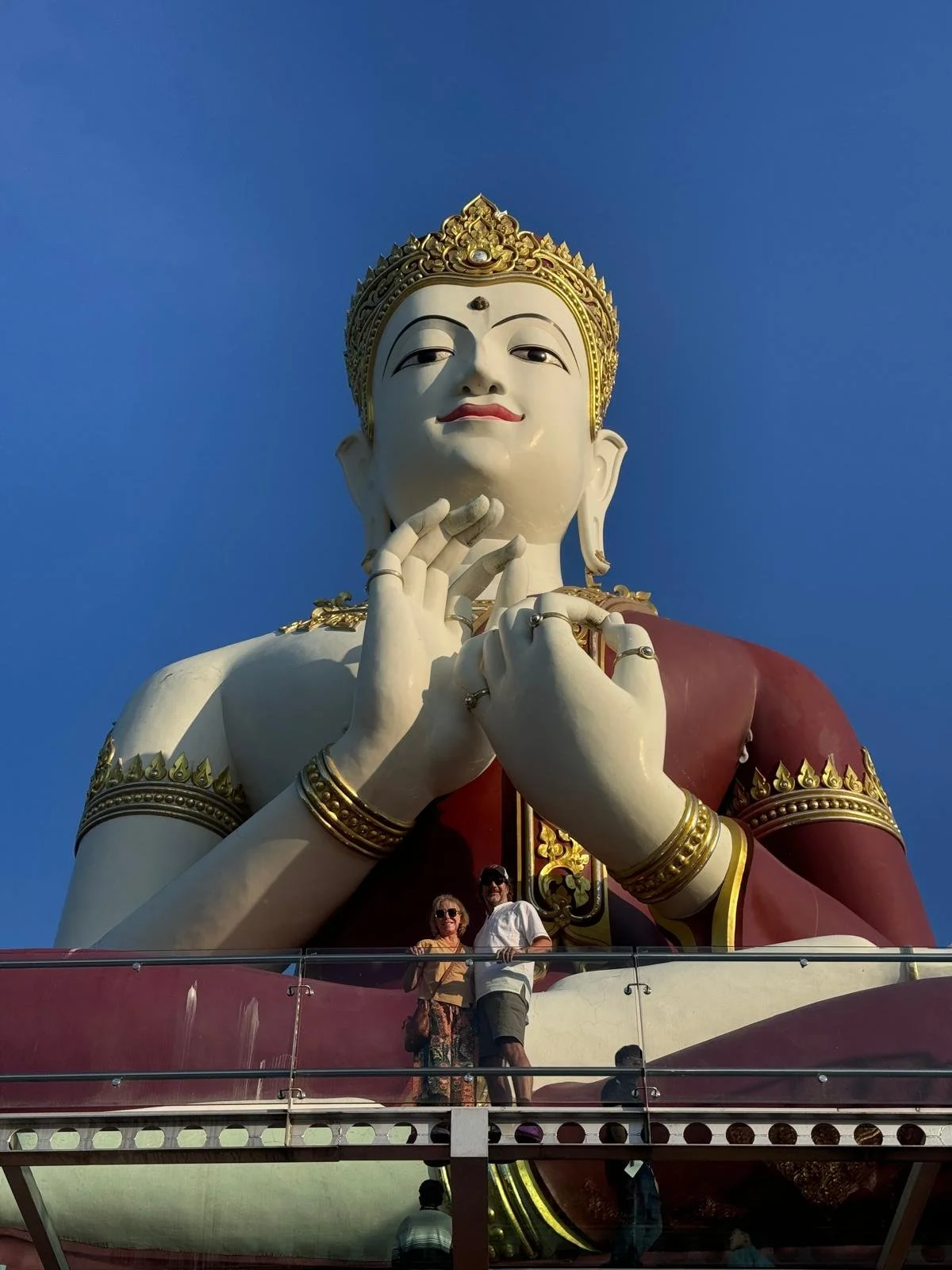
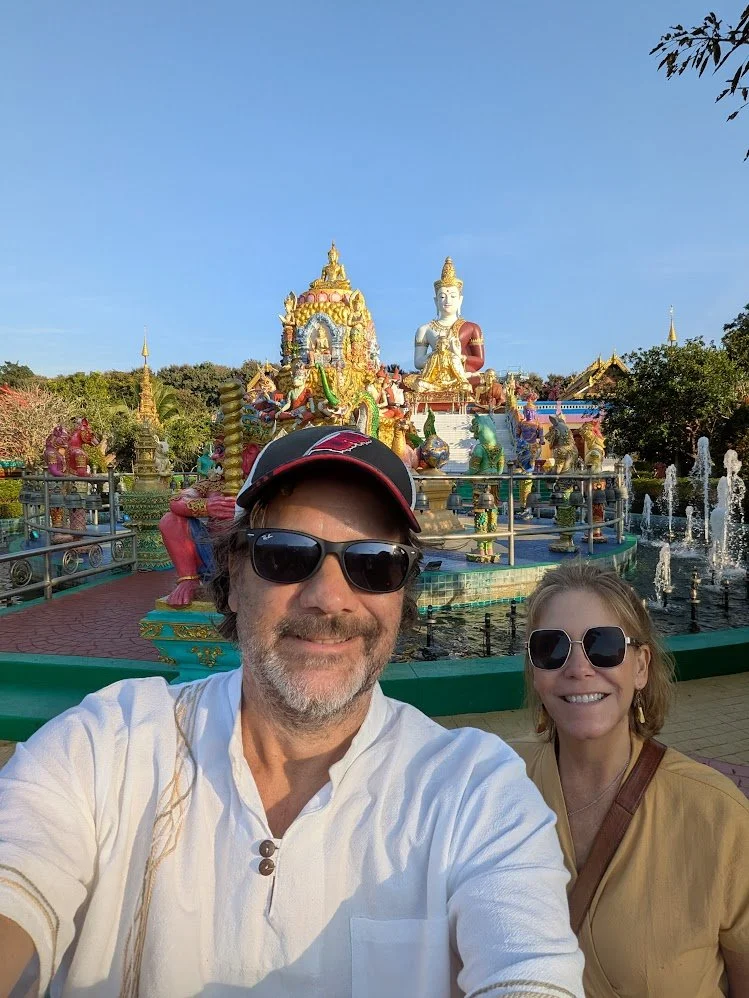
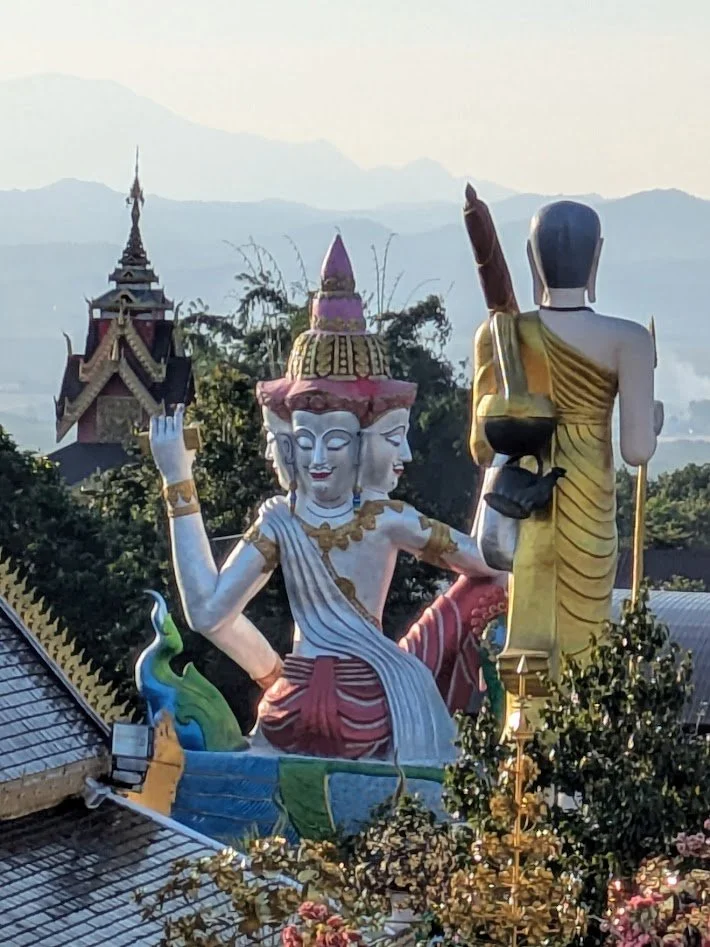
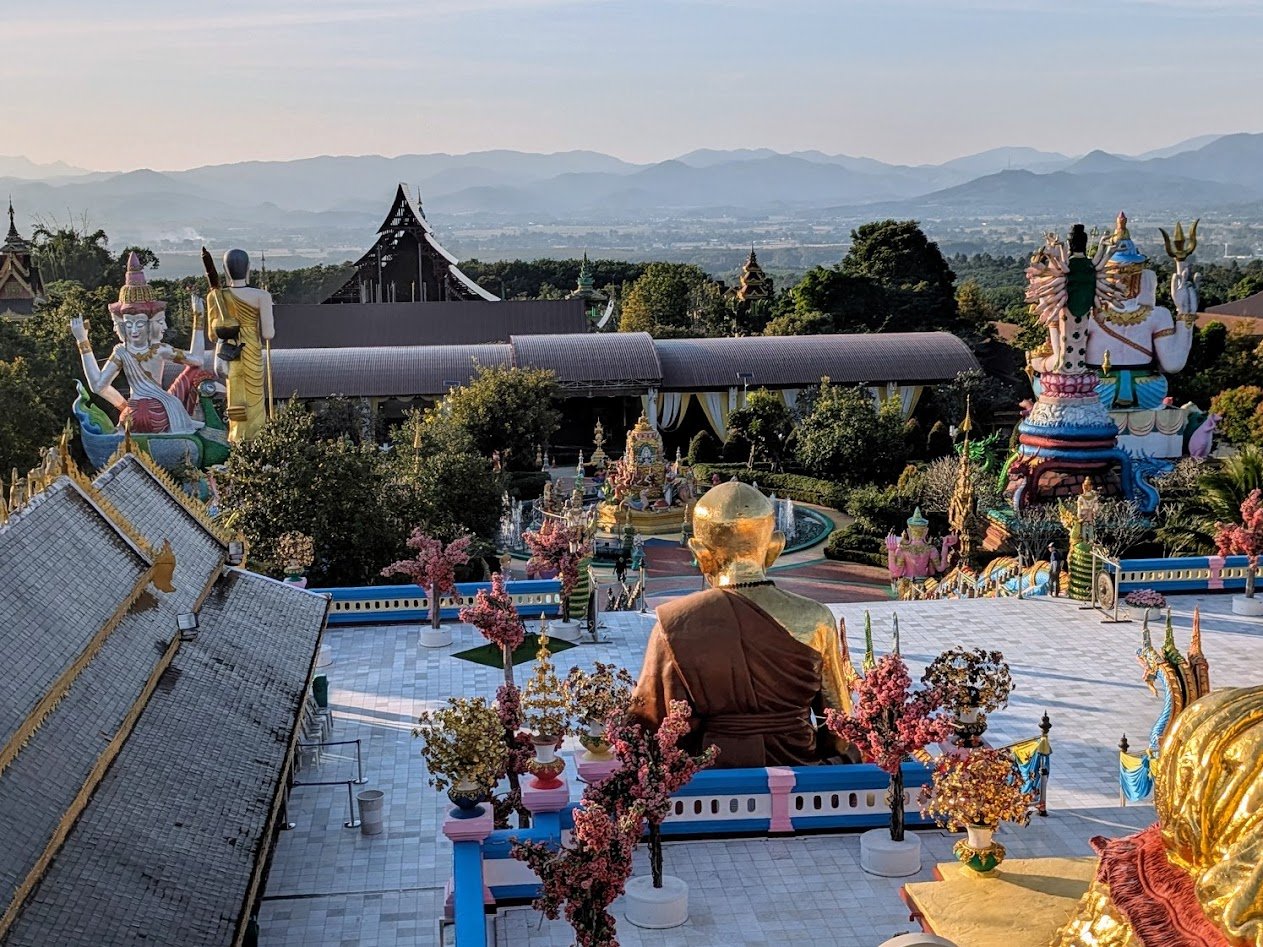
The final stop of our very long day was Wat Saeng Kaeo Phothiyan (otherwise known as Rainbow Temple) about 45 minutes south of Chiang Rai. It was founded in 2006 and features large colorful statues and a sky walk with pretty incredible views. It didn’t feel very religious or solemn, in fact, it was really pretty garish!
We enjoyed this temple the most because of the views from the skywalk and lack of crowds. It was almost closing time when we arrived and we pretty much had the place to ourselves. Once we were finished here, we headed back “home” to Chiang Mai. We were pretty much templed out by then!

Below you can add a comment: type your text in the white box and then Post Comment. If you get a second panel, you just need to enter your name and then hit ‘comment as guest’.
Be nice with your comments, we can always delete them 😊
